PART 6: The Night We Stopped Guessing What Love Meant_063
## END – The Version We Chose
Six months later, I stood behind a curtain in Chicago and listened to three hundred people settle into their seats.
My hands were cold.
They were always cold before performances.
I had forgotten that.
“You’re pacing.”
I turned.
Mason stood in the doorway backstage.
He wore the same navy jacket he had worn to our first anniversary dinner.
“It still fits,” I said.
“Barely.”
I smiled.
He came closer but stopped an arm’s length away.
That was something we had learned.
Not every anxious moment required rescue.
Sometimes love meant standing nearby.
“How bad?” he asked.
“Eight.”
“Out of?”
“Eight.”
“Excellent.”
I laughed.
Six months had changed us.
Not magically.
We still argued.
I hated the way Mason left cabinets open.
He hated the way I turned every flat surface into sheet-music storage.
We had one spectacular disagreement about whether purchasing a second keyboard counted as an emergency expense.
It did.
According to me.
The counselor remained neutral.
But our arguments had changed.
We no longer used silence as a waiting room.
We asked.
We answered.
Sometimes badly.
Then tried again.
The Chicago apartment had become unexpectedly dear to me.
Its windows faced an elevated train that rattled past every eleven minutes.
Mason claimed he could sleep through it.
He could not.
My residency had been harder than expected.
I wasn’t the best composer there.
Some days I wasn’t even the fifth best person in the room.
That turned out to be wonderful.
I learned again.
Failed again.
Played things nobody applauded.
Wrote things June crossed out with one ruthless pencil line.
And every time she handed the page back, she said:
“Again.”
Mason’s transfer had gone well too.
He came home tired but interested in his work in a way I hadn’t seen for years.
Sometimes we ate dinner at ten.
Sometimes neither of us cooked.
Sometimes the laundry remained in a basket until it became philosophically questionable whether it was clean or dirty.
Our life became less efficient.
It also became more alive.
June appeared backstage.
“Five minutes.”
“I may be ill.”
“Do it after the performance.”
She started to leave.
“June?”
She turned.
“Thank you.”
She studied me.
“For what?”
“The letter.”
“You were ready.”
“How did you know?”
“I didn’t.”
That surprised me.
“You said Mom told you—”
“She told me to give it to you if you returned to your music. She never explained what returning would look like.”
June glanced toward the stage.
“People imagine meaningful choices arrive with trumpets. Usually they look like someone showing up on a Tuesday.”
Then she disappeared.
Mason smiled.
“I like her.”
“She terrifies you.”
“Both can be true.”
The stage manager signaled.
Two minutes.
Mason held out his hand.
I took it.
“I have a question,” he said.
“Today?”
“One honest question.”
Our daily ritual had survived the move.
I nodded.
“Ask.”
“If they offer you a permanent position here tonight, do you want it?”
I stared at him.
June had hinted that the residency might lead somewhere.
Teaching.
Program development.
Maybe another year.
I had avoided imagining it.
The old Claire would have answered by calculating Mason’s reaction first.
I didn’t.
“Yes.”
He nodded.
“That was fast.”
“I’ve been practicing.”
He smiled.
“My turn,” I said.
“Go.”
“If I stay, will you resent me?”
“No.”
“Fast answer.”
“I’ve been practicing too.”
I squeezed his hand.
Then the stage manager whispered, “Claire, you’re on.”
The lights changed.
My name was announced.
Applause rose.
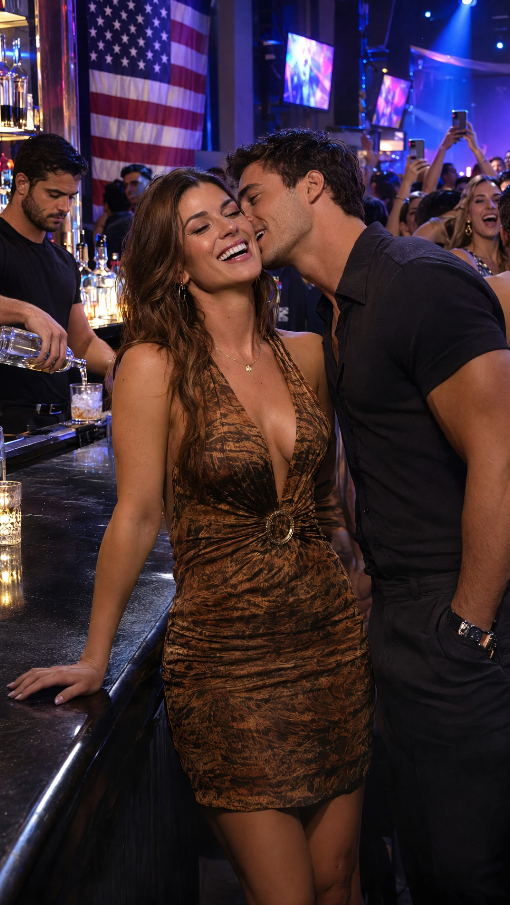
For half a second, I was back in the club.
Colored lights.
People cheering.
Music too loud.
A stranger beside me.
The woman I had been that night seemed close enough to touch.
I no longer hated her.
She had been foolish.
Secretive.
Scared.
But she had also been trying, clumsily, to find a door.
I stepped onto the stage.
The piano waited beneath a single warm light.
I sat.
Three hundred faces disappeared into darkness.
Mason sat in the second row.
June stood near the back.
I adjusted the microphone.
“This piece began twelve years ago,” I said.
My voice trembled.
“It didn’t have an ending.”
A few people smiled.
“I thought for a long time that unfinished things were failures.”
I rested my hands on the keys.
“Now I think sometimes they are invitations.”
I looked toward Mason.
“This is called **The Version We Forgot**.”
Then I played.
The opening came from **North Window**.
My mother’s melody.
Rain.
Hospital corridors.
Young love and bad coffee.
Then the composition changed.
The middle was newer.
Uneasy.
Restless.
A rhythm that refused to settle.
The club existed somewhere inside it.
So did the night drive.
The airport.
Chicago streets.
My mother’s letter.
Mason’s unsent card.
My own forgotten promise.
Then came the section I had written only three nights earlier.
It did not return to the opening melody exactly.
That had been my original plan.
June crossed it out.
“You’re trying to go backward,” she had said.
“I thought listeners would want resolution.”
“Resolution isn’t repetition.”
So I changed it.
The melody returned older.
Altered.
Recognizable but no longer identical.
Like us.
The final note faded.
For one terrible second, there was silence.
Then the room rose.
Not everyone.
But enough.
Applause filled the hall.
I bowed.
My eyes found Mason.
He wasn’t clapping at first.
He was wiping his eyes.
Then he noticed me looking.
He stood and applauded so loudly that the woman beside him laughed.
I laughed too.
Afterward, people crowded the lobby.
Strangers congratulated me.
Old classmates appeared.
Tessa had flown in from Ohio without telling me and nearly tackled me beside the refreshments.
“You knew?” I asked Mason.
“For three weeks.”
“That counts as a secret.”
“A surprise is time-limited.”
“We are discussing this with Dr. Patel.”
“Fair.”
June approached near the end of the evening.
She carried a folder.
Mason saw it and quietly moved away to speak with Tessa.
I noticed.
That was new too.
He knew when something belonged to me first.
June handed me the folder.
“What is it?”
“An offer.”
My heart jumped.
“Teaching?”
“Partly.”
The residency wanted me to stay for another year, helping develop workshops for adults returning to creative work after long absences.
I read the description twice.
“Why me?”
June raised an eyebrow.
“I assume you’re not fishing for compliments.”
“No.”
“Good.”
She pointed toward the stage.
“Because technical excellence can be taught by hundreds of people.”
Then she pointed at me.
“You know what returning costs.”
I looked at the contract.
“I need to talk to Mason.”
“Of course.”
I found him outside.
Chicago was warm now.
Summer traffic moved beyond the theater.
He leaned against the brick wall.
“Well?”
“They offered me a year.”
His smile arrived immediately.
“Do you want it?”
“Yes.”
“Then congratulations.”
“What about your job?”
“I had a meeting yesterday.”
My eyes narrowed.
“What meeting?”
“They’ve approved permanent Chicago placement.”
I stared.
“You didn’t tell me?”
“I didn’t know whether it would happen, and I didn’t want it affecting your answer.”
I considered invoking the no-secrets rule.
Then I understood.
This wasn’t a decision he had made for me.
It was information he had waited to share until I had answered for myself.
“Permanent?” I asked.
“If I want it.”
“Do you?”
“Yes.”
We stood beneath the theater lights smiling at each other.
“That’s inconvenient,” I said.
“Terribly.”
“We might have to stay.”
“Looks that way.”
I stepped closer.
“What about Ohio?”
“We decide together.”
“The house?”
“Together.”
“Everything?”
He smiled.
“That’s the general idea.”
I kissed him.
Not like a movie ending.
No swelling orchestra.
No audience.
Just Mason.
Just me.
Later, walking home, we passed a crowded club.
Music escaped every time the door opened.
I slowed.
Mason noticed.
“You okay?”
“Yes.”
A group of women rushed past us laughing.
One of them wore silver shoes.
For a moment I remembered cold Ohio air entering our house at two in the morning.
Mason beneath the lamp.
The glowing phone.
My own face in that video.
“If you could erase that night,” I asked, “would you?”
Mason thought.
“The test?”
“Yes.”
“I’d erase that.”
I nodded.
“But not what happened afterward.”
“Me neither.”
We continued walking.
At our apartment, I changed clothes while Mason made tea.
My phone buzzed on the dresser.
A message from Ethan.
We had exchanged perhaps four messages in six months.
**Tessa sent me the performance link. Congratulations.**
I smiled.
**Thank you.**
Then another message appeared.
**I figured you’d eventually finish that conversation.**
I frowned.
**What conversation?**
Three dots.
**The one outside the club.**
I sat on the edge of the bed.
**I saw the video.**
His response came quickly.
**Not all of it.**
My heart skipped.
I walked into the kitchen.
“Mason?”
He looked up.
“What?”
I showed him the screen.
Another file arrived.
We stood beside each other as I opened it.
The footage continued from exactly where the old clip had ended.
Outside the club, I had just put my wedding ring back on.
Ethan asked:
“You said you want another version of yourself.”
“Yes.”
“What happens if your husband doesn’t like her?”
Video-me considered.
Then I gave an answer I had completely forgotten.
“Then we’ll have to meet each other again.”
Mason glanced at me.
The video continued.
“And if he does?”
I looked toward the street.
“Then maybe I’ll finally understand something.”
“What?”
I smiled sadly.
“That becoming myself again doesn’t necessarily mean becoming someone without him.”
The recording ended.
Mason and I remained silent.
Then he laughed softly.
“What?”
“All this time.”
“What?”
“You already knew.”
I shook my head.
“No.”
“Yes, you did.”
“I was drunk and confused outside a nightclub.”
“You were still you.”
That sentence stayed with me.
I went to the window.
Below us, Chicago moved through another summer night.
Six months ago I had believed there were only two possible lives.
Stay and disappear.
Leave and become free.
I had been wrong.
People were not houses.
We did not have to burn one life down before entering another.
Behind me, Mason placed two cups of tea on the table.
“Claire?”
I turned.
“One honest question.”
“Still?”
“Every day.”
I smiled.
“Ask.”
He leaned against the counter.
“Who are you now?”
Once, that question would have frightened me.
Musician?
Wife?
Daughter?
Teacher?
Woman who lied?
Woman who stayed?
Woman who left?
But those were pieces, not answers.
I walked toward him.
“I don’t know yet.”
Mason smiled.
“Good.”
I laughed.
“You stole that from June.”
“Absolutely.”
I took my tea.
Then I looked toward the small keyboard beside our window.
“Want to hear something?”
“Always.”
I sat.
Mason pulled a chair beside me.
Not too close.
Not far away.
I played the beginning of a new song.
It was rough.
Uncertain.
Barely more than a melody.
Halfway through, I made a mistake.
I stopped.
Mason waited.
Years ago, I might have closed the lid.
Apologized.
Decided the song wasn’t good enough.
Instead I placed my hands back on the keys.
“Again,” I whispered.
And began.
#### Share your thoughts or feedback to motivate us to create more stories ♥️
**–THE END–PLEASE
✓ Lynn R. Adams
## END – The Version We Chose Six months later, I stood behind a curtain in Chicago and listened to three hundred people settle into their seats. My hands were cold. They were always cold before pe…