Part 6 – The Language of Silence-041
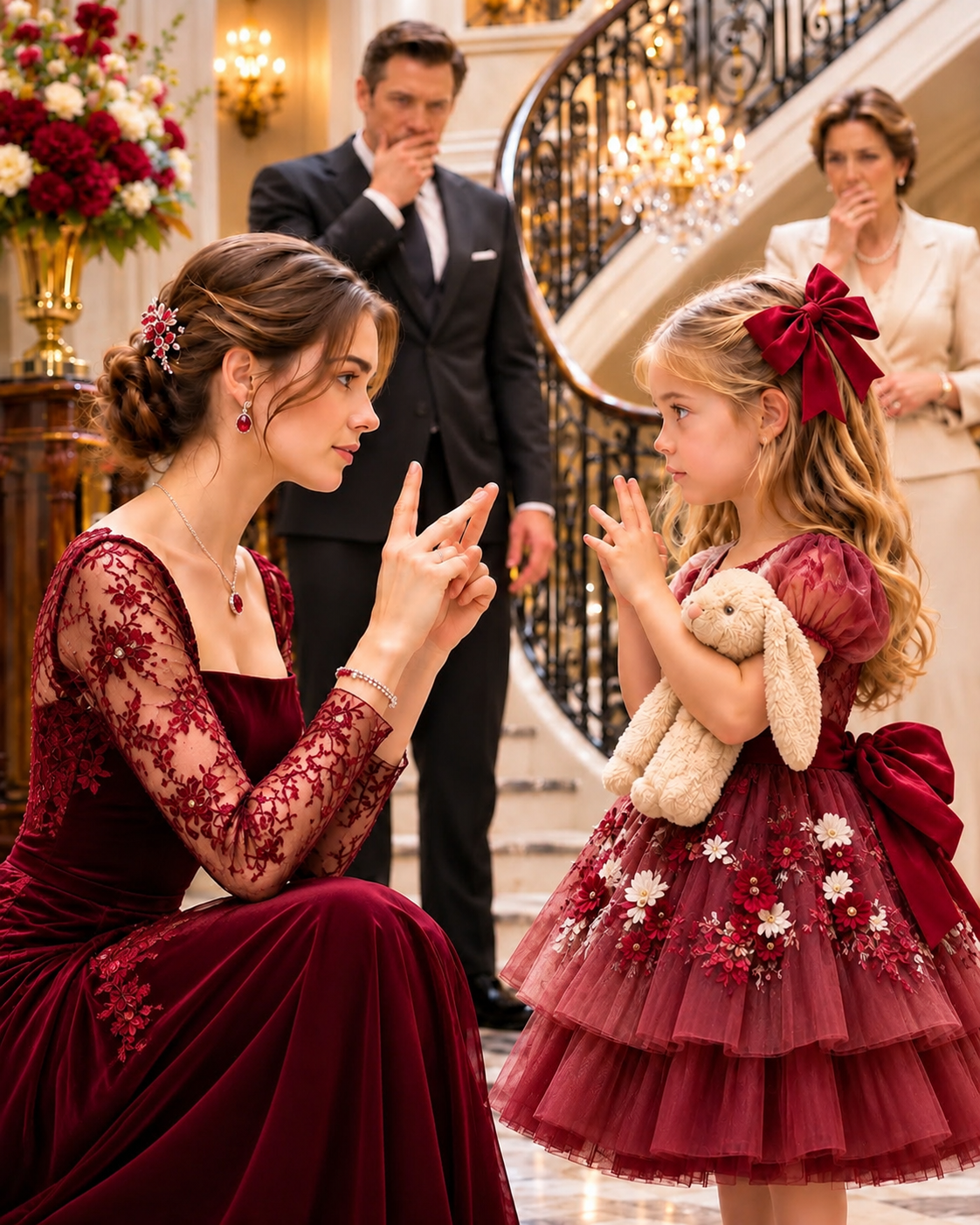
## END – The Things Silence Kept Safe
### Part 6
The house listens.
At first, none of us understood.
Then Daniel Mercer did.
Still connected by video, he leaned toward his camera.
“Marcus, your Chicago house has an integrated security system.”
“Yes.”
“Audio?”
“No. Cameras only.”
Daniel shook his head.
“That’s what you purchased. It doesn’t mean that’s what was installed.”
Marcus stared at the phone.
We returned to Chicago the next morning.
By noon, an independent cybersecurity team had isolated the mansion from the internet and begun examining its security system.
What they found was less dramatic than a hidden person standing behind walls.
It was also more believable.
And, in some ways, more disturbing.
Three years earlier, a subcontractor had installed microphones inside several security cameras as part of a premium monitoring package.
The microphones had supposedly been disabled.
They weren’t.
Audio from the foyer, main staircase, Marcus’s study entrance, library, and upstairs hallway had been stored on a private external server.
Someone had accessed that server repeatedly.
Stephen.
Later, Evelyn.
And one unidentified account.
Lily had not understood technology.
She only knew adults sometimes referred to the cameras as “watching.”
She had once overheard Clara say:
“This house listens to everything.”
After Clara died, Lily became convinced the cameras themselves were carrying secrets to whoever had frightened her mother.
Her fear had grown.
Nobody had asked the right question.
Every specialist asked why Lily wouldn’t speak.
Nobody asked whether Lily believed speaking was unsafe.
I thought about my father.
Silence doesn’t mean someone has nothing to say.
Sometimes silence means someone is waiting for a language that feels safe.
The cybersecurity team recovered old recordings.
Most were ordinary.
Breakfast conversations.
Staff instructions.
Marcus taking business calls.
Lily singing to herself before she stopped speaking.
That recording reduced Marcus to tears.
Then they found the night after Clara’s death.
The foyer microphone captured Stephen speaking to Evelyn.
His voice shook.
“She knew everything.”
Evelyn replied, “Then tell Marcus.”
“I can’t.”
“You have to.”
“If Marcus learns what his grandfather did, he’ll expose it.”
“Maybe he should.”
“You don’t understand. There are families, pensions, lawsuits—”
“Stephen.”
“She died believing I betrayed her.”
A long silence.
Then Evelyn:
“Did you?”
Stephen answered:
“Yes.”
Vivian listened without moving.
No affair.
No secret romance.
No hidden conspiracy between them.
Something sadder.
Stephen had betrayed Clara’s trust.
He had continued paying people who were exploiting the Ellery family’s fear of scandal.
He had forged records to hide the payments.
He had used Vivian’s credentials to protect himself.
He had altered an audio recording so Clara would distrust Vivian long enough for him to continue searching for a solution.
But he had not caused Clara’s death.
The final answer arrived three days later when police reviewed newly recovered exterior footage from an archived camera system at the lake house.
Clara had stepped onto the terrace alone after her argument with Evelyn.
The storm had worsened.
The damaged railing gave way.
There was no second person beside her.
No attack.
No hidden figure.
An accident.
Exactly as investigators had originally concluded.
And yet nearly everything surrounding that accident had been built from secrets.
Marcus sat beside me when the detective explained it.
Lily was upstairs with Vivian.
“So nobody killed her,” Marcus said.
“No,” the detective replied.
Marcus closed his eyes.
Relief and grief can exist inside the same breath.
I learned that watching him.
Evelyn confessed her role in maintaining the North Harbor payments.
The company’s attorneys and independent board handled the matter privately but properly.
There were investigations.
Restitution agreements.
Closed accounts.
Old records were reviewed.
Marcus refused to bury his grandfather’s misconduct simply to preserve the family name.
He also refused to turn the truth into spectacle.
“We correct what can be corrected,” he said. “We disclose what must be disclosed. And we stop pretending a reputation matters more than reality.”
Mrs. Calder—Eleanor—watched him say it.
Afterward she asked:
“Do you hate me?”
Marcus looked at his mother for a long time.
“No.”
She began crying.
“I’m not sure I forgive you either.”
She nodded.
“That is fair.”
“But I want to know you.”
Her eyes lifted.
“As my mother?”
“As whoever you actually are.”
That was better.
Vivian had her own difficult journey.
For fifteen years she had loved a man who, beneath his genuine affection for her, had made choices based on fear.
Stephen had convinced himself he was protecting the Ellery family.
Every lie had required another.
Every secret created another reason for silence.
Vivian removed her wedding ring for good one morning.
Not angrily.
She placed it inside a drawer with old photographs.
“I loved him,” she told me.
“I know.”
“He did terrible foolish things.”
“Yes.”
“Can both be true?”
“Yes.”
She nodded.
“I suppose growing up is discovering that most people cannot be reduced to the best or worst thing they ever did.”
Coming from the woman who had called me homeless because of my shoes, the statement almost made me smile.
Almost.
She noticed.
“You’re thinking about our first meeting.”
“I’m trying not to.”
“I was awful.”
“You were.”
Her eyebrows rose.
Most employees probably didn’t speak to Vivian Ellery that way.
I wasn’t most employees.
“I judged you because you were poor,” she said.
“Yes.”
“I’m sorry.”
I waited.
She looked uncomfortable.
It seemed important not to rescue her from that discomfort.
Finally, she added:
“I’ve spent my entire life assuming expensive things meant safe things. Expensive schools. Expensive doctors. Expensive lawyers.”
She looked toward the staircase where Lily sat practicing signs with Marcus.
“Then you walked in with glue on your shoes and listened better than all of us.”
I smiled faintly.
“My shoes were still terrible.”
“They were catastrophic.”
That time, we both laughed.
My mother received her treatment.
Not because Marcus wrote some dramatic charity check.
I refused that.
Instead, I accepted the position he offered me, along with health benefits and an advance that I repaid gradually through my salary.
Marcus argued.
I won.
Mostly because Lily took my side.
Within six weeks, my mother’s condition had stabilized.
When I brought Lily to visit her, my mother watched us sign for ten minutes before saying:
“So this is the little girl who saved us.”
I shook my head.
“No.”
Lily looked at me.
Then signed:
**Nora saved me.**
I translated.
My mother smiled.
“Sounds to me like you saved each other.”
Lily thought about this.
Then nodded.
That became our answer.
Months passed.
Winter softened into spring.
Lily began working with a licensed speech therapist who understood selective mutism and respected her signing rather than treating it as an obstacle.
Nobody forced her to speak.
That mattered.
Marcus learned sign language too.
Slowly.
Painfully.
Enthusiastically.
He mixed up “breakfast” and “stupid” so often that Lily nearly fell out of her chair laughing.
One evening in April, we sat in the mansion’s garden.
Tulips had begun opening along the stone path.
Marcus was reading documents.
I was helping Lily with a puzzle.
Vivian was arguing with Eleanor about rose bushes.
The mansion no longer felt silent.
Not because everyone was speaking.
Because everyone was finally communicating.
Then Lily touched my arm.
She signed:
**Can I tell Daddy something?**
“Of course.”
Marcus looked up.
Lily walked toward him.
He set the papers aside.
She stood between his knees.
For a moment, her hands rose.
Then stopped.
She looked frightened.
Marcus immediately signed:
**You can use your hands.**
Lily shook her head.
He waited.
Her lips parted.
Nothing came.
Marcus smiled.
“No hurry.”
Lily tried again.
A tiny sound escaped.
Marcus froze.
So did I.
Lily swallowed.
Then she whispered one word.
“Daddy.”
Marcus’s face crumpled.
He did not rush toward her.
He did not cheer.
He did not make her accomplishment into something she owed him.
He simply whispered:
“Hi, sweetheart.”
Lily threw her arms around him.
Marcus held her.
Vivian turned away, crying.
Eleanor pressed a hand to her heart.
I stared at the tulips because tears had blurred everything else.
Lily did not suddenly become talkative after that.
Some days she spoke.
Some days she signed.
Some days she did both.
Some days she wanted silence.
We let all of those choices belong to her.
The greatest mistake everyone had made was assuming speech was the destination.
It wasn’t.
Trust was.
Nearly a year after I first walked into the Ellery mansion, Marcus invited me into Clara’s old sunroom.
The hidden compartment beneath the piano bench was still there.
He had kept it.
Not because the house needed more secrets.
Because he liked remembering how Clara had turned hiding things into an art form.
“There’s something for you,” he said.
A small envelope rested on the piano.
I frowned.
“What is this?”
“Open it.”
Inside was an acceptance letter from Northwestern University.
I stared at him.
Then at the letter.
“I didn’t apply.”
“Technically, you did.”
“Marcus.”
“Your application required some logistical assistance.”
I glared.
He held up both hands.
“Vivian did most of it.”
“Vivian!”
From the hall came her voice.
“You’re welcome.”
I looked again.
A part-time program in communication sciences.
Tuition covered through an employee education benefit Marcus had recently established for every full-time member of his household staff and several divisions of the company.
Not just me.
That mattered too.
“You created a company program?”
He shrugged.
“You complained that accepting something only for yourself would make you feel like a charity case.”
“I did not complain.”
“You gave a twelve-minute speech.”
“It was nine.”
He smiled.
I looked at the letter.
My father had died before I finished high school.
After that, life became bills.
Work.
My mother’s health.
Survival.
College became something that happened to people in other families.
“You think I can do this?”
Marcus’s expression became serious.
“No.”
I looked up.
“I know you can.”
I laughed through tears.
Then Lily ran into the room carrying Oliver.
She looked at the letter.
“School?”
Her voice was still soft.
“Yes.”
“For you?”
“Yes.”
She smiled.
Then signed:
**You can learn to listen professionally.**
I laughed harder.
“Apparently.”
Marcus watched us.
For a moment, something passed between him and me.
Not romance.
Not yet.
Maybe never.
Something quieter.
Respect.
Gratitude.
The knowledge that two strangers had met during the worst seasons of their lives and somehow helped each other find doors neither had known existed.
That was enough.
Two years later, the Ellery mansion looked mostly the same from the street.
Same gates.
Same stone walls.
Same immaculate windows.
Inside, almost everything had changed.
Eleanor no longer lived anonymously as Mrs. Calder.
She kept the surname because she said starting over at sixty-four was exhausting enough without changing monogrammed towels.
Vivian joined the board committee responsible for corporate ethics and transparency.
She became very good at making executives uncomfortable.
Daniel remained CFO after the investigation cleared him.
Evelyn left Chicago.
Before going, she wrote Lily a letter.
Not an excuse.
An apology.
Lily read it and placed it in Clara’s blue box.
She did not answer.
That was her choice.
North Harbor became a legitimate charitable logistics program, moving medical supplies to communities around the Great Lakes.
Marcus insisted on the name.
“Clara found the truth there,” he said. “Maybe something good should come from it.”
And me?
I finished my degree.
Slowly.
I still worked with Lily.
I also began volunteering twice a week with deaf and hard-of-hearing children, the way Clara once had years before.
One afternoon, while sorting through old belongings, Eleanor found a photograph of my father at a community center.
I nearly dropped it.
“You knew him?”
She studied the picture.
“No.”
But on the back was Clara’s handwriting.
**Thomas Bellamy — volunteer instructor. Brilliant hands. Kinder heart.**
I sat down.
My father.
Clara.
Long before I knew Marcus.
Long before Lily.
Their lives had crossed.
Only briefly.
Eleanor found an old program beside the photograph.
Fifteen years earlier, Clara had attended a community sign-language course.
The instructor was my father.
That was where she had first learned.
That was how she later taught Lily.
I stared at the photograph for a long time.
My father had once given Clara a language.
Clara had given it to Lily.
Lily had used it to reach me.
And somehow, years after my father’s death, his hands had reached across time and helped save my mother too.
That evening, I visited his grave.
I brought no flowers.
He had hated flowers.
“Waste of perfectly good gardening money,” he used to say.
I sat in the grass.
For a while I said nothing.
Then I raised my hands.
**You were right.**
The wind moved through the trees.
**Silence never meant there was nothing to say.**
My throat tightened.
**Sometimes people just need somebody willing to listen differently.**
A week later, Lily joined me.
She stood beside the grave holding Oliver.
“Was he nice?” she asked.
“The nicest.”
She looked at the headstone.
Then signed:
**Thank you for teaching Nora.**
I looked away.
Lily took my hand.
We stayed until sunset painted the sky gold.
On the drive home, she talked about school, strawberries, rabbits, and whether clouds ever became tired.
She also signed when she wanted.
There was no longer a wall between silence and sound.
Only choices.
At the mansion, Marcus waited on the front steps.
His tie was loosened.
Two buttons of his shirt were undone.
He looked less like a billionaire than the exhausted father I had met on my first morning there.
Lily ran toward him.
“Daddy!”
He caught her.
I climbed the steps more slowly.
Marcus smiled at me.
“Good day?”
“Very.”
Lily whispered something in his ear.
He looked at me.
“What?”
I asked.
He signed clumsily.
**She says you belong here.**
I looked at Lily.
She nodded solemnly.
The mansion had once represented everything I thought I lacked.
Money.
Security.
Power.
Opportunity.
I understood now that those things did not prevent fear.
They did not prevent grief.
And they certainly did not guarantee that anyone inside a beautiful house knew how to hear one another.
Belonging came from something else.
It came from being known without being reduced.
From being listened to without being corrected.
From being allowed to speak in whatever language your heart could manage.
I reached for Lily’s hand.
She took it.
Together, the three of us walked inside.
Above the staircase, the old security camera had been removed.
In its place hung one of Clara’s photographs.
Three hands.
An adult’s.
A child’s.
Another adult’s.
All forming the same sign.
**Listen.**
Beneath it, Marcus had added a small brass plaque.
It contained seven words.
Words my father had spoken to me long before any of us knew how far they would travel.
**Silence doesn’t mean there is nothing to say.**
And whenever Lily walked beneath that photograph, she always looked up.
Sometimes she spoke.
Sometimes she signed.
Sometimes she simply smiled.
Every time, someone listened.
**–THE END–PLEASE
**Share your thoughts or feedback to motivate us to create more stories ♥️**
✓ Lynn R. Adams
## END – The Things Silence Kept Safe ### Part 6 The house listens. At first, none of us understood. Then Daniel Mercer did. Still connected by video, he leaned toward his camera. “Marcus, your …