PART 6: The Forgotten Melody That Led Charles Moretti Back to the Family He Never Knew He Had_063
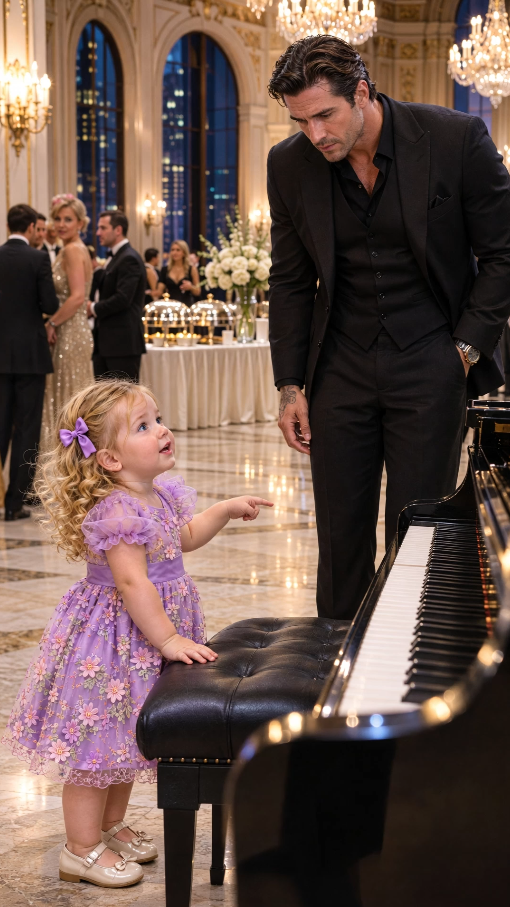
### END – The Morning They Chose Each Other
The man waiting downstairs was eighty-one years old.
His name was Dr. Nathan Feld.
He walked with a cane and wore a brown coat that seemed several decades older than Claire.
Charles expected another secret.
Another betrayal.
Another explanation that would rearrange everything he believed.
Instead, Dr. Feld offered something much simpler.
“A mistake,” he said.
They sat in what had once been the conservatory director’s office.
Evelyn remained beside Charles.
“You issued the certificate?” Charles asked.
“I approved the paperwork.”
“How could you declare someone dead who wasn’t dead?”
Dr. Feld’s expression carried seven years of regret.
“There were multiple casualties. Identification was difficult. Your fiancée’s bag and coat were recovered near one of the victims.”
Evelyn nodded slowly.
“I gave my coat to another passenger.”
Dr. Feld looked at her.
“That was eventually discovered.”
“When?”
“Three months later.”
Charles leaned forward.
“And no one contacted me?”
“They tried.”
“Who?”
“The county office. Then an investigator.”
“My mother’s investigator.”
“Most likely.”
Pieces settled into place.
No conspiracy.
No elaborate scheme.
No person sitting in a dark room deciding Charles and Evelyn should lose seven years.
Just bureaucracy.
Grief.
Bad timing.
A coat handed to a cold stranger.
A phone number no longer in service.
Instructions Charles himself had given to block people claiming Evelyn was alive.
Fear.
Silence.
Human beings making reasonable decisions with incomplete information.
Somehow that was harder to accept.
There was no villain to blame.
No enemy to defeat.
Only time.
Dr. Feld removed his glasses.
“I saw an article yesterday about the Bellmont Conservatory being reopened.”
Charles frowned.
“It isn’t being reopened.”
“The newspaper apparently misunderstood.”
Claire cleared her throat.
“I may have told one reporter we were cleaning it.”
Charles gave her a look.
She shrugged.
Dr. Feld continued.
“The article mentioned Evelyn.”
He looked at her.
“I recognized the name.”
His eyes lowered.
“I have thought about that paperwork for years.”
Evelyn reached across the desk.
“You didn’t know.”
“That has never made me feel much better.”
“It should.”
Dr. Feld looked at her.
Evelyn smiled gently.
“You made a mistake in terrible circumstances. So did all of us.”
Charles looked at her.
She was right.
The truth was almost disappointingly ordinary.
And perhaps that made it important.
Their lives had not been stolen by some grand scheme.
They had been separated by dozens of small moments when one person could have tried once more.
Charles could have answered one strange call.
Evelyn could have entered his office one more time.
Rose could have broken her promise.
A clerk could have rechecked an address.
A letter could have been forwarded.
No single choice had destroyed everything.
But together, they had created seven years.
Charles thanked Dr. Feld.
When the old man left, Charles remained seated.
Evelyn touched his arm.
“Disappointed?”
He looked at her.
“That there’s no one to blame?”
She nodded.
“A little.”
“I know.”
“I’m good at having opponents.”
“I remember.”
Charles leaned back.
“What do people do when there isn’t one?”
“Move forward.”
“That sounds suspiciously healthy.”
“Terrible, isn’t it?”
He smiled.
“Yes.”
Three months later, the Bellmont Conservatory reopened.
Not as condominiums.
Charles bought the building, which surprised absolutely no one.
Evelyn initially accused him of being incapable of learning restraint.
“I did not buy your apartment building,” he reminded her.
“You bought an entire conservatory.”
“For philanthropic purposes.”
“You heard Mia play one song and bought the building.”
“I prefer the first explanation.”
But Charles did not name the conservatory after himself.
He created the Rose Moretti Music Foundation, using the trust his mother had established as its symbolic first donation.
Its purpose was simple.
Children who wanted to learn music should be able to.
No auditions based on wealth.
No expensive uniforms.
No requirement to arrive wearing shoes, as Mia proudly informed the first class.
“Although shoes are encouraged,” Evelyn added quickly.
Charles stood near the entrance watching mother and daughter argue about footwear.
His life had changed in ways no newspaper could properly describe.
Mia still lived with Evelyn.
Charles did not contest that.
He rented an apartment four blocks away instead of insisting they move.
The decision caused a minor earthquake among his executives.
“Why are you renting?” his attorney asked.
“Because it’s four blocks from my daughter.”
“You own eleven residential buildings in Manhattan.”
“None of them are four blocks from my daughter.”
His attorney had no response.
Charles discovered school pickup.
He discovered that seven-year-olds could spend twenty minutes explaining something called a glitter emergency.
He discovered that a child could ask seventeen questions during a four-block walk.
He learned Mia hated peas.
Loved astronomy.
Was frightened by thunderstorms but refused to admit it.
Could read music better than most adults.
And believed every elevator ride improved if everyone jumped slightly when it stopped.
Charles refused that one.
For approximately two weeks.
Then Mia caught him doing it alone.
She told Evelyn immediately.
Evelyn recovered.
Proper rest and treatment corrected the anemia.
She returned to teaching piano three days a week.
Charles offered her a position at the foundation.
She rejected the salary he proposed.
“That number is ridiculous.”
“It is competitive.”
“With what? Conducting the New York Philharmonic?”
“I value talent.”
“You value showing off.”
Eventually they negotiated.
Charles hated negotiating with Evelyn because she knew exactly when he was bluffing.
She became director of community music programs.
The office she chose was the smallest one in the building.
Charles complained.
Evelyn ignored him.
Some traditions survived.
Their relationship progressed more slowly.
There was no magical return to seven years earlier.
They argued.
They misunderstood each other.
Sometimes Charles tried to solve problems Evelyn wanted simply to discuss.
Sometimes Evelyn assumed Charles’s silence meant disapproval when it meant he was carefully choosing words.
They learned.
They apologized.
They tried again.
One evening in early spring, Charles found Evelyn alone in the main rehearsal hall.
She was sitting on the edge of the stage.
He joined her.
“Mia asleep?”
“At Rosa’s.”
Charles nodded.
Rosa had become utterly unimpressed by him.
It was refreshing.
They sat together in comfortable silence.
Eventually Evelyn said, “Do you ever think about what would have happened?”
“If you hadn’t disappeared?”
“If the accident hadn’t happened.”
Charles considered.
“All the time.”
“You think we’d have been happy?”
“No.”
She turned toward him.
He smiled.
“Not every day.”
“Good answer.”
“I think we would have had terrible arguments.”
“Definitely.”
“You would have told me I worked too much.”
“You still work too much.”
“I would have complained that your sheet music was everywhere.”
“It is everywhere.”
“You would have forced me to attend recitals.”
“You love recitals.”
“I love leaving recitals.”
Evelyn laughed.
Charles looked at her.
“But yes.”
Her laughter faded.
“Yes?”
“I think we would have been happy.”
He paused.
“Not because things would have been perfect.”
“Why then?”
“Because I liked who I was when I was with you.”
Evelyn looked down.
“And now?”
Charles thought carefully.
“I’m starting to like who I am without needing you to make it happen.”
Evelyn’s eyes lifted.
“That may be the nicest thing you’ve ever said.”
“It wasn’t particularly romantic.”
“It was extremely romantic.”
“I’ll make a note.”
She bumped her shoulder against his.
Charles looked at her.
“Evelyn?”
“Yes?”
“I don’t want what we had.”
She became still.
He continued before she could misunderstand.
“I want whatever comes after it.”
Her expression softened.
“That’s frightening.”
“Yes.”
“No guarantees.”
“No.”
“No pretending seven years didn’t happen.”
“Never.”
“No buying me buildings.”
Charles frowned.
“That seems unnecessarily specific.”
“Charles.”
“Fine.”
Evelyn smiled.
“Then maybe we can see what comes after.”
Their hands rested beside each other on the stage.
Charles turned his palm upward.
Evelyn placed her hand in his.
Nothing dramatic happened.
No orchestra.
No applause.
No declarations witnessed by half of Manhattan.
Just two people holding hands in an empty conservatory.
It was enough.
On Mia’s eighth birthday, she performed “Home” publicly for the first time.
The foundation hall was full.
Children.
Parents.
Teachers.
Rosa sat in the front row wearing an enormous purple hat.
Claire sat beside her.
Dr. Feld had received an invitation and traveled from Maine.
Charles stood backstage adjusting Mia’s sleeve.
“Stop moving.”
“You’re making it worse.”
“I know how sleeves work.”
“No, you don’t.”
“I own suits.”
“That’s different.”
“How?”
“Someone else fixes them.”
Charles stared.
Mia grinned.
Evelyn appeared.
“She has you there.”
“This family is becoming hostile.”
Mia hugged him.
“You like it.”
Charles looked down at her.
“Yes.”
He did.
He loved it.
The word no longer frightened him.
He loved this child with an intensity entirely different from the controlled attachments of his previous life.
Love, he had discovered, did not feel like ownership.
It felt like paying attention.
Remembering that Wednesday was library day.
Knowing which cup Mia preferred.
Listening to an explanation about constellations despite understanding only half of it.
Learning when to intervene.
Learning when not to.
Showing up.
Every morning.
Like Rose had said.
Mia walked toward the stage.
Then stopped.
“Dad?”
Charles froze.
She had called him Charles sometimes.
Mr. Grumpy frequently.
Dad only twice.
“Yes?”
“Play with me.”
He looked toward the piano.
“This is your recital.”
“It’s our song.”
Evelyn watched quietly.
Charles approached Mia.
“I thought you wanted to do it alone.”
“I changed my mind.”
Charles smiled.
“Women in this family do that frequently.”
Evelyn raised an eyebrow.
“Would you like to reconsider that sentence?”
“Yes.”
Mia laughed.
Then took Charles’s hand.
Together they walked onto the stage.
Applause filled the hall.
Charles barely heard it.
He sat beside Mia.
Evelyn joined them on the other side.
Mia placed her hands on the keys.
“Ready?”
Charles looked at Evelyn.
She looked at him.
“Ready.”
Mia played the first note.
C-sharp.
The same note that had once stopped Charles’s heart inside a glittering Manhattan ballroom.
But it sounded different now.
Not because the note had changed.
Because he had.
The melody unfolded.
The beginning belonged to Charles and Evelyn.
Young.
Hopeful.
Certain.
The middle belonged to the years between them.
Unresolved.
Quiet.
Searching.
Then came Mia’s four notes.
Home.
The final chord lingered through the hall.
For one perfect second no one moved.
Then the audience rose.
Mia beamed.
Charles looked toward Evelyn.
She was crying.
He whispered, “Was I bad?”
Evelyn laughed through her tears.
“No.”
It was exactly what he had told Mia the first night they met.
Mia heard.
“So do I get chicken now?”
Charles stared at her.
The audience laughed.
“You planned that.”
“Maybe.”
Charles shook his head.
“Absolutely.”
That evening, after the guests left, the three of them remained in the conservatory.
Mia sat on the stage opening gifts.
Charles stood near the piano.
Evelyn approached.
“I have something for you.”
He looked suspicious.
“You already gave me something.”
“That was from Mia.”
She handed him a small box.
Inside was the faded photograph Mia had carried into the ballroom months earlier.
It had been restored.
Young Charles sat beside young Evelyn at the piano.
Two people smiling at a future they could not see.
Behind the photograph was another picture.
Taken that afternoon.
Charles.
Evelyn.
Mia.
At the same piano.
Same angle.
Same window.
Charles stared at the two photographs.
Then turned them over.
On the older photograph, Evelyn had written:
_Before._
On the new one:
_After._
Charles looked at her.
“After what?”
Evelyn smiled.
“Everything.”
He laughed softly.
Then kissed her forehead.
Mia appeared between them.
“What are you doing?”
“Nothing.”
“Were you kissing?”
“No,” Charles said.
“Yes,” Evelyn said simultaneously.
Mia groaned.
“Adults.”
Charles put an arm around her.
“Someday you’ll understand.”
“No thank you.”
“Excellent answer.”
They walked toward the entrance.
Charles switched off the lights one row at a time.
At the door, Mia stopped.
“I forgot something.”
She ran back to the piano.
Charles and Evelyn waited.
Mia pressed four keys.
The ending of “Home.”
Then she hurried back.
“Okay.”
They stepped outside.
Spring rain had begun falling gently over Manhattan.
Charles opened an umbrella.
Mia immediately walked outside it.
“You’re getting wet.”
“I know.”
“Then get under the umbrella.”
“I like the rain.”
“You’re going to catch a cold.”
“That isn’t how colds work,” Evelyn said.
Charles looked at her.
“Please don’t undermine me.”
“Scientific accuracy isn’t undermining you.”
Mia spun beneath the rain.
Charles watched her.
Once, unpredictability had terrified him.
Now it was running three steps ahead in red shoes.
He folded the umbrella.
Evelyn looked at him.
“What are you doing?”
Charles stepped into the rain.
Mia stared.
“You’re getting wet.”
“I know.”
“You hate rain.”
“I changed my mind.”
Mia grinned.
Then she grabbed his hand.
Evelyn joined them.
They walked toward home.
Not Charles’s home.
Not Evelyn’s.
Not even somewhere permanent yet.
Just the apartment four blocks away where they had agreed to eat birthday cake and decide what tomorrow should look like.
And perhaps that was what home had always meant.
Not a building.
Not a name.
Not a past that could somehow be recovered.
A place where nobody had to disappear when things became difficult.
A place where questions could remain unanswered for a while.
Where love was not measured by grand gestures but by breakfasts, school pickups, badly shaped pancakes, repaired conversations, and the stubborn decision to keep showing up.
Charles looked down at Mia.
She was humming.
Four notes.
The ending she had given their unfinished song.
Evelyn heard it too.
Their eyes met.
Charles finally understood what his mother had known years earlier.
Families were not completed by discovering the truth.
Truth merely opened the door.
Everything afterward was a choice.
Mia squeezed his hand.
“Dad?”
“Yes?”
“Tomorrow can we have pancakes?”
Charles smiled.
“Absolutely.”
“Round ones?”
He considered.
“No promises.”
Her laughter rose into the rainy Manhattan evening.
And this time, when the melody ended, nothing in Charles Moretti’s heart felt unfinished.
#### Share your thoughts or feedback to motivate us to create more stories ♥️
**–THE END–PLEASE
✓ Lynn R. Adams
### END – The Morning They Chose Each Other The man waiting downstairs was eighty-one years old. His name was Dr. Nathan Feld. He walked with a cane and wore a brown coat that seemed several decade…