PART 6 (THE END): The Tune Beneath the Noise 046
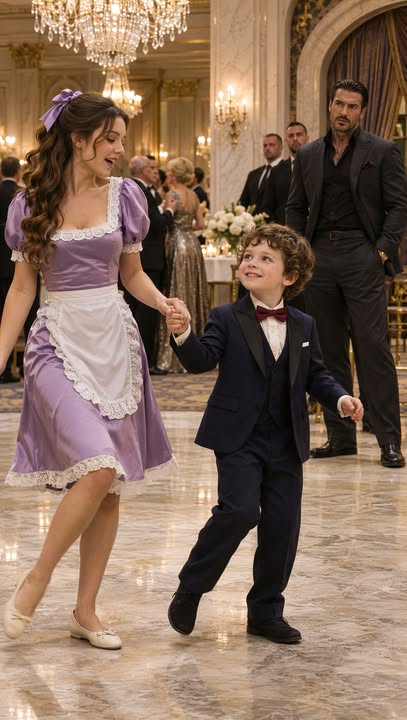
Part 6 – The Tune We Keep
Leo held the folded card toward me, and for a moment I could not make my hand move.
The writing had faded, but the words were clear enough.
For Mara, when she is old enough to understand.
My mother asked me to keep the tune, but Eli gave it back to her.
I read the sentence again, and the room around me seemed to draw gently away.
“Who wrote this?” I whispered.
Adrian looked at the handwriting, then at the card’s worn edges.
“I don’t know,” he said. “It wasn’t Clara’s.”
Mrs. Bell had joined us, her eyes bright with recognition.
“Your mother must have written it,” she said. “Clara kept it with the charm.”
I looked at the words again.
“My mother asked me to keep the tune,” I read aloud. “But Eli gave it back to her.”
Leo studied my face, holding the card with both hands.
“Eli?” he asked.
“My brother,” I said, my voice catching. “Yes. Eli.”
The note did not explain every detail, but it gave the mystery its missing shape.
The tune had been my mother’s first, a melody she had carried from her own childhood and hummed to Eli when he needed comfort.
Eli had taken it and changed it, making it his own quiet rhythm.
Clara had heard it at the community center, where she sat beside him and followed his lead.
Then she had carried it forward, keeping the tune for years before giving it to her son.
A song had passed from one person to another, not as a possession, but as a kindness each had chosen to hold.
I thought I had been searching for the person who taught Eli the melody.
Instead, I had found the way he had given it back.
I pressed the card gently between my fingers.
“Did you know about this?” Adrian asked Mrs. Bell.
“No,” she said. “I knew Clara treasured the charm. I didn’t know she had kept the card.”
Leo reached toward it.
I lowered my hand so he could see the words without taking the paper from me.
“Your mommy kept the tune,” I told him. “Eli made it his, and then she kept it for you.”
Leo touched the silver music box at his collar.
“Mine.”
“Yes,” I said. “It’s yours.”
He looked at the photograph of Clara, then at Adrian.
“Daddy song?”
Adrian’s mouth curved, though his eyes were shining.
“I know the song,” he said. “I’ve heard your mother sing it.”
Leo held his hand out toward him.
Adrian took it, letting Leo decide how long to keep their fingers linked.
The gallery had gone quiet, but no one had gathered around us.
The guests remained where they were, giving the moment space rather than turning it into a display.
The foundation coordinator stood near the entrance, speaking softly with one of the families.
Mr. Rusk watched the open doorway from a respectful distance.
The room seemed to understand that something important had happened, though no one needed to know what.
I looked at the card again.
The sentence for Mara, when she is old enough to understand had been written by my mother, but kept by Clara.
Perhaps Clara had meant to send it one day.
Perhaps the years had passed, and life had carried her somewhere else.
The paper had waited in the pouch with the charm, hidden but not lost.
“I should call my mother,” I said.
“Would you like some privacy?” Adrian asked.
“Yes, please.”
He gestured toward the open quiet room without directing me into it.
I stepped inside and left the door open.
My mother answered on the second ring.
“I found the card,” I said.
“Oh,” she breathed.
“You wrote it?”
“I did.”
“Why did Clara have it?”
My mother took a moment before replying.
“After Eli met her at the center, she sent a note home with him. She said he had made the tune with her. I wrote back to thank her, and I sent that card along with the little music box he had been admiring.”
I sat on the edge of a cushioned chair.
“The silver music box was yours?”
“It belonged to my aunt. It had stopped working years before, but Eli loved the shape of it. Clara said he held it while they tapped out the tune.”
I remembered the notes in the old notebook and my brother’s care in lining up his pencils.
“Why did you write, ‘Eli gave it back to her’?”
“Because I had sung that tune to him when he was small,” she said. “He used to hum it back to me, but he changed the rhythm. When he met Clara, she followed him. She told me he taught her the quiet part.”
My eyes stung.
“So it was yours first.”
“It was something I learned as a child, too. I can’t say where it began.”
She gave a small, tender laugh.
“Perhaps it has belonged to many people.”
I looked through the doorway.
Leo was standing beside Adrian, touching the charm while his father waited.
“I wish Eli had told me,” I said.
“He may have thought he did, in the ways he knew how.”
The answer settled softly inside me.
I had spent so long wondering which words I had missed, which questions I had forgotten to ask, which moments I should have understood better.
But Eli had left more than words.
He had left rhythms, drawings, small notes, the patient care he showed when someone needed time.
And now I knew that one of those quiet gifts had traveled much farther than I could have imagined.
“Thank you for telling me,” I said.
“Thank you for looking,” my mother replied.
When I returned to the gallery, Adrian was standing near the photograph of Clara.
Leo sat beside him on a low bench, holding the charm in his palm.
The card rested in my hand.
“Your mother remembered,” I told Adrian. “The tune started with her family, then Eli changed it. Clara followed his rhythm at the center, and my mother wrote the card afterward.”
Adrian listened without interrupting.
“She said Clara kept the music box because Eli liked it,” I continued. “And she kept the tune because it helped him find the quiet part.”
He looked at the silver charm.
“Clara never told me that.”
“Maybe she wanted to keep the story small.”
“Or maybe she thought it belonged to the boy and his family.”
“Both could be true.”
Adrian glanced up at the photograph of his wife.
For a moment, the public event and all the people in it seemed to disappear from his attention.
“She always said that small things could hold a whole life,” he said.
“Maybe this one held several.”
He looked at me then, and I saw the grief in him without the old armor around it.
Not gone.
Not made easy.
But no longer sealed away from the present.
Leo reached for my hand.
I offered it palm up, letting him choose whether to take it.
He rested his fingers in mine, then leaned his shoulder against Adrian’s arm.
For a few seconds, the three of us stood linked by nothing more dramatic than a small hand, a worn charm, and a tune passed between families.
A guest approached the coordinator, not us, and asked about the quiet room.
The coordinator showed her the open doorway.
The event went on.
That was how it should have been.
Leo did not owe the room an explanation for being there, and none of us had to make the moment larger than he wanted.
After a while, he looked toward the entrance.
“Home?”
Adrian bent slightly to meet his eyes.
“Would you like to go home now?”
Leo nodded.
“All right.”
There was no disappointment in Adrian’s face, no request to stay for one more introduction or one last photograph.
He simply gathered Leo’s coat.
Before they left, Adrian turned to me.
“Would you like to come with us?”
The question carried no assumption that I would say yes.
I looked at the card, then at the framed picture of Clara.
“I’ll walk with you to the entrance,” I said. “Then I need to go back to my own place.”
“Of course.”
He thanked the coordinator and Mr. Rusk, then took Leo’s hand.
I followed at a comfortable distance.
The clear path led directly to the door.
No one stepped in front of them.
No one called out to Leo or asked him to stop.
At the entrance, he turned back toward the gallery.
The framed photograph caught the afternoon light.
“Mommy,” he said.
“Yes,” Adrian replied. “She’s here.”
Leo touched the charm.
“Song.”
“Would you like to sing it?” I asked.
He nodded.
I began with the first three notes.
Leo tapped once against his father’s hand, then once again.
Adrian listened for the next beat.
When Leo paused, Adrian did not hurry to fill the silence.
He waited until Leo touched the charm again, and then he hummed the note that followed.
It was a little rough and lower than either of our voices, but Leo turned toward him with a pleased expression.
Adrian smiled.
“I think I missed that note for years,” he said.
“You didn’t know where it belonged,” I replied.
“I should have asked.”
“Now you know.”
Leo placed one small foot to the side.
I shifted with him.
Adrian watched, then moved one foot in the same direction.
Leo made the movement again, slower this time, checking whether his father had followed.
Adrian did.
No one clapped.
No one asked them to do it again.
There was no music playing in the gallery, only the faint murmur of the event behind us and the soft city noise beyond the doors.
Leo lifted his hand a little, still holding mine.
“One, two, three,” I sang.
Adrian joined on the final note.
Leo stepped sideways.
I stepped with him, and Adrian followed, careful to let the movement belong to Leo.
The little dance lasted only a few seconds.
Then Leo chose to stop.
We stopped with him.
He leaned against his father and rested his cheek against Adrian’s sleeve.
Adrian placed one hand lightly over his back, and the other remained open at his side.
I looked at Leo’s charm and thought of Eli at the kitchen table, humming while the colored pencils waited in their careful rows.
I thought of my mother singing the tune long before either boy was born.
I thought of Clara sitting beside Eli, quiet enough to hear him.
And I thought of all the people who had been changed by the simple choice to wait.
The foundation did not turn that afternoon into a story about one child overcoming anything.
It began with practical work.
In the months that followed, the staff consulted families about quieter rooms, flexible schedules, clear exits, and ways to take part without being asked to perform.
They added places to rest at foundation gatherings and made sure families knew they could come and go without explanation.
The work was not grand enough to solve every difficulty.
It was meaningful because it made room.
Adrian kept his promise to ask Leo what he wanted.
Sometimes Leo chose to attend an event.
Sometimes he chose to stay home.
On one occasion, he came only to the gallery’s quiet room and left before the speeches began.
Adrian never described that as a failure.
He described it as Leo’s choice.
Mr. Rusk adjusted the security plans so that protection did not mean closing doors around them.
He made sure the exits stayed clear and that the staff knew when to give a family privacy.
The first time he asked Leo whether he wanted someone to walk beside him or remain nearby, Leo chose to walk with Mrs. Bell.
Mr. Rusk accepted the answer without adding another question.
Mara kept her shifts at the hotel and the café.
She accepted paid work with the foundation when it fit her schedule, but she never became responsible for Leo’s care.
Adrian made sure their agreement stayed in writing, and when she said she could not attend, he thanked her and found another plan.
Their friendship grew in the spaces between those choices.
There were afternoons when Mara stopped by after work and joined Leo on the floor while he arranged blocks.
There were other days when she sat in the kitchen with Adrian and Mrs. Bell, talking about the foundation, Clara, or the ordinary things that had no place in a ballroom story.
Adrian learned not to treat each quiet moment as something he needed to preserve forever.
He let life change around him.
Clara’s photograph stayed in the gallery, but copies of the small card were kept privately by the families.
Mara placed one beside Eli’s notebook at home.
She did not read it every day.
She did not need to.
The tune had become part of the ordinary sound of their lives.
Months later, on a mild evening, the three of them met at the community garden beside the foundation’s arts center.
The garden had a narrow path bordered by herbs and flowers, with benches spaced apart beneath a row of young trees.
Leo chose the bench nearest the gate.
Adrian brought a thermos of tea.
Mara carried a paper bag of pastries from the bakery where she sometimes worked.
They sat without needing to fill every pause.
Leo held the silver charm in one hand.
The music box had grown more worn, and Adrian had asked a jeweler to secure its little hinge without polishing away the scratches.
“I like how it looks,” Leo had said when his father asked.
So the scratches stayed.
A breeze moved through the garden, lifting the leaves and carrying the smell of mint from the beds beside the path.
Leo pressed the charm.
The tune sounded softly.
Mara hummed the first notes.
Adrian joined her.
They waited together when Leo paused.
He tapped his fingers against the bench.
One tap.
Then another.
Then a third, spaced just far enough apart to leave the silence between them.
Mara tapped the same rhythm against her knee.
Adrian followed a moment later.
Leo looked from one to the other, then held out his hand.
Mara took it.
Adrian offered his other hand, palm up, and waited.
Leo placed his fingers in it.
No one pulled.
No one hurried.
The small dance began with a shift of weight, a sideways step, and a pause in which Leo could decide whether to continue.
He stepped again.
Mara moved with him.
Adrian followed, slower than either of them but smiling as he found the rhythm.
The tune held their three different voices without asking any of them to become the same.
When Leo stopped, they stopped.
He rested his head briefly against Adrian’s arm, then looked up at Mara.
“Again?” he asked.
Mara smiled.
“Whenever you’re ready.”
Leo pressed the charm.
The first notes returned, soft as a memory and steady as a hand held open.
This time, Adrian knew where the quiet part belonged.
**–THE END–PLEASE
Share your thoughts or feedback to motivate us to create more stories ♥️
* * *
[PREVIOUS: PART 5](https://echoesofstories.idolsgift.com/blog/part-5-the-tune-beneath-the-noise-046-8)
✓ Lynn R. Adams
Part 6 – The Tune We Keep Leo held the folded card toward me, and for a moment I could not make my hand move. The writing had faded, but the words were clear enough. For Mara, when she is old enoug…