PART 6 (THE END): The Truth He Couldn’t Outrun 056
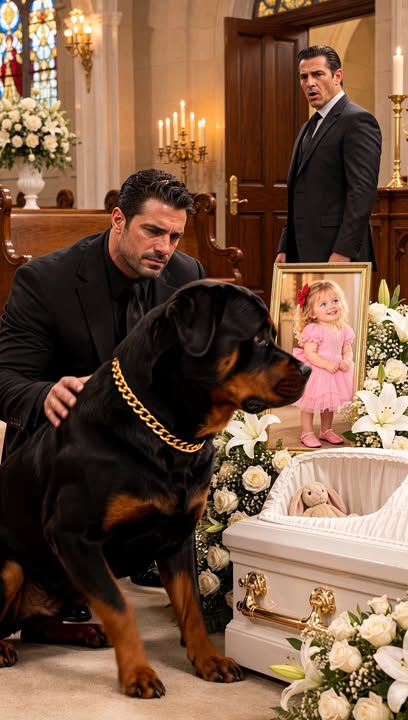
Part 6 – A Leash for the Road Ahead
“We’ve finished reviewing the note Marco wrote,” the detective said. “There’s something in it we need to discuss with you.”
“What is it?”
She was quiet for a beat.
“Marco’s first account of the collision was incomplete in another way,” she said. “He wasn’t the only person who stopped after Elena was hit.”
I held the phone more tightly.
“Who else stopped?”
“The shopkeeper, Peter, heard a second vehicle brake and saw its driver pull over. He couldn’t identify the person at first. We’ve now spoken with a woman who came forward after hearing that we were asking for witnesses.”
I waited, conscious of the empty shelves in the study and the boxes already in police custody.
“She was driving behind Marco,” the detective continued. “She stopped when she saw what had happened, called emergency services, and stayed until help arrived. She didn’t see the impact itself, but she saw Marco’s car leave.”
For several seconds I couldn’t speak.
“Did she see Elena?”
“Yes. She tried to help, but the dispatcher told her to keep the child still and stay on the line. She did what she could until paramedics arrived.”
The woman had not been a second driver involved in the collision. She had been a witness, a stranger who had seen someone in need and stopped.
The second set of brakes, the sound that had troubled Luis and complicated Marco’s account, had belonged to her.
“Why didn’t she come forward sooner?” I asked.
“She did speak to an officer that night, but her statement was incomplete. She was in shock and didn’t know she might have seen the first car clearly enough to help. When she heard we were looking for anyone who had stopped, she contacted us again.”
“Can she identify Marco’s car?”
“She remembered the model and part of the plate. It matches. She also saw a man get out briefly before driving away.”
I closed my eyes.
Marco had stopped, taken Elena’s drawing, and left her behind.
A stranger had stopped too, with no reason to believe she could change anything except that someone needed her.
“Thank you for telling me,” I said.
“We’re arranging for her to give a fuller statement. Her account supports the timeline, but it doesn’t change the charge against Mr. Ricci.”
“I understand.”
After the call ended, I remained in the study, listening to the quiet house.
Tony came to the doorway.
“Was it another car?”
“Another person who stopped. A woman behind Marco. She called for help and stayed with Elena until the paramedics came.”
Tony’s expression eased, though the sadness remained.
“So the second brakes were hers.”
“Yes.”
He stood beside me, looking at the empty shelves.
“I’m glad Elena wasn’t alone.”
“Me too.”
It was not enough to make the night right, but it gave the darkness one small point of light: after Marco drove away, someone had stayed.
The months that followed did not pass cleanly.
There were interviews, hearings, and long meetings with lawyers in rooms where every chair seemed built for waiting.
Investigators examined the records I had handed over and asked questions about the collection routes, the debts, and the people who had depended on my operation.
I answered as honestly as I knew how.
When I did not remember, I said so.
When the truth implicated me, I did not ask anyone to soften it.
The organization did not disappear in a single dramatic moment.
It came apart through paperwork, closed accounts, surrendered property, and men deciding one by one that they would not continue.
Some blamed me for ending it.
Some were relieved.
A few called to say they had found ordinary work and were trying, awkwardly, to become ordinary men.
I did not pretend that cooperating erased what I had done.
It did not.
It only meant that I had stopped using the past as a reason to keep repeating it.
Marco pleaded guilty to leaving the scene and to the charges tied to Elena’s death.
At sentencing, he stood in a plain suit with his wife and son seated behind him.
He did not ask the judge to excuse him because he had panicked, and he did not describe his fear as though it had been greater than Elena’s need for help.
He spoke about what he had done, then sat down.
Luis was there too.
He had not wanted to speak to Marco before the hearing, and Marco had not asked him to.
When the judge imposed the sentence, Luis remained still, his hands folded around the photograph of Elena’s drawing.
Afterward, I saw him in the hallway, speaking quietly with the detective.
I kept my distance until he turned and noticed me.
“How are you?” I asked.
He considered the question.
“Still grieving.”
“I know.”
“No,” he said, not unkindly. “You don’t. But you’ve stopped pretending you do.”
I nodded.
He looked down at the folder in his hands.
“The woman who stopped that night called me,” he said. “The detective asked if I wanted her to.”
“What did you say?”
“I said yes.”
He looked toward the courthouse steps, where people moved through the thin winter sunshine.
“She apologized for not being able to do more.”
“What did you tell her?”
“That she stayed. That mattered.”
His voice wavered only slightly.
“She didn’t have to stop. She did anyway.”
“No,” I said. “She didn’t have to.”
Luis tucked the folder beneath his arm.
“I’m reopening the restaurant.”
I looked at him.
“Are you sure?”
“No,” he said, and a faint smile touched his face. “But I’m doing it anyway.”
The restaurant reopened in spring.
Luis had repainted the front door a deep blue and put the old photographs back on the walls.
He had replaced two wobbly tables and repaired the sign above the entrance, but he had kept the worn wooden counter where Elena used to sit and draw when the afternoon was quiet.
The community fund was his idea.
He wanted it in Elena’s name, not as a repayment from me and not as a way to purchase forgiveness.
He said it should help local children buy school supplies, art materials, and books when their families could not manage the cost.
I offered to contribute through a lawyer, without conditions and without being named on the fund.
Luis said he would accept the money only if the fund’s board decided it belonged there, and if the same rules applied to everyone else.
I agreed.
The board accepted the contribution months later, after reviewing where it came from and what it required.
It required nothing.
Luis never called it a gift from me.
He called it part of Elena’s fund, and I was grateful he did.
On the morning the restaurant officially reopened, I stood outside for several minutes before going in.
The windows shone with the reflection of spring trees, and warm light filled the room.
A small framed notice near the door explained the fund in plain language.
At the bottom was a photograph of Elena’s drawing of Bruno, flowers around his paws and the purple leash looped loosely at his neck.
Luis had placed the original in a frame behind the counter.
The paper was still creased from where Marco had hidden it, but the colors remained bright.
When I entered, the bell above the door rang.
Luis glanced up from the counter.
“You came.”
“If I’m welcome.”
He considered me, then nodded toward a table near the window.
“Sit down.”
Bruno came in behind me, led by Tony, who had been waiting outside with him.
The dog’s nails clicked across the floor, and a few customers turned to look.
He was still large enough to draw attention, but he carried himself more gently than he had in the chapel.
Luis crouched beside him.
“Well, Bruno,” he said. “You remember this place?”
Bruno leaned forward and pressed his broad head against Luis’s shoulder.
Luis closed his eyes for a moment, one hand resting on the dog’s neck.
The room grew quiet around them, not with alarm this time but with the tender hush people make when they see something that belongs to grief and comfort at once.
“He used to do that when Elena gave him scraps,” Luis said.
“He’s always been fond of you.”
“I thought he was growling at Marco because he knew what happened.”
“I thought that too.”
Luis straightened slowly.
“Maybe he knew something was wrong. Maybe he only knew the room smelled of grief and fear.”
“Either way, he wasn’t giving a verdict.”
“No,” Luis said. “That was ours to figure out.”
Tony held up a paper bag.
“I brought lunch for the dog.”
Luis laughed softly.
“Of course you did.”
He disappeared into the kitchen and returned with a new purple leash folded over his arm.
“I bought this for Bruno,” he said. “Elena would have liked the color.”
He offered it to me.
I looked at the leash, then at him.
“I can’t take that from you.”
“It isn’t repayment.”
“I know.”
“It isn’t a favor.”
“I know.”
“And it isn’t forgiveness.”
“I know.”
Luis held the leash between us, his face open but guarded.
“It’s something I want to give him,” he said. “Because he came here, and because she loved him.”
I accepted it carefully.
“Thank you.”
“Don’t thank me too much. It’s just a leash.”
“It’s not just that.”
“No,” he said. “It isn’t.”
We walked Bruno through the restaurant after the lunch crowd had thinned.
Luis showed him the space beside the counter where Elena used to sit.
Bruno lowered his nose to the floor, then rested his head against the wooden counter as if he remembered the shape of the room through scent alone.
Luis stroked his back.
“She would have drawn him again,” he said.
“Probably.”
“And she would have made the leash brighter.”
“She might have added flowers.”
“She definitely would have added flowers.”
Luis smiled, and this time it stayed for more than a moment.
I took the framed drawing from the wall so I could see the back.
The words were written in Elena’s small, careful hand.
Thank you for the paints and paper.
I’m going to make pictures for people who need something happy.
From Elena.
I had kept a copy of the drawing at home after the police released it, but I had never asked Luis to let me have the original.
He had chosen to put it here, where people could see what Elena had made.
“She wanted people to be happy,” I said.
“She wanted them to feel less alone,” Luis replied. “Those were different things to her.”
I looked at the bright, uneven flowers around Bruno’s paws.
For a long time, I had believed that a good deed could remain separate from the life around it, sealed away from everything else I had done.
Elena’s drawing had shown me the flaw in that belief.
A kindness did not make a person good.
It did not erase harm or guarantee gratitude.
But it could travel farther than the person who offered it expected.
Her thank-you had reached me through a page I had forgotten, carried by a man who had tried to hide what he had done, and returned to the place where her life had first touched mine.
It had not saved her.
It had not saved Marco from the consequences of his choice.
It had not made Luis’s grief smaller.
But it had given the truth a path through all three of us.
Luis turned off the front lights as evening settled beyond the windows.
He kept the framed drawing lit above the counter.
The purple leash rested in my hands, soft and new, its color almost exactly the shade of Elena’s sneakers.
When I clipped it to Bruno’s collar, Luis watched him patiently.
Bruno leaned his shoulder against Luis’s knee, then turned toward the door.
This time, no one tried to make the moment mean more than it did.
We stepped out together into the spring air.
The street was busy, but the crosswalk ahead was clear, and the evening sun lay warm across the pavement.
Luis walked beside us for half a block before returning to his restaurant.
He did not offer forgiveness, and I did not ask for it.
He simply lifted a hand in farewell.
I lifted mine in return.
Then Bruno and I continued down the sidewalk, the new purple leash loose in my hand and Elena’s drawing waiting behind us in the window.
Grief had not left Luis, and the consequences of my choices had not ended with the closing of my old accounts.
But there was room now for something else beside them: a restaurant open to its neighbors, a child’s art fund beginning to grow, and a man learning to tell the truth before someone else had to pay for his silence.
I had spent most of my life building things that depended on fear and obedience.
The first decent thing I could build began when I let the truth leave my hands.
**–THE END–PLEASE
Share your thoughts or feedback to motivate us to create more stories ♥️
* * *
[PREVIOUS: PART 5](https://storyly.idolsgift.com/blog/part-5-the-truth-he-couldn-t-outrun-056)
✓ Lynn R. Adams
Part 6 – A Leash for the Road Ahead “We’ve finished reviewing the note Marco wrote,” the detective said. “There’s something in it we need to discuss with you.” “What is it?” She was quiet for a bea…