PART 6 (THE END): The Things Hannah Carried 027
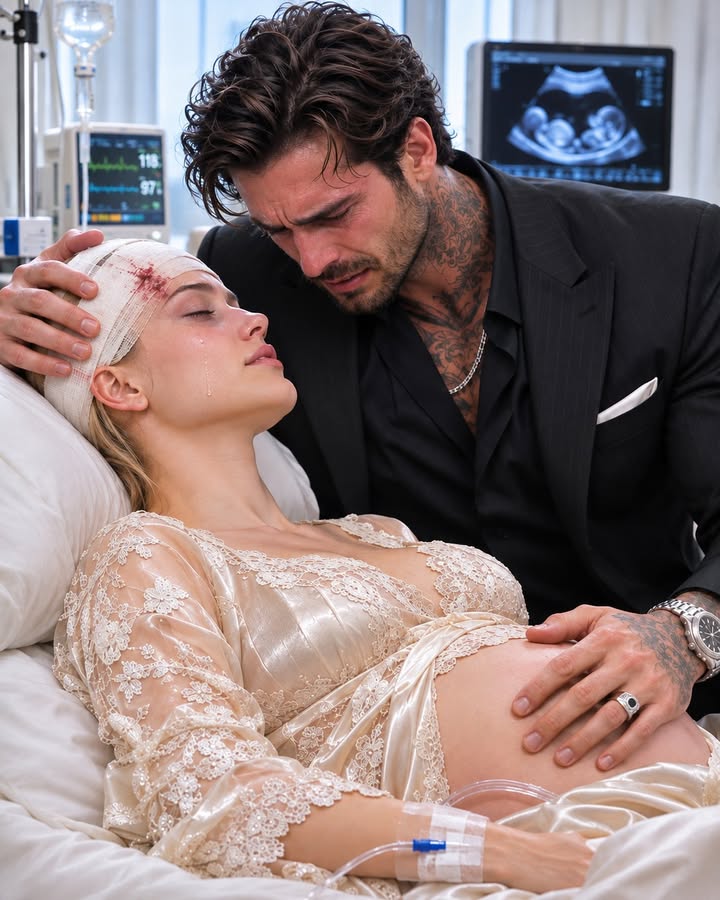
Part 6 – Beneath the First Snow
“I know why you left me, and I know what you promised him.”
Hannah read the words on my screen, then closed her eyes as if the damaged recording had opened a door she wasn’t ready to walk through.
I set the phone on the bedside table.
“We can stop,” I said. “We don’t have to listen to anything else tonight.”
“No,” she replied. “I want to know what I knew.”
The nurse glanced toward the monitor, then reminded Hannah that she could change her mind at any time.
Hannah nodded and asked me to play the recovered message.
I put the phone on speaker.
Her voice emerged through the thin hospital audio, younger and tired, with the same careful steadiness I remembered from the last months of our marriage.
“Lucas, if you’re listening, it means Marco didn’t give you my message.”
A quiet crackle swallowed several words.
“I found the old voicemail you left on the recorder,” her voice continued. “I don’t know whether you meant for me to hear it, but I did.”
My hands went cold.
The phone’s screen showed the recording was barely longer than a minute.
Hannah looked at me, waiting.
I pressed play again.
The message continued through the static.
“You said someone was watching me, and that you were afraid they would use me to make you surrender.”
Hannah’s gaze did not leave my face.
“You said you were going to make me hate you, because you thought that would keep me safe.”
The recording faltered, then returned.
“I know you thought you were protecting me. I know you made Marco promise to keep me safe.”
A faint breath sounded between the words, as though Hannah had recorded the message while trying to stay composed.
“But you never asked me what I wanted, Lucas. You decided that my life was something you could move around without me knowing why.”
The message ended in a soft click.
For a while, none of us spoke.
I had spent years imagining what Hannah might say if she ever learned the truth.
I had not imagined hearing her voice explain that she already knew, while also making clear that knowing had not healed anything.
“How did you hear my message?” I asked.
“The recorder you and Paige found,” she said. “I must have taken it from the old locker before I moved out.”
“You listened to it?”
“Once.”
“Before the divorce?”
She nodded faintly.
“I knew you were scared. I knew you thought the threat was real. I didn’t know who was behind it, or what you had promised Marco.”
“Why didn’t you tell me?”
A tired sadness moved across her face.
“I asked you whether our marriage had meant anything. You said no.”
I lowered my eyes.
“I was trying to give you the chance to tell me the truth,” she continued. “Instead, you gave me the answer you thought would end the conversation.”
“I’m sorry.”
“I know.”
Her fingers moved over the blanket, resting protectively above our daughter.
“I wanted to believe the message meant you’d come back and explain everything.”
“I should have.”
“But you didn’t.”
“No.”
She turned her face toward the window.
“Then I decided I couldn’t build my life around waiting for you to become honest.”
The truth settled in the room without accusation.
I was grateful she did not soften it for my sake.
“I’m glad you built a life that belonged to you,” I said.
“I did, as much as I could.”
“What happened to the message you left for me?”
“Marco told me he would pass it along. I don’t know whether he intended to.”
“He admitted he deleted part of it after taking your phone.”
Hannah closed her eyes.
“He said he was protecting me.”
“He told the police he was trying to keep you from reaching me.”
“That isn’t protection.”
“No.”
The next days brought the story into sharper focus, though no single discovery made it simple.
The police recovered enough of Hannah’s message to establish what she had been trying to tell me.
She had wanted me to know she’d heard the old recording.
She had wanted to ask me whether the danger still existed and whether I would finally speak to her without making decisions on her behalf.
Marco had taken her phone after she refused to let him keep following her.
He had confronted her in the stairwell, insisting that she leave Detroit with him before the rival found her.
Hannah had told him she would not go anywhere without knowing where, why, and by whose choice.
When he tried to take her arm, she pulled away.
In the struggle, she lost her footing on the stairs.
Marco called for help once she was down, but he took her phone before leaving and later claimed he had been trying to keep it from being used to locate her.
His explanation did not make what he had done harmless.
It did show how a secret arrangement, made in the name of care, had grown into something controlling and dangerous.
The police found no evidence that Hannah had been carrying the rival’s financial records or that anyone had ever intended to take her child.
The old threat had been real, but the rival’s group had been searching for leverage, not for Hannah herself.
They had lost interest after Lucas’s organization began cooperating with investigators and the financial channels they wanted were shut down.
Marco’s arrest, his testimony, and the dismantling of the network eventually gave the police enough to neutralize the remaining danger.
Nothing happened all at once.
There were interviews, legal meetings, long waits for calls that brought no immediate answers, and careful plans made with Hannah’s consent.
I followed Detective Bell’s instructions and did not contact Marco.
I cooperated with investigators, provided records, and testified about the parts of my business I had once treated as private.
The process did not turn me into an innocent man.
It gave me the chance to stop pretending my choices had no cost.
Hannah’s recovery took patience.
At first, she could walk only a short distance with help, and bright light left her head aching.
Some memories came back in pieces.
Others stayed blurred.
She could not recall every step in the stairwell, but she remembered the fear of being followed and the clear decision she had made to refuse Marco’s plan.
The doctors watched her closely, and the baby’s heartbeat remained steady.
I visited only when Hannah wanted me to.
Sometimes that meant sitting for ten minutes while she rested.
Sometimes it meant waiting outside while Paige kept her company.
On days when Hannah asked me questions, I answered them without asking her to comfort me afterward.
She wanted to know what I had told the investigators, what I remembered about the threat, and what I had done with the organization I once believed I could control.
I told her the truth, including the parts that made me look worst.
The first time I admitted I had used the business accounts to support the organization’s operations, she listened without interruption.
When I finished, she said, “That’s more honest than the version you used to give me.”
“It’s still incomplete.”
“Then keep making it complete.”
She never praised me for doing what I should have done long before.
I learned to value that.
Paige stayed beside Hannah through the hospital and the months that followed.
She helped choose a small apartment near the legal-aid clinic, one Hannah could afford and enter without feeling that every lock belonged to someone else.
The apartment had a narrow kitchen, a view of the river, and a little sunroom where Paige put a pot of hardy green plants.
Hannah chose the place herself.
I offered to help with the moving costs only after she asked what options were available, and I gave her the information without pressing her to accept.
She took a modest loan through the clinic’s community fund and rented the apartment in her own name.
Paige helped carry boxes.
I did not go inside until Hannah invited me.
The invitation came weeks later, after the doctors had cleared her to return to work part-time.
When I arrived, she was sitting at the kitchen table with papers spread before her.
“Your help is requested,” she said, pointing to a stubborn cabinet door.
I tightened the hinge while she watched from a chair, one hand resting over her stomach.
“Does the door meet your standards?” I asked.
“It closes.”
“High praise.”
“Don’t get used to it.”
For the first time in months, she smiled without looking away immediately.
The sight stayed with me long after I left.
The legal process took longer.
My cooperation mattered, but it did not erase what I had done.
I pleaded guilty to the charges connected to my role in the organization and accepted a sentence reduced for the information I provided.
The day the judge announced it, Hannah sat beside Paige in the back of the courtroom.
She did not hold my hand.
She did not promise to wait.
Afterward, she walked with me to the courthouse steps.
Snow had begun drifting from a low gray sky.
“I’m glad you told the truth,” she said.
“I’m sorry it took me so long.”
“So am I.”
I wanted to ask whether she would visit me.
I wanted to ask whether she could imagine a future in which my absence was temporary instead of final.
I remembered what she had told me: don’t decide my life for me, and don’t turn sacrifice into a claim.
So I said, “I’ll write if you want me to.”
“I do,” she replied. “But don’t write to persuade me.”
“I won’t.”
“Write because you have something true to say.”
“I can do that.”
“I’ll read them when I’m ready.”
“That’s enough.”
It was not everything I wanted.
It was more than I had a right to ask for.
I went to prison that spring.
The days were disciplined and narrow, but for the first time in my adult life, I could not send other people to do the work of facing my own choices.
I attended every counseling session offered to me.
I helped investigators identify accounts and business records that had been hidden behind layers of intermediaries.
I wrote to Hannah, Paige, and the daughter I had not yet met.
The letters were not grand declarations.
I wrote about the books I was reading, the garden behind the chapel where one determined patch of violets returned each year, and the way the first spring rain sounded against the common-room windows.
I told Hannah when I was ashamed of something, but I did not ask her to make the shame easier.
I told Grace that her mother was brave, funny, stubborn about cabinet doors, and kind to people the rest of the world had learned to overlook.
I never asked either of them to write back.
Sometimes Hannah did.
Her first letter arrived folded once, with no greeting beyond my name.
The baby is growing well.
I am growing tired of the doctor telling me to rest.
Paige says she is not going to let me carry groceries up the stairs, which means she will carry them and complain about it the entire way.
I hope you are telling the truth in your letters.
I read it until the paper softened at the creases.
I answered that I was trying, that I knew effort did not entitle me to trust, and that I was glad Paige was there to argue with her about groceries.
Her next letter included a small drawing of a snowflake Paige’s niece had made.
The letters were occasional, sometimes warm, sometimes brief.
I learned not to measure them as progress or promises.
I learned to be grateful for each one as it was.
Grace was born on a clear autumn morning after a long night of waiting.
Paige called me from the hospital.
The phone was handed to Hannah before I could say anything.
“She’s here,” Hannah said, exhausted and breathless.
“Is she all right?”
“She’s healthy.”
I gripped the phone so tightly that my fingers hurt.
“Thank you.”
“She has dark hair.”
I could not speak.
“She’s small,” Hannah added, and I heard the faintest smile in her voice. “But she has a very loud opinion about being here.”
A broken laugh escaped me, and then I covered my face with one hand.
“Is she—”
“Grace,” Hannah said. “We decided on Grace.”
The name passed through me like light.
“Thank you for telling me.”
“I want you to know she’s here,” she said. “That’s all I can promise right now.”
“That’s enough.”
Paige came back on the line and said Hannah needed rest.
I thanked her, then sat for a long time with the phone in my hand.
That night I wrote Grace a letter.
I told her that I was proud of her mother, that her aunt was probably already trying to feed them both, and that she did not owe me a future simply because I was her father.
I told her I would be here if she ever wanted to know me.
Then I sealed the letter without asking whether anyone would read it.
Hannah sent a photograph a few weeks later.
Grace was sleeping in a pale blanket, one tiny hand lifted beside her cheek.
Paige’s handwritten note beneath it read, Hannah says you can keep the picture, but don’t make a shrine.
I smiled until my eyes blurred.
Years passed.
I served my sentence and remained in contact with the people overseeing my release.
My cooperation earned a reduced term and a path toward rebuilding a life that no longer depended on power or fear.
When I returned to Detroit, I had no organization waiting for me, no office above downtown, and no one expecting me to give orders.
I rented a small place and found work with a reentry program that helped people leave criminal networks and start again.
It was slow work.
Some people trusted me.
Many did not.
I understood both responses.
I continued writing to Hannah, though after my release I did not assume that the old routine would continue.
She replied when she wanted to.
Sometimes it was a note about Grace’s school project or a question about whether I remembered the name of a bakery near the old apartment.
Sometimes months passed without a word.
I did not appear at her door.
I did not ask Paige to persuade her.
I did not mistake silence for permission.
When Grace was nine, Hannah called me.
“She’s been asking questions about you,” she said.
I stood in the small kitchen of my apartment, one hand resting on the counter.
“What has she asked?”
“What you were like before you went away. Whether you read the letters you sent her. Whether you would want to meet her.”
“I would,” I said. “If she wants that.”
“She does. But she’s allowed to change her mind.”
“Of course.”
“And so are you.”
“I’m not going to change my mind about wanting to meet her.”
“That isn’t what I mean, Lucas.”
I understood.
She was telling me the choice belonged to Grace, not to the story I had been carrying for years.
“I know,” I said. “I’ll let her decide what she wants from me.”
Their first visit took place in a public garden on a bright Saturday afternoon.
Grace held Hannah’s hand when they arrived.
She had Hannah’s watchful eyes and an easy, curious expression that made me recognize nothing and everything at once.
“This is Lucas,” Hannah said.
Grace looked at me.
“Do I call you Dad?”
“You can call me whatever feels right to you.”
She considered that.
“Lucas for now.”
“That’s fine.”
We walked along a path lined with winter-bare trees.
Grace asked whether prison had been frightening.
I told her sometimes it had been, but I kept the answer simple and did not turn it into a story about myself.
She asked whether I had really written her letters.
“I did.”
“Did you want me to write back?”
“I hoped you might, but I didn’t expect it.”
“Why not?”
“Because you were a child, and it wasn’t your job to make me feel better.”
Grace glanced at Hannah, then back at me.
“Mom said you used to decide things for her.”
“She’s right.”
“Are you still like that?”
“I’m still learning not to be.”
Grace seemed to consider whether that was a good answer.
“I think that’s probably hard.”
“It is.”
“Is it getting easier?”
“Only when I remember that being afraid doesn’t give me the right to take over.”
She nodded as though the idea fit somewhere in her own world.
At the end of the path, Hannah asked Grace whether she wanted to stay a little longer.
Grace said yes.
We sat beneath a bare tree while she told me about her class and the paper snowflakes they had begun cutting for the windows.
She did not call me Dad that day.
I did not ask her to.
Afterward, Hannah walked me to the garden gate.
“She had a good time,” she said.
“I did too.”
“She may want to see you again.”
“I’ll let her tell me.”
Hannah nodded.
“Thank you for not rushing her.”
“I know what rushing can cost.”
The years did not make our history disappear.
They made room around it.
Grace grew old enough to write to me herself, first with drawings and later with questions that deserved more than the polished answers I once would have offered.
Hannah and I learned how to speak without pretending we had returned to who we were before the divorce.
We were different people.
We had to meet each other as we were, not as a promise that time could be reversed.
Sometimes we disagreed.
Sometimes a memory rose between us and made the air go still.
When that happened, neither of us had to pretend it was healed.
Hannah’s forgiveness did not arrive in a single conversation.
It came through small choices made freely: answering one more letter, letting me attend Grace’s school recital, trusting me to drive her home after a winter concert.
Each time, I understood it was a gift and not a contract.
On the first snow of Grace’s fifteenth winter, Hannah invited me to meet them at the river walk.
The flakes drifted through the streetlights, soft and unhurried.
Grace stood between us with a red scarf wrapped twice around her neck.
She was taller than Hannah’s shoulder now.
“I know where I stand with you,” she said, looking at me. “You don’t have to keep proving you’re sorry every time I see you.”
I listened carefully.
“I’m glad you told me.”
“I want you in my life,” she continued. “Not because Mom says I should, and not because you wrote letters. Because I want to know you now.”
My throat tightened.
“Then I’ll keep showing up as the person I am now.”
“And if you mess up?”
“I’ll tell the truth about it.”
Grace nodded.
“That’s a better answer.”
Hannah watched her daughter, then turned to me.
“I don’t want to pretend the past didn’t happen,” she said. “But I don’t want it to decide everything that comes next.”
“Neither do I.”
“I can’t promise we’ll become what we were.”
“I don’t want to ask you to.”
She took a breath, watching the first white flakes gather on the dark railing.
“I’m willing to see what kind of family we can be,” she said. “If we build it honestly.”
The words were gentle.
They were also the most hopeful thing I had ever heard.
Grace reached for Hannah’s hand, then looked at me.
She held out her other one.
I waited until Hannah gave a small nod before taking it.
The three of us stood beneath the first snow, our hands joined without anyone being pulled, persuaded, or kept by force.
For years, I had believed love meant carrying every danger alone and making the choices no one else could bear.
Now I understood that love could also mean telling the truth, standing where you were asked to stand, and letting the people beside you choose whether to reach back.
Hannah’s hand warmed one side of mine.
Grace’s hand held the other.
Snow gathered softly on our coats as we walked together into the winter evening.
**–THE END–PLEASE
Share your thoughts or feedback to motivate us to create more stories ♥️
* * *
[PREVIOUS: PART 5](https://puretales.idolsgift.com/blog/part-5-the-things-hannah-carried-027)
✓ Lynn R. Adams
Part 6 – Beneath the First Snow “I know why you left me, and I know what you promised him.” Hannah read the words on my screen, then closed her eyes as if the damaged recording had opened a door she…