PART 6 (THE END): The Sound He Wasn’t Supposed to Hear 061
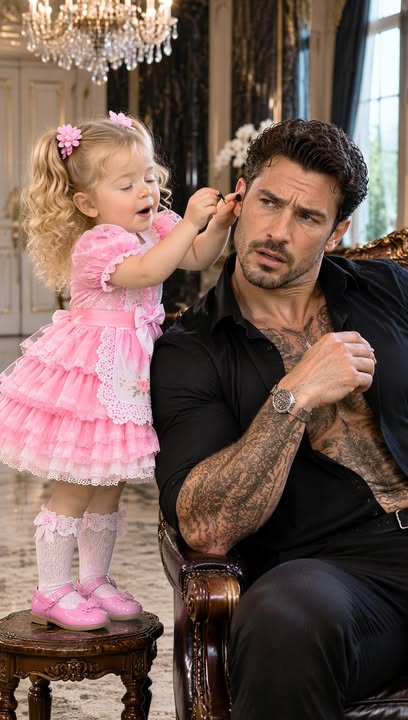
Part 6 – The Voice Beneath the Sun
“What does it say?” I asked.
Dominic held the page between his fingers, careful not to crease it.
“My father’s signature is at the bottom,” he said.
The lawyer glanced toward the closed office door, then back at us.
“The instruction appears to have been written shortly before the vehicle left the garage.”
Dominic read the note again, his face drawn tight with concentration.
“Have the car taken to the outer gate,” he said at last. “The meeting cannot be delayed. The mechanic’s concerns have been reviewed.”
A date and time were written beneath the instruction.
The time was only minutes before the car had been released.
Dominic’s father had known about the warning.
I felt the room tilt, though nothing around me had moved.
“Does it say who reviewed the concerns?” I asked.
“No,” the lawyer said. “But the instruction is in your father’s hand, and the dispatch log records that the vehicle left shortly afterward.”
Dominic’s gaze remained on the page.
“So he knew.”
The words were quiet, almost more difficult for being so small.
The lawyer explained that the document had been sent for independent verification, along with the other records.
The investigators had not yet determined whether the faulty wiring caused the explosion, contributed to it, or was only one factor in a more complicated failure.
They could establish that the vehicle had been declared unsafe, that the warning had reached the household, and that Dominic’s father had ordered it to leave.
They could not yet say why he had made that choice, or whether anyone else had tampered with the vehicle.
“Then we keep saying exactly that,” Dominic replied.
The lawyer nodded.
When he had gone, Dominic stood beside the table without looking up.
I stayed where I was.
“Do you want me to leave?” I asked.
“No.”
“Do you want to talk about it?”
“I don’t know.”
“That’s all right.”
His hand closed around the edge of the paper.
“I spent years thinking my father would have known what to do,” he said.
“Maybe he thought he knew.”
“He knew the car wasn’t safe.”
“Yes.”
“And he ordered it out anyway.”
The truth was a hard thing to set down between us.
I did not try to soften it with excuses.
Dominic’s shoulders rose with a slow breath, then fell.
“I’m angry with him,” he said.
“You’re allowed to be.”
“I’m also sorry for him.”
“You’re allowed to be that, too.”
He turned the page over, as if expecting another explanation to be written on the back.
There was only the faint impression of the signature showing through the paper.
For a while, the conservatory held only the hush of its ventilation and the occasional stirring of leaves.
The hearing device sat beside Lily’s drawing, its small shape nearly lost against the white table.
Dominic looked at the picture.
“She gave me this yesterday.”
“I know.”
“She drew the house with a door.”
“Most houses have doors.”
“She made this one very large.”
“Maybe she thought you’d need help finding it.”
His mouth moved in a small, tired smile.
Then he touched the hearing device.
“Could you help me put it on?”
I took the case and passed it to him rather than doing it for him.
He fitted the device carefully, following the instructions Dr. Levin had given him.
When he finished, he sat still, letting the room reach him in its uneven pieces.
A leaf scraped softly against the conservatory glass.
A distant cart rolled over the stone path.
The hearing device caught a faint hum from the hallway.
Dominic tilted his head, trying to understand it.
“Is it all right?” I asked.
“Not comfortable,” he said. “But manageable.”
“Then you can turn it off if you need to.”
“I know.”
He left it on for another minute.
Then he picked up the note from his father and placed it inside the folder with the other records.
“I can be angry without using that anger to make another bad choice,” he said.
“You can.”
“And I can tell the truth without pretending I understand all of it.”
“That’s what the investigators are for.”
“And what time is for.”
We sat together until the evening shadows stretched across the conservatory floor.
Nothing was solved that night.
The investigation still had questions to answer, Dominic still had decisions to make about the estate, and his hearing remained uncertain.
But the letter he had kept for years was no longer hidden, and the old story had finally been opened to the light.
In the weeks that followed, the investigators interviewed the people who could still be found and compared the surviving records.
The mechanic’s warning was authenticated as my father’s.
The signature on the dispatch order was confirmed as Dominic’s father’s.
Arthur Bell’s account matched the garage log in several important details, though he remained responsible for releasing the vehicle and later signing a false report.
Victor confirmed that he had received my father’s warning and concealed it after the explosion.
The evidence showed a deliberate cover-up of the warning and the decision to send the car out despite the unresolved fault.
It did not establish that the wiring was the sole cause of the explosion.
Investigators could not rule out the possibility that another failure had contributed, and they found no reliable evidence that the rival family blamed in the old account had caused it.
The years of accusations had been built on assumptions, omissions, and records changed to protect people who had made mistakes.
That finding did not return what the families had lost.
It did not undo Dominic’s injury or my father’s death.
But it gave his name back to him.
When the authorities confirmed their conclusions, my mother and I read the report together at her kitchen table.
She held the pages with both hands, her thumb resting near my father’s signature.
“He was right,” she said softly.
“He was.”
“He tried to warn them.”
“Yes.”
She looked at the report again.
“They should have listened.”
I took her hand.
“They should have.”
For a long time, we did not speak.
Then she folded the pages neatly and set them beside the tin box where we had found his old papers.
She did not look triumphant.
She looked relieved, and grieving, and proud of someone she had loved long before either of us understood how much courage his ordinary work required.
The estate released a clear statement acknowledging that my father had reported the vehicle’s dangerous condition and that his warning had not been followed.
It did not make him into a legend or claim that his note proved more than it did.
It simply recorded what he had done.
Dominic also acknowledged his own part in the years that followed.
He withdrew the old accusation against the rival family and provided the authorities with the documents they requested.
When the inquiry widened to include the estate’s other business practices, he did not try to separate himself from the questions.
He cooperated with the legal review, accepted limits on his authority, and began dismantling the operations that had kept the family’s influence outside the law.
The changes were neither quick nor painless.
Some people left.
Some contracts were canceled.
The estate’s accounts were examined in detail, and Dominic had to answer questions he could not settle with a signature or a private conversation.
He lost control of the criminal operations that had once made his name feared.
He did not try to reclaim it.
The family’s lawful businesses were reorganized under independent oversight, and the estate began shifting its resources toward work that could be openly accounted for.
Dominic sold a portion of the properties that could not be maintained honestly and kept only those assets that could be operated in accordance with the law.
The transition took months.
There were days when he returned from meetings tired enough to sit without speaking, and days when a sound from his hearing device would frustrate him until he removed it and put it away.
I never treated a difficult day as a failure.
Dr. Levin had warned us that improvement would be gradual and uncertain.
Dominic took the advice seriously, even when patience did not come naturally to him.
Some mornings, he could follow a conversation in the quiet office if the speaker faced him.
Other mornings, voices blurred together before he could separate one from another.
He learned to ask people to repeat themselves without apology.
He learned that a room becoming quiet did not mean he had disappointed anyone.
He learned to take breaks before sound became too tiring.
And he learned that hearing more was not the same as hearing everything.
Victor cooperated with the inquiry and admitted his part in concealing the warning.
He was removed from his position as estate manager.
Dominic did not make the decision into a public punishment.
There was no dramatic scene, no demand for a confession before the household, and no attempt to humiliate him.
Victor faced the consequences through the proper process, and his cooperation was taken into account without erasing what he had done.
When I saw him for the last time at the estate, he was returning a set of keys to the office.
The mansion looked almost unchanged around him, with its polished floors and tall windows, but the old confidence of the place had begun to loosen.
“I hope your mother knows the report cleared your father,” Victor said.
“She does.”
He nodded.
“I should have made sure the warning reached the people who could stop the car.”
“Yes.”
“I can’t repair what I did.”
“No.”
He stood with his hands loosely clasped.
“I’m sorry I made you feel that your place here depended on staying quiet.”
I believed that he meant it.
I also knew belief did not require me to forgive him.
“Thank you for saying so,” I replied.
Victor accepted the answer and left without asking for anything else.
My job changed gradually, and only after Dominic insisted that any new arrangement be discussed with me openly.
He offered me a role helping coordinate the estate’s legitimate community foundation, which was being built from the properties and funds the family could place under transparent management.
I asked for the duties in writing, a fair salary, predictable hours, and the freedom to turn the position down.
He agreed to each condition.
“I don’t want this to become a favor I have to repay,” I told him.
“It shouldn’t be a favor,” he said. “It should be work you’re qualified to do.”
The foundation supported local repair programs, job training, and grants for families facing sudden hardship.
When the first small repair workshop opened in Albany, my mother attended the launch with me.
She stood beside a display of tools donated in my father’s name and read the plaque twice before speaking.
“It would have embarrassed him to have a plaque,” she said.
“He would have complained about the spelling.”
“He always said a good repair should speak for itself.”
“Then maybe the workshop can do that.”
She smiled, and I saw some of the old brightness return to her face.
Lily adjusted to the changes in her own way.
She knew Dominic now as a person who kept her drawings and sometimes asked her to explain the parts he could not see clearly.
She did not know the details of the inquiry, and we did not give her more than she could understand.
She knew my father had been a mechanic.
She knew he had warned people when something was unsafe.
She knew Dominic had been hurt in an explosion and was working with doctors to hear as much as he could.
Children have a way of accepting the truth in the size it is offered.
One afternoon, Lily sat on the floor of the foundation office drawing while I reviewed a list of community grants.
Dominic sat near the window with his hearing device on, reading through a set of documents.
The room was quiet except for the turn of a page and Lily’s crayons moving over paper.
She held up her picture.
“It’s the workshop,” she announced.
The drawing showed a long table, several tools, and a man with a round head beside a small car.
“This is Granddad,” she said. “He’s fixing the wires.”
My throat tightened.
“That’s a lovely picture.”
“And this is you,” she added, pointing to a figure with a yellow shirt. “You’re helping.”
She pointed to the third figure, drawn taller than the others.
“This is Dominic. He’s listening.”
Dominic looked up from his papers.
“Did she say my name?” he asked.
“I think she did.”
Lily held the drawing up higher.
“Dominic, I made you a picture.”
He turned toward her, but the device had not caught the first words clearly.
“What was that?” he asked.
She walked closer, careful not to crowd him.
“Dominic, I made you a picture.”
The words reached him.
His expression changed.
He looked from Lily to the paper and back again.
“I heard you,” he said.
“I know.”
“I heard your whole sentence.”
Lily gave him the picture.
He accepted it with both hands and studied the bright workshop she had made.
“Your grandfather looks like he knows what he’s doing,” Dominic said.
“He does,” Lily replied. “He’s fixing the wires.”
Dominic nodded slowly.
“He sounds like a good mechanic.”
“He is.”
I watched him hold her drawing, and I understood that the moment was not a miracle.
It was a small sound reaching him through an ordinary room, after months of appointments, rest, uncertainty, and careful practice.
It mattered because it had taken time.
It mattered because neither of us had mistaken gradual change for failure.
The months became a year.
The investigation formally concluded that the warning had been concealed and that the vehicle had been released despite an unresolved safety concern.
The authorities found no evidence sufficient to establish that the wiring defect alone caused the explosion, but they confirmed that the family’s original account had not been supported by the records.
My father’s name was cleared of any implication that he had approved the vehicle’s use.
Arthur Bell accepted responsibility for his role in releasing it and signing the false report.
Victor’s cooperation did not remove the consequences of his actions, but it helped establish how the warning had disappeared from the files.
Dominic relinquished the remaining control he had held over the family’s unlawful operations and accepted the legal scrutiny that followed.
The estate did not become perfect.
It became smaller, more honest, and less certain of its old importance.
To Dominic, that seemed like a beginning.
He began working regular hours at the community foundation.
He learned the names of the people who came through its doors, and he asked questions without assuming he already knew the answers.
When he missed a word, he asked for it again.
When sound tired him, he took a break.
When the old fear returned, he told Dr. Levin instead of pretending it had vanished.
I kept the job I had earned, and the new position gave me enough stability to plan beyond the next week.
My mother visited more often.
Lily grew taller, though she still insisted that the people in her drawings needed the sun to be “the biggest part, because it helps everyone see.”
On the anniversary of the foundation’s opening, we held a small gathering in the renovated workshop.
There were folding tables, home-baked food, children’s art pinned to the walls, and a row of tools displayed beneath my father’s name.
Nothing about the day resembled the grand dinners at the Cray estate.
It was brighter for being ordinary.
Dominic stood near the open doors, listening to the overlapping conversations.
He wore his hearing device and a patient expression, though I could see him turning toward each speaker to find the voice.
When the room grew too loud, he stepped outside for a few minutes.
Lily followed him, carrying a folded sheet of paper.
I watched from the doorway but did not intervene.
She stopped beside him and waited until he looked down.
“I made you one more,” she said.
Dominic leaned slightly toward her.
“Could you say that again?”
“I made you one more.”
This time, he heard every word.
She unfolded the paper.
It showed three people beneath a large yellow sun.
My daughter had drawn herself in the center, with one hand in mine and the other in Dominic’s.
There was a small house behind us and a row of green shapes that might have been trees or the palms in the conservatory.
At the bottom, in careful, uneven letters, she had written our names.
“Are we a family?” Dominic asked her.
Lily looked at the drawing as though the answer was already there.
“We’re our family,” she said.
I stood very still.
The words were simple enough for a child and generous enough for the three of us.
Dominic looked at me.
There was no demand in his expression, and no assumption that a drawing could decide anything for me.
There was only a question he did not know how to put into words.
I stepped closer.
“If we choose to be,” I said.
He nodded.
“We choose,” he replied.
Lily slipped her hand into his.
He did not grip too tightly or pull her closer.
He simply let her hand rest in his, as if he understood that belonging was something offered and accepted, not something claimed.
We went back inside together.
The room was full of voices, and Dominic could not follow all of them.
He did not need to.
He could hear the people nearest him, and when he missed something, someone repeated it without making him feel small.
Lily set her drawing on the table beside the photograph of my father and the first picture she had given Dominic in the conservatory.
The three drawings made a small history of their own.
The first marked the moment she noticed him.
The second marked the beginning of his treatment.
The third gave us a future that did not need to be promised all at once.
As the gathering began to thin, Lily climbed onto a chair to see over the table.
“Dominic,” she called.
He was standing a few feet away, speaking with one of the foundation workers.
The room had quieted, but voices still moved around him.
He turned toward her.
She waited until his eyes found her face.
“Dominic, come look at the sun.”
The sound reached him clearly.
Not as a distant bell.
Not as a vibration whose meaning he had to guess.
As her voice.
His eyes brightened, and he walked toward her.
“I’m coming,” he answered.
Lily smiled and held up the drawing.
Dominic looked at it, then at the child who had once been small enough to hide behind my apron and brave enough to point out what everyone else had missed.
He listened while she told him how she had made the yellow sun so big.
This time, he heard her say every word.
And when she called his name again, he answered.
**–THE END–PLEASE
Share your thoughts or feedback to motivate us to create more stories ♥️
* * *
[PREVIOUS: PART 5](https://storyly.idolsgift.com/blog/part-5-the-sound-he-wasn-t-supposed-to-hear-061)
✓ Lynn R. Adams
Part 6 – The Voice Beneath the Sun “What does it say?” I asked. Dominic held the page between his fingers, careful not to crease it. “My father’s signature is at the bottom,” he said. The lawyer g…