PART 6 (THE END): The Song Elena Couldn’t Finish 008
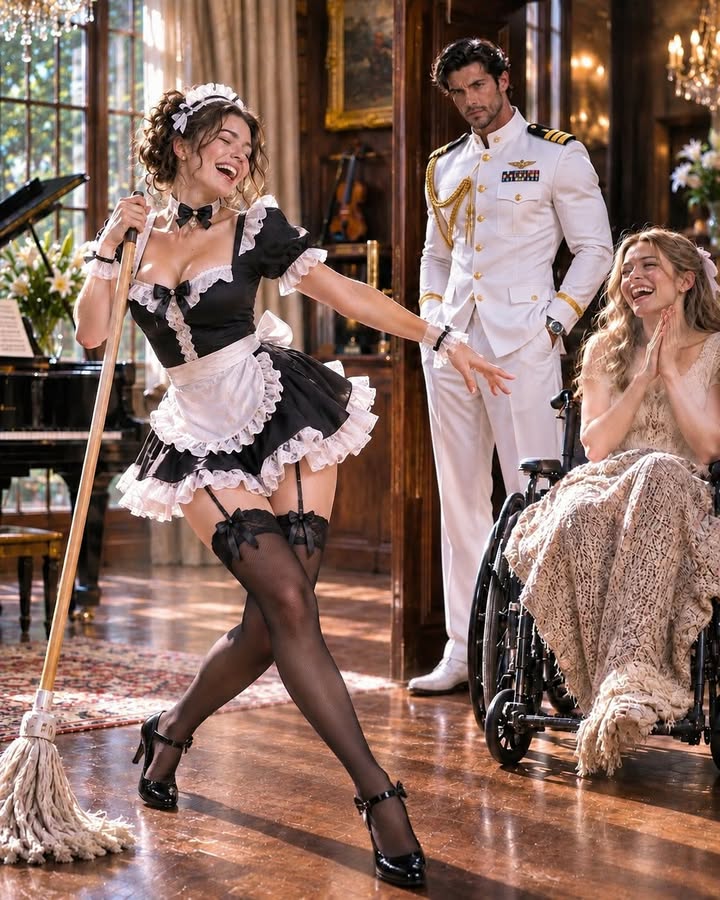
Part 6 – The Song’s True Ending
“But the signature at the bottom,” I whispered, “might be my mother’s.”
No one reached for the application.
Ms. Alvarez leaned closer to the page without touching it.
“Do you recognize the handwriting?”
“I think so.”
I looked at the broad sweep of the signature, the firm downstroke, the final line that rose slightly as if it were trying to leave the page.
It was like the writing on the envelopes.
Like the note from Elena’s mother.
Like the faded words at the bottom of the unfinished song.
Roman remained across the table, still enough that I could hear the clock above the library shelves.
“Could your mother have signed this?” he asked.
“I don’t know.”
The answer came out thin, but it was honest.
My mother had been gone for years.
I had no clear memory of her signing anything except the occasional birthday card or note left on the kitchen counter.
And I had never seen her write my name beside a loan.
Ms. Alvarez slid the photocopy back toward herself.
“We shouldn’t draw conclusions from a copy,” she said. “The collector needs to provide the original application and the records showing how this document was created.”
“Can they do that?” Elena asked.
“They can be asked to produce what they’re relying on. If they can’t, that matters. If they can, a handwriting expert can examine it.”
I looked at the address on the page again.
The apartment was unfamiliar.
The date was not.
It fell in the last year of my marriage, when my ex-husband, Daniel, had been restless and evasive, taking calls outside and coming home with stories that changed whenever I asked about them.
I had thought we were dealing with the ordinary wreckage of a failing marriage.
I had not known there were forms, signatures, and promises being made in my name.
“Could my mother have signed as a witness?” I asked.
“Possibly,” Ms. Alvarez said. “But there is nothing here that confirms that. We’ll request the original and compare the signature with verified samples.”
Roman lowered his gaze to the table.
“Would you like me to tell the collector not to contact your workplace again?”
I looked at him.
“No. Ms. Alvarez will respond for me.”
He nodded, accepting the boundary without trying to soften it into a different offer.
Ms. Alvarez sealed the photocopy inside her folder.
“I’ll ask for the full file and make clear that all communication must come through my office.”
“Thank you,” I said.
After she left, Roman walked her to the front door, then returned alone.
Elena and I were still in the library.
I had not moved from my chair.
“I’m sorry,” Roman said.
He looked at the empty place where the photocopy had been.
“Not because the document exists. Because I know how frightening it is to see your mother’s handwriting in the middle of something that may not be true.”
I drew a slow breath.
“I don’t know what I saw.”
“Neither do I.”
“You’re not going to try to decide for me what it means?”
“No.”
The answer did not come easily, but I believed him.
Elena rolled closer and laid her hand over mine.
“We can wait for what’s real,” she said.
I squeezed her fingers.
That night, I could not sleep.
I took the cookie tin from beneath the bed and set the envelopes beside it on the small table.
The handwriting on each one was familiar now, though I had spent months pretending it was not.
My mother had formed the capital M with a loop that started too high.
She always lifted her pen before the last stroke, leaving a tiny gap in the ink.
I had seen that gap on birthday cards, grocery lists, and notes tucked into my lunch when I was young.
The application might be forged.
The signature might be a copy.
Or it might be something my mother had written for a reason I did not yet understand.
I folded my hands on the table and let the question remain unanswered.
The next morning, I called Ms. Alvarez and told her about the handwriting on the envelopes.
She asked me to bring the originals to her office, where she could photograph them and add the images to the records she was gathering.
I agreed.
When I reached the mansion later that day, Elena was in the music room.
The piano stood open, and the old sheet music rested on the stand.
She had not played.
“I thought you might come,” she said.
“Did you want me to?”
“Yes.”
I sat beside her, and for a while we looked at the faded notes.
The words at the bottom still stopped at the same place.
The melody is not—
Elena pressed her lips together.
“I keep thinking the missing word is ‘finished,’” she said.
“It might be.”
“Or ‘lost.’”
“Maybe.”
“Or she wrote something completely different and we’re trying to make it mean what we need.”
“That could be true too.”
Elena looked at me.
“You don’t mind not knowing?”
“I mind,” I said. “But I’m learning I don’t have to fill in every blank before I can keep going.”
She studied the page again.
“I’m trying to learn that too.”
Her fingers rested on the edge of the music stand.
I placed my hand on the piano bench between us, palm up.
She took it after a moment.
We sat there until the afternoon light shifted across the keys.
Two days later, the collector sent the original loan application to Ms. Alvarez.
She called me before I had even finished my breakfast.
“The document has several inconsistencies,” she said. “The address doesn’t match any verified residence for you. The loan officer listed on the form no longer works for the company, and the account number appears to have been altered.”
My grip tightened around the phone.
“Does that prove the signature was forged?”
“It supports your dispute, but we still need an expert review. The original is in their possession, and I have requested an independent examination.”
“What about the signature beside my name?”
“We’re not making assumptions. But the collector has not provided any document showing that you authorized the loan, and their offer that you sign a statement blaming Roman is a serious concern.”
“Will they stop contacting my workplace?”
“They’ve agreed to communicate through my office while the dispute is pending.”
I closed my eyes.
It was not a final answer, but it was the first step toward one.
“Thank you,” I said.
When I hung up, Roman was standing in the kitchen doorway.
He had not heard the conversation.
He had only seen my face.
“Good news?” he asked.
“Some.”
He waited for me to explain.
“The application has inconsistencies. They’re reviewing the original.”
“Do you want to tell Elena?”
“Yes.”
“Would you like me to come with you?”
I looked at him.
The question was small, but I could feel the effort behind it.
“Yes,” I said. “You can come.”
We found Elena near the music room, speaking with the gardener about the pots by the back terrace.
When she saw us, she dismissed him with a smile and turned toward me.
“They found something,” I said.
I told her what Ms. Alvarez had explained.
Elena’s relief was quiet, but it settled her shoulders.
“It means they’re finally looking at what happened instead of asking you to carry the blame,” she said.
“Yes.”
Roman stood beside the door, his hands at his sides.
“I’m glad,” he said.
I looked at him.
“Me too.”
No one said the case was over.
No one tried to promise that the next step would be easy.
For once, the uncertainty belonged to the facts, not to the people in the room.
A week later, the handwriting expert’s report arrived at Ms. Alvarez’s office.
She called me and asked if I wanted to hear the findings alone or with someone beside me.
I thought about it for a moment.
“Elena,” I said. “And Roman, if he’s willing to come.”
“I’m willing,” Roman answered when Elena passed him the phone.
We met at the legal aid office that afternoon.
Ms. Alvarez laid the report on her desk and read the conclusion aloud.
The signature under my name had not been written by me.
The handwriting showed evidence of imitation and tracing.
The signature beside the financial-reference line was also not Roman’s.
The loan had been opened using false information.
A second document in the collector’s file was a note from the former loan officer, written at the time of the application.
It recorded that Daniel had submitted the papers and claimed he was authorized to sign for me.
The officer had questioned the signature, but the loan had gone through after Daniel provided additional identification documents of his own.
There was no evidence that my mother had signed anything.
The mark I had thought I recognized was not hers.
It had been copied from a piece of writing and altered to support the application.
For a moment, I felt the room tip.
Then Ms. Alvarez set a glass of water in front of me.
I wrapped both hands around it.
“I’m sorry,” Elena said softly.
“I thought I wanted it to be her,” I said. “So I could understand why that handwriting was there.”
“Of course you did,” she replied.
Roman sat across from me, his expression full of regret.
“I should never have let them make this about me,” he said. “It gave them another way to pressure you.”
“They used your name because they thought it would frighten me.”
“Did it?”
“Yes.”
He accepted the answer without defending himself.
“I’m sorry.”
“I know.”
The debt was not cleared that day.
There were still forms to file and records to verify.
But the evidence had shifted the matter out of the shadows.
Ms. Alvarez prepared a formal complaint, and the collector agreed to suspend collection while the company reviewed the expert report.
A month later, they withdrew their claim.
The remaining balance was removed from my record, and the collection activity stopped.
The legal office sent me the confirmation in a plain envelope.
I read it twice at my little table, then placed it beside my mother’s photograph.
For the first time in years, the number in the old tin no longer defined the distance between me and a life that belonged to me.
I did not celebrate with anyone that evening.
I wanted one quiet night to believe it.
The next morning, I told Elena.
She reached for my hand and held it against her heart.
“Then we have to celebrate,” she said.
“I thought you might say that.”
“I’m planning something small.”
“Does the mop know?”
“The mop has a busy schedule.”
“Of course he does.”
She laughed, and the sound rose into the music room with the ease of a window opening.
Roman was standing in the hall.
He had heard her.
His eyes closed for a brief moment, as if he were storing the sound somewhere he could keep it.
When I stepped out, he was waiting with a folded sheet of paper.
“I want to apologize properly,” he said.
“You already apologized.”
“I want to make sure you know what I’m sorry for.”
I waited.
“I treated your life like a problem I could manage,” he said. “I went into your room. I arranged the doctor without asking. I kept pressing you to explain the money because I believed that knowing the truth gave me the right to act on it.”
His voice was measured, but not rehearsed.
“When my mother’s note appeared, I understood she had trusted you. I thought that would be the moment I changed. But I still tried to take control when the collector called.”
“You stopped when I asked.”
“I should have stopped myself sooner.”
I looked at the folded paper in his hand.
“What’s that?”
“A job offer.”
He set it on the hall table instead of placing it in my hands.
“I don’t want you to feel you owe us your work because of the money, or because of my mother. This is for a position managing the household accounts and staff schedule. It pays more than your current position, has regular hours, and includes paid time off.”
I glanced at the title printed at the top.
“You’re offering me a promotion?”
“I’m offering you a job you’re qualified to do.”
“You don’t know whether I want it.”
“I don’t.”
“And if I say no?”
“Then I’ll keep looking for someone else.”
“Would I still be welcome here?”
“Yes.”
The answer came without hesitation.
I folded my arms.
“Would I still be allowed in the music room?”
“Elena would decide that.”
“I’ve already decided,” Elena called from the doorway. “Yes.”
Roman’s mouth moved at one corner.
“You could have waited until he finished,” I said.
“I knew what he was going to say.”
“Seven cameras at the gate,” I murmured.
“Eight,” she said.
The laughter that followed loosened something in Roman’s face.
He did not use it to press the offer again.
I read the details that evening.
The job was fair.
The hours were clear.
The pay was written down, and nothing in the offer asked me to repay anyone with gratitude, loyalty, or silence.
I accepted it a week later, after discussing the terms with Elena and Ms. Alvarez.
I did not accept because the house had saved me.
I accepted because the work suited me, the conditions were reasonable, and I wanted to stay.
Roman gave me the signed agreement without ceremony.
When I asked whether he wanted me to sign an additional confidentiality clause, he shook his head.
“Only what’s standard for household records,” he said. “You can have your own adviser look it over.”
I did.
He waited.
When I returned with the signed copy, he thanked me as if I had done him a favor, not the other way around.
By then, the music room had begun to change.
Elena opened the piano more often.
She still did not always play the song.
Sometimes she only set out the old pages, studied them, and put them away again.
Sometimes she tried the first phrase, then stopped.
No one asked her to continue.
One afternoon, she found a small box in the back of the piano bench.
It held several sheets in their mother’s handwriting, including a music page that had been tucked underneath the old arrangement.
“There’s more,” Elena said.
Her voice was quiet with wonder.
The page did not contain an ending.
It contained a second melody, written in the margin, along with a short instruction.
Let the second voice answer.
Elena stared at the words.
“She left another part?”
“I think so.”
She turned the page carefully.
Beneath the music was a note in the same looping hand.
The melody is not a road you must follow.
It is a place where we meet.
The words were complete this time.
Elena lifted her fingers to the page.
“I remembered the beginning,” she said. “But not this.”
“Maybe you weren’t supposed to remember it alone.”
She looked at me.
Her eyes were bright, but she did not cry.
“Would you sit with me?”
“Of course.”
She moved to the keyboard.
The first few notes came slowly.
Her hands were uncertain, and the melody wavered where it had always stopped.
Then she found the second phrase.
It was not the ending either of us had expected.
It did not close the song so much as open a space beside it.
Elena stopped playing and looked at the extra line in the margin.
“Who answers?” she asked.
“I don’t know.”
“Would you?”
I glanced at the music.
“I can’t play.”
“You can sing.”
“I can also embarrass myself.”
“That has never stopped the mop.”
I looked toward the corner.
The mop stood propped against the wall, its head neatly tied with a faded ribbon.
“I suppose he can sit this one out.”
Elena laughed.
I sang the notes as best I could, following the simple line her mother had written.
My voice was not trained.
It slipped on one note and nearly lost its place on the next.
But Elena’s hands found the melody again, and the two lines met where the page said they should.
She stopped after a few measures.
For a moment, her face held the old fear.
Then she looked at the music.
“I can do the first part,” she said.
“And I can help with the second.”
“I might have to stop.”
“Then we stop.”
“We might not finish it today.”
“Then we don’t finish it today.”
She took a breath and started again.
This time, she played the full phrase.
I followed the answer line quietly.
When we reached the end, Elena’s hands hovered over the keys.
There was no grand final chord.
No perfect resolution that made the years between us disappear.
There was only the last note, soft and true, fading into the room.
Elena turned toward me.
“That’s not how I imagined it would feel,” she said.
“What did you imagine?”
“I thought I’d hear the ending and know whether we’d done it right.”
“Do you?”
“No.”
She looked at the open sheet music.
“But I don’t think that was what the song was asking.”
I smiled.
“What was it asking?”
“To be played.”
The answer stayed with me.
A few days later, Roman came into the music room carrying no folder, no envelope, and no instructions.
He stood by the doorway and watched Elena adjust the music stand.
“Are you working?” he asked.
“Not exactly,” Elena said.
“Would you like to dance?”
I looked at the mop in the corner.
“Is this a formal invitation?”
“It’s a question.”
“That’s new.”
“I’m practicing.”
Elena laughed under her breath.
Roman crossed the room, then stopped beside the piano.
“Only if you both want me here,” he said.
I looked at Elena.
She glanced at the keys and then at her brother.
“You can stay,” she said. “But you have to follow the music.”
“I can try.”
Elena began the melody.
The first phrase moved through the room, fragile and familiar.
Then she reached the place where it used to stop.
This time, she kept going.
Her hands found the second line, and I sang the answer beneath it.
Roman stood beside the piano, listening.
When the song ended, Elena lifted her hands from the keys.
“Now,” she said, “you may dance.”
Roman glanced at me.
I held out the mop.
He accepted it with solemn care.
“You’re giving me the lead?” he asked.
“I’m giving the mop the lead.”
Elena laughed again, and this time the sound filled the whole room.
Roman waltzed badly around the rug, turning the mop as if it were a partner who had much better rhythm than he did.
I joined them with a cloth tucked over one shoulder as a pretend ballroom cape.
Elena clapped along from her chair, offering a steady beat with her fingertips against the armrest.
When Roman completed a turn, he bowed toward her.
She bowed back.
No one in the room was asked to pretend the past had not happened.
The accident remained part of their lives.
My mother was still gone.
The debt had taken years from me, and no melody could return them.
But the room no longer belonged only to loss.
It belonged to the song, to the laughter, and to the people who had chosen to stay.
Afterward, Elena asked me to leave the piano open.
I looked to Roman.
He nodded toward her.
“It’s her room.”
“It’s our room today,” Elena said.
I left the lid raised.
Later, the three of us sat on the floor beneath the tall windows, sharing tea and the last of a plate of biscuits.
Roman sat on the hardwood as he had the first afternoon, his suit trousers creased at the knees.
This time, no one had to ask him to stay.
I had spent a long time believing that receiving anything meant giving up some part of myself.
The envelopes, the job, the room, the music had all taught me something gentler.
Help could be offered without a claim.
A secret could be held until someone was ready to hear it.
A family could be made not by obligation, but by the steady choice to ask, to listen, and to leave room for one another’s answers.
Elena leaned her shoulder against mine.
Roman rested his back against the piano.
The last notes of their mother’s song were still in the air, unfinished only in the way every living song is unfinished, because someone must keep playing it.
**–THE END–PLEASE
Share your thoughts or feedback to motivate us to create more stories ♥️
* * *
[PREVIOUS: PART 5](https://puretales.idolsgift.com/blog/part-5-the-song-elena-couldn-t-finish-008)
✓ Lynn R. Adams
Part 6 – The Song’s True Ending “But the signature at the bottom,” I whispered, “might be my mother’s.” No one reached for the application. Ms. Alvarez leaned closer to the page without touching it…