PART 6 (THE END): The Song Beneath the Photograph 047
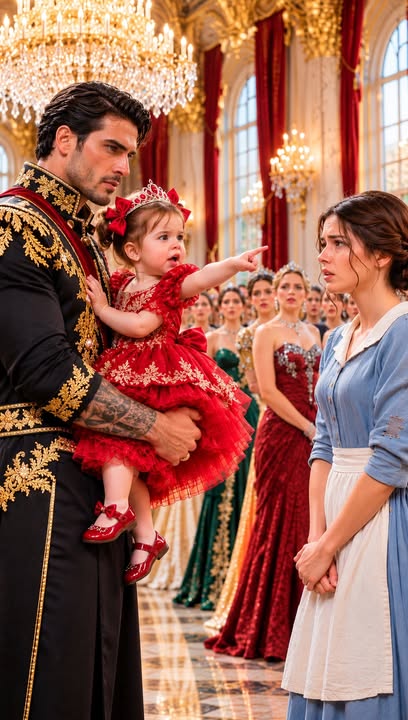
Part 6 – A Song for the Living
The former head of the household office had died that morning.
For a moment, the east wing held only the quiet rustle of papers in my hands.
Olivia read the statement again, her brow drawn with worry.
“Whoever wrote this wants the council to believe your father knowingly sent Isabella into danger.”
“Or wants us to stop looking at the altered roster,” I said.
The captain took back his phone.
“The council is meeting in the west salon. Your father has asked you to come.”
I looked at the sealed folder.
“Then we’ll go together.”
Olivia’s eyes met mine.
“Are you sure?”
“Yes. We have the letters and the original roster. We won’t let one statement erase what they show.”
The captain arranged for the documents to be carried by the archivist, who walked beside us with the sealed cabinet key in his hand.
As we crossed the palace, I thought of my father alone in the council room, waiting for the judgment of the family he had spent his life commanding.
I had never before wondered how frightened he might be.
The west salon was crowded when we arrived, but the members of the household council had set aside a small table for the evidence.
My father stood at its far end.
He looked older than he had the night before.
When he saw Olivia beside me, his gaze paused on her, then returned to my face.
“You came,” he said.
“I did.”
The council chair turned toward the archivist.
“Are these the original records?”
“They are,” the archivist replied. “The cabinet had remained sealed in the east wing. The documents have not been altered since its opening.”
The chair looked over the statements.
“Your Majesty, you have admitted to arranging Lady Isabella’s departure and concealing financial records,” she said to my father. “The second statement claims you knowingly ordered the outer watch removed.”
“I did not,” he answered.
“Can you prove that?”
My father looked at me.
I placed Isabella’s letter and the signed escape plan on the table.
“She believed the route would be secure,” I said. “My father’s letter confirms the plan. The watch roster shows that the order to stand down was added later, in a different hand.”
The archivist opened the sealed folder and indicated the marked line.
“R.R. appears beside the alteration,” he said. “Captain Rizzo’s initials.”
A murmur passed through the room.
The council chair raised one hand, and the room quieted.
“Who is Captain Rizzo?”
“Former head of the east gate watch,” I said. “He retired shortly after the accident.”
“He has been living outside the city,” the captain of the guard added. “We have located him and asked him to give a statement. He has agreed to return.”
My father’s hands had gone still at his sides.
The chair turned to him.
“You concealed the accounts and failed to report your suspicions about the driver.”
“I did,” he said.
“Why?”
“I believed that making an accusation without proof would bring the rival faction into the open and place the entire family in danger.”
“You chose silence.”
“Yes.”
“And now?”
“Now I will answer for that choice.”
He did not defend himself.
That, more than anything, changed the room.
The council’s questions continued, practical and difficult.
The financial records would be reviewed by independent auditors.
The criminal accounts would be turned over to the authorities.
The family’s security arrangements would be separated from its private business, and anyone who had participated in illegal dealings would be expected to cooperate with the investigation.
My father agreed to every condition.
I listened without interrupting, though each decision seemed to loosen something old and carefully bound inside me.
When the council paused, my father looked toward the documents.
“There is one thing I should say clearly,” he said. “I did not know the driver was working for the rival faction.”
“Do you know who chose him?” I asked.
“No.”
“Do you know who altered the roster?”
“I suspected Rizzo after I learned the watch had been moved, but I never had proof.”
“Why didn’t you tell me?”
“Because I was ashamed that I had arranged the escape without making certain every part of it was secure.”
His voice roughened.
“And because I feared you would hear only that I had sent your wife away.”
“I did hear that,” I said. “For years.”
“I know.”
The council chair closed the folder.
“Then we will wait for Captain Rizzo’s statement and the examiners’ findings before reaching a conclusion about the altered order.”
My father nodded.
The meeting ended without a verdict, but no one tried to take the evidence away.
For the first time, the truth was no longer held by one frightened person in a locked room.
It belonged to everyone willing to face it.
The former head of the household office’s death was not connected to the records.
He had been ill for some time, and the family physician confirmed that his passing had been expected.
His statement had been written weeks earlier, then sent to the council only after my father disclosed the hidden accounts.
The accusation against Vittorio had been added by someone else.
The difference mattered.
So did the fact that someone had tried to make the past serve a new lie.
Over the next several days, investigators examined the ink and handwriting on the gate roster.
Captain Rizzo returned to the palace and gave a full account.
He admitted that he had changed the watch order after accepting money from a messenger who claimed to speak for a man in the household office.
Rizzo had been told that the carriage route was already secure and that the guard post should be cleared to avoid drawing attention.
He had never been shown a signed order.
He said he had believed the instructions came from the household’s senior staff.
He also confessed that he had received money after the crash to remain silent about the altered roster.
The money had passed through an intermediary.
He could not identify the messenger, but he remembered a signet ring bearing the mark of a private transport company.
The examiners traced the company to a courier service that had once worked for the rival faction.
Their records revealed that the driver assigned to Isabella’s carriage had used another name.
His real name was found in a set of correspondence recovered from a former account manager.
He had been paid by the rival faction to sabotage the carriage and make the crash appear accidental.
The driver had died years later under a different identity, but the surviving records established his role beyond reasonable doubt.
The rival faction had believed Isabella’s escape would carry the hidden ledgers beyond the palace.
They had arranged to intercept the carriage before it reached the safe house.
They had not known the evidence was hidden with Olivia’s music box.
For years, the documents had rested in the east wing, preserved by Clara Bennett, while the only record of Isabella’s intentions remained in the hands of a child she had trusted.
The full truth did not arrive all at once.
It came through interviews, account books, old letters, and corrections made in careful ink.
My father had used palace funds to hide transactions that should have been exposed.
He had arranged Isabella’s departure, hoping to keep her safe while he contained the scandal.
He had not ordered the gate unguarded or the carriage sabotaged, but he had accepted an answer about the security arrangements without verifying it.
After Isabella’s death, he had chosen silence to prevent a conflict that might have harmed the family.
That silence had protected his power as much as it had protected anyone else.
When the authorities asked him to testify, my father did not refuse.
He gave them the account books and named the people who had benefited from the concealed funds.
Then I gave them the evidence in the music box and the letters from the east wing.
Some of the family’s operations came under investigation.
Several members of the organization were arrested or chose to cooperate.
The old network began to unravel, not with a single dramatic collapse, but through a series of difficult, deliberate choices.
I surrendered my position as head of the family’s organization before the authorities could demand it.
The title had been placed on my shoulders as if it were an inheritance I could not refuse.
For the first time, I understood that refusing it was also a way of protecting Lily.
My father did not try to stop me.
He stood beside me in the palace garden the morning I signed the papers.
“Your grandfather would have called this weakness,” he said.
“Then he was wrong.”
A faint, sad smile crossed my father’s face.
“Perhaps he was.”
He looked toward the nursery windows.
“Do you hate me?”
I thought of the man who had raised me, the patriarch who had hidden the truth, and the father who had finally agreed to answer for it.
“No,” I said. “But I won’t pretend you did no harm.”
“I wouldn’t ask you to.”
“I need you to be honest with Lily.”
“I will.”
“And with me.”
“I will try.”
I studied him.
“Trying isn’t enough if you use it to avoid telling me the hard thing.”
He accepted that without looking away.
“Then I will tell you the hard thing.”
It was not forgiveness.
It was a beginning.
The palace changed slowly.
Some rooms were opened to auditors.
Others were closed while the family’s private accounts were examined.
The guards remained at their posts, but their orders became simpler and more accountable.
The household council brought in independent officials to oversee the transition.
My father moved out of the patriarch’s private suite and into a smaller residence near the garden.
For the first time in years, he had no office to command from.
He spent more mornings in the garden than in the council chamber.
Lily began to know him as a grandfather rather than as the man with the golden cane.
It happened gradually.
He learned to sit on the floor with her without asking the nurse to bring a chair.
He let her show him how to stack wooden blocks, and he listened gravely when she explained that a yellow block was a castle and a blue one was the sea.
One afternoon, I found them both beside the fountain.
Lily had placed a flower in the brim of his hat.
My father sat very still, allowing her to decide whether he looked handsome.
When she laughed, he laughed with her.
The sound was unfamiliar in the palace.
It was also welcome.
Olivia stayed at the palace, but only after I asked her what she wanted.
I did not ask her to become Lily’s mother.
I did not ask her to remain because Isabella had chosen her.
I asked whether she wanted to continue her work with the charity home, whether she wanted a room of her own, and whether she could imagine building a life here that did not depend on anyone else’s expectations.
“I want to stay,” she said. “But I want it to be my choice.”
“It is.”
“And I want to keep working at St. Agnes.”
“Then we’ll make sure you can.”
“I don’t want charity presented as a royal favor.”
“Then we’ll support it through a trust, with the people who work there making the decisions.”
She studied me.
“You’re learning to ask instead of decide.”
“I’m trying.”
“That is a better beginning.”
I gave her a room in the guest wing, not the nursery and not Isabella’s old rooms.
She made it her own with a small desk, books from St. Agnes, and a blue glass bowl she had brought from the room where she grew up.
Lily began calling her Livvy without being prompted.
Sometimes she reached for Olivia when she was tired.
Sometimes she reached for me.
Neither of us turned it into a test.
I told Lily stories about her mother.
At first, I managed only small ones: the way Isabella hummed while she read, how she disliked cold tea, and how she would press a flower between the pages of any book she loved.
Later, I told Lily about the charity home and the children Isabella had visited.
I told her that her mother had been brave and kind, but not perfect.
I told her that she had been afraid and had asked for help.
And I told her that the accident had not been her fault.
Lily listened in the way small children listen, catching a word here and a feeling there.
Sometimes she asked where Isabella was.
I never told her that her mother had gone away.
I told her that we remembered her together.
That winter, the palace held no gathering to choose Lily a mother.
Instead, the family council approved the creation of a foundation in Isabella’s name, funded in part by the sale of property that had once served the old organization.
The first project was the restoration of St. Agnes.
Its roof was repaired, the kitchen was rebuilt, and the bedrooms were painted in soft colors chosen by the children who lived there.
Clara Bennett’s name was added to the archive room.
The dedication took place on a bright spring morning, several years after the night Olivia brought the music box to the ballroom.
The old charity home looked different from the street, but the garden remained.
Children ran between the young trees while the staff arranged chairs beneath a white canopy.
My father stood near the back, no longer carrying his cane.
He had testified, paid what he owed, and accepted the restrictions placed on him.
He was not free from consequence, and he did not ask to be.
But he had come.
Olivia stood beside me beneath the new stone sign.
ISABELLA MORETTI HOUSE, it read.
Below it, in smaller letters, were the names of the people who had helped preserve the home: Isabella, Clara, and the staff of St. Agnes.
Lily was no longer a toddler.
She wore a simple lavender dress and held the music box in both hands.
For years, it had rested in a glass case in the home’s archive.
That morning, she had asked to carry it into the garden.
“Are you ready?” I asked her.
She nodded.
“Can I sing Mommy’s song?”
“If you want to.”
“Livvy sings with me.”
Olivia crouched beside her.
“Whenever you’re ready.”
Lily looked around the garden.
The children had gathered near the new trees.
The staff stood beside the old matron, who had come from her retirement home to see the restored building.
My father stood near the path, his eyes bright.
I could still feel the ache of Isabella’s absence.
It had not vanished with the years or the answers.
But it no longer filled every silence.
Lily opened the music box.
The old mechanism turned with a faint, uneven click, and the first notes drifted into the garden.
She began to sing.
Her voice was small and clear, and Olivia joined her gently.
When the melody reached the line I had once been unable to hear without breaking, I sang too.
The notes did not bring Isabella back.
They did something quieter.
They gathered the people she had loved beneath the same sky.
When the song ended, Lily leaned against me.
Olivia’s hand settled over mine.
My father stood only a few steps away, waiting for permission rather than assuming it.
I reached out to him.
He took my hand.
For a moment, we stood together beside Lily, with the garden bright around us and Isabella’s song resting in the air.
Our family was not the one we had been before.
It was not built on perfect trust or untouched history.
It was built from what we had chosen to tell, what we had chosen to repair, and the people who had chosen to stay.
Lily slipped her hand into Olivia’s.
Then she took mine with the other.
“Home?” she asked.
“Yes,” I told her.
And this time, the word meant a place where the truth could be spoken, where love did not ask anyone to disappear, and where the future was ours to make.
**–THE END–PLEASE
Share your thoughts or feedback to motivate us to create more stories ♥️
* * *
[PREVIOUS: PART 5](https://echoesofstories.idolsgift.com/blog/part-5-the-song-beneath-the-photograph-047)
✓ Lynn R. Adams
Part 6 – A Song for the Living The former head of the household office had died that morning. For a moment, the east wing held only the quiet rustle of papers in my hands. Olivia read the statement…