PART 6 (THE END): The Secret Isabella Couldn’t Name15 026
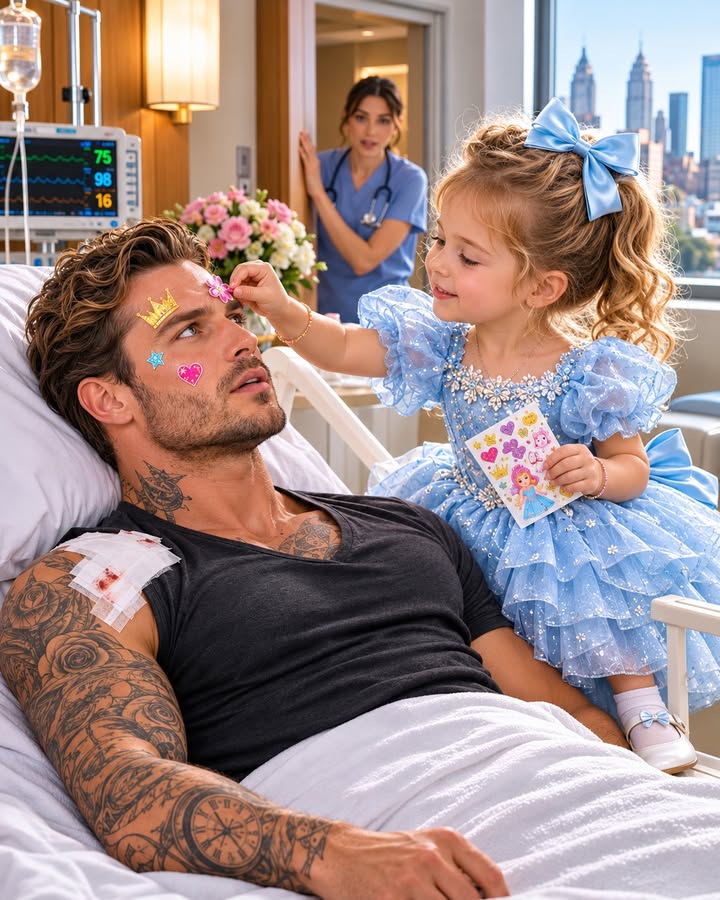
Part 6 – The Promise of the Butterfly
The liaison repeated the question, more gently this time.
“Does Daisy remember the lullaby Isabella used to sing to the twins?”
I looked toward the hospital window, where the afternoon light had turned the glass pale gold.
For a moment, I could hear Isabella’s voice as clearly as if she were sitting beside me, singing softly over the low hum of the prenatal clinic.
She had made up a song about two little stars who traveled through the night together, even when clouds hid one from the other.
I had sung it to Daisy as a baby, though I had never known where Isabella learned the tune.
“I think she might,” I said.
The liaison waited.
“Would the family be willing to let Daisy hear the question?” I asked. “I don’t want her to feel pressured.”
“They’ve said there’s no hurry,” she replied. “The child wants to know, but they understand Daisy is very young.”
Gabriel rested one hand on the blanket, his expression open and patient.
“We can ask her when she’s ready,” he said. “And if she doesn’t remember, that’s all right.”
Michael nodded.
“We shouldn’t turn a song into a test.”
The liaison carried that answer back through the proper channel, and the room settled into a quiet that felt different from the silences before.
This one held hope without demanding anything from it.
Over the next several days, the hospital’s investigators worked with the family liaison to verify the safety of the child and the people who had raised them.
Gabriel did not ask for their address.
He did not send anyone to look for them.
He signed every consent form placed before him and answered every question about the route used on the night of the ambush.
The investigation into Victor Hale moved forward through official channels.
Records showed that Hale had worked for the former chief of security, who had quietly shared Gabriel’s travel schedules with an outside group in exchange for money.
The ambush had been planned to frighten Gabriel into surrendering control of several businesses, not to kill Isabella or take a child.
But Isabella’s pregnancy had made her a possible target for leverage, and she had recognized enough to fear what might happen if the wrong person learned about the twins.
Hale had later searched the hospital records and contacted people connected to the placement because he hoped the information would give him influence over Gabriel.
The butterfly pin was not proof by itself.
The records, messages, and testimony made the picture clear.
Daisy had seen Hale near the family’s car service office weeks earlier, and his polished shoes had stayed in her memory.
The butterfly on his coat had matched the small emblem used by the security team.
Michael’s tattoo had been a cruel coincidence, a symbol of their late mother rather than a sign of danger.
He had never been the bad butterfly man.
When investigators explained what they had found, Michael listened with his head bowed.
“I was so certain the clue pointed at me,” he said afterward, “that I stopped seeing how little Daisy was actually accusing.”
“She was remembering what frightened her,” I replied. “She never knew what it meant.”
“Neither did I.”
Gabriel reached across the table and rested a hand on his brother’s shoulder.
“We were all trying to make the fear fit a familiar shape.”
Michael’s eyes shone.
“I’m sorry I made you question me.”
“I’m sorry I let my fear turn into suspicion.”
They did not embrace at once.
The hurt between them had not disappeared simply because the mystery had changed shape.
But Michael stayed beside Gabriel while the investigators took their statements, and Gabriel asked him to help preserve the family records.
It was enough for a beginning.
The chief of security resigned before the inquiry was complete and later agreed to cooperate.
Gabriel’s organization was placed under review, and he stepped away from its day-to-day control.
Some of the businesses passed into independent management.
Others closed.
The choices cost him money, influence, and the certainty that he could shape every outcome.
He made them anyway.
“I spent years thinking control was the same as protection,” he told me one quiet evening in his recovery room.
“It isn’t,” I said.
“No. Sometimes it’s just fear wearing a better suit.”
I smiled despite myself.
“You’ve been practicing that line.”
“I’ve been practicing telling the truth.”
His recovery was slow.
His shoulder healed before his ribs stopped aching, and for weeks he had to accept help with ordinary things he had once done without thinking.
He grew impatient with the limits his body placed on him, but he never took that frustration out on the people around him.
When Daisy visited, he let her choose which book they read and never asked her to sit still when she wanted to draw.
She made him a new butterfly every time.
Some were crooked, some had wings that stretched beyond the page, and one had three eyes because Daisy had decided it looked “more awake.”
Gabriel kept every drawing in a folder beside his bed.
The family liaison continued to carry messages between us and the child’s caregivers.
At first, the messages were simple.
They asked about Daisy’s favorite color, whether she liked music, and what name she used for the butterflies she stuck on her bedroom wall.
We shared photographs of her drawings and told them that she loved cinnamon toast and the sound of rain against the window.
In return, we learned that Isabella’s second child had been raised by a kind couple named Ruth and Daniel Mercer.
They had been close friends of the family placement worker and had cared for the child with patience and devotion.
The child was named Leo.
He was four years old, curious about birds, fond of building tall towers, and cautious around people he did not know.
The Mercers had told him, in simple terms, that he had been born with a twin sister and that his first mother had wanted them to be safe.
He had kept the photograph Isabella sent with the placement papers in a small wooden box.
The image showed her holding him close in a hospital blanket, her cheek resting against his tiny head.
She had written a note on the back.
For Leo, so you will know you were loved from the very beginning.
When I read those words, I had to sit down.
I thought of how often I had imagined the missing baby as a shadow, a life cut short before anyone could know it.
Instead, he had been loved, held, named, and raised by people who had honored Isabella’s choice.
The Mercers agreed to speak with us by video call before considering a meeting.
On the evening of the call, Gabriel sat beside me in the quiet family room at the hospital.
Michael chose to wait in the corridor, saying he did not want to make the conversation feel like a family gathering before the Mercers were ready.
Daisy sat on my lap, her lavender backpack on the floor and a purple butterfly sticker carefully stuck to the sleeve of her cardigan.
The screen brightened.
Ruth Mercer appeared first, with a warm, thoughtful face and soft gray hair.
Daniel sat beside her, one arm resting along the back of their sofa.
A small boy leaned into view, then disappeared again.
“Hello, Natalie,” Ruth said. “Hello, Gabriel.”
“Thank you for speaking with us,” Gabriel replied.
“I know this can’t be easy,” I said.
“It isn’t,” Ruth answered. “But keeping the children apart forever would be harder.”
She looked toward the edge of the screen.
“Leo, would you like to say hello?”
The boy appeared, holding a toy bird in one hand.
His brown hair fell over his forehead, and his eyes were wide with careful interest.
“Hello,” Daisy said.
Leo stared at her for a moment.
“Hello.”
Daisy waved.
He lifted the toy bird and showed it to her.
“It has a red tail,” he said.
“It’s pretty,” Daisy replied.
A small smile tugged at his mouth.
Gabriel sat very still beside me, as though he was afraid movement might interrupt the fragile bridge forming between the children.
Ruth glanced at him.
“Isabella spoke about you in the letter she left for Leo,” she said. “She wrote that you loved the children, even when she was afraid of the people around your work.”
Gabriel lowered his eyes.
“I wish she had been able to tell me more.”
“She may have wanted to,” Ruth said. “But she was trying to make a choice she believed would keep both children safe.”
“I understand that now.”
Daniel watched him with quiet care.
“Understanding it now doesn’t make the past simple.”
“No,” Gabriel said. “It doesn’t.”
“I won’t pretend we have decided what comes next,” Ruth continued. “Leo has a home with us. He has always known that he is loved here.”
“I would never ask you to change that,” Gabriel replied.
Ruth’s shoulders eased.
“We hope you’ll become people he knows, if that feels right to him.”
“I would be grateful for that.”
Leo looked from Ruth to Daisy.
“Are you really my sister?”
Daisy looked up at me, uncertain.
“You’re my brother,” she said.
The words came simply, without fear or ceremony.
Leo considered them.
“Do you like birds?”
“I like butterflies.”
He nodded, as though this was useful information.
“I like birds and butterflies.”
“Then we both like things that fly,” Daisy said.
“That’s true.”
The first call lasted only a few minutes.
No one rushed the children into affection.
When Leo began to fidget, Ruth ended the conversation gently, promising they could speak again another day.
After the screen went dark, Gabriel let out a long breath.
Daisy looked at me.
“Is Leo the other baby?”
“He’s your brother,” I said. “He was the baby Isabella asked the Mercers to care for.”
“Can I give him a sticker?”
“Not yet,” I said. “We’ll ask when the time is right.”
She accepted this with a thoughtful nod.
“Then I’ll keep one safe.”
Gabriel looked at her.
“That’s a good idea.”
Michael appeared in the doorway.
“Was that Leo?”
Daisy nodded.
“He likes birds.”
Michael’s face softened.
“Then I’ll have to learn about birds.”
Over the following weeks, the calls became familiar.
Leo showed Daisy his wooden blocks and the small plants Ruth kept beside the kitchen window.
Daisy showed Leo her sticker collection and explained that princess stickers could make almost anything better, even a cracked teacup.
Sometimes the children talked.
Sometimes they simply sat together while their caregivers spoke.
They learned each other slowly, without being asked to pretend that four years apart could vanish in a single conversation.
The first in-person meeting took place at a quiet community garden on a mild Saturday morning.
The family liaison had helped choose the place, and Ruth and Daniel arrived before us so Leo could become comfortable with the setting.
Gabriel came with a walking cane, his shoulder healed but still stiff when the weather turned cold.
Michael stayed near the path, giving the children room to decide how close they wanted to be.
I held Daisy’s hand as we approached.
Leo stood beside Ruth, clutching the same toy bird he had shown her on the screen.
Daisy wore her butterfly clip.
When Leo saw it, he looked at Ruth, then at me.
“Is that the butterfly from Isabella’s letter?” he asked.
“Yes,” I said. “Daisy has worn it for a long time.”
“Mom said Isabella wrote about it.”
Daisy touched the clip.
“It helps my hair stay up.”
Leo smiled.
Ruth bent to speak softly with him, then stepped back.
Daisy reached into the pocket of her cardigan.
She took out a purple butterfly sticker and held it out, but did not move closer.
“I saved this for you,” she said.
Leo looked at the sticker, then at Daisy.
“Can I have it?”
“Yes.”
He crossed the small space between them and accepted it.
For a moment, neither child seemed to know what to do next.
Then Daisy pointed to the bench.
“Do you want to sit?”
“Okay.”
They settled side by side, with a little space between them.
Daisy placed her hands in her lap.
Leo held the sticker carefully between two fingers.
Gabriel stood behind them, watching with an expression I had never seen before.
It was grief, but not only grief.
There was wonder in it, and gratitude, and the first light of a future he had once believed was gone.
Ruth turned to him.
“Isabella wanted them to know each other.”
“She did,” Gabriel said. “Thank you for caring for Leo when we couldn’t.”
“We loved him,” Ruth replied. “We still do.”
“I hope we can keep caring for him together.”
Ruth nodded.
“That’s what we hope too.”
Michael joined us then, carrying a small box wrapped in brown paper.
“I brought something for the children,” he said. “Only if it’s all right.”
Ruth glanced at Leo, who nodded.
Michael unwrapped the box.
Inside was a simple wooden music box, the kind that played a gentle tune when its lid was lifted.
“I remembered this melody,” he said. “Isabella used to sing it to the twins.”
I felt my breath catch.
The tune was soft and winding, the song about two little stars traveling through the night.
Michael turned the key.
The music began.
Daisy’s face changed with recognition.
“That’s my sleepy song,” she whispered.
Leo looked up.
“Mom sings it to me.”
I sat beside them on the bench.
“I sang it to Daisy when she was a baby,” I said. “Isabella taught it to me before the twins were born.”
Daisy listened as the melody turned through the air.
Then she began to hum.
Her voice was quiet and unsteady, but the tune was clear.
Leo joined her after a moment.
The two children did not know every note.
They did not need to.
Their voices met in the middle of the song, one rising where the other fell, just as the melody had always been meant to do.
Gabriel turned his face away.
I reached for his hand.
This time, he took mine without hesitation.
He did not speak, and neither did I.
We stood together beneath the bare branches of the garden trees, listening as the twins finished the lullaby their mother had left for them.
When the music stopped, Daisy pressed the butterfly sticker onto the lid of the music box.
“It’s so they don’t get lost,” she said.
Leo touched one purple wing.
“They can fly together.”
“Yes,” Daisy replied. “But they can come back too.”
A few months later, the former chief of security’s role in the ambush was confirmed, and Victor Hale was arrested for trying to obtain sealed information about Leo’s placement.
No child was approached.
No family address was released.
The investigators acted on the evidence, and Gabriel let them do their work.
His world changed as a result.
He no longer directed the organization that had once demanded every part of his attention.
He sold what he could not responsibly manage and gave up the rest.
The decision was not painless.
It was still the first choice he had made in years that seemed to bring him closer to the man Isabella had once hoped he could become.
He began volunteering with a neighborhood medical clinic, helping raise funds without placing his name on its doors.
He learned to cook a few simple meals, though his first attempt at soup was so salty that Daisy declared it “a sea in a bowl.”
Michael found his own way forward too.
He spent time with Leo only when Ruth and Daniel invited him, and he never treated the child as a secret he had been entrusted to solve.
One afternoon, he sat with me at the garden table while Daisy and Leo built a tower of wooden blocks nearby.
“I kept telling myself I had protected Isabella by staying quiet,” he said. “Sometimes I was protecting myself from having to admit I didn’t know what to do.”
“You don’t have to earn forgiveness all at once,” I replied.
“I know. I just want to stop making silence do the work of an apology.”
He looked across the garden toward Gabriel, who was helping the children keep their tower from tipping.
“Will you forgive me?”
“I already have,” I said. “But I may still need time to trust every choice you make.”
“That’s fair.”
“It’s a beginning.”
He nodded, accepting the difference.
By then, Gabriel and I had learned how to be together without hurrying toward a promise neither of us was ready to make.
We took walks in the park when his shoulder allowed it.
We spoke about Isabella when we needed to, and about ordinary things when we didn’t.
He never asked me to forget the years we had lost.
I never pretended that loving him meant I had stopped seeing the risks of his past.
Instead, we learned to make room for the truth between us.
One evening, after the children had gone home with the Mercers and my mother had driven Daisy back to our apartment, Gabriel walked me to the front steps.
The air smelled of wet leaves and woodsmoke.
“You don’t have to decide anything tonight,” he said.
“I know.”
“I just want you to know I hope this is the beginning of something.”
I studied his face.
He looked more tired than the man who had once commanded a private wing, but also more present.
“I hope so too,” I said.
He offered me his hand.
I took it.
There was no promise to love without fear or a declaration that the past had been made harmless.
There was only the choice to keep walking toward each other, carefully and honestly.
For now, that was enough.
On the day the twins celebrated their fifth birthday, we gathered in Ruth and Daniel’s garden.
My mother brought a cake decorated with uneven purple butterflies.
Michael brought a second music box, repaired and polished, so Leo could keep one at his house and Daisy could keep the other.
Gabriel arrived with a paper bag of cinnamon rolls and an apology for how many had come out a little too dark.
The children laughed and ran between the picnic table and the flower beds.
Daisy wore her butterfly clip.
Leo wore the matching one Ruth had chosen for him, a small blue butterfly fastened to his sweater.
When the cake came out, everyone sang.
After the candles were blown away, Daisy placed a purple sticker on Leo’s hand.
Then Leo chose a yellow one and pressed it onto hers.
“Now we both have butterflies,” he said.
“And we both have families,” Daisy replied.
The words made the table fall quiet, though no one asked her to explain them.
I looked at the people gathered around us.
Ruth and Daniel, who had kept a promise to a frightened mother.
Michael, who had finally learned that love sometimes meant helping without demanding to know every answer.
Gabriel, who had chosen a future built on care rather than control.
And the twins, who had found each other without being asked to forget the people who had loved them along the way.
Daisy reached across the table and took Leo’s hand.
The purple butterfly sticker rested between their fingers, bright in the afternoon sun.
I thought of the first one Daisy had pressed onto Gabriel’s blanket, the warning she had given in a child’s uncertain words, and the secret Isabella had trusted us to keep until her children were together.
The butterfly had once seemed to point toward danger.
Now it meant something else.
It meant that the family had listened.
It meant that the children were safe enough to laugh.
It meant they could fly out into the world and still find their way back to one another.
**–THE END–PLEASE
Share your thoughts or feedback to motivate us to create more stories ♥️
* * *
[PREVIOUS: PART 5](https://puretales.idolsgift.com/blog/part-5-the-secret-isabella-couldn-t-name15-026-1)
✓ Lynn R. Adams
Part 6 – The Promise of the Butterfly The liaison repeated the question, more gently this time. “Does Daisy remember the lullaby Isabella used to sing to the twins?” I looked toward the hospital wi…