PART 6 (THE END): The Secret in the Guard’s Hand 056
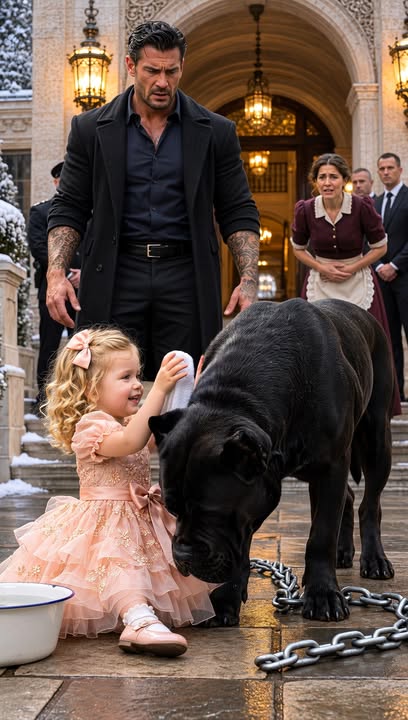
Part 6 – The Place Bruno Chose
The sleeve belonged to the night maintenance supervisor, a man named Calder who had been sent to check a frozen heating line near the east courtyard.
The investigator found him in the estate’s service log, where his arrival had been recorded but his name had never been added to the security roster.
When we showed him the enlarged image, he recognized the silver key in his hand.
“It was my master key,” he said, looking uneasy. “I was checking the old storage room beside the service stairs.”
“Why didn’t you report being near the courtyard?” I asked.
“I thought I had. I was called away before I finished the log.” He rubbed one thumb over the other. “I saw the handler leaving through the gate. I didn’t know what had happened, and I didn’t want to interfere.”
“You saw Daniel open it?”
“Yes.”
“Did you speak with him?”
“No. He looked upset, so I thought he was handling it.”
The investigator asked whether Calder had entered the security room.
“No,” he replied. “I never had access. My key opens the maintenance areas, nothing else.”
His account matched the building’s access records.
He had been the figure by the service entrance, watching the courtyard because he had heard the commotion and was deciding whether he should call for help.
The silver key was his own.
It opened no secret door and revealed no hidden visitor.
The mystery had been smaller than our fears, though the questions that mattered had not been small at all.
Calder had noticed something was wrong and hesitated.
Daniel had opened the gate because he was afraid.
I had trusted the wrong person because I had not looked closely enough.
And my brother, trying to protect Emma, had left behind a silence that nearly became another burden for her to carry.
The investigator included Calder’s statement in the final report, along with Daniel’s, the camera records, and the contractor’s documents.
The handler was located through the contractor and questioned about his return.
He admitted that he had believed the old agreement gave him a right to reopen the matter, though he had no proof that my brother’s private settlement remained active.
He also acknowledged that he had handled Bruno poorly in the courtyard.
The footage supported that account.
The contractor was investigated for recommending a handler whose earlier dismissal it had failed to disclose, and for approving his return without confirming what the old agreement meant.
The company suspended the account and agreed to cooperate with the inquiry.
Daniel was removed from duty while his part in the incident was reviewed.
He had made a serious mistake by opening the gate without confirming what was happening, and another by hiding Emma’s fabric instead of reporting it.
But the evidence did not show that he had harmed Bruno or Emma.
He accepted responsibility for his decisions and agreed to testify about what he had seen.
I did not ask for his return to the estate.
Trust could not be restored merely because I understood why it had failed.
But I made sure his statement recorded the parts that were true: that he had been frightened, that he had made a choice he regretted, and that he had cooperated once asked to explain it.
Bruno received a full examination from the veterinarian.
His hind leg was badly strained, but there was no lasting damage.
The old scar along his shoulder had healed years before, though the cold and the stress of the courtyard incident had made the area tender.
For several weeks, he needed quiet, careful walks and more rest than he thought he deserved.
He disliked being told to slow down.
He disliked the soft support wrap even more.
Emma, however, could persuade him to accept both.
She would sit beside his blanket with her picture books, reading each page in a grave, reassuring voice.
When Bruno began to fidget, she would set her teddy bear beside his paws and say, “You can be brave without getting up.”
He seemed to understand that she was speaking to him.
Sometimes I thought she was speaking to all of us.
The first time I came into the room after the final report was filed, I found Sophia kneeling beside Bruno while Emma rested her chin on the dog’s back.
She looked up at me.
“Is it over?” she asked.
“The investigation is finished.”
“Does that mean nobody will come looking for answers anymore?”
“It means the adults responsible have been asked to answer for what they did.”
“Will they be all right?”
“I don’t know,” I said honestly. “But the people who were hurt are being cared for, and the truth has been recorded.”
Emma considered this.
Then she looked at Bruno.
“He’s being cared for.”
“He is.”
“Then that’s good.”
Sophia reached for her hand.
It seemed like enough for that moment.
I had expected the end of the investigation to feel like a door closing.
Instead, it felt like the first quiet morning after a long storm, when the damage was still there but the wind had finally stopped asking questions.
The house changed in small ways.
I stopped taking meals alone in my study.
Sophia and Emma began joining me in the dining room, first because Bruno needed someone nearby, then because neither of us wanted to go back to separate rooms out of habit.
I asked before making decisions that affected them.
Sophia began telling me when she needed more space instead of assuming I would understand it without being told.
We did not become a family by deciding that we were one.
We became one by making room for ordinary things: tea that went cold while Emma described a story, walks that took longer because Bruno stopped to smell every snowbank, and evenings when Sophia and I spoke about the day without trying to solve each other.
One afternoon, when the snow had thinned and the courtyard stones were wet with the first slow melt, Sophia and I sat beside the kitchen window while Emma drew at the table.
Bruno slept on the rug nearby, his injured leg stretched out beneath him.
“You don’t have to keep us here,” Sophia said.
I turned toward her.
“I know.”
“And you don’t have to offer us a home because you feel guilty.”
“I know that too.”
She watched me carefully.
“Then why are you asking us to stay?”
“Because I want to build a home with you, not because I’m trying to make amends for my brother or pay back a debt.”
Her gaze softened, though she remained cautious.
“What would that look like?”
“It would look like you having your own work, your own choices, and the freedom to say no to me.”
“That last part may take practice.”
“I expect it will.”
“And Emma would still be my daughter.”
“Always.”
“I wouldn’t want anyone deciding what’s best for her without asking me.”
“Then I won’t.”
She looked out at the courtyard.
“It would take time.”
“I’m not asking you to decide today.”
For a moment, she said nothing.
Then she placed her hand on the table between us.
Not a promise.
Not yet.
But an invitation to remain in the conversation.
I laid my hand beside hers.
Emma looked up from her drawing.
“Are you making a plan?”
“Not a secret one,” Sophia said.
“Can I hear it?”
“You can hear the parts that affect you,” I told her.
She considered that, then nodded as though this was a fair rule.
“Can we have pancakes on Saturday?”
Sophia laughed.
“That part is definitely open for discussion.”
“I think pancakes are a good plan,” I said.
Emma returned to her drawing with a satisfied smile.
Bruno lifted his head at the sound of her voice.
She slid out of her chair and went to him, stopping a short distance away.
“Do you want company?”
Bruno’s tail moved once against the rug.
Emma sat beside him.
The simple question stayed with me.
Do you want company?
It was a better beginning than any promise I had ever made.
Spring came slowly to the estate.
The courtyard fountain was cleared of ice, the dead leaves were swept from the steps, and small green shoots appeared beside the garden wall.
Bruno’s leg healed well enough for short walks.
He still favored it when the weather turned cold, but the veterinarian assured us the stiffness would ease.
Emma insisted on carrying his teddy bear whenever they went outside, though Bruno had never again needed to borrow it.
The red strip from her dress was returned to Sophia after the examination was complete.
She placed it in a small box with the family photograph of Emma and Bruno.
The box remained on the shelf in her room, not as a mystery to be solved, but as part of a story she could understand when she was ready.
We spoke to Emma about the past in simple pieces.
We told her that Bruno had known her when she was very small, that he had once helped keep her safe during an accident, and that some adults had made decisions they should have handled more honestly.
We told her she had done nothing wrong.
She listened with the solemn attention she gave to everything important.
“Was Daddy there?” she asked.
Sophia took her hand.
“He knew about it afterward,” she said. “He helped Bruno get better.”
Emma looked at the old photograph.
“Daddy knew Bruno?”
“He did,” Sophia said.
“Did Bruno know Daddy?”
I looked at the dog resting beside them.
“I think so.”
Emma traced the edge of the frame with one finger.
“Then Bruno knew our family before I did.”
Sophia’s eyes filled.
“Yes,” she whispered. “He did.”
Emma leaned against her mother.
Bruno rose carefully and settled his head on Emma’s lap.
The old photograph showed the beginning of their bond.
The living dog beside them showed that it had endured.
Months later, Daniel returned to the estate with the investigator and gave his final statement.
He did not come inside.
He asked me to pass along an apology to Sophia and Emma, and I told him I would.
Sophia listened when I relayed the message.
“I’m glad he told the truth,” she said.
“So am I.”
“Does that mean you forgive him?”
“I don’t know.”
“You don’t have to decide.”
The answer gave me permission I had not known I needed.
Daniel’s part in the incident remained in the record.
He had not been made innocent by his fear, but neither had his fear erased everything else about him.
Accountability, I was learning, did not require pretending a person had only one quality.
The contractor closed the old account and provided copies of the records to the investigator.
My brother’s private agreement was no longer hidden inside a folder no one had opened.
The handler’s claim had no legal standing.
His return had been unauthorized after the agreement expired, and his treatment of Bruno had been documented.
The matter was settled in the way my brother had once intended but had not managed to achieve: not through silence or a payment, but through a clear record of what happened and who had failed to act.
I read my brother’s letter once more before placing it in a new archival folder.
His last request was still difficult to accept.
Do not bargain with him again.
I had not.
But I wished my brother had trusted me enough to tell me the truth while he was alive.
I wished he had trusted Sophia enough to tell her, too.
Still, beneath the mistakes in his letter, I found the thing he had wanted me to understand.
Bruno had chosen Emma.
And love, when it was real, did not become weaker because the truth had been painful.
One warm evening, long after the courtyard had dried, I found Sophia sitting on the back steps while Emma and Bruno rested in the garden.
Emma had her teddy bear in her lap.
Bruno was stretched beside her, eyes half closed in the sun.
Sophia watched them with a softness that had been missing from her face during the weeks of the inquiry.
“She trusts him completely,” she said.
“He earned it.”
“So did she.”
I sat beside her.
“Do you think you could be happy here?”
Sophia looked at the house, then at the garden where Emma was telling Bruno a story about a brave rabbit who had once been afraid of the dark.
“I think happiness is something we’ll have to build,” she said.
“I’d like to help.”
“You’ll have to remember that help isn’t the same as control.”
“I’m trying.”
“I know.”
She rested her shoulder lightly against mine.
“I’m not ready to promise that I know what this becomes,” she said.
“You don’t have to.”
“But I’m willing to keep finding out.”
The words were quiet, but they opened something in me that no signed document ever could.
“Then we’ll take our time,” I said.
Sophia smiled.
“Good.”
Emma turned toward us.
“Mr. Moretti,” she called, “Bruno says the rabbit found his way home.”
“Did he tell you that?”
“He put his head on my foot.”
“That does sound like him.”
“He’s not cold anymore.”
“No,” I said. “He isn’t.”
Emma leaned over Bruno and pressed her cheek briefly to his warm shoulder.
The dog closed his eyes.
A month later, we moved from the large dining room to the smaller breakfast room because Emma liked the morning light there.
Sophia kept her work at the house, but only by her own choice, and we hired additional help so she was never expected to carry the household alone.
I did not ask her to give up her independence.
She did not ask me to become someone I was not.
We learned where compromise was possible and where it would cost one of us too much.
There were difficult conversations.
There were also mornings when Emma placed a drawing on my desk, or Sophia left a cup of coffee beside my papers without saying anything.
There were evenings when Bruno slept between us on the rug, his breathing slow and even.
One night, Emma woke from a dream and asked if the handler could come back.
Sophia sat on the edge of her bed and answered honestly.
“He can’t come to see you without permission, and the grown-ups are paying attention now.”
Emma searched her mother’s face.
“Will you stay?”
“I’ll stay as long as you need me.”
Emma looked toward the doorway, where I had stopped to give them space.
“Will Vincent stay too?”
Sophia glanced at me.
“That’s up to him,” she said.
I stepped into the room.
“I’m here,” I told Emma. “And if you want me to stay, I will.”
She held out her hand.
I took it, careful not to make a promise larger than the moment required.
Bruno had followed me down the hall.
He settled on the floor beside her bed, his head near her hand.
Emma fell asleep holding one of his ears between her fingers.
Sophia and I remained beside her until the room grew quiet.
As we left, Sophia touched my arm.
“You didn’t promise the whole world.”
“No.”
“You promised the part you could give.”
“I’m learning.”
“So am I.”
By the time winter returned, Bruno could climb the courtyard steps without help.
He still moved more slowly than he had in the years before the incident, but he no longer seemed to brace himself against every sound.
The guards carried no weapons in the west hallway.
The service gate had been repaired, its access logs reviewed, and its controls moved to a room where several people could verify each opening.
More importantly, the adults who worked in the house were encouraged to report what they saw without fear that asking a question would make them suspect.
The estate did not become safer because I controlled every detail.
It became safer because more people were willing to tell the truth.
On the first snowfall of the next winter, Emma asked if she could take Bruno out to the courtyard.
Sophia looked at the vet’s note, then at Bruno.
“He can go for a short walk,” she said. “But we’ll stay close.”
“I’ll stay close too,” I said.
Emma wrapped herself in a red coat and carried her teddy bear.
Bruno wore a thick blanket over his back, which he tolerated because Emma had chosen it.
We crossed the courtyard together beneath the falling snow.
The fountain was still covered, and the stones glimmered under the garden lights.
Bruno stopped beside the place where Emma had first knelt with her washcloth.
She looked down at him.
“Do you remember this?”
His tail moved once.
“I think he does,” I said.
Emma crouched and rubbed the soft place behind his ear.
“Thank you for remembering me.”
Bruno leaned into her hand.
Sophia stood beside us, her gloved fingers tucked around Emma’s other hand.
I looked at the three of them in the falling snow and felt, for the first time, that the house was no longer only a place I owned.
It was a place where I had learned to stay.
We went inside when the cold grew sharp.
Bruno settled beside the fire in the small sitting room, his blanket folded beneath him.
Emma placed her teddy bear against his chest, as she had on the day the guard frightened him.
He turned once, careful of his healed leg, and rested his head beside her.
She curled up on the rug nearby, listening to the snow tap softly against the windows.
Sophia sat beside me on the sofa, her shoulder warm against mine.
Emma’s eyes began to close.
“Bruno,” she murmured, “you’re home now.”
Bruno breathed out, slow and peaceful.
And in the quiet room, with Sophia beside me and Emma safe in the warmth of the fire, I understood that home was not something I could command a person or a dog to feel.
It was something we had built, one honest choice at a time.
**–THE END–PLEASE
Share your thoughts or feedback to motivate us to create more stories ♥️
* * *
[PREVIOUS: PART 5](https://storyly.idolsgift.com/blog/part-5-the-secret-in-the-guard-s-hand-056)
✓ Lynn R. Adams
Part 6 – The Place Bruno Chose The sleeve belonged to the night maintenance supervisor, a man named Calder who had been sent to check a frozen heating line near the east courtyard. The investigator …