PART 6 (THE END): The Secret Grandma Had Been Keeping 047
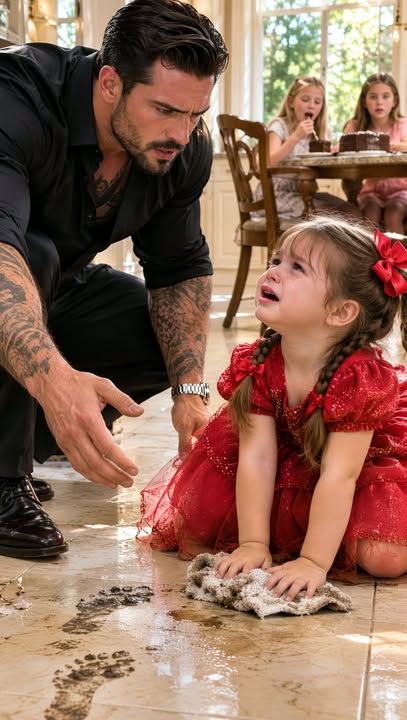
Part 6 – The Story We Carried Home
Elena’s last sentence lingered between us.
“She had met you before Lily was born,” she said, “and she left something else for you, too.”
I looked through the doorway at Lily, who was settling Oliver into his paper house with grave care.
“What did Rachel leave?”
“A note in the file says she asked Patricia to keep a second letter for you,” Elena replied. “It was meant to explain why she chose you, but the letter itself isn’t part of the agency record.”
“Does Patricia still have it?”
“I don’t know. You’ll have to ask her.”
After we hung up, I stayed at the kitchen table with my hands wrapped around a mug that had gone cold.
I had spent years thinking my mother’s silence was a wall built against Lily and me.
Now I could see it had also been a room where Patricia had locked away her grief, her shame, and the words Rachel had trusted her to carry.
Understanding that did not erase what Lily had heard or how frightened she had been.
But it gave me a way to approach my mother without asking her to pretend the hurt had never happened.
I called Patricia that afternoon.
She answered softly.
“I heard from Elena,” I said. “Rachel left another letter for me.”
There was a pause.
“Yes,” she said. “She did.”
“Do you still have it?”
“I do.”
“Why didn’t you tell me?”
“Because I thought the first letter was for Lily, and the second was something I had no right to hand you until you knew the rest.”
“You could have told me it existed.”
“Yes,” Patricia said. “I should have.”
Her voice held no defense, and I found myself listening for one anyway.
It never came.
“Can you bring it to Elena’s office?” I asked. “I want to read it there.”
“I can.”
“And, Mom?”
“Yes?”
“This doesn’t change what Lily needs.”
“I know.”
“She gets to choose when she sees you, and how long.”
“I understand.”
“I need you to keep understanding it after today.”
“I will try.”
The next afternoon, Patricia brought the letter to Elena’s office in a plain envelope.
We sat around the same table where we had first looked through the case history.
Lily was at preschool, and I had decided to read Rachel’s words without her there, so I could take in whatever they held before deciding what might be right to share.
Patricia placed the envelope in front of me but did not push it closer.
“I kept it because Rachel asked me to,” she said. “And because every time I thought about giving it to you, I remembered how I had failed her.”
Elena sat quietly beside us.
I opened the envelope.
Rachel’s handwriting was the same as the first letter, careful and uneven, as though each line had cost her something to write.
She said she had met me at a family gathering years earlier, when I had been helping her carry boxes from a relative’s apartment.
She remembered that I had stayed after everyone else left, not because anyone asked me to, but because she looked overwhelmed and I had noticed.
I barely remembered the afternoon myself.
Rachel did.
She wrote that she had seen in me a steadiness she wished she had found in her own life.
She had not expected me to adopt her baby, and she had not wanted anyone to feel obligated.
But when Patricia told her I was considering fostering, Rachel had asked whether she could speak with me.
Patricia had promised to arrange it.
Then Rachel’s circumstances worsened, and the opportunity never came.
She wrote that she was sorry for the things she could not give her daughter, but she did not want Lily to grow up believing that being placed for adoption meant she had been left without love.
The choice to ask Patricia for help, Rachel explained, was not a last-minute plea to take Lily back.
It was the beginning of a plan to place her with someone Rachel believed would stay.
The final paragraph was brief.
If Daniel is reading this, Rachel had written, then Lily has found the home I hoped she would find.
Please tell him I trusted him with her, and that I hope he never doubts he belongs in her story.
I read the last line twice.
The words blurred before I reached the end the third time.
Patricia sat opposite me, her hands folded together.
“I should have told you when you first said you wanted to adopt her,” she said.
“Yes.”
“I was afraid the truth would make you think I had a right to decide whether Lily belonged with you.”
“It wasn’t yours to decide.”
“I know that now.”
She looked down at the table.
“I was ashamed that Rachel had trusted me with something I couldn’t fix. Then you came along, and I saw you doing the thing I hadn’t managed to do.”
“You could have helped me.”
“I could have.”
“You could have stood beside Lily instead of making her feel as though she had to prove she deserved a place.”
“I know.”
Her answer was still, simply, an admission.
I folded Rachel’s letter and returned it to the envelope.
For a while, none of us spoke.
The room felt different from the last time Patricia and I had sat together.
Not because the past was settled, but because we were no longer pretending it had happened by accident.
At last, Patricia asked, “Would Lily want to see me again?”
“That’s a question for Lily.”
“I won’t ask her to.”
“I know.”
“I’m sorry, Daniel.”
I looked at her, remembering the way she had held Lily by the window, the words she had chosen, and the years in which she had let resentment speak for her.
“I hear you,” I said. “Trust will take longer.”
“I understand.”
We left the office without making plans for another meeting.
The letter came home with me and went into the small wooden box in my desk, beside Rachel’s first letter.
For the next several months, our family moved at Lily’s pace.
Counseling gave her a place to ask the questions that wandered into her thoughts at bedtime, at breakfast, and sometimes in the middle of an ordinary game.
She asked whether Rachel had liked flowers.
She asked if Rachel would have enjoyed picture books.
She asked whether Grandma had known that Lily liked pancakes.
There were no questions too small for me to answer, even when the honest answer was that I didn’t know.
Together, Elena and the counselor helped us talk about the letters in a way Lily could understand.
We told her that Rachel had loved her and wanted her to be safe.
We told her that Patricia had been asked to help find a good home.
We told her Rachel had trusted me to be Lily’s daddy, and that I had been glad to say yes.
Lily listened, asking us to repeat certain parts when she wanted to hear them again.
She did not ask to read the letters.
They belonged in her room on the shelf beside a framed photograph of Rachel, where she could see them and choose when to learn more.
Patricia sent cards on quiet occasions, never pressing for a reply.
Sometimes Lily asked me to read one aloud.
Sometimes she tucked it into the wooden box she used for her most important things: a smooth stone, a broken red crayon she liked, and a drawing of me holding her hand.
The first visit after the meeting lasted twenty minutes.
Elena sat with us, and I stayed close enough for Lily to reach me without getting up.
Patricia brought a small picture book about a rabbit who built a home under a tree.
She did not bring gifts that were too large, and she did not ask Lily for a hug.
At the end, Lily said she was ready to go.
Patricia thanked her for visiting.
By the fourth visit, Lily was asking Patricia to help her build a tower from wooden blocks.
By the sixth, she had climbed into the chair beside her grandmother with Oliver tucked between them.
She still checked where I was whenever the room changed or someone entered.
Each time, I let her find me.
Each time, I stayed.
Vanessa’s apologies came more slowly, but they became more honest.
She sent me a message one evening saying she had spoken with the girls about what it meant to welcome someone into a family.
She did not tell me that the conversation fixed anything.
She only said Madison had asked whether she could apologize to Lily again, this time without expecting Lily to make her feel better.
I asked Lily whether she wanted to see Madison.
She said yes, as long as we stayed at our house.
So Madison came over with Vanessa on a Saturday afternoon.
Madison stood in the entryway with a folded drawing in her hands.
“I’m sorry I told you nobody wanted you,” she said. “Grandma said something like that, and I repeated it. I shouldn’t have.”
Lily looked at the drawing, then at Madison.
“Did you draw me?”
Madison nodded.
The picture showed two girls beside a cake, with a little red bow drawn on Lily’s hair.
“I can keep it?” Lily asked.
“If you want.”
Lily took the picture.
“Thank you.”
The girls went to the living room and began building a block house.
Vanessa stayed near the doorway, neither trying to turn the afternoon into a reunion nor asking me to pretend she had not failed Lily.
Before she left, she said, “I’m working with the bank on a smaller place. I wanted you to know I’m handling it.”
“I’m glad you have a plan.”
“I miss the help,” she admitted. “But I know it wasn’t something I was owed.”
“Thank you for saying that.”
She nodded, then looked toward the living room.
“I hope Lily and the girls can keep getting to know each other.”
“That will depend on how they treat her.”
“I understand.”
I did not restore the monthly payment.
The decision was difficult when I heard how much pressure Vanessa was under, and there were nights when I wondered whether keeping the boundary made me unkind.
But I had learned that love could include help without becoming an obligation, and that a boundary could protect a child without being a punishment.
Vanessa found a smaller home within the season.
She did not ask me to pay her way into keeping it.
As the months passed, Patricia kept her promise to wait.
She never asked Lily whether she had forgiven her.
She never told Lily that she had been lonely or that the family needed to be together.
When Lily wanted to sit near her, Patricia made room.
When Lily wanted to go home, Patricia said goodbye.
Gradually, Lily stopped checking the door every few minutes.
She began telling Patricia about her preschool friends, her favorite songs, and the dog she wanted when she was bigger.
She did not suddenly call her Grandma with new warmth, because she had always called her Grandma.
What changed was the way she said it.
The word no longer sounded like a question.
One cool Sunday, several months after the first supervised visit, we gathered at Vanessa’s new home for dinner.
The rooms were smaller than the old house, but the table was bright with mismatched plates and a vase of sunflowers.
Madison had made a chocolate cake with her mother.
Lily stood on a chair beside me, wearing a blue dress and the red satin bows she loved.
She had one hand around her cup and the other resting on my sleeve.
Patricia sat across the table, watching Lily talk about the paper house she had made for Oliver.
When Lily finished, Patricia smiled.
“You’re very good at making places feel like home.”
Lily looked at me.
I smiled back.
“I like making homes,” Lily said. “Then people know they can stay.”
The table quieted.
Not with the uncomfortable silence that had followed the hurtful words months before, but with the careful stillness of people who understood how much a small sentence could carry.
Patricia’s eyes shone.
“Yes,” she said. “They do.”
Lily turned toward her.
“Grandma, do you want to hear my first mommy’s story?”
Patricia glanced at me, asking without words whether she should answer.
I nodded.
“I would love to,” she said.
Lily slid off her chair and came around the table, carrying the small wooden box.
She set it in front of Patricia but kept one hand on its lid.
“Daddy can read it,” she said. “I want to sit with him.”
“Of course,” Patricia replied.
I sat with Lily in my lap and opened the box.
Inside were Rachel’s letters, the photograph, and the drawing Lily had made of our house with the red door.
We did not read every word.
We read the parts Lily had chosen, pausing whenever she wanted to ask a question.
When we reached Rachel’s name, Lily traced it with one finger.
“Did she know I would be Lily?”
“Yes,” I said. “She chose your name.”
Lily looked toward the photograph.
“Hi, Mommy,” she whispered.
Patricia lowered her head, giving Lily room for the moment.
Lily turned back to me and rested against my chest.
“Daddy?”
“I’m here.”
“Rachel wanted me to come home to you?”
“She hoped I would become your dad.”
“And you said yes.”
“I did.”
“Would you say yes again?”
“Every time.”
She wrapped her arms around my neck.
“I’m glad you found me.”
I held her close, feeling the steady warmth of her against me and the small, solid weight of the wooden box on my knees.
“I’m glad I found you, too.”
Across the table, Patricia’s hand rested beside her plate, open and still.
Lily glanced at it, then at her grandmother.
“Can I sit by you after cake?”
Patricia smiled through her tears.
“Whenever you’re ready.”
Lily returned to my lap for another moment, safe in the familiar circle of my arms.
Then she climbed down by herself and carried her plate to the chair beside Patricia’s.
She did not rush into her arms.
She did not need to.
Patricia waited, and Lily chose where to sit.
As the family began to talk again, the photograph remained beside the box, Rachel’s face turned toward the light.
There was room at the table for the story that had begun before Lily could remember it, for the hurt that could not be undone, and for the care that all of us would have to keep choosing.
Lily leaned her shoulder against Patricia’s arm, then reached across the table for my hand.
I held it.
She was loved by the woman who had given birth to her, chosen by the man who had become her father, and slowly welcomed by the family still learning how to hold the truth without turning away.
Most of all, she was home.
**–THE END–PLEASE
Share your thoughts or feedback to motivate us to create more stories ♥️
* * *
[PREVIOUS: PART 5](https://echoesofstories.idolsgift.com/blog/part-5-the-secret-grandma-had-been-keeping-047)
✓ Lynn R. Adams
Part 6 – The Story We Carried Home Elena’s last sentence lingered between us. “She had met you before Lily was born,” she said, “and she left something else for you, too.” I looked through the door…