PART 6 (THE END): The Secret Genevieve Left Behind 046
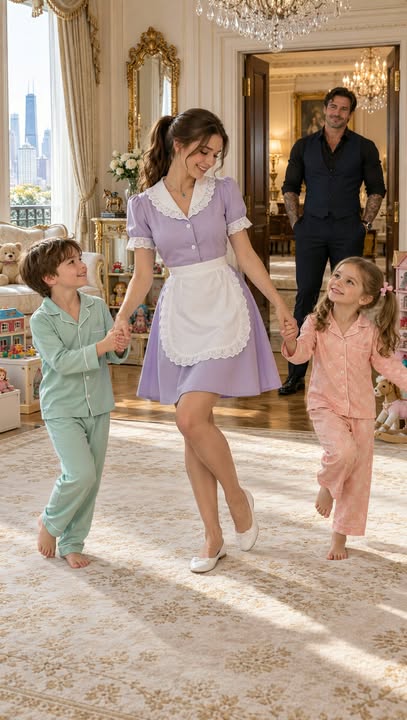
Part 6 – The Dance Beneath the Photograph
The woman on the phone waited for my answer.
Across the hall, Lawson had gone still, his gaze fixed on me with a question he did not dare ask.
“Tell me the name,” I said.
“The authorization was submitted by a representative of the clinic,” she replied. “But the instruction identifies the person who arranged the first transfer.”
“Who?”
“Lawson Mercer.”
The words settled quietly between us.
They did not sound like an accusation.
They sounded like the last piece of a puzzle finally finding its place.
I lowered the phone.
Lawson watched my face.
“Was it me?” he asked.
“Yes.”
He closed his eyes for a moment.
“I did it,” he said. “The first transfer.”
“You signed the request to move the samples.”
“I did. But I didn’t know they were being sent to the private clinic.”
He stepped toward the window, as if he needed to put the words somewhere besides between us.
“The hospital said their storage arrangements were changing. I was handling Genevieve’s paperwork while she was recovering from the twins’ birth. I thought I was making sure the samples stayed safe.”
“Why did the clinic have them?”
“I don’t know. I never approved that part.”
“Did you meet with anyone there?”
“I remember speaking to a representative who said the new facility had better preservation equipment. I thought it was part of the hospital’s arrangement.”
He looked back at me.
“I should have asked Genevieve. I should have read everything more carefully. But I never meant for them to be used or taken.”
I believed him.
Not because his explanation erased what had happened, but because his face held the same regret I had heard in his voice since he learned what Genevieve’s records contained.
He had made a careless decision believing it was a helpful one.
Afterward, he had mistaken his own good intentions for proof that nothing needed to be examined.
“Genevieve wrote that the samples had to stay apart until both children needed them,” I said.
“She wanted enough left for both,” Lawson replied. “That’s why she had them returned.”
The records director was still on the phone.
“Could you send the full file to the hospital team?” I asked. “Every record, every note.”
“Of course. The transfer can begin tonight.”
“And please note that the samples must not be divided until the transplant team confirms the shared protocol is safe.”
“I’ll include that instruction.”
I ended the call.
The coordinator waited beside the consent desk, her expression attentive but calm.
“We have the answer,” I said. “The samples were sent for specialized processing without Genevieve’s knowledge, then returned to storage. The clinic has confirmed the final authorization, and they’re sending the complete records.”
“Thank you,” she said. “We’ll review everything with Dr. Shah before beginning.”
I looked through the window at Jonah and Blythe.
The twins were awake now.
Elena sat between their beds, telling them that the treatment team was preparing the next step.
Blythe listened with both hands around a soft cloth rabbit.
Jonah leaned toward Elena, his eyes serious.
“What did the doctor say?” I asked when I entered.
Elena looked at me.
“That they’re still checking the last details.”
“Good.”
Jonah studied my face.
“Did you find out who moved the blood?”
“I did.”
“Was it Uncle Lawson?”
Lawson had followed me into the room and heard the question.
He came to Jonah’s bedside.
“Yes,” he said. “I signed the form that moved it from the hospital.”
Jonah’s brow furrowed.
“Why?”
“I thought I was helping keep it safe. I didn’t ask enough questions, and I should have.”
“Did you know it would go somewhere else?”
“No.”
Jonah considered this.
“Mom got it back?”
“She did,” Elena said. “She made sure it came back and stayed safe.”
Blythe looked from Elena to me.
“So she saved it for us?”
“She made sure it was there if you ever needed it,” I said.
Blythe hugged her rabbit to her chest.
“Then we can try together?”
“The doctors believe we can,” I told her. “They’ll watch you very carefully.”
“Will it hurt?”
“There may be uncomfortable parts,” Dr. Shah said from the doorway. “We’ll do everything we can to help with those, and we’ll explain what’s happening before each step.”
Blythe nodded, taking this in.
Jonah reached across the space between the beds.
“Can we count while we wait?”
Elena placed one hand gently on his shoulder.
Then she gave Blythe two light taps.
The familiar gesture was no longer a warning passed between adults or a clue hidden in plain sight.
It was a promise that someone was there.
“Let’s count,” she said.
The doctors completed their review that evening.
They confirmed that the cord blood had remained viable and that the shared protocol was medically possible, though still risky.
The transplant team explained the remaining uncertainties once more, and I listened to every word.
Lawson stayed in the family room with the documents from the clinic.
He called the hospital’s legal office and told them he was ready to answer any questions about the transfers.
He did not ask me to keep his name out of the file.
He did not ask me to protect him from what followed.
When the coordinator brought the final forms, I read them slowly.
My signature was already on the first consent page, but I signed again beneath the confirmation that the treatment team had reviewed the full chain of custody.
The date and time were written beside my name.
Nothing about the decision felt easy.
But I no longer felt that I was making it alone.
Before the procedure began, I returned to the twins’ room.
Elena stood between their beds.
Lawson waited near the door, his hands folded in front of him.
The room had become a place where all of us were frightened, but no one was pretending otherwise.
“I’ll be right here,” I told Jonah and Blythe.
“Both of us?” Blythe asked.
“Both of you.”
Jonah looked toward Elena.
“And you?”
“I’ll be here, too,” she said.
He glanced at Lawson.
“So will I,” my brother answered.
The twins exchanged a tired look.
Then Blythe reached for Jonah’s hand, and he closed his fingers around hers.
Elena began counting their breaths.
I counted with her.
Lawson joined us on the fourth breath, quietly enough that the twins might not notice if they did not want to.
They noticed.
Blythe’s eyes flicked toward him.
He gave her a small, uncertain smile.
She squeezed Jonah’s hand.
At ten, the nurse arrived to take the children to the treatment room.
Elena leaned down and touched each shoulder twice.
“Here,” she whispered.
Blythe repeated the gesture on Jonah’s arm.
“Here,” she said.
The nurses wheeled the beds toward the corridor.
I walked beside them until the treatment-room doors opened.
Then the staff asked us to wait in the family area.
The hours that followed stretched and folded strangely.
I drank a cup of coffee I could not taste.
Elena sat beside me, her hands clasped around the necklace.
Lawson remained across from us, the family attorney waiting with him.
The hospital had begun a formal review of the transfer records.
The clinic had agreed to provide its original files, including the names of the people involved in the processing and return.
Lawson had already told the legal team what he remembered, including the conversation about the new storage facility.
He made no effort to change the words he used.
“I thought I was helping,” he said at last, staring at the floor. “I used that sentence as if it could make everything all right.”
“It can’t,” I said.
“I know.”
“But it matters that you’re telling the truth now.”
He nodded.
“I should have told you sooner.”
“Yes.”
“I’m sorry.”
I had spent weeks imagining the moment I would demand an apology.
Now that it had come, it did not make my grief disappear or repair every hour he had withheld information.
But I could hear that he meant it.
“I don’t know what comes next for us,” I said.
“Neither do I.”
“We’ll start with what’s true.”
“I can do that.”
Elena looked from one of us to the other.
“Genevieve would have wanted the truth,” she said.
“I think she would have wanted us to keep the children safe,” I replied.
“She did both,” Elena said. “She just had to do it carefully.”
I looked down at the necklace in her hands.
The blue stone caught the light above its hidden compartment.
“You kept it safe all this time.”
“I kept what I could.”
“And came back when you thought you might lose the chance to tell me.”
“I should have found a way to tell you sooner.”
“Yes.”
Her eyes lowered.
“But you came back,” I said. “And the children trusted you before I understood why.”
“They remembered their mother.”
“They remembered you, too.”
Elena’s mouth trembled.
She turned toward the closed treatment-room doors before either of us could see whether she was crying.
The transplant team came out near dawn.
Dr. Shah looked tired, but his expression was composed.
“The cord blood has been administered,” he said. “The procedure went as planned.”
I stood too quickly, and Elena caught my elbow.
“Are they all right?” I asked.
“They’re stable. The next days will be important. We’ll monitor them closely for complications and watch for signs that the cells are taking hold.”
“So we wait.”
“Yes,” he said. “But for now, the treatment has gone as we hoped.”
My knees felt weak.
Elena’s hand stayed on my arm.
Lawson exhaled as if he had been holding his breath since the previous afternoon.
“Can we see them?” I asked.
“One at a time, and only briefly.”
I went in first.
Jonah looked impossibly small beneath the hospital blanket.
Blythe was on the other side of the room, asleep with her hand turned palm up.
The monitors kept their steady rhythm.
I sat between them and rested my hand on the rail of each bed.
“You’re still together,” I whispered. “I’m right here.”
I did not know whether they heard me.
I stayed until the nurse gently asked me to give them room.
Elena went in next.
When she came out, her eyes were wet, but she was smiling.
“They’re sleeping,” she said.
“They’re where they need to be.”
“Yes.”
The days that followed were not easy, and no one pretended they were.
There were fevers that made my heart climb into my throat, blood tests that changed more slowly than we wanted, and nights when the smallest sound in the room brought me awake.
The doctors watched the children carefully.
The nurses explained every change, and Elena stayed close enough to hear each instruction.
She learned the medication schedule, the ways the twins liked their pillows arranged, and the stories that could persuade Jonah to take a sip of water when he was too tired to ask for it.
She did not take my place beside them.
She made space beside me.
Lawson came every day.
At first, the twins spoke to him only when he asked a question.
He did not press them to forgive him or tell them he had meant well.
He brought Blythe a new sketchbook and sat with Jonah while they watched the same cartoon twice.
One afternoon, Jonah asked him whether the story about the dog in the office building had really happened.
“It did,” Lawson said.
“Did you find the dog’s family?”
“Eventually.”
“Did you tell the truth?”
Lawson looked at him.
“Yes.”
“Good,” Jonah said, and turned back to the screen.
It was a small exchange.
Lawson held on to it all day.
The first sign that the treatment was taking hold came more than a week later.
Dr. Shah explained that the laboratory results were encouraging, though the children still needed close monitoring.
I listened as he described the numbers and the next milestones.
When he finished, I asked him to say it once more in plain language.
“They’re moving in the right direction,” he said. “It’s early, but this is what we hoped to see.”
Elena closed her eyes.
I bowed my head over the bed rail.
The relief did not arrive like joy.
It arrived like a breath I had forgotten I could take.
Recovery was slow.
The twins tired easily and had days when they did not want to speak.
Their hair began to grow back in soft, uneven wisps.
Blythe insisted that Jonah’s looked like a baby bird.
Jonah told her that hers looked like a dandelion.
The nurse laughed when they argued about which comparison was worse.
For the first time in months, their disagreement sounded like ordinary childhood.
I learned how to sit without checking the monitor every few seconds.
I learned to let a quiet moment be quiet without assuming it meant something had gone wrong.
Elena helped me learn.
Sometimes she told me what Genevieve had done when the twins were babies.
Sometimes she said nothing and sat beside me until the worry passed.
When the hospital’s review team interviewed Lawson, he answered their questions without trying to soften his role.
He admitted that he had signed the original transfer request and had failed to verify where the samples would be stored.
The clinic’s records showed that a third-party laboratory had taken the units for specialized recovery work without the required written consent.
The recovered samples had been returned to storage after Genevieve challenged the transfer and insisted on a complete record.
There had been no sale, and no evidence that anyone had tried to use the blood for another patient.
The matter was referred to the appropriate medical and regulatory offices, which began reviewing the clinic’s procedures.
Other families who had used the same storage service were contacted so their records could be checked.
Lawson’s carelessness had mattered.
So had Genevieve’s insistence that the samples be found and protected.
He did not ask the investigation to ignore either fact.
One evening, after the twins had gone to sleep, he sat with me in the hospital’s quiet family room.
“I thought signing forms was the same as taking responsibility,” he said. “I see now it was only the beginning.”
“You were trying to help.”
“I keep hearing that as if it’s a defense.”
“It isn’t.”
“I know. I let myself stop asking questions because I thought my intentions were enough.”
I looked toward the darkened ward.
“Genevieve used to say that good intentions still needed a second look.”
A faint smile touched his face.
“She did.”
We sat for a while without speaking.
Then he said, “I’m sorry I made it harder for you to trust me.”
“You did.”
“I know.”
“I don’t want us to pretend this never happened.”
“Neither do I.”
“But you’re their uncle. You’re my brother. I want there to be a way forward.”
His eyes shone in the low light.
“So do I.”
We did not embrace.
We did not promise the past was repaired.
We began with a promise to be honest, and that was enough for that night.
Blythe and Jonah were discharged several weeks later, once the doctors were satisfied that they could continue their recovery at home with regular monitoring.
The house looked different when we brought them back.
I had expected it to feel like a return to the life we had lost.
Instead, it felt like a place waiting for a new life to begin.
Elena had arranged the twins’ room the way they liked it, with their beds close together and the paper moon rehung above Blythe’s side.
The desk in Genevieve’s study remained as we had left it.
I had placed the letter, the report, and the clinic records in a secure folder for the authorities.
The necklace rested beside Genevieve’s photograph, its compartment closed.
The children were not expected to make up for lost time.
They were allowed to rest, to complain, and to say no when they were tired.
Elena stayed in the guest room for the first weeks.
When I asked whether she would consider making the arrangement permanent, she looked startled.
“I don’t want to take Genevieve’s place,” she said.
“You couldn’t.”
“I don’t want the children to feel I’m supposed to.”
“They know who their mother is.”
Elena looked toward the photograph.
“I know.”
“You cared for them before they could remember. You kept your promise to Genevieve. They love you because you’re Elena, not because you’re replacing anyone.”
She was quiet for a long time.
“What if I make mistakes?”
“You will.”
A small laugh escaped her.
“So will you,” she said.
“I already have.”
She looked at me then, and some of the fear in her face eased.
“I’d like to stay,” she said. “If the children want me here.”
“They do.”
We asked them together.
Blythe said, “Can Elena keep the counting game?”
Jonah said, “She already has it.”
Elena smiled.
“Then I’d like to stay.”
The first evening the twins felt strong enough to dance was not a special occasion.
There were no decorations, no guests, and no plans.
Blythe had found one of Genevieve’s old records in a cabinet and asked whether we could play it.
The music drifted through the living room, soft and bright.
Jonah stood in the middle of the rug, careful of his slippers.
Blythe turned once, then stopped to catch her breath.
Elena held out her hands.
The twins took them.
Their steps were slow and uneven.
They were not trying to perform.
They were simply finding the music again.
I watched from the doorway, remembering another night in another room, when I had thought laughter meant the worst was over.
This time I knew better.
The worst had not disappeared.
It had changed us.
It had taught us how fragile trust could be, how much courage could live inside a small promise, and how love could survive even when it arrived tangled with fear and mistakes.
Blythe looked over at me.
“Daddy, your turn.”
For a moment, I could not move.
Then Elena held out one hand.
I crossed the room and took it.
She guided me beneath her arm with the same gentle turn as before.
The twins laughed when I nearly stepped on my own slippers.
I laughed with them.
After the song ended, Blythe leaned against my side.
Jonah rested his shoulder against Elena.
The necklace lay beside Genevieve’s photograph on the mantel, the blue stone catching the lamplight.
Elena touched Jonah’s shoulder twice.
Two taps.
Not a signal to hide.
Not a warning to fear.
Just a quiet way of saying, I’m here.
Jonah reached for her hand.
Blythe took mine.
And beneath their mother’s photograph, with the music fading around us, we stood together as the family she had trusted us to become.
**–THE END–PLEASE
Share your thoughts or feedback to motivate us to create more stories ♥️
* * *
[PREVIOUS: PART 5](https://echoesofstories.idolsgift.com/blog/part-5-the-secret-genevieve-left-behind-046-1)
✓ Lynn R. Adams
Part 6 – The Dance Beneath the Photograph The woman on the phone waited for my answer. Across the hall, Lawson had gone still, his gaze fixed on me with a question he did not dare ask. “Tell me the…