PART 6 (THE END): The Secret Beneath the Polished Boot 041
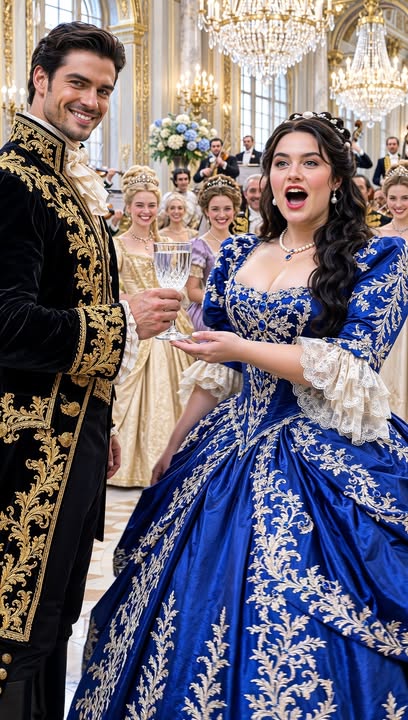
Part 6 – A Dance Without a Test
“He says the order came from someone who signed it in his name.”
The words settled over the salon, and the letter trembled faintly in Alexander’s hand.
Eleanor saw the hope that had risen in him, followed by the caution that tried to contain it.
“Does he name the person?” Victoria asked.
Alexander read the final lines again.
“He says he does not know who signed for him.”
“That leaves the question open,” Eleanor said.
“Yes.” He folded the letter along its crease. “But he has agreed to an independent review of the records, and he will meet with Mrs. Vale and Mr. Harrow tomorrow.”
The king’s secretary inclined his head.
“His Majesty also asks that the west ballroom remain closed until the inspection is complete.”
“It will,” Alexander said.
“And the public correction?”
“The court has already heard what we know. Once the review confirms the details, we will publish the full account.”
The secretary seemed to weigh his reply, then bowed.
“I will carry that answer to His Majesty.”
He withdrew, leaving the guests to return to their quiet conversations.
The mystery had not yet been entirely settled, but the king had not tried to silence them.
For the first time that evening, Alexander allowed himself to breathe out slowly.
Eleanor stood near him, close enough to share the quiet without claiming it.
“You believe him?” she asked.
“I believe he wants to know the truth.” Alexander glanced toward the closed doors. “I do not yet know whether he remembers everything clearly.”
“That is an honest answer.”
“I am learning that the honest answer is often less comfortable than the one that ends a conversation.”
Victoria came to stand beside them.
“Then perhaps we should keep asking until the records can answer what memory cannot.”
Alexander looked at her.
“Will you help us?”
“If the review is conducted fairly, yes.” She paused. “And if you continue to listen when the answer is inconvenient.”
“I will try.”
“Trying is a beginning,” Eleanor said.
The phrase returned to him, and a small, weary smile appeared.
“Then I will begin there.”
The remaining guests departed gradually, leaving the salon to the soft sounds of staff collecting glasses and drawing curtains.
Alexander thanked each contestant who remained, speaking to them as people rather than as an audience.
He did not ask them to forgive him.
He listened when they told him what the challenge had felt like, and when one young woman said she had been afraid the glass would shatter, he did not dismiss her concern simply because it had not.
By the time Eleanor and Victoria reached the entrance hall, dawn had begun to pale the high windows.
The palace looked different in that early light, its gilded details softened and its grand rooms no longer hiding behind candlelit splendor.
Victoria paused beneath a portrait of Queen Adelaide.
“She looks as though she is listening,” she said.
Eleanor followed her gaze.
The queen’s painted eyes were warm and direct, her hand resting on the back of a chair as if she had just turned to welcome someone into the room.
“Perhaps she was,” Eleanor said.
Victoria studied the portrait for a moment.
“I would like to know more about her.”
“Mrs. Vale may know stories the records never kept.”
“Then I will ask her.”
Victoria turned toward Eleanor.
“And I would like to apologize again for what I said about your size.”
Eleanor’s expression softened.
“You apologized when you told the truth about why you said it.”
“I did not know how much I had made my own fear sound like certainty.”
“Now you do.”
Victoria took a measured breath.
“I was afraid that if you succeeded, it would prove there was a place for only one kind of woman at court, and that you had somehow found a way into it.”
“There should never have been only one kind of place.”
“No,” Victoria said. “There should not.”
She offered her hand.
Eleanor accepted it.
Their handshake was formal, a little awkward, and sincere.
“I cannot promise we will always agree,” Victoria said.
“I would be disappointed if we did.”
A laugh escaped Victoria, soft and genuine.
“Then perhaps we can begin with disagreement that does not require us to become enemies.”
“I would like that.”
When the palace carriage arrived, Victoria went with Eleanor to the front steps.
Before they parted, she asked whether Eleanor would return for the inspection.
“If Alexander wants the people who witnessed the dance to speak,” Eleanor said, “I will.”
“He will want you there.”
“Then I will come.”
Victoria smiled.
“Good.”
The days that followed were filled with questions, careful examination, and the patient work of putting old records in order.
The king appointed a panel that included an independent builder, a legal clerk, and two archivists from outside the palace.
Mrs. Vale gave a written account of what she remembered, separating what she had seen from what she had only heard.
Mr. Harrow provided the ledgers and the loose report, while the king’s secretary searched the household records for the person authorized to sign on the sovereign’s behalf.
The west ballroom remained closed.
Workers lifted the marble panels nearest the windows and found that several had shifted slightly over time.
The stones were not on the verge of collapse, but the joints beneath them had weakened enough to create uneven footing.
A narrow channel in the wall had also allowed damp air to gather along the floor after cold nights.
The inspection could not prove that those exact stones had shifted during Queen Adelaide’s fall, but it confirmed that the old warning had been reasonable.
The records told the rest.
The report had been altered by the chief steward, who had acted on an order delivered from the king’s private office.
The person who signed the instruction was a junior secretary authorized to speak in the king’s name while the king was receiving foreign guests.
That secretary had recorded the order as a decision to keep the reception open, believing the floor had been temporarily secured.
The record showed that he had never verified the repair.
He had not acted for personal advantage or from malice.
He had acted too quickly, trusting a verbal assurance and assuming that the technical work was finished.
The chief steward, afraid that the mistake would bring public criticism upon the palace, had removed the report and corrected the ledger.
King Edmund had not known the floor remained unsafe.
But he had approved the decision to continue the reception without confirming the repair, and he had accepted the easy explanation of the queen’s fall afterward.
When the panel presented its findings, the king did not dispute them.
He asked that the junior secretary’s part be included in the account, but he also accepted that his own decision had created the conditions for the mistake.
The palace issued a public correction honoring Queen Adelaide and acknowledging the failures in maintenance and recordkeeping.
It stated that the queen had warned the household about the floor and had fallen while trying to help another dancer.
The young attendant, whose name had not survived in the papers, was not identified.
Instead, the correction honored her as a member of the palace staff and made clear that she had not been at fault.
When the statement was read before the court, Alexander stood beside his father.
The king was a tall, silver-haired man, his expression carefully composed, though his hands rested on the table as if the weight of the papers before him had grown heavier.
“I cannot restore the truth my wife should have been given in her own lifetime,” he said. “I can only correct the account that followed her.”
He turned toward Alexander.
“I also owe you an apology for the years in which I let you believe she had fallen through carelessness.”
Alexander did not reach for a quick answer.
He looked at the man who had raised him, and Eleanor could see the affection and hurt existing together in his face.
“I accept that you regret it,” Alexander said. “I will need time to understand what it means for us.”
His father nodded.
“Time is yours to take.”
There was no embrace before the court, no grand gesture that could mend everything at once.
There was only an honest beginning, and the room seemed to understand that it was enough for that day.
The ballroom’s repairs took several weeks.
The workers reset the loose stones, replaced damaged joints, and improved the seals around the west windows.
A second inspection confirmed that the floor was sound.
The palace also changed how it maintained the room.
Every repair would now be recorded in a central ledger, and no royal gathering could proceed in an area that had not received a documented safety check.
Alexander ordered that the ballroom be opened to public tours once the work was complete, with a small display about Queen Adelaide’s kindness and the correction to her story.
He refused to let the display describe her as a saint.
“She was a person,” he told Mrs. Vale. “People should be allowed to remember her courage without being asked to pretend she was perfect.”
Mrs. Vale smiled at him.
“I believe she would have liked that.”
The contestants received personal letters of apology, but Alexander also invited them back to the palace for an evening that had no competition attached to it.
There were no glasses filled to the brim, no hidden tests, and no prizes.
The invitation promised music, supper, and dancing for anyone who wished to join.
When Eleanor arrived, the ballroom glowed with lamplight and spring flowers.
The west windows stood open to the evening air, and the repaired marble caught the candlelight in a soft, even sheen.
A small plaque near the entrance carried the corrected account of the queen’s fall.
It did not dominate the room.
It simply made the truth impossible to erase again.
Victoria stood beside a table where a palace clerk was recording names for a new court committee.
The committee would advise on invitations and public events, making certain that women from different families, backgrounds, and circumstances were welcomed rather than measured against one narrow standard.
“You have chosen a busy place to spend the evening,” Eleanor said.
Victoria looked up from the list.
“I have been told that progress requires paperwork.”
“Who told you that?”
“Mr. Harrow.”
“He sounds difficult to argue with.”
“He is. He also suggested that I ask the women what would make court events feel more welcoming, instead of deciding for them.”
“That sounds like good advice.”
“I thought so too.”
Victoria handed Eleanor a sheet of names.
“We already have three proposals for opening the seasonal dances to more families, and one very strong suggestion that the invitations stop describing gowns by size.”
Eleanor’s smile widened.
“That seems like a useful beginning.”
“It is. And I have learned not to call anyone’s idea foolish until I have heard why they proposed it.”
“An excellent improvement.”
Victoria gave her a playful look.
“I am still allowed to disagree with you, though.”
“Of course.”
“Good. I intend to remain interesting.”
Across the ballroom, Alexander was speaking with several of the women who had taken part in the contest.
He had not placed himself at the center of the room.
He was listening to one woman describe how the music changed when the orchestra had followed his sudden turns, and to another explain that she had been too nervous to notice anything except the water in her glass.
He listened without interrupting.
When one of them asked whether the dance challenge had taught him what he wanted to learn, he considered the question before answering.
“It taught me that attention cannot be demanded as proof,” he said. “It has to be offered and returned.”
The woman seemed to consider that.
“That sounds harder than dancing.”
“It is.”
“Good,” she replied. “Then perhaps you will remember it.”
“I hope to.”
Eleanor watched them from across the room.
The prince noticed her watching and crossed toward her only after the conversation had ended.
“Would you care to dance?” he asked.
There was no glass in his hand.
There was no crowd waiting for a verdict.
Eleanor looked at the open floor, where couples were moving beneath the chandeliers with room enough to find their own rhythm.
“Is it a test?” she asked.
“No.”
“Are you certain?”
“I am willing to be asked again if I ever forget.”
She studied him, noticing the careful way he distributed his weight.
His left ankle still troubled him after long hours, but tonight he wore a softer shoe beneath his formal clothes, and he made no attempt to disguise the small adjustment in his stance.
“You are not hiding it,” she said.
“No.”
“Does that feel uncomfortable?”
“Very.”
“Will you manage?”
“I think I can manage discomfort better when I am not pretending it does not exist.”
Eleanor placed her hand in his.
“Then yes, I will dance with you.”
The orchestra began a waltz.
Alexander offered his other hand, and Eleanor stepped into the open space with him.
They moved slowly at first, finding one another’s rhythm rather than forcing the music into a pattern either of them had rehearsed alone.
His frame was steady.
Her steps were sure.
When his left foot hesitated, he allowed the movement to remain what it was, and Eleanor adjusted naturally, not to hide his pain but to meet him where he stood.
The dance carried them beneath the chandeliers.
The water glass that had once defined the challenge was nowhere in sight.
For the first time, neither of them was trying to prove anything.
Around them, the court continued to change in small, visible ways.
Victoria danced with an older cousin who had once been overlooked at formal gatherings.
The young contestants spoke together near the windows, comparing stories with laughter instead of embarrassment.
A footman who had brought the queen’s note to the records room was invited to join a set, and no one treated the invitation as an occasion for surprise.
When the music ended, Alexander did not release Eleanor’s hand immediately.
“Thank you,” he said.
“For the dance?”
“For not pretending I was right when I wanted you to.”
“That would have been a poor way to begin a partnership.”
His expression gentled.
“Then I hope I can continue earning the chance to ask.”
“You can ask,” Eleanor said. “I will continue to answer honestly.”
He smiled, and this time the warmth reached his eyes.
Months passed.
The ballroom’s public opening drew people from the city as well as the court.
Some came to see the repaired marble, others to read Queen Adelaide’s corrected story.
Many came simply to dance.
The palace opened the gallery for community music evenings, where people could learn the waltz without invitation or expense.
Victoria’s committee ensured that the gatherings welcomed people of different ages, shapes, and backgrounds.
The change did not happen in a single night.
It happened in the way a host stopped choosing partners by appearance, in the way a new courtier was introduced by her work rather than her family name, and in the way Alexander learned to ask a question and wait for the answer.
Eleanor remained herself through all of it.
She kept her own home, her own friendships, and the work she had always cared about.
When the court began to speak of her as if she had already been transformed into a royal ornament, she corrected them with a smile and returned to her own affairs.
Alexander never asked her to become smaller so that his life might feel more orderly.
When he finally asked her to marry him, he did so privately, beneath the garden arch outside the ballroom.
The evening was mild, and the windows stood open behind them.
Music drifted into the garden, where the last guests of the public dance were finding their coats.
Alexander had no audience, no prepared speech, and no ring hidden behind a velvet curtain.
He held the ring in his open palm.
“I love the way you see what is there,” he said. “Not what I hope people will see, and not only what is wrong, but what might still become better.”
Eleanor looked down at the simple band, then back at his face.
“I love that you are learning to listen, even when the answer unsettles you.”
“I will keep learning.”
“I know you will.”
He drew a breath.
“Will you marry me?”
The question held no command, no condition, and no expectation that she would become someone else in answering.
Eleanor rested her hand over his.
“Yes,” she said. “I will marry you.”
His relief made him laugh softly, and she joined him.
Their wedding took place in the newly repaired ballroom the following spring.
The court attended, but so did the palace workers, musicians, and families who had begun coming to the open dances.
Victoria stood beside Eleanor as one of her closest friends.
Mrs. Vale sat in the front row, holding a small copy of Queen Adelaide’s letter.
Mr. Harrow had arranged the flowers himself, though he insisted they looked better than he expected.
The king gave Alexander his blessing without trying to make the moment belong to the crown.
When the ceremony ended, the orchestra began the waltz Eleanor and Alexander had first shared without a test.
They moved beneath the chandeliers, neither leading so far ahead that the other had to chase nor following so blindly that either lost their own step.
They met in the middle, again and again, choosing a shared rhythm.
And in the bright ballroom where an old story had once been hidden, honesty became part of the music.
**–THE END–PLEASE
Share your thoughts or feedback to motivate us to create more stories ♥️
* * *
[PREVIOUS: PART 5](https://echoesofstories.idolsgift.com/blog/part-5-the-secret-beneath-the-polished-boot-041)
✓ Lynn R. Adams
Part 6 – A Dance Without a Test “He says the order came from someone who signed it in his name.” The words settled over the salon, and the letter trembled faintly in Alexander’s hand. Eleanor saw t…