PART 6 (THE END): The Secret Beneath the Duck15 026
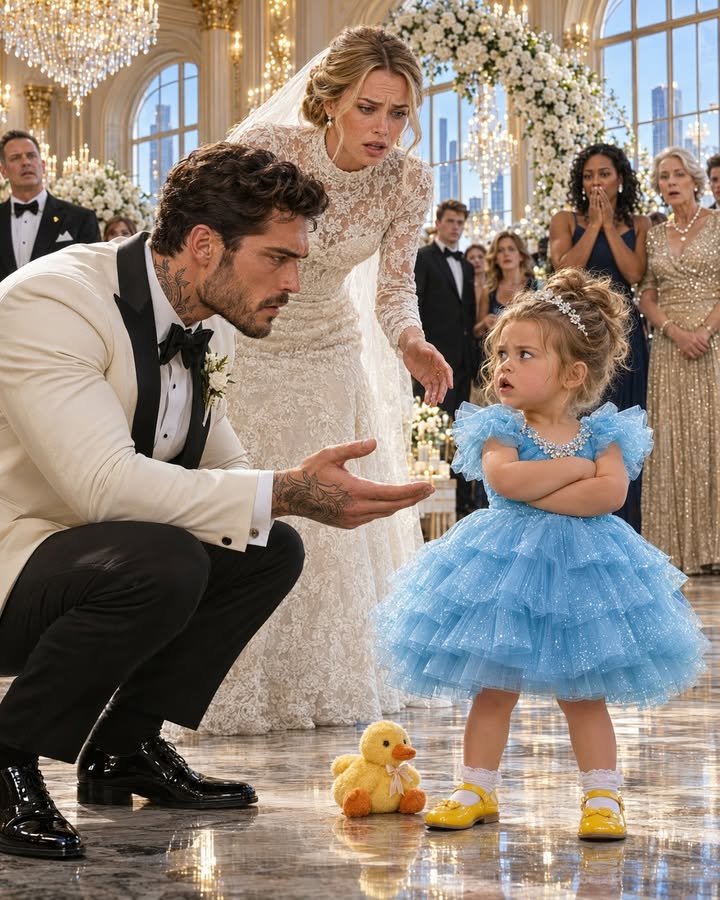
Part 6 – A Future Chosen Freely
The second message stayed bright on Hannah’s phone long after the car had turned onto the quiet street where she lived.
No words followed it.
Only the photograph of Poppy asleep against her shoulder, taken through the rain-streaked window.
“Hannah?” Mrs. Alvarez asked gently.
Hannah locked the screen.
“I’m all right.”
It wasn’t quite true, but it was the answer she could manage with Poppy’s warm weight against her chest and the familiar shapes of home drawing near.
At the curb, she asked the driver to wait until she and Mrs. Alvarez were safely inside.
He nodded and did not argue.
No one followed them up the stairs.
No one appeared outside the apartment door.
There was only the small, ordinary comfort of the hallway light and the chipped blue paint beside the lock.
Mrs. Alvarez checked the rooms while Hannah settled Poppy into bed, leaving the yellow duck beside her pillow.
The little girl sighed in her sleep and curled one hand around its loose wing.
Hannah stood watching her longer than she meant to.
The messages had frightened her, but they had not changed the truth she needed to hold on to.
Poppy was home.
She was safe for that moment.
And whatever came next would be handled by adults who had a duty to protect her—not by asking her to carry secrets she could not understand.
Mrs. Alvarez made tea, then sat beside Hannah at the kitchen table.
“Do you want to call the police?”
“Yes,” Hannah said. “And Dominic. But the police first.”
She showed the officers the messages and the photograph.
They took her statement, explained how they would document the contact, and advised her not to reply to the unknown number.
The photograph was examined for identifying details, though it yielded little beyond the reflection of the car window and a patch of the estate’s distinctive courtyard lamps.
Hannah gave them the original recording and the copies Dominic had sent as promised.
The audio was added to the case already being built around Vanessa’s altered bracelet, the champagne glass, and the stolen delivery badge.
When the officers left, Hannah called Dominic.
He answered on the second ring.
“I saw the messages,” he said.
“Did you receive the photograph too?”
“Yes.”
“Did you tell me what happened the night Luca disappeared?”
A pause opened between them.
“No,” he said. “I didn’t.”
“Why?”
“Because I don’t know all of it. And because I thought I could keep the past contained until I understood it.”
“That’s what you told yourself about the wedding.”
“Yes.”
“Are you still trying to decide everything alone?”
“No,” he said. “But I’m learning how difficult it is not to.”
She leaned back in her chair, hearing the weariness in his voice.
“Tell me what you do know.”
“The night of the fire, Luca and I were supposed to be at my aunt’s house. He wanted to go back for a coat he’d left at my grandfather’s place.”
“Did he go alone?”
“No. I went with him.”
Hannah’s fingers tightened around her mug.
“Your mother told you to stay in the car?”
“Yes. She had been arguing with my father about something, and she wanted us out of the house.”
“What happened?”
“I remember smoke coming from the kitchen window. I remember Luca yelling that he had left something inside. I ran toward the door, but my mother caught me.”
“Did she say Luca was still in the house?”
“She said she would find him.”
His voice thinned for a moment, though he kept it steady.
“My father came out later and told us Luca was gone. I asked him where Luca was. He said the fire had taken him.”
“And you believed him?”
“I was a child.”
“You don’t have to defend yourself to me.”
“I know. But I’ve spent years wondering whether I should have gone back in.”
Hannah closed her eyes.
“You were a child. It was not your responsibility to save him.”
“I understand that now.”
“Do you?”
“I’m trying to.”
The phrase, once so familiar from him, sounded less like a shield now and more like a confession.
“Peter’s photograph might help,” she said.
“The police have it.”
“Then wait for them to investigate. Don’t go looking for Luca yourself.”
“I won’t.”
“Don’t ask me to believe that because you say it.”
“I understand.”
She heard movement on his end, then the low murmur of another voice.
“Rafael is here,” Dominic said. “The investigators are coming to the estate. They’ll take the ledgers into custody and examine the messages with the police.”
“What about Vanessa?”
“She’s still cooperating, but she’ll be questioned about the accounts, the transmitter, and the altered glass.”
“Does she say she was working with Luca?”
“She says she was. She says she believed he would help her take control of the business, and that she never knew the full plan for the toast.”
“Do you believe her?”
“I don’t know.”
It was a small answer, but it was one he had once refused to give.
“What do you want to do about the organization?” Hannah asked.
“Turn over what I can to the authorities and begin dissolving the parts that have no lawful purpose.”
“And the people who depend on you?”
“Some of them have legitimate work they can keep. Others will need help finding something else.”
“That sounds difficult.”
“It will be.”
“Are you still going to cooperate, even if it costs you?”
“Yes.”
Hannah looked toward Poppy’s room.
“Then do it because it’s right. Not because you think it will earn you a place in our lives.”
“I know.”
“Good.”
“I’m not asking you to wait for me.”
“Good.”
“I’m not asking you to forgive me for being part of a dangerous world before I’ve done anything to leave it.”
Her throat tightened unexpectedly.
“Good,” she said again, more softly.
“Thank you for giving the evidence to the police.”
“I gave it because it needed to be examined.”
“I know.”
They both fell quiet.
Hannah could hear rain whispering against her kitchen window.
For the first time that night, there was no wedding crowd, no security team, and no one asking her to interpret a toddler’s words.
Only the steady, unfamiliar quiet of a decision made without fear.
“Good night, Dominic,” she said.
“Good night, Hannah.”
She ended the call.
In the morning, a caseworker from the police contacted her with an update.
The messages had been traced to a prepaid phone, but the officers had found the camera used to take the photograph near the estate’s service entrance.
Security footage showed a woman wearing a gray delivery cardigan entering the courtyard shortly before the wedding.
The same woman had been listed on the false roster as Evelyn Price.
It did not identify her.
It did confirm that Mrs. Bell had told the truth about someone else using the badge.
Over the following days, the pieces began to settle into a clearer picture.
The tiny device in the duck had recorded fragments of Vanessa’s calls and tracked its location.
It had not been a weapon.
The bracelet’s concealed transmitter had been meant to mark Dominic during the toast, allowing Luca’s people to coordinate an attack and then make the evidence point back toward Dominic.
The champagne glass had been altered so it could be identified and kept separate from the others.
No one had yet been able to prove whether the glass was part of the same plan or a backup meant to create confusion.
What the investigators did establish was that someone with access to the wedding arrangements had prepared it.
The false florist’s badge had been made using staff information that should never have left the estate’s private office.
A review of the staff records led them to Mrs. Bell’s old employment file and to the name of the person who had requested a duplicate key several weeks earlier.
It belonged to a former administrative assistant who had left the estate months before.
That assistant was found in another state and agreed to cooperate with investigators after learning the recordings existed.
Through her, the authorities located the person who had been using the delivery badge.
Her name was Evelyn Price, a paid courier who had been hired to bring papers and small devices onto the estate without attracting notice.
She had no connection to Hannah or Poppy.
The duck had been used because Mrs. Bell knew a child’s toy would pass unseen among flowers and wedding preparations.
Her choice had been reckless.
It had not been a prophecy.
It had not been a judgment that Poppy could save a dangerous man.
It had been a frightened woman’s attempt to get evidence into the room where the truth might finally be heard.
When Hannah learned that, she felt relief and anger together.
She could understand why Mrs. Bell had done it without believing she had been right.
A week later, Mrs. Bell came to Hannah’s apartment with a canvas bag and no security escort.
She waited on the landing until Hannah opened the door.
“I brought Poppy something,” she said. “Not a recorder.”
Hannah studied her face.
“Come in.”
Mrs. Bell offered Poppy a small wooden duck painted yellow, its smooth wings polished by hand.
Poppy took it, turned it over, and tapped its beak.
“Quack.”
Mrs. Bell laughed softly, and Hannah saw the tightness in her shoulders ease.
“I made it in the estate workshop,” she said. “It has no hidden parts.”
“Good.”
“I wanted to apologize again.”
“You already did.”
“I know. I thought perhaps I owed you more than words.”
Hannah looked down at the wooden duck.
“An apology doesn’t make what happened harmless.”
“No,” Mrs. Bell said. “It doesn’t.”
“But I believe you won’t use Poppy that way again.”
“I won’t.”
The older woman sat with them for a little while, answering the questions Hannah asked about Dominic’s mother.
She spoke of a woman who loved old gardens, kept careful journals, and sometimes left handwritten reminders in the margins of cookbooks.
She did not claim that Dominic’s mother had been perfect.
She did not claim that the truth about Luca explained everything.
That honesty made the memories easier to trust.
Before she left, Mrs. Bell told Hannah that the original letter had been given to the investigators with Dominic’s consent.
The ledgers had gone with it.
The people named inside them were being examined one by one, and the authorities had begun the slower work of distinguishing evidence from suspicion.
Dominic did not ask Hannah to help him understand the papers.
He did not ask her to comfort him about what they might reveal.
He asked the investigators to explain it to him as they would explain it to anyone else.
That was one of the first changes she noticed.
The second was that he stopped using Rafael to pass along messages that should have come from Dominic himself.
The third was that he listened when people told him no.
The work of dismantling his organization was neither quick nor clean.
Some of its businesses were lawful, and their employees needed wages while the accounts were reviewed.
Others had been built on favors and fear, and could not simply be renamed and carried forward.
Dominic sold what could be sold, closed what could not be made legitimate, and provided records to investigators even when the entries implicated people he had once trusted.
He accepted interviews.
He gave up private control over properties and accounts.
He did not ask anyone to make the consequences disappear.
When a reporter called the estate seeking a statement, Dominic did not hold a press conference or make a grand declaration.
He gave one brief answer through his lawyer.
He would cooperate with the investigation, and he would not comment on anyone else’s guilt.
Then he returned to the work.
Three months after the wedding, Vanessa and Luca were arrested.
Vanessa had been found through the financial records and the messages recovered from her phone.
Luca was located through the trail of payments connected to the old account his mother had noted in the ledger.
He had been using a false identity and had lived far from Chicago for years.
The photograph Peter brought had helped the investigators confirm where he had been, but it was the combined evidence that led them to him.
The recordings, the bracelet transmitter, the altered champagne glass, and the ledgers all supported the same account of the planned attack and the attempt to seize Dominic’s assets.
Peter’s role in hiding Luca after the fire remained under investigation.
He admitted that Dominic’s mother had asked him to keep the boy away from the family’s criminal network until there was a safer way to reveal the truth.
He had not known Luca would later use that secrecy to build his own plan.
Mrs. Bell had not known either.
Dominic did not forgive Peter quickly.
He did not need to.
He listened to the investigators, read his mother’s letters, and accepted that the answers did not arrive in the order he wanted.
The night of the fire had not been a simple accident.
Luca had been injured and taken away before the fire spread.
Dominic’s father had believed him dead and had used the story to consolidate control over the family’s accounts.
Dominic’s mother had suspected the truth but never found enough proof to challenge her husband.
She had saved what she could.
The final letter she left did not accuse Peter or absolve him.
It only explained that she had wanted Dominic to have a choice when he was old enough to understand what the family had become.
It was not the explanation Dominic had hoped for.
It was enough to stop him from blaming the child he had once been.
Months passed.
The city moved through spring into early summer, and the news about the Moretti case gradually shifted from front pages to the quieter columns of the paper.
Dominic’s cooperation did not erase his past.
It did change what he did with the future.
He surrendered control of the businesses tied to the investigation and accepted the legal consequences that followed.
He spoke with former employees who had depended on him, helping connect them with lawful work where he could.
He learned how to be a man without making every room bend around his decisions.
Hannah did not see most of this for herself.
She heard pieces from Mrs. Bell, from the caseworker, and from the occasional email Dominic sent only when there was something practical she needed to know.
He never asked whether she missed him.
He never asked whether she was seeing someone else.
He never wrote that he had changed.
The last message he sent before the summer began was a short note telling her the final copies of the recordings had been transferred to the investigators and that she would not hear from him again unless she wanted to.
There was no plea hidden inside it.
No request to meet.
No mention of what she owed him.
Hannah read it twice, then placed it in a drawer.
She did not answer.
Weeks later, an envelope arrived by post.
Inside was a letter in Dominic’s careful handwriting.
He wrote that he had moved out of the estate and into a small apartment on the north side.
He was attending every meeting the authorities required.
He had started working with a legal nonprofit that helped people leaving family businesses connected to organized crime find lawful employment and stable housing.
He did not write that he was doing it for Hannah.
He wrote that he wished someone had offered him a different door years earlier, and that he wanted to make sure other people could see one before they believed there was nowhere else to go.
He also wrote that he understood she might never want to see him again.
If she did, he would meet her wherever she chose, at a time she chose, and leave when she asked.
Hannah held the letter for a long while.
Then she put it away.
Not because she was ready.
Because she was not.
More months passed.
Poppy’s pigtails grew longer.
Her strawberry-red wedding dress became too small, and the yellow shoes wore thin at the toes.
She learned new words, invented songs, and insisted on bringing the wooden duck to bed.
The yellow stuffed duck remained in a drawer for a time, its torn seam carefully repaired by Hannah with a needle and thread.
She did not throw it away.
It belonged to Poppy, and the danger in its stuffing had been removed.
One afternoon, nearly a year after the wedding, Hannah took Poppy to a neighborhood garden where a small community fair was being held.
The air smelled of cut grass and lemonade.
Paper lanterns hung between the trees, and children ran in bright loops across the lawn.
Poppy wore a yellow cardigan over a blue dress, with her curls tied into two uneven pigtails.
She stopped beside a table of painted wooden toys and immediately reached for a little yellow duck.
Hannah laughed.
“You have one at home.”
“Duck,” Poppy said firmly.
“That’s true.”
A familiar voice came from behind them.
“May I say hello?”
Hannah turned.
Dominic stood several feet away, holding nothing but a paper cup of coffee.
He looked thinner than he had at the wedding, and the hard stillness she remembered had softened around his eyes.
He wore no ring.
He wore no suit.
For a moment, she saw the man from the greenhouse beneath the lamps, uncertain of what he was allowed to ask.
Then she saw the man who had written a letter without demanding an answer.
“Hello,” she said.
Poppy looked up.
“Honky!”
Dominic’s breath caught, and a real smile spread across his face.
“Hello, Poppy.”
She lifted the wooden duck from the table and held it out to him.
“Duck.”
“Would you like me to hold it?”
Poppy nodded.
He took the toy, then waited.
Hannah watched his hands.
He did not lift Poppy without asking.
He did not step closer without invitation.
He did not look to her for permission to make a promise.
He simply stood with the duck in his palm while Poppy studied him.
“How have you been?” Hannah asked.
“Busy. Tired. Better than I was.”
“Are you still working with the nonprofit?”
“Yes. We’re helping a few families untangle their businesses from the people who controlled them.”
“Is the legal process finished?”
“Not entirely. Some consequences are still ahead of me.”
“Are you prepared for that?”
“I am.”
He said it without bravado.
“I can’t undo what I was part of,” he added. “I can only keep answering for it.”
Hannah nodded.
“That matters.”
“I know it doesn’t give me a claim on your time.”
“No,” she said. “It doesn’t.”
“I’m glad you’re here,” he said. “But I’ll go if you’d rather not talk.”
Poppy pulled the duck from his hand and hugged it to herself.
Hannah watched the three of them, the child, the man, and the small bright toy that had first brought them together.
The months apart had not erased what frightened her.
They had given Dominic the chance to prove that he could live without making her responsible for his choices.
And he had given her the space to decide what she wanted.
“Walk with us?” she asked.
“If you want me to.”
“I do.”
They started along the garden path.
Poppy walked between them for a few steps, then demanded to be carried.
Hannah lifted her first, and Dominic did not reach in until she glanced at him.
“Would you like to take her for a minute?” Hannah asked.
“If she wants.”
Poppy held out both arms.
Dominic picked her up carefully.
She rested her cheek against his shoulder, then patted his nose.
“Honk.”
He laughed, and the sound was warm and unguarded.
Hannah walked beside them beneath the garden trees.
There was no urgency between them.
No hidden device.
No old secret demanding a decision.
Only the slow, ordinary work of learning one another.
They met again the following week, and the week after that.
At first, each visit was short.
They had coffee while Poppy played nearby, or walked through the garden while Mrs. Alvarez sat on a bench with a book.
Dominic never arrived without asking.
He never treated a kind afternoon as a promise of the next one.
Hannah learned about his work, his mother’s favorite plants, and the way he had once wanted to be an architect before his family’s expectations narrowed the choices in front of him.
Dominic learned how Hannah had pieced together work and childcare, how she had learned to ask for help without apologizing, and how she wanted Poppy to grow up believing kindness was a choice people practiced rather than a quality they were born with.
They talked about the wedding eventually.
Hannah told him how frightened she had been when the guests turned toward her and Poppy as if they had caused the danger.
Dominic listened without trying to make himself the hero of the memory.
He told her how ashamed he had felt when he realized his people had let the threat reach the ceremony.
Neither asked the other to make the past gentler than it had been.
In time, Hannah began to trust that when Dominic said he would do something, he meant to do it.
Not because he never failed.
Because he admitted when he did.
Poppy grew attached to the sound of his steps on the garden path.
She began calling him “Honky” even when he was too far away to hear.
When she finally learned his name, she pronounced it “Domnic,” which made him smile every time.
Nearly two years after the wedding, on a warm morning in a small garden filled with daisies and roses, Dominic asked Hannah to marry him.
He did not kneel in the middle of a crowd.
He did not bring a diamond bracelet or a room full of witnesses.
They were sitting together beneath a tree while Poppy tried to arrange fallen petals into a circle.
“I don’t want you to say yes because of what happened at the estate,” Dominic said. “Or because I was kind to Poppy. Or because you think I need a family to prove I’ve changed.”
Hannah watched him carefully.
“I want you to say yes only if the life we have now is a life you want to keep choosing.”
She looked at his face, at the patience he had learned, at the humility he had not always possessed, and at the man who had accepted that her freedom mattered more than his hopes.
“Yes,” she said.
Poppy looked up from her petals.
“Yes what?”
Hannah laughed.
“Your father asked me to marry him.”
Poppy considered Dominic.
“Honky stay?”
“If your mother wants me to,” he said.
Hannah put one hand over his.
“I want you to.”
Poppy grinned and scattered the petals with both hands.
Their wedding was small.
Mrs. Bell came, wearing a blue dress and carrying a bouquet of garden flowers.
Mrs. Alvarez sat in the front row and cried before the ceremony began.
Rafael attended in a plain dark jacket, no longer standing guard but present as a friend who had chosen to remain.
There were no armed men at the doors.
There were no concealed devices in the flowers.
There were no records hidden beneath a false floor.
There was only a table, a scattering of white blossoms, and the people Hannah and Dominic had chosen to invite.
Poppy wore a bright strawberry-red dress and yellow shoes.
Her two pigtail buns bounced as she danced across the lawn, the repaired stuffed duck tucked under one arm and the wooden duck held in her other hand.
When the music began, she spun in a crooked circle and laughed.
Dominic watched her with open tenderness.
Hannah took his hand.
He looked at her, and no one had to tell either of them what the promise meant.
It was not a vow to keep danger away forever.
It was not a promise that the past could be erased.
It was a promise to tell the truth, to make room for choice, and to build a future no one had to be frightened into accepting.
Poppy danced between them beneath the garden flowers, her red dress bright as a strawberry in the sun.
Dominic bent to kiss Hannah’s hand.
Then Poppy offered him the yellow duck.
He accepted it with both hands.
“Quack,” she said.
“Quack,” he answered.
And for the first time, the little toy carried no secret at all.
**–THE END–PLEASE
Share your thoughts or feedback to motivate us to create more stories ♥️
* * *
[PREVIOUS: PART 5](https://puretales.idolsgift.com/blog/part-5-the-secret-beneath-the-duck15-026)
✓ Lynn R. Adams
Part 6 – A Future Chosen Freely The second message stayed bright on Hannah’s phone long after the car had turned onto the quiet street where she lived. No words followed it. Only the photograph of …