PART 6 (THE END): The Secret Behind Mara’s Steady Hands 070
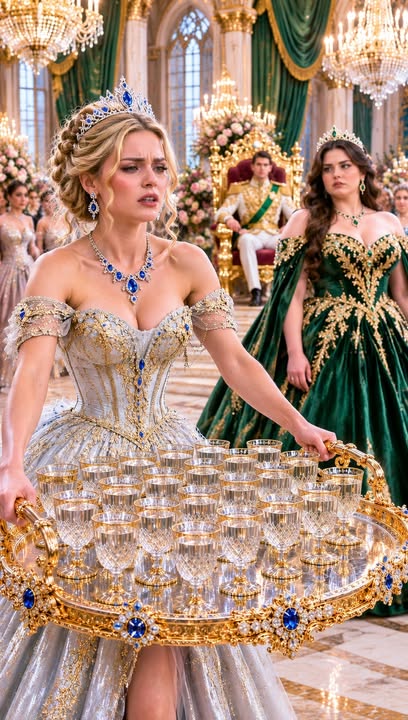
Part 6 – The Truth, at Last
For a long moment, no one in the sitting room moved.
Mara read her grandmother’s words again, tracing the careful letters with her eyes.
*If the truth is ever needed, let it be told by the people who were there.*
The sentence did not sound like a demand.
It sounded like Evelyn: firm without being unkind, certain that truth mattered more when it made room for everyone who had lived it.
Queen Eleanor lowered the council’s letter onto the table.
“She wrote this after the fire,” the archivist said. “It appears to have been kept with a list of staff statements, but filed separately from the commendation.”
“Why was it never used?” Adrian asked.
“I don’t know,” the archivist replied. “But the instruction is clear. Evelyn wanted the people present to speak for themselves.”
Mara glanced at the names on the attached sheet.
There were six, including Evelyn’s.
“Are any of them still living?” she asked.
“Two, according to the staff records,” the archivist said. “The others may have children or relatives who can help us understand what happened afterward.”
Eleanor’s expression had softened, though the gravity in her face remained.
“Then we will find them,” she said. “We will ask, not assume. And we will give them the choice to speak.”
She looked at the council’s letter.
“As for this, I will not let the palace describe Mara’s refusal as a withdrawal. She has not withdrawn. She has asked the palace to tell the truth.”
Mr. Hale, who had stood quietly by the door, nodded.
“I’ll inform the council that the selection cannot proceed on those terms.”
The queen turned to him.
“Inform them that the announcement is canceled, and that the record will be reviewed openly. No candidate’s place will depend on accepting an engagement.”
“I will, Your Majesty.”
“And Mr. Hale,” Eleanor added, “make certain the correction is not written in language that hides responsibility behind phrases like ‘an account was mistaken.’ The palace allowed the wrong story to stand. We must say that plainly.”
The official bowed his head.
“Yes, Your Majesty.”
Mara felt her shoulders ease, though the tension did not leave her entirely.
The letter had hurt, but Evelyn’s note had changed the shape of the room.
The truth was no longer a private favor to be granted by the palace.
It was something her grandmother had already asked for, in the same clear spirit with which she had lived.
Eleanor turned toward Mara.
“I am sorry that we let the council place this burden on you.”
“Thank you,” Mara said. “But the choice still has to be mine.”
“Of course.”
“I don’t want to continue the selection tonight.”
Adrian’s face remained open and attentive.
Mara looked at him before she continued.
“I came here to see whether I could stand in a room like this and remain myself. I think I’ve found part of the answer, but I don’t want the ceremony to decide the rest for me.”
“You don’t owe the ceremony an ending,” Adrian said.
Something in Mara’s chest loosened at that.
“Neither do you,” she replied.
Adrian turned toward the queen.
“I won’t choose a bride because a council has scheduled an announcement,” he said. “And I won’t ask Mara to make a life-changing promise while the entire court waits to see what she’ll do.”
Eleanor looked at her son, and for the first time that evening, her composure gave way to tenderness.
“Then we will end the selection for tonight,” she said. “The court can wait.”
The archivist gathered the records, placing Evelyn’s note in a protective sleeve.
Mara watched her grandmother’s handwriting disappear safely beneath the clear cover.
It seemed a small act, but it mattered.
The palace would not lose that paper again if Mara could help it.
“May I keep a copy?” she asked.
“Certainly,” the archivist replied. “I can prepare one for you and your family.”
“Please.”
Eleanor looked toward the door.
“I must speak to the guests.”
Mara stiffened instinctively.
The idea of standing before the ballroom again made her feel as if she had stepped back beneath the chandeliers, with every face waiting for a performance.
Eleanor noticed.
“You need not come with me,” she said. “I can explain what happened without making you part of the announcement.”
Mara looked at the queen, measuring the offer.
“Will you tell them the selection is paused because I refused the private engagement?”
“I will tell them the council proposed a condition that was not acceptable, and that the ceremony will not continue until the process is fair to every candidate.”
“And the record?”
“I will say that we have found evidence Evelyn Williams led the staff to safety during the kitchen fire, while the public commendation credited Lord Ashcombe. I will also say we are reviewing the account and contacting the other people who were there.”
Mara searched Eleanor’s face.
“Will you say the palace made a mistake?”
“Yes.”
“Will you say you should have corrected it sooner?”
Eleanor did not look away.
“Yes.”
Mara nodded.
“Then I’ll come with you.”
Adrian offered his arm, but did not insist.
Mara took it.
They returned to the ballroom together, followed by the queen, the archivist, and Mr. Hale.
The guests had been waiting, their conversations quieter now.
The musicians had set down their instruments.
At the edge of the room, Vanessa stood beside the other candidates, no longer trying to conceal her unease.
When she saw Mara, she gave her a small, steady smile.
Mara returned it.
Eleanor walked to the center of the dais, where the royal official had prepared to announce the next stage.
“Ladies and gentlemen,” the queen began, “the selection ceremony will not continue tonight.”
A ripple of surprise passed through the guests.
Eleanor did not pause long enough for anyone to fill the silence with speculation.
“The council proposed that one candidate accept a private engagement announcement in order to advance. That condition was not fair, and I would not have any person’s future decided by pressure or convenience.”
Mara felt the room’s attention shift toward her.
Eleanor continued before the whispers could gather.
“Miss Williams has not withdrawn from the selection. She has asked for time and has declined to make a promise she has not chosen freely. Her decision deserves respect.”
A few heads turned toward Mara, but this time the attention felt different.
It was still attention.
It still made her aware of her plain blue dress and the unfamiliar weight of the room.
But she was not standing there as a challenge to be judged.
She was standing there as herself.
Eleanor lifted the old report, which the archivist had brought from the sitting room.
“We have also uncovered an incomplete record concerning a kitchen fire that took place in this palace many years ago. The existing public commendation credited Lord Ashcombe with coordinating the evacuation. The original report indicates that Evelyn Williams, a kitchen assistant, guided the staff toward safety and helped me when I was a young princess.”
The ballroom grew quieter.
“For years, the public account did not tell that story. The palace allowed an incomplete version to stand, and I should have corrected it sooner.”
The queen’s voice remained clear, though emotion had softened its edges.
“I cannot change the years in which Evelyn’s part was left unrecognized. I can make sure the record is corrected now, with care for everyone who was there.”
She lowered the report.
“Evelyn did not act alone, and her own note asks that the people present be heard. We will contact the surviving staff members and their families, review the records, and publish an account that reflects what the evidence supports.”
Mara watched the guests listening.
Some looked uncomfortable.
Some looked moved.
A few appeared uncertain about how to respond.
No one laughed.
Eleanor turned toward Mara.
“I am sorry to Evelyn Williams, to her family, and to the staff whose work was left out of the official story.”
She stepped away from the lectern, not asking for applause.
For a heartbeat, the room remained still.
Then a woman near the back began clapping.
Another joined her, then several more.
The applause spread, but Mara did not mistake it for justice completed.
Applause could be sincere and still disappear when the evening ended.
What mattered was what happened after.
She looked at Eleanor, who had not turned to accept the praise.
The queen was watching the staff gathered along the wall, as if she understood that the words belonged first to them.
Vanessa was among those clapping.
When the applause subsided, the royal official asked the candidates to remain for a few moments while the arrangements for the evening were changed.
Guests began moving into smaller conversations.
The air in the ballroom had shifted, but it was not suddenly perfect.
Mara heard questions, uncertainty, and the low murmur of a hundred people revising what they thought they knew.
She welcomed the honesty of that.
Vanessa came over.
“I’m glad you didn’t let them turn your decision into a story about you being difficult,” she said.
“I’m glad the queen spoke plainly.”
“She did.”
Vanessa glanced toward Eleanor, then back to Mara.
“I don’t know what my family will say about tonight.”
“Do you know what you’ll say?”
Vanessa thought about it.
“That I was wrong to mock you. That I was afraid of failing, and I tried to make someone else look smaller so I could feel safer.”
Mara met her gaze.
“That’s a good start.”
“I’ll try to keep going.”
“I hope you do.”
Vanessa gave a small nod.
“I don’t expect us to be friends because I apologized.”
“Good,” Mara said with a gentle smile. “Friendship would be a strange prize for one apology.”
Vanessa laughed, surprised into it.
“No argument there.”
They stood together for a moment, no longer rivals, though not yet close.
It was enough that neither pretended the hurt had never happened.
Later that night, the court archivist began making calls.
The first former kitchen assistant she reached was Mrs. Bell, who remembered Evelyn with affection and agreed to speak with the archive.
The second surviving staff member, a retired steward named Mr. Croft, asked for a few days to look through his own papers before sharing anything.
Eleanor told the archivist to give him as much time as he needed.
Lord Ashcombe sent his original commendation the following morning, along with a signed statement confirming that he had arrived after the evacuation and had never directed the staff out of the kitchen.
He did not ask the palace to protect his reputation.
In his letter, he wrote that he had accepted a public honor he had not earned because he believed the correction would come later.
“I was wrong to wait,” he wrote. “Please record that too.”
The palace staff located the repair orders for the faulty warming cabinet and the written account of the kitchen fire.
The papers confirmed that the equipment had been installed incorrectly and that several workers had helped one another through the smoke-filled corridor.
Evelyn had led the way to the service passage.
She had stayed with an injured assistant until medical help arrived.
And, according to a note from the household secretary, she had refused an individual commendation until all the staff who helped were named.
The palace had repaired the equipment.
It had not repaired the record.
One week later, Eleanor invited Mara and her mother to the palace.
Mara’s mother, Denise, arrived carrying the old silver tray from their family box, wrapped carefully in a clean cloth.
“I didn’t know this belonged in a palace,” she said as they entered the archive room. “Your grandmother kept it on the top shelf. I thought she liked the shape.”
The tray was smaller than the one used in the challenge, though its silver was darkened and the leaf-shaped handle bore the same curling pattern as the piece in the photograph.
The archivist examined it with gloved hands.
“It appears to be the tray in the photograph,” she said. “The design and the small dent near the rim match.”
“Was it given to her?” Mara asked.
“We don’t have a receipt or formal record,” the archivist replied. “But the kitchen inventory shows that this tray was removed from service after the fire and transferred to Evelyn Williams as a personal memento.”
Denise touched the folded cloth.
“She never told us.”
“Perhaps she thought the tray was only a reminder of people she worked with,” Eleanor said.
Mara looked at the silver, seeing not a royal treasure but a familiar object that had belonged to her grandmother.
“What will happen to it?” Denise asked.
“That depends on your family,” the archivist said. “The palace would be honored to display it with the corrected account, but it remains yours.”
Denise looked at Mara.
Mara thought of the tray balancing in Evelyn’s hands in the photograph, of the old object carried home and placed among family belongings.
“We could lend it,” Mara said. “Not give it away. I’d like people to see it, but I want it to stay connected to our family.”
“Then that is what we’ll arrange,” Eleanor replied.
The corrected record was published a month later.
It did not describe Evelyn as a flawless hero.
It described her as a kitchen assistant who noticed the danger, guided the staff toward the service passage, helped the young princess, and stayed beside an injured coworker until help arrived.
It named the other workers who had been present and recorded their contributions in their own words.
It acknowledged the faulty equipment and the palace’s failure to make the truth public at the time.
At the bottom, the archivist included a line from Evelyn’s note.
*If the truth is ever needed, let it be told by the people who were there.*
The palace held a modest gathering in the old staff dining room, rather than a grand ceremony beneath the ballroom chandeliers.
Mrs. Bell came with her daughter.
Mr. Croft brought a small notebook in which he had written down what he remembered.
Several families sent letters or photographs of relatives who had worked in the kitchens.
Eleanor listened to each account without rushing anyone.
When it was her turn to speak, she stood beside the silver tray, not above the gathered staff.
“I have often thought that gratitude in private was enough,” she said. “It was not. I should have made sure the public record reflected the people who acted with courage and care.”
She turned to Denise and Mara.
“I am sorry for the years your family was left without the full story.”
Denise held Mara’s hand.
“Evelyn wouldn’t have wanted a great fuss,” she said. “But she would have wanted the others remembered.”
“That is what she asked for,” Eleanor replied. “And that is what we will do.”
The gathering ended without a royal announcement or a formal selection.
People lingered over tea and small plates of food prepared by the palace kitchen.
Mara watched Mrs. Bell and Mr. Croft compare memories of the old kitchens, laughing when they remembered how the ovens made the room unbearable in summer.
It was the kind of gathering Evelyn might have liked: people speaking across a table, remembering not only the dramatic moment but the ordinary days that surrounded it.
Adrian came to stand beside Mara.
“You seem more at ease here,” he said.
“I am.”
“Even with all the palace staff watching?”
“They’re watching the tray,” Mara said, glancing toward the display. “That’s different from waiting to see whether I fail.”
He followed her gaze.
The silver caught the afternoon light, its small dent visible near the rim.
“My mother wants to know if you might visit again,” he said. “Not for a ceremony. Not for a decision. Just to speak, if you’d like.”
Mara looked at him.
“And what do you want?”
“To see you again,” he said. “But I don’t want that to sound like a request you have to answer today.”
She appreciated the care in his voice.
“I’d like to see you too,” she said. “Outside the selection.”
“Outside the palace?”
“Eventually. Somewhere ordinary.”
He smiled.
“I know a community garden that has a remarkable variety of birds.”
“Herons?”
“Not yet. But I’m hopeful.”
Mara laughed softly.
They began meeting without a title attached to the invitations.
Sometimes Adrian came to the community kitchen, where Denise showed him how to portion meals efficiently and refused to let him stand idle just because he was a prince.
He learned to stack clean plates, carry supply boxes, and ask people what would be useful before offering advice.
Mara found that he listened as well in a busy kitchen as he had in the garden.
Sometimes they walked along the river path near the city, where no one knew to call him Your Highness.
They talked about ordinary things: books, family, work, and the complicated business of becoming a person apart from the role one inherited.
Adrian never asked Mara to hurry toward a future.
Mara never pretended that affection alone could solve the differences between their lives.
They gave each other room to be uncertain.
Vanessa, too, began to change in ways that could not be measured by one apology.
She returned to the community center with a box of donated kitchen supplies, but she did not arrive with photographers or a speech.
She asked Denise what the center actually needed.
When Denise told her that extra hands mattered more than another polished fundraiser, Vanessa came back the following Saturday to serve meals.
She was awkward at first, and Mara had to show her how to keep a tray steady in the crowded room.
Vanessa laughed at herself when she wobbled.
Then she stopped, reset her grip, and tried again.
Months later, the palace invited Mara to speak at a gathering about the corrected archive.
She agreed, but only after making clear that she would speak about Evelyn and the staff, not about her place in the selection.
The court accepted the terms.
Mara stood before the same ballroom where the guests had once laughed at the thought of her lifting a tray.
The chandeliers still glittered above her, but they no longer seemed to make the room untouchable.
Her mother sat in the front row.
Vanessa sat beside her, and Adrian stood with the palace staff rather than on the dais.
Mara did not tell the audience that her grandmother had been perfect.
She told them Evelyn had been quiet, practical, and often more interested in whether everyone had eaten than in whether anyone praised her.
She spoke about the community kitchen where she learned to carry a tray close to her body, bend her knees, and notice a wobble before it became a fall.
She spoke about how courage was sometimes a steady hand, a clear direction, and a decision to stay beside someone who could not keep going alone.
Then she looked toward Eleanor.
“People should not need to be related to a prince, or standing in the right photograph, for their work to be remembered,” Mara said. “A record matters because it tells people whose effort counted. But the people who lived the story matter most of all.”
Eleanor bowed her head.
When Mara finished, the applause rose warmly, but she did not measure the evening by its volume.
Afterward, the queen thanked her in private.
“I cannot undo what happened,” Eleanor said. “But I can keep asking whose names are missing.”
“That would be a good place to begin,” Mara replied.
Eleanor smiled.
“And I will keep listening.”
A year after the night of the tray challenge, Adrian asked Mara to meet him at the community garden.
It was late afternoon, and a soft wind moved through the tall grasses.
Mara arrived from the kitchen wearing a simple coat, her hands still carrying the faint scent of soap and bread.
Adrian was waiting beside a row of young trees.
He had no officials with him, no photographer, and no carefully arranged audience.
“I wanted to ask you something,” he said.
Mara raised an eyebrow.
“That sounds serious.”
“It is,” he said, then smiled. “But not a question you have to answer because I am a prince.”
“Good.”
“I’ve spent much of my life assuming that the next step would be chosen for me,” he continued. “Then I met you, and I began to understand that a life can be built by two people who are both allowed to choose it.”
Mara’s expression softened.
“What are you asking?”
“I’m asking whether you would like to build a future with me. Not as a selection, not as a public symbol, and not as someone who owes the palace anything. As yourself, alongside me as myself.”
He paused.
“I know it would take patience. I know our lives are different, and I don’t expect you to move into a role you didn’t choose.”
Mara looked at the garden, where seedlings had taken root in neat, hopeful rows.
“Would the community kitchen still be part of our lives?” she asked.
“I would want it to be.”
“Not as a royal project for photographs.”
“No,” he said. “As a place where we show up, learn what people need, and do the work.”
“And if I don’t always agree with you?”
“I hope you won’t always agree with me.”
She smiled.
“And if the palace becomes difficult?”
“Then we will talk about it honestly. And if something needs to change, we will decide together.”
Mara considered the promise.
It was not a promise that everything would be easy.
It was a promise that she would not have to disappear inside his title.
“I’ll build that future with you,” she said, “as long as we keep choosing it together.”
Adrian’s relief showed in the quiet way his shoulders lowered.
“Together,” he said.
He held out his hand, not as a prince offering a reward, but as a person asking to walk beside her.
Mara took it.
They did not announce an engagement that afternoon.
They went back to the community kitchen instead, where a delivery had arrived late and the dinner trays needed carrying.
Adrian picked up one end of a heavy stack.
“Keep it close,” Mara reminded him.
“I remember.”
“Bend your knees.”
He did, and the trays stayed level.
Across the room, Denise watched them with a smile.
Vanessa was helping Mrs. Bell arrange chairs, while the archivist had brought a copy of the corrected record to show the volunteers.
Queen Eleanor arrived quietly near the end of the meal, without a procession, and sat at a table with the people who had come to eat.
The palace still had its ceremonies and its old habits.
But some doors had opened.
The silver tray rested in the archive with Evelyn’s name beside it, not as a treasure that belonged to royalty, but as a family object lent so that the people who had worked in the kitchens would be remembered.
The corrected account named every staff member whose part could be confirmed.
And in the community kitchen, where Mara had first learned the steady steps that carried her across the ballroom, she and Adrian served dinner shoulder to shoulder.
No one there asked her to prove that she deserved her place.
They simply made room at the table.
**–THE END–PLEASE
Share your thoughts or feedback to motivate us to create more stories ♥️
* * *
[PREVIOUS: PART 5](https://storyly.idolsgift.com/blog/part-5-the-secret-behind-mara-s-steady-hands-070)
✓ Lynn R. Adams
Part 6 – The Truth, at Last For a long moment, no one in the sitting room moved. Mara read her grandmother’s words again, tracing the careful letters with her eyes. *If the truth is ever needed, le…