PART 6 (THE END): The Seam Beneath the Marble 057
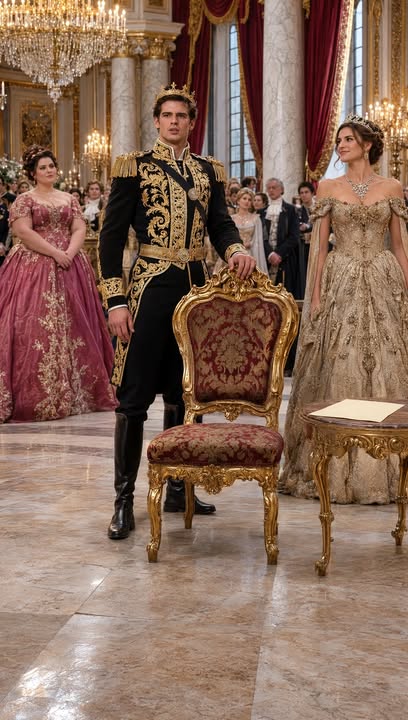
Part 6 – The Steady Ground
“It should have happened years ago,” Mara said.
The prince’s face held no defense against the truth.
“Yes,” he replied. “It should have.”
Mara looked across the hall, where the public record lay open beside the king’s letter.
People were still gathering in small groups, their voices low, their expressions sober.
She had imagined this moment many times, though never quite like this.
In her imaginings, she had pictured relief, perhaps even triumph.
What she felt instead was grief, threaded through with a tenderness she had not expected.
“My mother never heard those words,” she said.
“I’m sorry.”
Mara looked at him.
“Don’t apologize for her as if you were the only person who failed her.”
The prince absorbed that, then nodded.
“You’re right.”
“She should have had the truth while she was alive.”
“She should have.”
“And now it’s my responsibility to remember her, not just the mistake made against her.”
The prince’s expression softened.
“Then we’ll make sure the archive remembers her too.”
Mara drew a slow breath.
She did not feel that her mother’s name had been repaired by a single public speech.
But it had been spoken plainly, before the people who had once heard the false account, and that was a beginning she could hold.
Celestine approached them, her composure carefully gathered around tired eyes.
“My father has sent word,” she said. “He will come to the palace tomorrow.”
“Did he say why?” Mara asked.
“He wants to speak with the prince and me. He says he has papers connected to Lord Vale’s request.”
The prince glanced toward the table.
“Do you think those papers will tell us what your father knew?”
“I hope so,” Celestine said. “But I won’t decide what they mean before I read them.”
Mara offered a small smile.
“That sounds like the lesson you said you needed.”
“It does.”
Celestine looked toward the open hall doors, where the last of the guests were beginning to leave.
“Would you walk with me tomorrow, after he comes?”
“If you want me to.”
“I do.”
The next morning, the ballroom stood quiet behind its closed doors.
The prince had ordered an inspection, and the royal household had cleared the room so the restoration team could examine the marble without ceremony or spectators.
Mara was invited to join them, not as a contestant or a symbol, but as someone who understood the way a room could reveal the strain it carried.
She stood near the western course while a master mason examined the joints.
He worked carefully, measuring the floor and comparing its settling to the old report.
The diagonal seam she had noticed during the challenge ran across the marble like a fine line of handwriting.
“The lower bedding has shifted,” the mason said. “It is not dangerous at this moment, but it has been uneven for a long time.”
“Can it be repaired without replacing the whole floor?” Mara asked.
“Most of it can be preserved. We’ll need to lift a few stones, correct the bedding, and reset them once it has cured properly.”
The prince stood beside her, listening.
“Then that is what we’ll do,” he said. “Keep every sound tile that can be kept.”
The mason bowed his head and returned to his measurements.
Mara watched the workmen mark the places that needed attention.
For years, the floor had appeared flawless from a distance, its polished surface reflecting chandeliers and silk gowns.
Up close, the flaw had been waiting in the seams.
The prince noticed her gaze.
“You look as though you’re listening to it.”
“I am.”
“What is it saying?”
“That it needs time before anyone puts the weight back on it.”
He smiled faintly.
“Then we’ll give it time.”
At midmorning, Celestine arrived with her father.
Lord Vale was a dignified man in his late fifties, dressed in a dark coat that bore no ornament beyond a small family pin.
His expression was composed, though his hands stayed clasped tightly before him.
They met in a private sitting room overlooking the eastern gardens.
Celestine chose a chair beside the window, and Mara sat opposite her.
The prince remained near the mantel, allowing Lord Vale to speak without making the meeting feel like a hearing.
“I have read the statement issued last night,” Lord Vale began.
Celestine watched him steadily.
“And?”
“I wish it had not been necessary.”
“That isn’t the same as wishing it had never happened,” she said.
“No,” he replied. “It isn’t.”
He took a leather document case from beneath his arm and placed it on the table.
“These are copies of the household office correspondence from that year. I kept them when I left my post, though I have not looked at them in many years.”
“Why did you keep them?” the prince asked.
“Because I thought the matter might return one day,” Lord Vale said. “That does not excuse my silence. It only explains why I did not destroy the papers.”
Mara’s attention stayed on the case.
Lord Vale opened it and removed a small stack of letters.
“The first is my request to have report R-17 transferred to the household office,” he said. “I described it as a temporary measure until the king could review the incident.”
“Did the king ask you to seal it?” Celestine asked.
“He asked that the report be held privately while he decided how the court should be informed.”
“Did he tell you he had written to my mother?”
“I knew he had written to her. I did not know the exact contents.”
“Did you know she had been blamed?”
Lord Vale looked down at the papers.
“I knew there had been an accident and that the first account placed responsibility on a staff member. I did not know that your mother’s report contained such a clear warning.”
“Did you ask to read it?”
“I should have,” he said. “I did not.”
Celestine’s fingers tightened in her lap.
“Why not?”
“Because I believed that keeping the matter quiet would give the king time to settle it without causing public alarm.”
“And when he did not settle it?”
“I let the silence continue.”
His voice held no attempt to turn inaction into virtue.
“I told myself there was no value in reopening an old matter that had already passed out of the court’s attention. I was wrong.”
Celestine looked toward the window, where bare branches stirred in a mild breeze.
“You taught me that protecting the crown was one of the most important duties of our family.”
“I did.”
“But you never told me that it could mean protecting a mistake.”
“I should have taught you the difference.”
Mara saw Celestine’s shoulders rise and fall with a controlled breath.
“My father’s name is part of this now,” she said. “I need to know whether you will tell the full truth if the inquiry asks.”
“I will.”
“Even if it damages your reputation?”
“Yes.”
“Even if people say you should have known better?”
Lord Vale met his daughter’s eyes.
“They would be right to say that.”
Celestine looked down at the papers.
For a moment, the room held the ache of everything that could not be undone between a parent and child, and the small possibility of something honest beginning in its place.
“I wanted you to be proud of me,” Lord Vale said. “I thought that meant keeping you away from the less honorable choices I had made.”
Celestine’s expression softened, though it did not lose its hurt.
“I would rather know who you are than be given a perfect story.”
“I understand that now.”
Mara listened without intervening.
The truth did not make Lord Vale innocent, but it gave Celestine something more substantial than rumor to meet him with.
“I’m not ready to say everything is forgiven,” Celestine said.
“I would not ask you to.”
“But I am glad you came.”
Lord Vale lowered his head.
“So am I.”
He turned to Mara.
“Miss Vale, your mother deserved better from the palace and from me. I am sorry I allowed the record to remain unchanged.”
Mara took a moment before answering.
“Thank you for telling the truth now.”
It was not forgiveness, and she did not pretend it was.
But it was an answer offered without bitterness.
In the weeks that followed, the inquiry unfolded with care.
The correspondence Lord Vale had brought confirmed that he had requested the report’s transfer and that the king had ordered the evidence preserved while he considered how to correct the public account.
The records also showed that Elinor’s warning had been received before the ballroom accident.
The report had been placed in the old chair because the king’s household office had instructed Master Vey to preserve the furniture from the affected portion of the room.
No one knew who had tucked the report into the lining.
The restoration team believed Elinor herself might have done so while the chair was being stored, perhaps to ensure the evidence stayed with the object that bore the same number.
Mara could not prove it.
But when she held the paper beside the chair and saw the careful fold matching the shape of the inner frame, the possibility felt like her mother’s quiet hand reaching across the years.
The official record was amended.
It stated that Elinor Vale had identified the ballroom floor’s instability, that her warning had been accurate, and that she had been wrongly blamed for the later accident.
Her report and the king’s letter were entered in the public archive under her name.
A copy was also kept in the palace workshop, where future restorers would learn from the way she had recorded the shifting stones.
The ballroom remained closed while the repairs were made.
Mara visited often, but she did not hurry the work.
The stones were lifted one by one, cleaned, and set aside.
The damaged bedding was removed and replaced.
Where possible, the old marble was returned to its place, with each piece fitted carefully against the next.
The repair took longer than the council had expected.
The prince did not ask the masons to finish sooner.
Celestine began visiting the workshop as well.
At first she came with questions about the inquiry, then with questions about the work itself.
She learned the names of the tools and how to distinguish polished stone from a surface worn by many years of footsteps.
Mara showed her how to examine a table joint before deciding whether it needed tightening.
Celestine, in turn, taught Mara the proper way to address a visiting ambassador, though she admitted that most of the rules were less mysterious than they sounded.
“I used to think I was being taught how to become a queen,” Celestine said one afternoon as they sorted old upholstery samples.
“Were you?”
“I was being taught how to make everyone else comfortable with the idea of me becoming one.”
Mara looked up from the fabric.
“And what do you want now?”
Celestine considered the question, then smiled a little.
“I want to choose useful work because it matters to me, not because it makes me easier to place.”
She had begun helping with the palace’s charitable restoration grants, visiting local workshops and arranging for apprentices to receive proper training.
Her father supported the work, though he no longer presented her future as a duty already decided.
Their conversations remained awkward at times.
That, Celestine said, was better than pretending they were not.
The prince also changed the marriage challenge.
He did not repeat it, and he did not ask the court to treat Mara’s success as the beginning of an engagement.
Instead, he announced a restoration advisory role for the palace, open to skilled workers whose judgment could help preserve the kingdom’s historic buildings and objects.
Mara was offered the position because of her experience, not because of what the prince hoped she might feel for him.
She accepted on the condition that the work remain practical and that her mother’s records be available to the people doing it.
The prince agreed without hesitation.
They learned one another slowly.
Sometimes they spoke in the workshop, with wood dust on his sleeves and a half-repaired cabinet between them.
Sometimes they walked through the gardens after a long day of meetings, where the prince could speak without a roomful of courtiers measuring every word.
He asked about Mara’s life before the palace, and she told him about her mother’s little workroom, the customers who brought her impossible chairs, and the way Elinor could make a hem look elegant even when the cloth had been cut too short.
Mara asked about his father too.
The prince told her about the man he had loved: patient in private, attentive to music, and sometimes too willing to believe that postponing a difficult choice was the same as solving it.
“I can miss him,” he said one evening, “and still know that he failed your mother.”
“You don’t have to choose one truth,” Mara replied.
He looked at her with quiet gratitude.
“I’m learning that.”
As the ballroom repair neared completion, a small memorial plaque was prepared for the public archive.
It did not praise the royal family or speak of forgiveness.
It recorded the facts: the floor had been repaired after its instability was documented; Elinor Vale had reported the fault; her warning had been disregarded; and the record had later been corrected.
Mara read the inscription before it was placed.
“Her name is written clearly,” the prince said.
“Yes.”
“Is that enough?”
“It is a beginning.”
He nodded.
“I thought you might say that.”
“You know me better than you did.”
“I hope so.”
Mara looked at him, noticing the careful way he gave her room to answer.
“You’re not asking whether I’ll become your queen.”
“No.”
“Not asking whether I’ll accept a title?”
“No.”
“What are you asking?”
The prince glanced through the open doors toward the ballroom, where the repaired floor waited beneath its coverings.
“I’m asking whether you might let me build a life with you, if that is something you want.”
Mara’s heart beat steadily, without the dizzy rush of a storybook promise.
She thought of the first time she had seen him, seated beside the rocking chair, waiting for someone else to solve the problem.
She thought of how he had listened in the corridor, how he had faced the record in public, and how he had learned that care without courage could still become another kind of silence.
“I won’t be a symbol of your better judgment,” she said.
“I would never ask you to be.”
“I won’t give up my work.”
“I don’t want you to.”
“I won’t agree to a life designed for me by the court.”
“Then we’ll design it together.”
Mara searched his face.
“And if we disagree?”
“Then we will have to listen before we decide.”
“That sounds harder than a marriage challenge.”
“It probably is.”
She smiled.
“I think I would like to try.”
The prince did not reach for her as though her answer had made her his.
He simply offered his hand.
Mara took it, and for a moment they stood together in the quiet corridor, with no audience to applaud them and no promise that their future would always be easy.
Only the possibility of choosing one another, honestly, each day.
Months later, the ballroom reopened.
The marble gleamed beneath the restored chandeliers, and the repaired diagonal course ran cleanly across the floor.
The old stones had been preserved wherever possible.
At the entrance, the new archive display included Elinor Vale’s report, the king’s letter, and a note explaining how the floor had been repaired.
Mara stood before it with her hands clasped loosely before her.
For a long while, she had imagined what it might feel like to see her mother’s name cleared.
She had expected the feeling to arrive as a sudden release.
Instead, it came gently, like a seam easing beneath a careful hand.
“She would have liked the display,” Celestine said beside her.
“She would have asked whether the report was being kept somewhere dry.”
Celestine laughed softly.
“Then I’m glad we placed it behind glass.”
The prince approached them, dressed in black and gold but wearing no crown.
“The masons say the floor is ready.”
“Is it steady?” Mara asked.
“They tested every section.”
“Did they test it with a chair?”
“I believe they did.”
“Good.”
The guests began entering the ballroom, but there was no contest and no announcement of a bride.
There was music, conversation, and the warmth of people gathered to celebrate both the restored room and the work that had made it sound again.
Before the musicians began, the prince turned to Mara.
“Would you take the first step with me?”
Mara looked down at the marble.
The floor held the soft glow of the chandeliers, its seams visible in the light rather than hidden beneath polish.
She thought of Elinor’s hands, her patient eye, and the words she had given her daughter: look for the strain, then decide what can be mended.
Mara placed her hand in the prince’s.
Together they stepped onto the restored marble.
The floor remained steady beneath them.
This time, neither of them needed the room to mistake a polished surface for a perfect one.
They walked forward side by side, on ground whose flaw had finally been seen, whose story had finally been told, and whose trust could at last begin to bear their weight.
**–THE END–PLEASE
Share your thoughts or feedback to motivate us to create more stories ♥️
* * *
[PREVIOUS: PART 5](https://storyly.idolsgift.com/blog/part-5-the-seam-beneath-the-marble-057)
✓ Lynn R. Adams
Part 6 – The Steady Ground “It should have happened years ago,” Mara said. The prince’s face held no defense against the truth. “Yes,” he replied. “It should have.” Mara looked across the hall, wh…