PART 6 (THE END): The Scar That Remembered 057
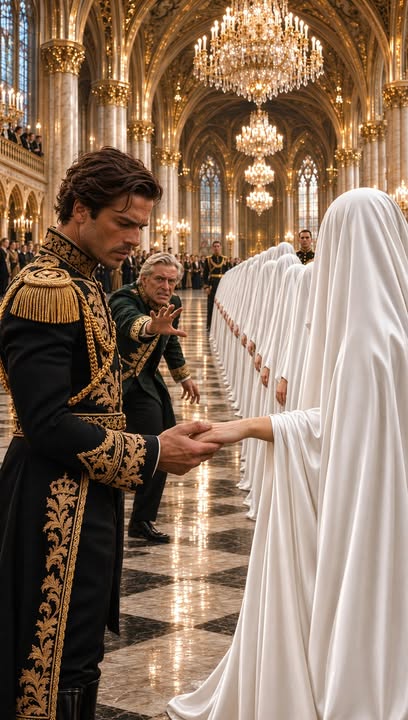
Part 6 – The Garden That Remembered
Michael’s words settled over the garden, and the last light of day thinned between the bare rose stems.
Alexander looked at him, the council’s message still folded in his hand.
“My father knew about Isabel?”
“The document is a letter from Queen Margaret,” Michael said. “It says your father was told after Isabel’s death.”
“Did he know Mateo had been blamed?”
Michael’s eyes lowered.
“The letter suggests he did.”
Elena’s hand tightened around the photograph she had carried from the house.
“Did he know Mateo was innocent?”
“I believe so,” Michael replied. “The letter says Queen Margaret wanted him to help correct the record when the family was ready.”
“And he never did,” Alexander said.
“No.”
For a moment, the old estate seemed to hold every silence it had ever kept.
Alexander looked down at his statement.
The choice before him had not changed, but its shape had.
His father had known enough to act, and had left the burden for someone else to carry.
“Where is the letter?” he asked.
“In the council room. They found it while reviewing your mother’s papers.”
“Then we’ll read it before I decide anything.”
Elena watched him closely.
“You’ve already decided what you believe.”
“I have,” Alexander said. “But I want to understand what my father was asked to do, and what he thought he was protecting.”
Michael nodded.
“I’ll bring it to you.”
He turned toward the house, leaving Alexander and Elena beside the garden path.
The prince remained still for a few seconds, then folded the statement and placed it in his coat.
“Are you all right?” Elena asked.
“No,” he said. “But I’m here.”
She appreciated that he did not pretend a new discovery could be made painless by naming it.
“Come on,” she said. “Let’s read the letter.”
In the council room, the members had not yet gone.
Queen Margaret’s letter rested on the table beside the statement Alexander had written.
Lady Caroline stood by the window, while the legal adviser sat with his hands clasped before him.
Michael entered behind Alexander and Elena, carrying the document with both hands.
“The original was among the papers we were reviewing,” he said.
“May we see it?” Alexander asked.
Lady Caroline nodded.
“It belongs to the family record now, but it concerns you.”
Alexander read the letter silently.
His mother’s handwriting moved across the page in measured lines.
She had written that his father had been told of Isabel after the child’s death, and that she had asked him to find a way to restore Mateo’s name without revealing the details of Isabel’s life.
His father had agreed, but the letter offered no evidence that he had ever taken the necessary steps.
At the bottom, Queen Margaret had added a final note.
I fear we have mistaken delay for mercy.
Alexander read the sentence again.
Then he handed the letter to Elena.
She read it, her face grave but composed.
“Your mother knew the silence was hurting people,” she said.
“Yes.”
“She hoped your father would find a way to mend it.”
“Yes.”
“Why didn’t he?”
Alexander looked at the old paper.
“I don’t know.”
Lady Caroline spoke gently.
“Your father may have believed that reopening the matter would cause Isabel’s memory to become a public question. He may have feared that restoring Mateo’s name would lead people to ask why he had left.”
“That may explain his hesitation,” Alexander said. “It doesn’t undo the years Mateo spent under suspicion.”
“No,” Lady Caroline replied. “It does not.”
The legal adviser moved the unsigned public statement closer to Alexander.
“If you release it now, the council cannot guarantee its support.”
Alexander rested his fingertips on the page.
“Then let me be clear about what I’m doing.”
He turned to the assembled council.
“I am not accusing my father of cruelty, and I will not pretend to know every reason he delayed.”
He glanced at Queen Margaret’s letter.
“But I will not continue that delay.”
No one interrupted him.
“Mateo Reyes was trusted with the queen’s signet, and he returned it as he had been asked to do.”
“He was not a thief, and the record that allowed people to believe he was must be corrected.”
“Isabel was my twin sister.”
“She was sent away as a child because the people who loved her feared she would not survive the turmoil surrounding the family.”
“She died young, far from the home where she was born, and she deserves to be remembered as more than a secret.”
The council room remained quiet.
Alexander continued, his voice steady without becoming grand.
“I cannot make the past fair by choosing perfect words.”
“But I can stop asking the people who bore the cost of our silence to bear it alone.”
Lady Caroline closed her eyes briefly, then opened them.
“Your mother would have understood why you chose this.”
“I hope so.”
“I cannot promise that every member of the family will agree.”
“I’m not asking for agreement before the truth.”
The legal adviser glanced at the statement.
“Then the council will not authorize it as an official family announcement.”
“I understand.”
“Your Highness,” Lady Caroline said, “if you speak in your own name, the council may consider whether you can continue as heir.”
Alexander looked at the old portraits lining the walls, then at the people seated around the table.
“I understand that too.”
Elena stood near the door, quiet and watchful.
He did not turn to her for reassurance.
He had promised to make this choice freely, and she deserved to see him keep that promise.
“I’ll release the statement tomorrow,” he said.
The next morning, Alexander stood in the estate’s small press room with the handwritten pages before him.
He had chosen to speak without a formal ceremony, without banners or a grand backdrop.
Michael waited to one side, and the family’s public affairs team stood near the door.
Elena had asked to remain in the guesthouse until the statement was delivered.
She wanted the choice to belong to Alexander, not to the audience watching him make it.
He began by naming Mateo Reyes.
He explained that Queen Margaret had entrusted Mateo with a royal signet and with the safety of a child who needed to live away from the estate.
He said that the family had allowed an accusation of theft to stand, even though Mateo had done nothing wrong.
He did not claim that the secrecy had been simple or that every person involved had understood its cost.
He said that a desire to protect one person had become a reason to leave another man’s name unprotected.
Then he spoke of Isabel.
He told the public that she had been his twin sister, born frail and sent away under his mother’s care.
He said that Isabel had lived a short life, loved by the people who raised her, and that she had been denied the chance to know the family she came from.
He did not offer details that Elena had not agreed to share.
He did not make the story into a romance, a mystery, or a defense of the royal family.
He spoke of his sister as a person.
When he finished, he announced that Mateo’s name would be formally cleared in the estate records and that a memorial would be created in Isabel’s honor.
Then he said that the truth had been withheld for too long, and that the family would no longer ask others to accept a convenient silence in its place.
The statement brought questions, some tender and some difficult.
Alexander answered the ones he could.
He admitted when he did not know.
He refused to speculate about what Isabel might have become or how his father might have acted if given another chance.
He only promised to preserve the letters and records, and to make them available for careful historical review.
When the cameras were gone, Michael approached him.
“Your Highness,” he said, then paused. “Alexander.”
The prince looked at him.
“I should have done more to question the old record before this.”
“You didn’t know the whole story.”
“I knew enough to wonder why it had never been settled.”
Michael’s voice carried a quiet regret.
“I accepted the file’s conclusion because it was easier than asking what the conclusion protected.”
Alexander rested a hand on his shoulder.
“We can’t change what we failed to ask then.”
“No,” Michael said. “But we can ask now.”
A week later, the council announced that Alexander would remain heir.
The decision did not erase the disagreement between him and some family members, nor did it turn every doubt into approval.
But Lady Caroline spoke for the council when she said that the family would not punish him for telling the truth about its history.
She also supported the memorial, and offered to help gather the names of people who had served the household without ever appearing in its official stories.
The news reached the estate staff before it reached the papers.
In the kitchen, the former worker who had first told Elena about the bride-selection announced the decision with such satisfaction that the cooks laughed.
In the garden, older groundskeepers remembered Mateo as they had known him, not as the man a ledger had once accused.
One of them brought a small bundle of rose cuttings to the house.
“They came from the old garden,” he told Elena. “Your father helped me plant the original row.”
Elena accepted the cuttings carefully.
“Thank you.”
“We should have said his name sooner,” the man replied.
Her eyes shone, but she smiled.
“You’re saying it now.”
The memorial was placed beside the rose garden, where the pale stone path curved toward the place the greenhouse had once stood.
It was not a statue of a prince or a monument to a dynasty.
A low stone wall held Isabel’s name, Mateo’s name, and a simple inscription chosen by Elena and Alexander:
For those whose lives were made smaller by the stories others found convenient.
The remaining space was left open for names that might be added as the family learned more.
At the first gathering, staff members came in work clothes, family members arrived without ceremony, and Mrs. Bell stood beside Lord Pembroke with a walking stick in one hand.
Michael placed the signet, now restored to the estate archive, in a small glass case nearby with Queen Margaret’s letter and a copy of Mateo’s note.
It no longer sat in a record as a missing object.
It stood as evidence of a promise kept, and of the price secrecy had asked others to pay.
Elena brought the faded photograph.
She did not place it in the case.
Instead, she held it while Alexander spoke about Isabel’s love of rain, smooth stones, and the stubborn courage of a child who had wanted to know whether her brother might someday visit.
He did not embellish the story.
He did not pretend that a memorial could give him back the sister he had never known.
He simply said her name, and let it be heard.
Afterward, as the guests drifted through the garden, Michael approached Elena.
“I owe you an apology,” he said.
“For what?”
“For treating your father’s name as a question to be managed before I treated him as a man whose life had been affected.”
Elena looked at him, remembering the first moments in the ballroom, when he had feared what her presence might reveal.
“Thank you for saying that.”
“I hope you’ll forgive me.”
“I do,” she said. “But I also hope you remember what it felt like not to know.”
“I will.”
Near the memorial, Alexander waited until the last guests had gone.
The sky had clouded over, and a thin rain began to fall across the garden.
It tapped softly on the stone and darkened the rose stems.
Elena stood beneath the shelter of an old archway, holding the photograph against her chest.
Alexander joined her there.
“Is that why she liked the rain?” he asked.
“Partly,” Elena said. “She said it made even a quiet house sound as though someone had come home.”
He watched the rain for a moment.
“I wish I could have known her.”
“So do I.”
“Thank you for knowing her when I couldn’t.”
Elena lowered her eyes to the photograph.
“She was more than the secret my father kept.”
“I know.”
“Say her name when you remember her.”
“Isabel,” he said.
The name sounded different now that it had been spoken in the open air, without a locked room or a missing page around it.
Elena’s shoulders eased.
“I think she would have liked that.”
Alexander looked at her carefully.
“I have something to ask you, but I don’t want it to sound like a reward for what happened.”
“Then don’t make it one.”
“I won’t.”
He took a slow breath.
“I want to build a life with you, if that is something you want too.”
She looked at him, and he went on before the old habits of the palace could make the question sound like an announcement.
“Not because you knew Isabel.”
“Not because your father protected my family.”
“Not because I chose you in a ballroom and want that choice to become permanent.”
“I want it because I would like to know who you are when there is no crisis between us, and because I have begun to care for the person who keeps telling me the truth even when I would rather hear something easier.”
Elena’s eyes warmed.
“And what would that life look like?”
“Whatever we choose together.”
“No title attached?”
“No title that obligates you.”
“No expectation that I’ll become a symbol of a story you’ve told about yourself?”
“No.”
“No grand gesture meant to make it difficult for me to say no?”
He smiled faintly.
“I’ll try to make it as easy as I can.”
“That would be a first for a prince.”
“I’m willing to learn.”
The rain whispered through the garden.
Elena looked at the path, the memorial, and the old stone wall where their childhoods had crossed without either of them understanding the shape of the moment.
“I care for you too,” she said.
Alexander did not reach for her hand until she offered it.
When she did, he took it gently, his thumb resting beside the faded scar.
“Your mother asked me to remember you as a boy before you were an heir,” Elena said.
“I think I understand why now.”
“She wanted someone to see you without the title.”
“And you do?”
“I’m beginning to.”
He looked down at their joined hands.
“That’s more than I deserve.”
“It isn’t about deserving,” she said. “It’s about what you choose to do next.”
“I’ll keep choosing.”
“Then I’ll keep deciding for myself.”
“I wouldn’t ask for anything else.”
Months passed before the wedding.
The family did not rush the plans, and neither did Alexander or Elena.
They spoke often, sometimes about the past, sometimes about unimportant things that felt important because they belonged only to them.
Elena told him stories about Mateo’s dry humor, his habit of talking to the garden tools as if they were stubborn apprentices, and the way he kept Isabel’s smooth stones in a wooden bowl by the window.
Alexander told her what it had been like to grow up beneath careful expectations, and how often he had mistaken admiration for affection because no one had taught him to ask what remained when the title was removed.
They learned each other in ordinary hours.
Elena still stayed in the guesthouse at first.
Later, when she chose to spend more time at the estate, she had a room placed near the gardens rather than in the family wing.
Alexander never called that a compromise.
He called it her room.
In the early spring, the roses began to open.
The old garden was renewed with the help of the workers who had cared for it across generations.
At its far end, where the greenhouse had once stood, a new path led toward the memorial.
On the morning of their wedding, the sky was clear.
The ceremony took place beside the rose garden, with the family gathered alongside the people who had shaped their lives.
Mrs. Bell sat in the front row with Lord Pembroke.
Michael stood beside Alexander, no longer as a man guarding the family from a troubling truth, but as a friend who had learned that loyalty without honesty could become another kind of silence.
The estate workers stood beneath the rose arches, dressed in their best clothes.
Some of them remembered Mateo.
Others had known Elena long before the prince had.
When she walked toward Alexander, she carried no veil.
She wore a simple dress and the faded photograph of Isabel, tucked safely inside a small locket.
Alexander did not look first at the scar on her hand.
He looked at her face.
There were no guards to lift a veil, no challenge to prove that love could be chosen without sight.
There was only Elena, walking toward him because she wanted to.
When she reached him, he offered his hand.
She placed hers in it.
“I choose you,” he said quietly.
“And I choose you,” she answered.
Their promises were simple, made in their own voices.
They promised to listen before deciding for one another, to speak the truth even when silence seemed easier, and to build a life that neither title nor history could claim as its own.
After the ceremony, the guests gathered among the roses.
Someone began to play an old waltz, and the workers laughed when Alexander stepped on Elena’s hem.
“You’re supposed to be a practiced dancer,” she told him.
“I’ve had extensive instruction.”
“Perhaps you should request a refund.”
“I’ll take it up with my tutor.”
She laughed, and he laughed with her.
The sound carried across the garden, past the memorial and the open windows of the estate.
Later, when the guests had gone and the light softened over the rose beds, Alexander and Elena returned to the path where they had first begun to tell the truth.
The memorial rested among the flowers.
Isabel’s name was clear in the evening light, and beside it Mateo’s name no longer stood beneath an accusation.
Alexander held Elena’s hand.
For the first time, he did not feel that the past was a locked room he had to enter alone.
They walked on together, not as an heir and the woman he had chosen unseen, but as two people who had learned that love was not a secret to uncover or a prize to claim.
It was a truth they would keep choosing, freely, in the open air.
**–THE END–PLEASE
Share your thoughts or feedback to motivate us to create more stories ♥️
* * *
[PREVIOUS: PART 5](https://storyly.idolsgift.com/blog/part-5-the-scar-that-remembered-057)
✓ Lynn R. Adams
Part 6 – The Garden That Remembered Michael’s words settled over the garden, and the last light of day thinned between the bare rose stems. Alexander looked at him, the council’s message still folde…