PART 6 (THE END): The Scar She Carried 069
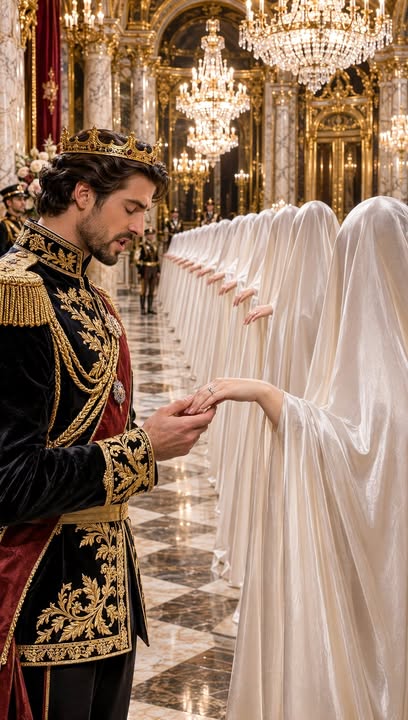
Part 6 – A Life Chosen Freely
The name on Clara’s paper was not a stranger’s.
It belonged to Lord Edmund Vale, Alexander’s grandfather’s younger brother, a quiet man who had managed the family’s private accounts and died many years before.
The room seemed to draw in around them.
Michael read the name once more, then looked up with troubled recognition.
“Lord Edmund had access to the west wing,” he said. “He was there that night. The household register lists him in the king’s study.”
The Queen’s fingers went to her lips.
“He told me he had nothing to do with the jewel.”
“Perhaps he believed he was protecting your grandfather,” Michael said. “Or the family.”
Elena held the paper carefully between her hands.
“My mother wrote this before she left the palace?”
“Yes,” Alexander said. “The date is the night the jewel disappeared.”
“Then she knew who took it.”
“She may have seen him remove it,” Michael replied. “Or learned it from someone afterward.”
Elena looked down at the small, faded lines.
“She never told me.”
“Perhaps she thought the name would put you in danger,” the Queen said softly.
Elena’s gaze lifted, and the Queen immediately corrected herself.
“I don’t know that. I’m only guessing.”
“Thank you for saying so.”
Alexander turned to Michael.
“Can the name be confirmed in the household register?”
“It can. I’ll ask Mrs. Lennox to bring the original.”
“No,” Elena said. “We have the paper and the register already. We don’t need to make another decision before listening to the person who wrote it.”
“She’s right,” Alexander said.
Elena folded the note and tucked it into her satchel.
“I’ll go to my mother.”
“Would you like me to come?” Alexander asked.
“Not yet.”
He nodded, accepting the answer without trying to persuade her.
The next morning, Elena returned with Clara.
Clara was smaller than Alexander expected, with silver threaded through her dark hair and a posture made straight by habit rather than pride.
Her eyes were clear and watchful, and when she entered the library, Alexander felt an echo of the child who had once run through the garden to help him.
The scar on Elena’s hand was a mark left by that day.
Clara saw him looking at it.
“You remember now?” she asked.
“I remember enough to know she reached for me before she thought of herself.”
“She was always like that,” Clara said, and for the first time her face warmed. “Though she would have been furious to hear me say so.”
Elena gave her mother a fond, quiet look.
“I’m standing right here.”
“I know,” Clara replied.
The Queen rose from her chair.
“Clara.”
“Your Majesty.”
Neither moved toward the other.
The distance between them was not measured in feet, but in years of silence and the life Clara had been forced to build beyond the palace gates.
“I owe you an apology,” the Queen said. “I knew you had not taken the jewel, and I did not clear your name.”
Clara listened without lowering her eyes.
“I was afraid of my father,” the Queen continued. “I told myself I would make things right later, then let the years pass. That was my failure, and no explanation makes it smaller.”
Clara’s expression held sorrow, but no triumph.
“You were young,” she said.
“So were you, when you lost your position.”
“Yes.”
“I am sorry.”
Clara took a slow breath.
“I accept that you mean it,” she said. “I can’t pretend the past did not hurt, and I can’t give you back the years we lost. But I don’t want to spend the rest of my life carrying anger for you.”
The Queen’s eyes filled.
“Thank you.”
“Don’t thank me for making peace with what I can,” Clara replied. “Just tell the truth about what happened.”
“I will.”
Clara turned to Alexander.
“Your mother once wrapped a child’s torn coat with a palace ribbon,” she said. “The little girl was angry that she had been made to wait, and she told the prince he was being foolish.”
Elena glanced at him.
“I don’t remember that part.”
“You were very convincing,” Alexander said.
“I was ten.”
“You were still convincing.”
A faint smile crossed Clara’s face.
The gentleness of the moment did not erase the old hurt, but it made room for something that had been missing: a conversation in which no one needed to hide behind a royal title.
The council met again the following day.
This time, Alexander brought the original household register, Clara’s note, the steward’s document, the letter from his grandfather, and the accounts that confirmed Lord Edmund’s presence in the west wing.
The evidence did not prove whether Lord Edmund had taken the jewel to protect his brother or to conceal another secret, and no one living could question him.
It did establish that Clara had named him that night, that the jewel had been removed from the king’s study, and that the accusation against her had never been supported by the record.
Alexander asked the council to publish a full statement clearing Clara’s name, acknowledging the family’s failure, and explaining the evidence as honestly as they could.
The Queen supported him.
Michael spoke as well, admitting that he had accepted the palace’s account without asking what evidence remained.
He did not excuse himself by saying he had been young or uninvolved.
He simply acknowledged that his silence had helped the false story endure.
The council approved the statement.
It would include an apology from the royal family, a formal correction to the palace record, and the establishment of a fund for palace workers and their families, offering practical support with education, housing, and emergencies.
Alexander asked that the fund be administered independently, with workers represented among those who oversaw it.
The council agreed.
When the statement was released, it did not make the past simple.
Some people criticized the Queen for having stayed silent.
Others questioned why the family had taken so long to tell the truth.
The palace answered those questions rather than dismissing them, and Clara’s name was cleared in the same public record where the accusation had once been preserved.
Alexander did not become the hero of Clara’s story.
He never expected to.
He had only done what should have been done long before he was old enough to understand what had happened.
For a time, the question of the crown remained unsettled.
Several members of the council believed Alexander should step aside, arguing that the future of the monarchy required a leader who would not challenge its private decisions in public.
Others thought his choice had shown a kind of responsibility the crown needed.
Alexander listened to them all.
Then he announced that he would give up the privileges and wealth attached to the title of heir, while remaining willing to serve in a public role chosen by the people and the council.
He would not accept the crown as a prize for telling the truth.
Nor would he abandon the people who had trusted him to serve.
Michael stayed beside him through the decision.
“You may find that life outside the old expectations is less comfortable than you imagine,” the adviser said one evening, as they walked through the garden.
“I’ve spent a long time being comfortable in ways that left me lonely.”
“That may be true.”
“And you?”
“I’ll stay if you still want me.”
“I do.”
“Even though I’ve been wrong?”
“Especially if you keep telling me when I’m wrong.”
Michael gave a quiet laugh.
“I will make an effort.”
“You’ve already started.”
The garden had changed little since the afternoon Alexander first remembered Elena there.
The same fountain stood beneath the climbing roses, and the same stone paths curved between the hedges.
But Alexander no longer saw it as the place where a child had vanished from his life.
It was where two people, years later, had begun to speak honestly.
Elena joined him there one mild evening, after Clara had returned to her aunt’s home and the palace had grown quieter.
“I heard about your decision,” she said.
“I thought you would.”
“You’re giving up the privileges of the title.”
“Yes.”
“And keeping a role in public service.”
“If it remains useful.”
“Those are difficult choices.”
“I don’t want to pretend they are easy.”
She rested her hands on the fountain’s edge.
“Are you giving them up because of me?”
“No,” Alexander said. “I’m doing it because I don’t want to build my life on the idea that the crown makes every choice worthwhile.”
“Good.”
“I also don’t want you to think you have to choose a life with me because I chose this.”
“I know.”
“If you would rather leave the palace and never return, I’ll help you do it.”
Elena studied him, her gaze clear in the fading light.
“You keep offering me the freedom to leave.”
“I want you to have it.”
“I know.”
“And?”
“And I want a life where neither of us has to ask permission to be honest.”
He felt his breath catch, but he did not reach for her hand.
“Would you like to build that with me?”
“I would,” she said. “But not as a bride chosen by your title, or as the ending to a story the palace can use to make itself look forgiven.”
“Then what would you like to be?”
“Your partner. Your equal. The person who can disagree with you without the room deciding she has been ungrateful.”
“I can promise to listen.”
“Don’t promise perfection.”
“I won’t.”
“Promise me you’ll keep trying.”
“I can do that.”
Elena looked down at her scar.
“I came to the palace because I wanted my mother’s name cleared. I thought that might be the end of my connection to this place.”
“And now?”
“Now I know what I want next.”
She held out her hand, not as the scarred hand Alexander had once examined, but as Elena’s hand, freely offered.
He took it gently.
Clara joined them in the garden a few weeks later, carrying a small bundle wrapped in blue cloth.
Inside was the old ribbon she had used to bind Elena’s cut when the children were young.
The fabric had faded, but the careful stitches still held.
“I kept it because I was sentimental,” Clara said. “Or because I thought one day you would want it.”
Elena touched the ribbon.
“I want it.”
Clara placed it in her daughter’s palm, then looked at Alexander.
“Take care of each other,” she said. “Not because either of you is helpless, but because life is easier when someone stands beside you.”
“We will,” Alexander said.
Their wedding took place in the palace garden, beneath the roses and the open sky.
It was small by royal standards, with no parade, no procession through the capital, and no guests invited merely because of their rank.
Clara sat in the front row beside Michael.
The Queen joined them, not as the center of the ceremony, but as a mother who had come to witness her son choose a life without asking the crown to choose for him.
When Elena walked toward Alexander, he saw the scar on her hand.
For an instant, he was seven again, frightened beside the fountain, while a brave girl pressed a strip of ribbon against his bleeding palm.
Then Elena reached him, and the years between them folded gently into the present.
“I know this hand,” he said, so quietly that only she could hear.
“You know the scar,” she replied. “You still have to get to know me.”
“I intend to.”
“Good.”
They made their vows without promising that love would make every difficulty disappear.
They promised to speak truthfully, to respect each other’s choices, and to remember that neither a title nor a past could decide what their life would become.
When the ceremony ended, Clara embraced her daughter, and the Queen waited until Elena turned toward her before offering her hand.
Elena took it.
There was forgiveness in the gesture, but not a claim that everything had been mended.
There was only a willingness to begin from what was true.
The palace’s new fund opened its doors that year, offering help to workers and their families without requiring them to prove that their struggles were worthy of attention.
Alexander worked alongside its trustees and listened to the people the old household had too often overlooked.
Michael remained at his side, no longer guarding the family’s image, but helping it become more honest.
And Elena, who had once refused to be treated as a royal curiosity, became neither an ornament nor a symbol.
She became Alexander’s partner, challenging him when he needed it, standing with him when she chose, and building with him a home where respect mattered more than rank.
In the garden where the truth had first returned, the scar on her hand no longer felt like evidence of a wound the palace had buried.
It was a reminder that a child had reached for another child, that courage could survive years of silence, and that love, when freely chosen, did not ask anyone to surrender themselves.
**–THE END–PLEASE
Share your thoughts or feedback to motivate us to create more stories ♥️
* * *
[PREVIOUS: PART 5](https://storyly.idolsgift.com/blog/part-5-the-scar-she-carried-069-3)
✓ Lynn R. Adams
Part 6 – A Life Chosen Freely The name on Clara’s paper was not a stranger’s. It belonged to Lord Edmund Vale, Alexander’s grandfather’s younger brother, a quiet man who had managed the family’s pri…