PART 6 (THE END): The Route Nobody Should Have Known 056
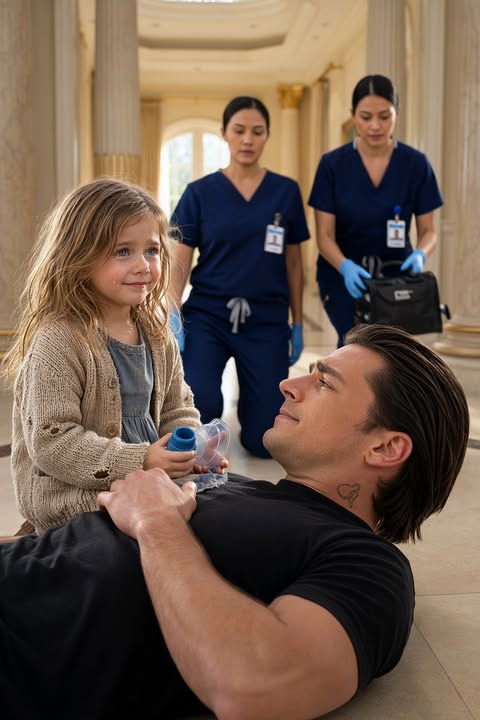
Part 6 – The Home They Chose
Lucas read Victor’s note again, though the words had not changed.
“If you turn over the ledger, Daniel will learn that the first person who decided which records survived was not your father.”
Isabella stood beside him, close enough that her sleeve brushed his.
“What does he mean?” she asked.
“I don’t know yet.”
“Do you think he’s trying to stop you?”
Lucas looked at the final line.
“Maybe he’s trying to tell me what I’ll find.”
He called Miriam, who advised him not to contact Victor directly and asked him to preserve the note.
Lucas agreed, then followed her instructions, placing it in a clear sleeve and writing down when it had arrived.
For the rest of the morning, he kept finding his eyes returning to the last sentence.
He had been so certain that his father’s choices had shaped the family’s secrets, and so certain that Victor had helped carry them forward.
Now the note suggested that Victor had also decided which parts of the truth were allowed to remain.
By noon, Miriam called back.
Victor had contacted her through a lawyer and agreed to meet with investigators.
Carmine had been located in a hotel outside the city, where he had gone after learning that the warehouse records were being reviewed.
He was safe, and he had agreed to turn over the original ledger.
The news brought no immediate relief.
It was difficult to be grateful that no one was hurt when the people involved had spent years hiding facts that could have changed other lives.
That afternoon, Lucas sat with Isabella at the kitchen table while Daniel played on the rug nearby.
The boy’s Lego castle leaned at a precarious angle beside his knee.
Lucas told her what Miriam had said.
“Victor is going to cooperate?” Isabella asked.
“He says he is.”
“Do you believe him?”
“I believe he’s ready to tell them something.”
“That isn’t quite the same.”
“No,” Lucas said. “It isn’t.”
Daniel looked up from his castle.
“Is Victor coming here?”
“No,” Lucas replied. “Not today.”
“Is he your friend?”
Lucas let the question sit for a moment, giving it the care it deserved.
“He was,” he said. “And I still care what happens to him.”
Daniel frowned at the Lego tower.
“Can someone be your friend and still do something wrong?”
“Yes.”
“Can they say sorry?”
“They can.”
“Does that fix it?”
Lucas glanced at Isabella.
“It can be part of fixing it.”
Daniel returned to his castle, apparently satisfied for now.
Lucas looked at the boy’s small hands fitting bright blocks together.
He thought of the note, of Victor’s withheld records, and of all the years in which he had mistaken loyalty for silence.
“What if Daniel learns I made mistakes too?” he asked quietly.
Isabella reached across the table and touched his hand.
“He will.”
Lucas looked at her.
“He’ll learn that you made them,” she continued, “and that you didn’t ask him to carry them for you.”
The answer did not make the fear disappear.
It gave the fear somewhere honest to stand.
The next day, Lucas met Victor at Miriam’s office with two investigators present.
Victor looked older than he had the week before.
He sat with his hands clasped together and did not ask Lucas to speak with him alone.
“I’m glad you came,” Lucas said.
“I nearly didn’t.”
“Why did you?”
“Because I’ve spent too long deciding what other people were allowed to know.”
Miriam placed a recording device on the table and explained the process.
Victor confirmed that he understood his statement would be shared with the investigators and could be used in any legal proceedings.
Then he began.
Years earlier, after the fire, Victor had been asked to assemble files for the company’s internal review.
He had been young, eager to prove himself, and afraid of losing his place in a family business that had already begun to close ranks.
He found the maintenance memo and the original repair request.
He also found a second page, written after the fire, which showed that Lucas’s father had asked the building manager to describe the door as “left unsecured” and not to emphasize that the repair had been delayed.
Victor had not written that instruction.
He had not caused the fire.
But he had removed the second page from the file before the company gave its records to the investigators.
He had kept the page.
He said he told himself it was temporary, that he would return it when the family was ready to speak plainly.
The family had never been ready.
Instead, the incomplete file became the official account.
Clara Carter was blamed for leaving the passage unsafe.
“I chose the organization,” Victor said, his voice low. “Then I told myself I was choosing the people inside it. It took me years to admit those weren’t the same thing.”
Lucas did not answer immediately.
He had expected the truth to feel like a door finally opening.
Instead, it felt like standing in the same room as a person he loved and seeing, clearly, the harm they had done.
“You knew Elena’s sister had been blamed,” Lucas said.
“Yes.”
“You knew the report left out the repair delay.”
“Yes.”
“You knew I never heard the whole story.”
“Yes.”
“Why did you keep the page?”
Victor looked down.
“At first, I thought I was protecting your father. Then I thought I was protecting you. Later, I realized I was protecting myself from having to say what I’d done.”
Lucas let out a slow breath.
“Thank you for telling them.”
“I’m not asking you to forgive me.”
“I know.”
“I don’t expect you to trust me.”
“I don’t.”
Victor accepted this without protest.
The investigators asked him to identify the original page and explain when and how he had kept it.
He answered as carefully as he could, sometimes saying he did not remember, sometimes admitting that he had remembered and chosen not to speak.
The new warehouse records came next.
The ledger showed that Victor had arranged for Carmine to create a false security alert.
The diversion was not intended to cause physical harm, Victor said, but to pull Lucas away from the mansion and create confusion around a shipment record.
He had wanted Lucas to respond forcefully to what appeared to be an attack, then use the resulting conflict to argue that the organization needed stronger, centralized control.
He had also been diverting money from company accounts to build support among several captains who had grown impatient with Lucas’s efforts to move the business toward legitimate work.
The plan had been meant to make Victor seem indispensable.
It had also depended on keeping Lucas’s family out of sight while the first alarm unfolded.
The handwritten line on the dispatch sheet—keep the house quiet until the second call—had been Victor’s.
He had arranged for the household security team not to contact Isabella until he knew whether Lucas would leave the warehouse.
The choice had not been made to endanger them, he insisted.
But it had placed them inside a plan they had never agreed to join.
Lucas listened without interrupting.
When Victor finished, there was no satisfying moment in which one of them could pretend the years between them had vanished.
“You used the house as part of your calculation,” Lucas said.
“Yes.”
“You knew Daniel was there.”
“Yes.”
“And Isabella.”
“Yes.”
Victor’s voice faltered, though he did not look away.
“I thought I could control what happened.”
“You thought that before.”
Victor lowered his gaze.
“Yes.”
The investigators continued their questions.
Victor provided account numbers, names, and the locations of records he had kept.
He confirmed that the money had been diverted to strengthen his own position, not to fund any larger attack.
The evidence gave the investigators a clear path to follow.
They did not arrest him in the office.
They informed him that the inquiry would continue and that he would need to remain available.
For now, his cooperation would be considered alongside the records and the choices he had made.
When the meeting ended, Victor stood slowly.
At the door, he turned to Lucas.
“I am sorry for what I did to your family.”
Lucas thought of the note, the alarm, Clara’s name in the old report, and Isabella’s face as she waited through one more night of uncertainty.
“I believe that you’re sorry,” he said. “I can’t tell you what that earns.”
“I know.”
Victor left with his lawyer.
Lucas remained in the quiet office until Miriam reminded him they had another appointment.
The next weeks were filled with careful, unglamorous work.
The investigators reviewed the ledger, the warehouse records, and the papers from the old building.
Elena gave her statement and brought Clara’s note.
The retired facilities manager described the repair order he had never been able to complete.
Former employees were contacted, and their memories were compared against the records.
No one found evidence that Clara had deliberately made the corridor unsafe.
The revised report concluded that the fire had been made more dangerous by the known failure of the back door and the decision to delay its replacement.
It also found that the company’s original account had omitted information about that delay and had placed blame on Clara without sufficient evidence.
The report could not answer every question about the night of the fire.
It could answer the one that had followed Elena’s family for years: Clara had not deserved the blame laid on her.
When Elena received the findings, Lucas sat across from her in a small conference room with Miriam nearby.
Elena read the pages slowly.
She did not cry at first.
She simply held the report open on the table and traced the line that named her sister.
Then she closed her eyes.
“My mother should have seen this,” she said.
“I wish she had,” Lucas replied.
Elena opened the report again.
“Clara was careful,” she said. “She was the kind of person who checked a door twice before leaving a room.”
Lucas kept his gaze on the page.
“I’m sorry her name was used to protect the people who made the decision.”
Elena nodded, but did not absolve him.
“I know you didn’t write that report,” she said. “But your family inherited what it gave you.”
“Yes.”
“And you inherited the benefit of it.”
“Yes.”
“That matters.”
“I know.”
She folded the report and placed it beside the envelope containing Clara’s note.
“I want the correction shared with the neighborhood archives and with the families who lost people in the fire.”
“The investigators are preparing a public statement.”
“I want Clara’s name included.”
“It will be.”
“Not as a footnote.”
Lucas met her eyes.
“Not as a footnote.”
Elena’s expression eased, though only a little.
“Then this is a beginning.”
“Yes.”
The public correction came several weeks later.
It was not a spectacle.
There were no grand speeches, no triumphant headlines, and no attempt by Lucas to make himself the center of the story.
The report was filed, the original records were preserved, and Clara Carter’s name was formally cleared of responsibility for the fire.
Elena attended the small gathering with Lily beside her.
Lily wore her yellow cardigan and carried her inhaler in its new, bright blue case.
She listened while the archivist read Clara’s name aloud.
Afterward, she slipped her hand into her mother’s.
“Aunt Clara didn’t do anything bad,” she whispered.
“No,” Elena said. “She didn’t.”
Lily looked at Lucas across the room.
He stood beside Isabella, holding Daniel’s hand.
For a moment, Lily hesitated, then raised her free hand in a small wave.
Lucas waved back.
The investigation into the warehouse scheme continued.
Carmine cooperated and produced the original ledger, along with several supporting records.
The account books showed how money had been moved and which decisions Victor had tried to conceal.
The evidence also showed that Lucas had not known about the diversion, though it did not erase his years of involvement in the organization or the benefits he had received from its legitimate and illegitimate operations.
Lucas gave the investigators access to his financial records and answered their questions.
When charges were eventually filed, they concerned the organization’s unlawful business activity and the records he had signed or approved during the years he had been in control.
His cooperation mattered, but it did not make him innocent.
Miriam made sure he understood that from the beginning.
“You can contest any charge that is inaccurate,” she told him. “But you can’t ask the process to call you blameless simply because you are trying to change.”
“I’m not asking that.”
“Good.”
Lucas accepted the legal process.
He did not flee.
He did not ask anyone to alter a statement or remove his name from a document.
He also did not pretend that the past belonged only to his father or Victor.
The organization’s remaining legitimate businesses were placed under independent management, and the assets connected to unlawful activity were surrendered.
Several employees lost work as a result.
Lucas and Miriam helped set up a transition fund through a separate, audited foundation, with payments based on documented need rather than loyalty or silence.
Elena reviewed its terms before agreeing that the Carters could receive support.
She insisted that the assistance be handled by a neutral administrator.
Lucas accepted the condition.
“No strings,” Elena told him.
“No strings.”
“And no visit from a photographer.”
“There won’t be one.”
“Good.”
The Carters received help with Lily’s medical expenses, housing costs, and Elena’s training for a steadier position.
Nothing required them to forgive Lucas or speak on his behalf.
That was what made the help feel different.
Lucas’s own legal reckoning was difficult and public in the ordinary, exhausting ways that legal matters often are.
There were interviews, filings, and long stretches of waiting.
He had to explain decisions he would once have described as routine.
He had to sit with the consequences without turning them into a story about his good intentions.
His sentence included financial penalties, restrictions on his business activity, and a period of supervised service.
It was fair, though not painless.
Before the final hearing, Isabella asked him whether he was still afraid.
“Yes,” he said.
“What are you afraid of?”
“Losing the life we were trying to make.”
She rested her palm over his.
“You can lose plans,” she said. “You can lose comfort. You can even lose your way for a while.”
He watched her face.
“But you can’t make me trust you by telling me there’s nothing to fear,” she continued. “You make me trust you by telling me what’s true.”
Lucas nodded.
“I’ll keep trying.”
“I know.”
Their marriage was not restored by one apology or one court date.
They began again in the slow ways that mattered: honest conversations, shared schedules, dinners he came home for, and promises small enough to keep.
Isabella returned to teaching piano.
Her students filled the new apartment with imperfect scales and bright, determined mistakes.
Lucas took a job with a legitimate development firm that had no connection to the Moretti businesses.
He started at a modest level and learned to accept being one person among many.
The work was plain, often tedious, and entirely free of the old authority that had once surrounded his name.
He discovered that there was dignity in answering to a supervisor who had no reason to fear him.
Daniel adjusted to the smaller apartment with the resilience children brought to changes adults had spent months worrying about.
He missed the wide marble hallway and the echoing staircases for exactly three days.
Then he claimed the best corner of the living room for his Lego castle.
Lily and Elena moved into a nearby building, close enough that the children could visit after school.
The specialist helped Lily and Elena settle on a treatment plan that worked for her.
Her breathing improved, and the family learned what signs to watch for and when to ask for help.
She still kept her inhaler within reach.
She still knew how frightening it felt when a breath did not come easily.
But fear no longer had to be faced alone.
One bright Saturday in early autumn, the children spread their train track across the living room floor.
Daniel built a bridge from blocks, then placed a picture book beneath one side.
Lily examined it.
“You used my idea,” she said.
“I made it stronger,” Daniel replied.
“You used my idea.”
“I made it stronger with your idea.”
She considered this, then accepted the explanation.
Elena sat at the kitchen table, checking Lily’s follow-up appointment card.
Isabella played a few soft notes on the upright piano near the window.
Lucas arrived from work with a bag of groceries in one hand and his keys in the other.
He stopped in the doorway to listen.
The room was not grand.
The walls were a little scuffed, the kitchen was too small for everyone to pass through at once, and Daniel’s castle leaned dangerously close to a stack of schoolbooks.
It was their room.
Isabella glanced over her shoulder.
“You’re home.”
“I’m home.”
Daniel ran to him, holding up a tiny plastic knight.
“Dad, the castle needs a king.”
Lucas put down the groceries and crouched beside him.
“Does the king have to be brave?”
Daniel thought about it.
“He has to come home.”
Lucas felt the answer settle in him, gentle and complete.
“Then I can do that.”
Daniel placed the plastic knight on the shelf.
Beside it stood Lily’s spare inhaler, kept in a clearly marked case that Elena had agreed could remain there.
The children’s crooked Lego castle leaned on the other side.
Nothing in the room suggested that the people within it had been untouched by loss or fear.
Instead, it showed what they had chosen to keep close.
That evening, after Elena and Lily had gone home, Isabella rested her head against Lucas’s shoulder.
Daniel slept on the couch beneath a blanket, one hand hanging over the edge.
The piano stood quiet by the window.
Lucas listened to the apartment settle around them.
For years, he had thought protection meant keeping danger outside the door.
Now he understood that it also meant telling the truth when it could cost him, accepting consequences without asking his family to carry them, and making room for other people to choose what they could forgive.
Isabella’s fingers found his.
“We’re still here,” she whispered.
Lucas held her hand.
“Yes.”
Not because the past had disappeared.
Not because every wound had closed.
They were there because, each time the truth asked something difficult of them, they had chosen to face it together.
In the next room, Daniel’s crooked castle waited on the shelf.
Lily’s inhaler was safely within reach.
And Lucas, at last, came home to the people he had chosen to protect.
**–THE END–PLEASE
Share your thoughts or feedback to motivate us to create more stories ♥️
* * *
[PREVIOUS: PART 5](https://storyly.idolsgift.com/blog/part-5-the-route-nobody-should-have-known-056)
✓ Lynn R. Adams
Part 6 – The Home They Chose Lucas read Victor’s note again, though the words had not changed. “If you turn over the ledger, Daniel will learn that the first person who decided which records survive…