PART 6 (THE END): The Rose That Remembered 046
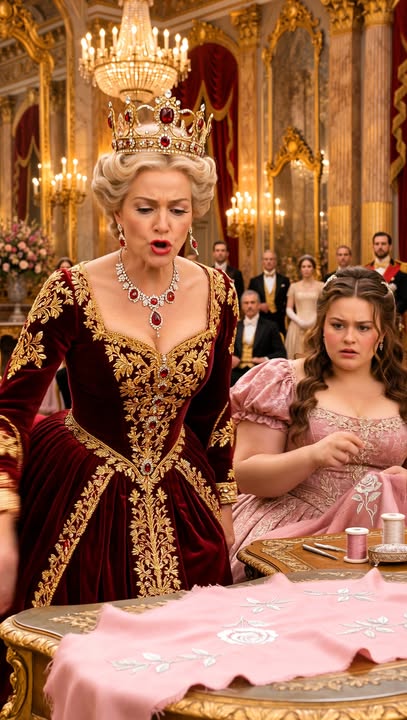
Part 6 – The Rose We Chose
For a long moment, no one in the courtyard moved.
The words on the page seemed to belong to a room far away from us, a room in which my mother had once stood between love and fear, trying to choose a life for a child she had not yet held.
Eleanor read the last sentence again, silently.
If Lily ever asks what I wanted, tell her I wanted her to choose for herself.
She pressed the letter against her heart.
“I should have known,” she whispered.
Mara’s expression was gentle.
“You were given a false account of what happened.”
“But I was her sister,” Eleanor said, her voice unsteady. “I should have found another way to reach her.”
I looked at the signature, tracing its familiar slant with my eyes.
The handwriting was the same as the letter in my sewing box, the same as the name on its front, the same as the little rose drawn in the margin of Eleanor’s old correspondence.
This time, there was no need to call it a resemblance.
It was my mother’s hand.
“She wanted to come home,” I said.
Eleanor looked up at me.
“Yes.”
“And she was afraid of what the court might do.”
The old chancellor’s letter lay open between us, its pages carrying both his confession and the words he had kept from the queen.
“She feared they would separate you from the life she had made,” Eleanor said. “She thought if she returned, the council would treat you as an heir before you were even old enough to speak.”
“I think she was afraid they would decide what I was before they knew who I was.”
Eleanor’s eyes filled.
“She knew what it meant to be turned into a symbol.”
“She wanted me to have a choice.”
“And you have chosen.”
I looked toward the palace doors, then beyond them to the road that led back to the village.
“I have.”
The answer no longer felt like a refusal.
It felt like the beginning of something.
Eleanor lowered the letter.
“I will not ask you to come here because your mother wished she could. Her words don’t create an obligation between us.”
“Thank you.”
“But if you ever want to come,” she added, “I will be glad to see you.”
“I know.”
“And if you don’t?”
“I’ll still know you told me the truth.”
Her face softened with relief.
The moment was not a reunion in the way stories often promised.
No embrace could restore twenty-five lost years, and no letter could make the hurt disappear.
But Eleanor held my mother’s words without trying to turn them into a claim.
That was a beginning I could trust.
Mara arranged for the letter to be copied and authenticated, and the original was returned to Eleanor’s care only after she promised to keep it in a protected archive accessible to me.
The chancellor’s confession helped explain what the other records could not.
He had concealed Elizabeth’s survival because he believed the court would turn her daughter into a succession question, and because he thought a quiet lie would spare the royal family a public division.
His choice had been wrong.
It had also been made in a time when the palace mistook control for protection.
Eleanor did not excuse him.
She did not pretend that his intentions had repaired what he had done.
But she read his letter without seeking to turn him into a monster, and she listened to the people whose lives had been shaped by his decision.
The council released a careful statement confirming that Princess Elizabeth had survived the accident, given birth to a daughter, and lived for many years under the name Margaret Bennett.
They acknowledged me as Eleanor’s niece and confirmed that I had no claim to the throne and no obligation to assume a royal role.
The announcement did not change my name.
It did not change the village where I lived or the work I did with my hands.
It did change the way people spoke about my mother.
They stopped calling her a missing princess as though that were the whole of her life.
They began to understand that she had also been Margaret, the quiet woman who mended coats for neighbors, baked too many honey cakes at winter festivals, and kept a little jar of spare buttons by the kitchen window.
I was grateful when they remembered both names.
A month after the letter was authenticated, Eleanor visited the village.
She came without a procession and without the court musicians who usually announced a royal arrival.
Her carriage stopped outside my workroom just before noon, and she stepped out wearing a plain dark coat and a scarf tied against the wind.
Alexander accompanied her, but waited by the gate while she approached me.
“Would you like to come in?” I asked.
“I would,” she said. “If I’m not interrupting your work.”
“You are interrupting it.”
A startled laugh escaped her.
“Then perhaps I should apologize.”
“You can help me pin a hem.”
Eleanor took off her coat and stood beside my worktable, looking mildly alarmed by the number of pins laid out on its surface.
“I should warn you that Elizabeth once told me I was hopeless with a needle.”
“Maybe she was trying to keep you away from her sewing box.”
“She may have been wise to do so.”
I showed her how to hold the fabric while I marked the hem.
Her fingers were careful, though she kept glancing at the pin as if it might test her resolve.
We worked in quiet for a while.
Through the window, I could see Alexander speaking with one of the village children, who seemed to be explaining something important with both hands.
Eleanor followed my gaze.
“He is good at listening when he remembers not to offer solutions.”
“He does that?”
“More often than he believes.”
I smiled.
“He’s learning.”
“So are we all.”
When the hem was finished, Eleanor sat at the kitchen table and accepted a cup of tea.
She did not ask to see the rooms where my mother had lived.
She did not ask whether I had kept every object in its place.
She spoke about her sister as she remembered her, and I spoke about the woman who had raised me.
Between those memories, something new took shape.
Eleanor learned that my mother hated strong perfume and preferred the garden gate left unlatched on summer evenings.
I learned that Elizabeth once climbed onto the palace roof to watch a meteor shower and had convinced Eleanor to join her.
“She told me the sky was the one place where no one could tell us where to stand,” Eleanor said.
“That sounds like her.”
“Does it?”
“I think so.”
She smiled, and the resemblance between her and the girl in the portrait seemed less like a clue now and more like a family likeness I was learning to recognize.
Before Eleanor left, she asked whether she might visit again.
“You can,” I said. “But next time, you’re helping me sort buttons.”
“I accept the terms.”
Alexander walked her to the carriage.
Before he followed, he turned to me.
“I’ve been asked to return to the palace tomorrow.”
“Will you?”
“Yes.”
“I thought so.”
He nodded toward my worktable.
“Will you be here?”
“Probably.”
“Then perhaps I’ll come back when I’m finished with my duties.”
“That sounds like a plan.”
He smiled, and I felt the warmth of it follow me into the workroom after the carriage had gone.
The sewing school began with a borrowed village hall, six sturdy tables, and a grant from the palace that was offered without conditions.
I refused the first draft of the proposal because it gave the school a royal name and placed a portrait of me at its entrance.
Eleanor agreed to change both.
The revised plan let the village choose its own teachers, schedules, and fees.
The school would be supported by palace funds, but it would be run by the people who needed it.
I hired two experienced seamstresses from the nearby farms and arranged for apprenticeships with local tailors and dressmakers.
We bought good scissors, strong thread, fabric that could be practiced on without fear, and enough needles that no one had to wait for another girl to finish.
On the opening morning, the hall smelled of fresh timber, warm bread, and new cloth.
Girls arrived in pairs and alone, some carrying old garments they hoped to repair, others holding nothing but a notebook and a question.
I stood beside the doorway, trying not to become nervous about the small speech I had promised to give.
Eleanor stood among the villagers, not on a raised platform.
Victoria had come too, carrying a box of fabric she had purchased from a local mill.
She set it on the nearest table.
“I thought these might be useful,” she said. “They’re sturdy enough for practice.”
“They will be,” I replied.
She looked around the room.
“I’m glad you made this yours.”
“So am I.”
Victoria’s family had not welcomed every part of the story.
The council’s recognition of me had changed no royal marriage arrangement, because no arrangement had ever truly existed.
Alexander had never promised to marry Victoria, and Victoria had never promised to marry him.
Their families had simply behaved as if a future could be settled by imagining it often enough.
She was learning to step away from that expectation.
In the months after the hearing, she had helped the palace establish a small fund for village apprenticeships, without asking to have her name placed on it.
She had also apologized to the other women she had once treated as rivals in the competition.
Some had accepted quickly.
Others needed time.
She did not demand forgiveness from any of them.
That morning, she stood beside me at the cutting table and began helping the youngest girls sort fabric squares by color.
She still carried herself with the confidence she had always possessed.
What had changed was the way she used it.
Once everyone was settled, I stood at the front of the hall.
“I learned to sew from my mother,” I said. “She taught me that a garment should fit the person who wears it, not force the person to become someone else.”
A few girls smiled.
“She also taught me that a torn seam isn’t a failure. It’s the place where you begin again.”
My voice caught, but I let it.
“This school exists so that you can learn a skill, find work, repair what needs repairing, and decide for yourselves what you want to make. No one here will tell you that your life has to be shaped by someone else’s expectations.”
I looked around the room.
“And no one has to be perfect before she is allowed to begin.”
The girls sat very still.
Then one of them raised her hand.
“Do we get to keep the practice cloth?”
“You do,” I said.
Another girl looked at the boxes of thread.
“What if we make mistakes?”
“Then we learn how to mend them.”
That was when the room began to feel like a school.
Eleanor had asked whether I wanted a royal emblem for the entrance.
I told her I did not want the crown or the palace crest.
Instead, I brought the silver thimble from home.
Its engraved rose was still faint, its seven petals worn smooth by years of use.
Mara had arranged for a small metal copy to be made, not as a royal mark but as an emblem the school could use.
I pinned the new silver rose above the doorway.
The stem curved to the left.
The girls watched as the first late morning sun fell across it.
“My mother taught me that rose,” I said. “It belonged to her before she was Margaret Bennett, and she passed it on without telling me why.”
I touched the little metal flower.
“Now it belongs to everyone who learns here.”
No one applauded at first.
Then one of the girls began, and the rest joined in, their clapping bright and uneven.
I laughed through the tightness in my throat.
Across the hall, Eleanor was wiping her eyes.
Victoria handed her a clean handkerchief without a word.
Alexander arrived just as the lesson began.
He stood in the doorway, careful not to interrupt, and watched me guide a girl’s hands as she fed cloth beneath the sewing machine.
When the lesson ended, he helped carry a stack of folded practice fabric to the storage shelves.
“You’ve built something beautiful,” he said.
“We built it.”
He glanced toward the girls, who were already asking when they could come back.
“Yes,” he said. “You did.”
Outside, the sky had cleared, and the village road shone beneath a soft afternoon sun.
Alexander walked beside me toward my workroom.
Eleanor and Victoria remained behind to speak with the teachers.
For a few paces, we talked about ordinary things: the machine that had jammed, the girls who had arrived with the sharpest questions, the bread someone had left near the door.
Then Alexander grew quiet.
“I’ve wanted to ask you something,” he said.
“You can ask.”
“Would you like to have dinner with me sometime?”
I looked at him.
He continued before I could answer.
“Not as a prince asking a dressmaker to attend a palace event. Not because anyone expects a particular answer. Just dinner, somewhere ordinary, if you want it.”
I considered him carefully.
The attention of the palace had once felt like a hand reaching for my life.
Alexander had never asked me to give him a future.
He had simply stayed beside me while I chose one.
“I would like that,” I said. “But slowly.”
“Slowly,” he agreed.
“And not at the palace.”
“I know a small place by the river.”
“Then you may take me there.”
His smile appeared gradually, as if he understood that the answer was not a promise of forever, only a door left open.
“That sounds like a beginning.”
“It is.”
When I returned to my workroom, the rose-shaped patch on the school’s first uniform lay across my table.
I threaded my needle with silver.
Seven petals, a stem turned slightly to the left.
My mother had taught me the pattern long before I knew it belonged to a princess, and long before I knew it could lead me to a queen.
I stitched the final petal without hurrying.
When I was done, I lifted the cloth toward the light.
The silver thread shone, not like a crown, but like something made by patient hands.
And beneath the window, my mother’s sewing box stood open.
There was nothing left inside it that needed to be hidden.
**–THE END–PLEASE
Share your thoughts or feedback to motivate us to create more stories ♥️
* * *
[PREVIOUS: PART 5](https://echoesofstories.idolsgift.com/blog/part-5-the-rose-that-remembered-046)
✓ Lynn R. Adams
Part 6 – The Rose We Chose For a long moment, no one in the courtyard moved. The words on the page seemed to belong to a room far away from us, a room in which my mother had once stood between love …