PART 6 (THE END): The Rhythm Beneath the Music 056
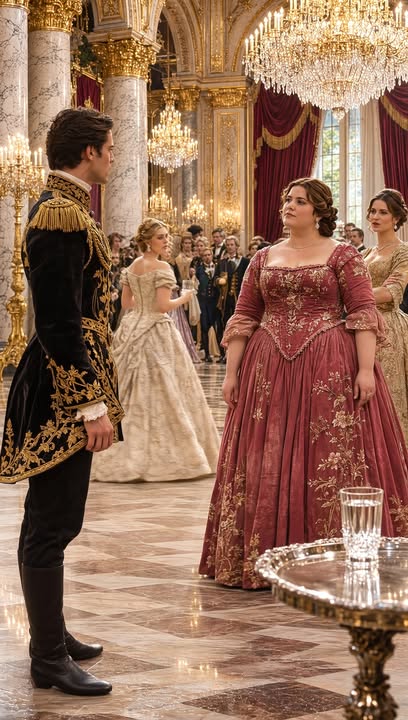
Part 6 – A Home Without a Debt
“As the person responsible for the records,” Mara finished.
Adrian met her eyes.
“Yes,” he said. “As the person responsible for the records.”
The answer did not make the burden hers, nor did it turn his willingness into a promise he could not keep.
For the first time since she had entered the palace, Mara felt she was not standing alone between her family and a power too large to question.
“I will not accept Corwin’s offer,” she said.
Adrian’s shoulders eased, but he did not mistake her decision for a victory.
“Then we will proceed with the inquiry,” he said. “With your brother’s evidence, Eveline’s records, and every document we can find.”
“And with the truth about the Queen?”
“We will tell what is necessary to explain the debt and the repayment. The villagers’ names will remain protected.”
Mara nodded.
“Then I choose disclosure.”
The next morning, the palace sent a carriage for Mara’s brother, Tomas.
He arrived with their mother’s papers wrapped in oilcloth and held close against his chest.
Mara met him in the courtyard before the household clerks could approach.
He had the same dark eyes as their mother and the same habit of pressing his lips together when he was trying not to show worry.
“You look tired,” he said.
“So do you.”
“That is because I traveled half the night to bring a receipt to a palace.”
“It is a very important receipt.”
“I gathered that from your letter.”
He held the bundle out, but did not release it at once.
“Before I give this to anyone, I want to know who will keep it safe.”
“The original will remain in the archive under seal,” Mara said. “They’ll make a certified copy for the inquiry.”
“And if the inquiry decides it means something different from what Mother wrote?”
“Then we will have the original to prove what she wrote.”
Tomas studied her face.
“Do you trust the prince?”
“I trust that he is trying to do the right thing.”
“That is not quite the same.”
“No,” Mara said. “It isn’t.”
Tomas nodded, accepting the distinction.
“Then I’ll meet him before I hand anything over.”
Adrian came to the courtyard himself, without attendants at his side.
He greeted Tomas as the innkeeper’s son, not as a petitioner, and thanked him for bringing the papers.
“I will not ask you to trust me because I am prince,” he said. “The inquiry will give you copies of everything entered into evidence, and you may keep the original receipt in your family’s possession if you prefer.”
Tomas’s wary expression eased a little.
“You would allow us to keep it?”
“It belongs to your family. The archive can examine it here and return it to you once the copies are authenticated.”
Tomas glanced at Mara, then back at Adrian.
“That seems fair.”
Together, they carried the bundle to Master Hales.
The receipt was folded inside the old tea tin, between a list of kitchen supplies and a recipe for the spiced oat cakes their mother used to make on winter mornings.
Its paper had softened at the creases, but the writing remained clear.
The date matched the Queen’s records.
The amount matched the sum recorded by the treasury.
At the bottom, their mother had written a brief acknowledgment of full repayment.
Tomas let out a breath as Master Hales laid it beside the Queen’s copy.
“I used to think she kept every scrap of paper because she couldn’t bear to throw anything away,” he said.
“She may have known this one mattered,” Mara replied.
“Or she just thought it might be useful someday.”
Their mother had often said those words when she tucked a bill or note into the tea tin.
Perhaps, in her quiet way, she had been right.
The inquiry began two days later in a council room open to appointed representatives from the treasury, the royal household, and the town.
It was not a spectacle.
No one was called before a crowd to be humiliated, and no accusation was treated as proof.
The record was read carefully, one document at a time.
The Queen’s letter described the emergency evacuation without naming the villagers who had been moved.
The treasury ledger showed repayment under the matching account number.
The Queen’s receipt confirmed that Mara’s mother had received the full sum.
The original receipt from the inn bore the same date and amount.
The later release, carrying her mother’s signature, was examined by two independent clerks.
They found that the paper and ink were newer than the date written at its top, and that the signature had been copied from an older receipt.
Beneath it, the pressure marks preserved the words her mother had written when she refused to sign.
**Paid in full. I will not sign this twice.**
The evidence settled the question of whether the inn owed the Crown anything.
It did not yet settle who had revived the claim.
Eveline’s father arrived at the inquiry with his company’s ledgers and a grave apology for the gaps in his own records.
He did not pretend that his family’s business had been beyond error.
The company had provided transport during the border crisis and later supplied copied account summaries to the treasury.
Among those summaries was a sheet marked with the inn’s reference number, but the notation showing repayment had been missing.
The sheet had come from the collection office.
It had been delivered by a clerk who worked under Corwin.
Eveline’s father had accepted it as accurate without requesting the original entry.
“I should have asked for the source,” he said before the inquiry. “My company benefited from the Crown’s trust, and I treated that trust as a substitute for careful review.”
Eveline listened without looking away.
“Then help us correct the record,” she said.
He did.
His company’s old correspondence showed that Corwin had requested the account summaries and instructed the office to omit the closing notation until a separate review was complete.
The instruction had been presented as a matter of routine.
A later message, written in Corwin’s hand, asked that the claim remain open because the lender’s original receipt had not been located.
The original receipt had been in Mara’s mother’s possession all along.
The inquiry also found that the false release had been assembled from a copy of her signature and an outdated treasury form.
The evidence did not show that Corwin had created the signature himself.
It did show that he had knowingly allowed an unpaid claim to proceed without checking the Queen’s repayment records, and that he had concealed the missing closing notation when transferring the account.
When questioned, Corwin no longer offered the explanation of a complicated account.
He said he had been afraid that the private disbursement would be judged as an improper use of the Queen’s authority.
He had believed the safest course was to keep the account open and let the collection office decide what to do.
Then, when the false release appeared, he had failed to challenge it because doing so would expose how carelessly he had handled the file.
“I thought I could protect the Crown from embarrassment,” he said. “I did not understand that I was protecting my own decisions instead.”
No one praised him for admitting it.
No one called him a monster, either.
The inquiry recorded the truth plainly: Corwin’s failure to preserve and verify the account had enabled a fraudulent claim to be made against the inn.
He was removed from any position of authority over royal records, and the case was referred to the proper legal office.
The false release was marked as invalid.
The debt was canceled.
The collection fees were erased, and the Crown formally cleared the inn’s title.
Eveline’s family was not found to have knowingly participated in the deception.
Its business records had been used to support a claim the company had not verified, and Eveline’s father accepted responsibility for that failure.
He withdrew the company from any future role in collecting private royal debts.
Eveline, for her part, submitted every document she had found, including several that reflected poorly on her family’s judgment.
When the inquiry concluded its first session, she sat beside Mara on a bench outside the council room.
“I thought honesty would feel cleaner than this,” she said.
“Does it?”
“Not exactly.”
Mara considered the closed doors behind them.
“It feels heavier,” she said. “But at least it belongs to the people who have to carry it.”
Eveline’s gaze rested on her.
“I’m glad you did not take Corwin’s offer.”
“So am I.”
“I would have understood if you had.”
“I know.”
Eveline gave a small smile.
“That may be the first time I have been glad someone understood me without agreeing with me.”
Mara smiled back.
Their friendship did not arrive all at once, polished and complete.
It began in a series of small choices: a shared table, an honest question, a letter sent without a courtier’s seal of approval.
When the inquiry resumed, Adrian stood before the appointed representatives and presented the Queen’s letter, the treasury ledger, and both copies of the receipt.
He did not hide the fact that the Crown had failed Mara’s family.
He did not describe the debt as a misunderstanding that had taken care of itself.
“The claim against the Vale family was false,” he said. “The account had been paid in full, and the Crown failed to protect the record of that payment. The inn was placed at risk because its owners were asked to prove a truth the royal offices already possessed.”
He looked toward Mara and Tomas.
“My mother borrowed from their mother to help families escape danger during the border crisis. She repaid the loan. The secret of that emergency was kept to protect those families, but the secrecy also allowed a trusted official to misuse the record.”
The council room remained still.
Adrian continued.
“The private nature of the Queen’s action does not excuse our failure. Nor does my lack of personal knowledge absolve me of responsibility for the institution I now lead.”
Mara listened to him speak.
She had asked him to take responsibility rather than leave her alone with the scandal.
He did not ask her to explain the Queen’s choices, nor did he invite her to make the Crown appear generous.
He stood beside the documents and answered the questions himself.
Some members of the council challenged the Queen’s decision to bypass the usual treasury process.
Adrian answered that the question deserved examination, but that the emergency had required swift action and the debt had been repaid.
Others asked whether the records could be trusted after so many years.
He showed them the matching amount, the original receipt, and the dated ledger entries.
When questions turned to the inn’s future, Adrian made no grand promise of royal favor.
Instead, he confirmed that the false claim had been erased and that the family’s title was clear.
He also announced the creation of an independent office to review disputed royal debts.
Its records would be open to the people named in them, and no property could be seized on the strength of an unverified copy.
Mara had helped shape that proposal.
She had insisted that a person should not need a title, wealth, or court connections to challenge an official claim.
The office would accept appeals from towns and villages, and its findings would be recorded where they could not quietly disappear into a private cabinet.
When the council adjourned, Adrian did not reach for Mara’s hand in front of the gathered representatives.
He waited until the room had cleared and asked, “Would you like to walk?”
“I would.”
They went out through the eastern doors, toward the garden where the roses had begun to open again after the rain.
For some time, neither spoke.
The Queen’s receipt, the inquiry, and the debt had occupied so much of their days that quiet now felt unfamiliar.
At last Adrian said, “The court expects me to continue the contest.”
“Do you want to?”
“No.”
“Then why continue it?”
“I have been asking myself the same question.”
He slowed beside a bed of white flowers.
“I designed the trials because I wanted to know whether anyone could stand beside me without simply following what I wanted. Yet every test put me in control of the rules. I expected the women to prove they could withstand my choices while I avoided proving I could listen to theirs.”
Mara glanced at him.
“That is a difficult thing to admit.”
“It should have been difficult to do.”
He looked toward the palace, its windows catching the late afternoon light.
“I am withdrawing the contest. I will tell the other women that they are free to leave with their promised travel money, and that no one will be asked to justify why she entered.”
“Some of them may have wanted the contest to continue.”
“Then I should have asked what they wanted before deciding for them.”
“Will you tell them why you changed your mind?”
“Yes. I will explain the trials were unfair, and that I was wrong to make marriage the reward for passing them.”
Mara appreciated that he did not ask whether she approved.
A contest built around his approval was not the place for her to decide what came next.
“After the announcement,” he said, “would you allow me to court you?”
Mara looked at him.
The question was soft, but he had left no hidden claim inside it.
“Without a title attached?” she asked.
“Without obligation.”
“Without another test?”
“Especially without another test.”
“Without expecting me to save the Crown from its own mistakes?”
“I cannot promise never to need your counsel,” he said. “I can promise not to make your love the price of giving it.”
She studied his face, remembering the prince who had once watched contestants fail and called their failure an answer.
He had not become a different man overnight.
He had become someone more willing to notice what his certainty had cost other people.
“I will not be your solution,” she said.
“I know.”
“I won’t leave my family or my own work to fit into a palace.”
“I would not ask you to.”
“And if the court finds your choices inconvenient?”
“Then I will have to learn to stand beside someone even when the room becomes difficult.”
The words brought back the first dance.
This time there was no music, no glass, and no one watching to see whether she would spill.
Mara let the quiet rest between them.
“Then you may court me,” she said. “Slowly.”
Adrian’s smile came without a courtier’s polish.
“Slowly,” he agreed.
Tomas returned to the inn with the original receipt and a formal copy of the title clearance.
The first evening after the claim was canceled, Mara stood beside him in the kitchen while he read the document at the table.
He finished, folded it, and set it carefully inside the account book.
“So it is truly ours,” he said.
“It always was.”
“Not according to the people who sent the notices.”
“No,” Mara said. “But now the record agrees with us.”
Tomas looked around the kitchen.
The old hearth still needed repair, the roof still leaked above the eastern room, and the front sign had faded nearly beyond recognition.
Nothing had been mended by a single signature.
Yet the house felt less like a place braced for loss.
Their mother’s tea tin rested on the shelf beside the flour jars.
The receipt was no longer hidden among scraps, but preserved in a small wooden case Tomas had made himself.
He had carved the lid with a branch and a handful of tiny leaves.
“Mother would have said the box was too fine for a piece of paper,” he said.
“She would have put a flour bill inside it just to make sure it got used.”
They laughed, and the sound did not undo their grief.
It made room for it.
Over the next months, the inn repaired its roof, reopened the upstairs rooms, and began keeping a separate ledger for travelers who had nowhere else to go.
The idea had come from Mara.
During the border crisis, strangers had once found shelter there through her mother’s courage.
Now Mara wanted the inn to offer a room to anyone traveling in trouble, without first asking whether they could pay.
The new royal debt office helped fund the repairs, but the inn remained in the family’s hands.
The grant had clear terms, public records, and no claim on the building.
Tomas insisted that every detail be reviewed twice before he signed.
Mara considered this an excellent habit.
Eveline visited in the spring, bringing no entourage and no business proposal.
She stayed for supper and helped carry dishes through the crowded common room.
“You have learned the house’s rhythm,” Mara told her as they passed one another near the hearth.
“I am trying not to spill anything.”
“Watching the room helps.”
Eveline smiled.
“I know. You taught the prince that.”
“I don’t think he needed me to teach him not to spill water.”
“Perhaps not,” Eveline said. “But he needed to learn that balance is not the same as control.”
At the window table, Adrian sat with Tomas, listening while her brother explained the history of the inn’s roof repairs.
The prince had come without a royal carriage, though a discreet escort waited outside the village.
He wore a plain coat and had already helped carry in a basket of firewood.
Tomas was not yet ready to call him a friend.
But he had invited him back.
Mara watched Adrian listen, his attention fixed on the person speaking rather than on the room waiting to hear from him.
Her mother had taught her to watch what people were about to do.
She had spent years noticing who made space, who rushed past, who saw a need before it became a request.
Adrian was learning to notice, too.
After supper, he found Mara on the front step, where the evening air carried the smell of rain on warm stone.
“Your brother says the eastern roof is finally sound,” he said.
“It is. He says the work cost twice as much as planned.”
“And you say?”
“I say it will cost less next year because he will have to repair fewer ceilings.”
Adrian laughed.
For a moment they sat without speaking, listening to the inn’s lively rooms behind them.
“My mother would have liked this place,” he said.
“She would have liked you better after you learned to carry a tray.”
“Is that my next trial?”
“No.”
He looked at her, and his smile softened.
“Good. I would rather ask for lessons than be tested without warning.”
Mara leaned her shoulder against his.
She did not lean because he was a prince, or because the court had approved, or because he had once offered help when she needed it.
She leaned because he had learned to wait for her answer.
Inside, Tomas called for someone to bring more bread.
Mara rose.
Adrian rose too, but he did not assume she wanted him to follow.
She held out her hand.
“Come on,” she said. “There is work to do.”
He took it.
Together they went inside, where the inn was warm with lamplight, conversation, and the steady promise of a home kept safe by truth.
The Queen’s receipt rested in its wooden case.
The false claim was gone.
And the house her mother had built was once again a refuge—not because the Crown had granted it a favor, but because no one could take it from the people who had earned the right to call it home.
**–THE END–PLEASE
Share your thoughts or feedback to motivate us to create more stories ♥️
* * *
[PREVIOUS: PART 5](https://storyly.idolsgift.com/blog/part-5-the-rhythm-beneath-the-music-056)
✓ Lynn R. Adams
Part 6 – A Home Without a Debt “As the person responsible for the records,” Mara finished. Adrian met her eyes. “Yes,” he said. “As the person responsible for the records.” The answer did not make…