PART 6 (THE END): The Rabbit with the Blue Thread 047
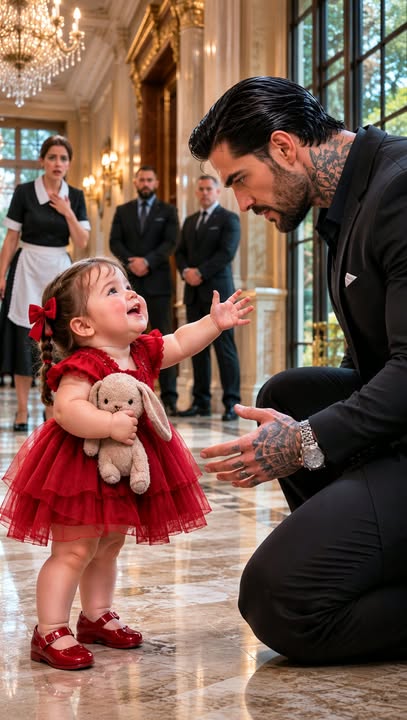
Part 6 – The Family We Choose
I stared at the screen until the letters blurred.
My mother had not merely kept Elena’s secret.
She had signed the paper that changed the baby’s name.
And beneath her signature was the date of my own adoption.
“Claire?” Dominic said.
I lowered the phone, but my hand would not stop trembling.
The room felt suddenly smaller, as if every object in it had gathered close to listen.
“Could this be a mistake?” I asked.
Dominic came nearer, then stopped when he saw my face.
“It could be incomplete or misread,” he said carefully.
“We need to confirm what the record means before we decide what it says about you.”
I nodded, though my thoughts had already begun racing ahead.
My mother’s hands came to mind, warm around mine as she taught me to button my coat.
Her voice, reading stories long after I was old enough to read them myself.
The way she had held me through my first heartbreak and laughed with me when Sophie took her first steps.
None of those memories had changed, yet the ground beneath them had.
“I was adopted,” I whispered.
“Maybe,” Dominic said.
“I never knew.”
“Then we find out what your mother intended to tell you.”
I looked at him.
“What if she was my mother in every way that mattered, but not by birth?”
“Then she was still your mother.”
His answer came without hesitation.
The certainty in it steadied me.
I called Mrs. Ellis before fear could keep me from asking.
She answered on the third ring, sounding as though she had been waiting for me.
“I received the page,” I said.
“Yes,” she replied.
“I’m sorry it reached you without explanation.”
“What does it mean?”
“I can’t interpret the whole file from the fragments I kept. The note says your mother took custody of the baby pending a family placement, and the next page records a name change.”
“My name?”
“It appears so.”
“Was I Elena’s baby?”
There was a pause.
“I believe the dates and names point that way,” Mrs. Ellis said.
“But I cannot certify it from my copy.”
“What can?”
“The complete state archive file may contain the original placement agreement and the court order.”
“Can you help us request it?”
“I can tell you what to request, and I can give the state archivist my account of the old agency’s process.”
“Thank you.”
“Claire, there’s one more thing.”
I held my breath.
“I remember Margaret speaking to me after the adoption was finalized,” Mrs. Ellis continued.
“She said the child was wanted, and that Elena’s family must never be told where she was unless Elena returned herself.”
“Did she say she was raising the baby?”
“She said, ‘She’ll have a home with us.’ I didn’t understand then that she meant her own home.”
I closed my eyes.
The words could not answer every question, but they sounded like my mother.
“Did she say why she kept the adoption secret from me?”
“No.”
“Did she ever seem afraid of me learning the truth?”
“She seemed afraid that someone else might learn it first.”
The call ended gently, without offering certainty where there was none.
I stood in the cottage’s quiet living room, holding my phone against my chest.
Dominic waited without trying to fill the silence.
“My mother chose me,” I said at last.
His expression softened.
“Whatever the papers say, she chose you.”
“She may have taken Elena’s baby in because she promised to protect her.”
“She may have.”
“And then she raised me as her own.”
“Yes.”
“I don’t know how to feel about that.”
“You don’t have to decide tonight.”
I looked toward the bedroom where Sophie was asleep.
The life I had known still existed, but a hidden door had opened inside it.
“I want the whole file,” I said.
“Then we’ll request it.”
“Together, but I speak for myself.”
“Of course.”
“And I don’t want anyone telling Sophie who she is before I’m ready.”
“No one will.”
The state archive took five days to respond.
During those days, Dominic did exactly what he had promised: he told me what he knew, admitted what he did not, and did not send anyone to our apartment or ask the security team to make decisions on my behalf.
The police liaison reviewed the inquiries and found no evidence that Northline had followed us or learned Sophie’s location.
Their call appeared to have been an attempt to gather background information about Elena, not a plan to approach her family.
The company agreed to turn over its notes to the authorities and stop contacting the archive.
There was no dramatic confrontation, only paperwork, interviews, and a clear reminder that an old secret did not give anyone the right to intrude upon our lives.
When the archive clerk called, I took the call in Dominic’s study with Mrs. Alvarez nearby and the original letter spread across the desk.
The clerk confirmed that the file had been located.
The full record stated that Elena’s baby had been born as Eleanor Bennett, the daughter of Elena Valenti and Thomas Bennett.
After Elena’s death, my mother had adopted the child and given her the name Claire Margaret Bennett.
The date matched the day my mother had always celebrated as my adoption day.
My birthday had come a year earlier.
I had never questioned why our family had two days for cake.
One for the day I was born, my mother had told me, and one for the day we became a family.
Now I understood what she had meant.
The record also contained a final letter from my mother, filed with the adoption papers.
I asked the clerk to send it to me.
It arrived in a sealed envelope two days later.
I opened it alone at the cottage, with Sophie at Mrs. Alvarez’s kitchen table, drawing a purple house with a bright yellow door.
My mother’s handwriting filled both sides of the page.
My dearest Claire,
I have loved you as my daughter since the moment your mother placed you in my arms.
I have also loved you as the daughter I was given the chance to raise.
I never knew which words would make you feel more secure, so I held both truths in silence and hoped my love would be enough until I found the courage to tell you.
I stopped reading, my tears falling onto the paper.
It had not been enough to tell me.
But it had been enough to love me.
I drew a breath and continued.
Elena asked me to keep you safe until she could come back.
She believed she would return when the danger around her family had passed.
After she died, I was afraid that the truth might draw the same danger to you.
I should have told you when you were older.
I should have trusted you with the story of your beginning.
Instead, I let fear make the choice for both of us, and I am sorry.
Your father, Thomas, loved Elena.
He knew about you before he died, and he asked me to make certain you would never doubt that you were wanted.
You were wanted, Claire.
You were loved before you were born, loved when you came home with me, and loved every day after.
I folded the letter against my heart.
For a long time, I sat with my mother’s words and let grief rise beside gratitude, neither one canceling the other.
I missed her.
I wished she had told me.
I understood why she had been afraid, even as I wished she had trusted me with the truth.
When I finally looked up, Dominic stood in the doorway.
He had not entered.
“Would you like me to come in?” he asked.
I wiped my cheeks.
“Yes.”
He came to the table but did not reach for the letter.
“I’m your niece,” I said.
His eyes filled, though his voice remained steady.
“Yes.”
“Your sister was my mother.”
“Yes.”
“And my mother was the woman who raised me.”
“She was.”
I let out a breath that sounded almost like a laugh.
“That’s a lot of mothers.”
“It is.”
“Do you think Elena would have wanted me to know her?”
“I think she wanted you to know you were loved.”
“That isn’t quite the same thing.”
“No,” he said.
“It isn’t.”
He sat across from me, leaving the letter between us.
“I can’t know what Elena would have chosen if she had lived longer,” he continued.
“I can only tell you what she wrote.”
“That she wanted to come back.”
“Yes.”
“She didn’t.”
“No.”
“And now I’m supposed to feel happy that you found me?”
“You don’t have to feel anything on anyone else’s schedule.”
The words gave me room to breathe.
“I feel sad for her,” I said.
“I feel sad for the little girl she left behind.”
“So do I.”
“I feel angry with my mother for keeping this from me.”
“You’re allowed to.”
“I also understand why she did it.”
“You’re allowed to understand and still be angry.”
I looked at him, the man my birth mother had been afraid to tell about me.
The man who had spent years believing his sister left nothing behind.
“I don’t know what happens now,” I said.
“Neither do I.”
“Will you keep coming around?”
“If you want me to.”
“And if I don’t want you to?”
“Then I’ll respect that.”
“I’m not asking you to disappear.”
“I’m glad.”
“But you have to understand that being my uncle doesn’t mean you get to make choices for me.”
“I understand.”
“You don’t get to decide when Sophie meets the rest of the family, or what she calls you, or whether she wants to hug you.”
“I know.”
“And you don’t get to treat us like something you’re responsible for protecting by yourself.”
His eyes held mine.
“I don’t want that responsibility alone.”
“Good.”
He took a moment before speaking again.
“I would like to know you, Claire.”
The simplicity of the request reached me more deeply than any grand promise could have.
“I’d like that too,” I said.
“Slowly.”
“Slowly is good.”
His shoulders eased, though the grief in him remained.
“Thank you.”
“Don’t thank me yet.”
A faint smile touched his face.
“That sounds familiar.”
For the first time, we laughed together without either of us needing to hide it.
The weeks that followed were not transformed by one revelation.
They changed through ordinary moments, which turned out to be more difficult to distrust.
Dominic arrived at the cottage when he said he would and left when I asked him to.
He learned Sophie liked her toast cut into stars, but he never tried to feed her unless she reached for him.
He asked before giving her a book, before joining us in the garden, and before talking about Elena.
At first, I watched every movement, waiting for the kindness to become a bargain.
It never did.
When Sophie asked why he had so many books, Dominic told her that he had once been a boy who liked stories and had grown into a man who forgot to make time for them.
Sophie decided this meant he needed someone to read with him.
She appointed herself.
Mrs. Alvarez became part of our days too.
She brought recipes my mother might have known, then listened as I told her which ones tasted familiar and which did not.
One afternoon, she recognized a phrase from the letter Elena had written years before and smiled through her tears.
“She used to say that love should feel like a hand held open,” she told me.
“Never like a door being locked.”
I repeated the words later, when Dominic asked whether I was ready to see Elena’s old bedroom.
“Not yet,” I said.
He nodded.
“Then not yet.”
He never asked again until I brought it up myself.
We visited Elena’s room on a quiet Sunday morning, with Mrs. Alvarez beside us.
The room had been kept in careful order, but it no longer felt like a shrine.
A book lay open on the nightstand.
A small sewing tin sat on the desk.
The curtains shifted in the breeze from the cracked window.
I imagined Elena here, young and frightened, hiding her pregnancy from the people she loved because she believed the truth could put her child at risk.
I imagined my mother sitting beside her, offering a place to sleep and a warm meal without demanding a promise.
Then I imagined the two of them looking down at the baby they had both loved.
Dominic stood by the window.
“I used to think I knew her completely,” he said.
“Then I found out she had kept whole parts of her life from me.”
“People can love each other and still be afraid.”
“I wish she had trusted me.”
“So do I.”
He looked at me.
“Do you wish you had known her?”
“Yes.”
“Do you wish she had raised you?”
I thought about the question before answering.
“I wish she had been able to come back.”
“That’s not the same thing.”
“No.”
I touched the sewing tin.
“I’m grateful my mother raised me.”
Dominic’s eyes lowered.
“Margaret gave you a life.”
“She gave me everything she knew how to give.”
He nodded as if the words had reached somewhere he needed them to.
The estate’s inquiry from Northline was closed after the authorities confirmed that no one had attempted to approach us.
Dominic also changed how he ran the household.
He met with the security chief and established clearer rules for protecting employees’ privacy, making certain that staff concerns could be raised without fear of being punished.
I did not ask him to do it.
He told me only after it was finished, and he did not present it as a favor to me.
“I should have made those rules years ago,” he said.
“You can still make them now.”
“I can.”
He began speaking with the police liaison about other questions connected to his old business and accepted that the answers would have to come through lawful channels.
There were no threats, no dramatic show of force, and no sudden transformation into a man without flaws.
There was only a powerful person learning that care meant giving up the comfort of deciding everything himself.
Months passed.
The city softened into spring, and then into summer.
The cottage was no longer necessary, so Sophie and I returned to our apartment.
Dominic did not argue.
He offered to have the building’s locks checked, then accepted my choice to use a locksmith I knew.
When he visited, he parked on the street and waited until I opened the door.
Sometimes he brought groceries.
Sometimes he brought nothing at all.
He learned that Sophie preferred company to presents and that I trusted him more when he could hear “no” without turning it into a wound.
Our temporary work arrangement became a permanent position when I asked for it.
I continued to help Mrs. Alvarez with household schedules and events, but I kept my own apartment and my own hours.
Dominic made certain my pay was written into a formal agreement and never asked me to repay his generosity with closeness.
There were days when grief returned unexpectedly.
A song would remind me of my mother’s kitchen.
A photograph of Elena would make me wonder what I had inherited from a woman I had never met.
On those days, Dominic listened more than he spoke.
He told me stories about Elena when I asked, and kept them to himself when I did not.
He remembered her love of rainy mornings, her habit of sewing patches into the elbows of his old coats, and the way she used to correct him when he made decisions too quickly.
“She told me being certain wasn’t the same as being right,” he said once.
“Would you have listened?”
“Not often enough.”
“Then she sounds like my mother.”
The thought made him smile.
One warm evening, nearly a year after Sophie first walked into the mansion corridor, the three of us sat in the garden beneath the wide branches of an old maple.
Mrs. Alvarez had brought lemonade and a plate of small cakes.
Sophie had spent the afternoon making crowns from fallen leaves, one for herself and one for Mr. Buttons.
Dominic sat at the edge of the blanket, letting Sophie place a leaf crown on his head.
“It’s too small,” she announced.
“I’ll try not to take it personally,” he said.
“You can have this one.”
She put a larger crown over his silvering hair and stepped back to admire her work.
“You look like a king.”
“Is that good?”
“It means you can be nice to everyone.”
He glanced at me.
“I’ll do my best.”
Sophie climbed into my lap and rested Mr. Buttons between us.
The rabbit’s blue thread had been replaced with a fresh stitch after the old one finally loosened.
I had let Sophie choose the new thread, and she had insisted it be the same bright shade.
Dominic looked at the repaired ear.
“Your grandmother would have liked that,” he said.
“Which grandma?” Sophie asked.
I brushed a loose curl from her forehead.
“Both of them.”
Sophie considered this, then nodded.
“Then they can share.”
Dominic lowered his eyes, unable to answer for a moment.
Sophie studied him.
“Are you sad, Uncle Dom?”
The name slipped out naturally, as if it had always belonged there.
Dominic looked up.
“What did you call me?”
“Uncle Dom.”
She said it again, patiently, as though he had not heard.
His face changed, and the careful composure he had worn for so many years could not hold.
He turned away, pressing a hand briefly to his eyes.
Sophie frowned.
“Did I say it wrong?”
“No,” he said, his voice unsteady.
“You said it exactly right.”
She leaned over and placed Mr. Buttons in his arms.
“He can give you a hug.”
Dominic accepted the rabbit as gently as he had the first time.
Sophie climbed from my lap and wrapped both arms around his neck.
This time, no one stood frozen in the corridor.
No guards waited for orders.
No one mistook tenderness for weakness.
Dominic held her with one arm and the worn rabbit with the other, while I watched the man my daughter had recognized before I knew what recognition meant.
He looked at me across Sophie’s shoulder.
There was no question in his eyes, no demand that I name what we were becoming.
Only patience, and the hope that I might choose to stay.
I reached for his free hand.
He held mine lightly, giving me room to let go if I wanted.
I did not.
Sophie settled against him, Mr. Buttons tucked between their chests.
“Five minutes?” she murmured.
“As many as you want,” Dominic said.
The garden breathed around us, warm with summer and full of the quiet sounds of a family learning how to belong to one another.
For the first time, the past no longer felt like a locked door.
It was a story we could open together, one page at a time, without letting it decide the shape of the life we made.
And when Sophie called him Uncle Dom again, he answered as if he had finally come home.
**–THE END–PLEASE
Share your thoughts or feedback to motivate us to create more stories ♥️
* * *
[PREVIOUS: PART 5](https://echoesofstories.idolsgift.com/blog/part-5-the-rabbit-with-the-blue-thread-047)
✓ Lynn R. Adams
Part 6 – The Family We Choose I stared at the screen until the letters blurred. My mother had not merely kept Elena’s secret. She had signed the paper that changed the baby’s name. And beneath her…