PART 6 (THE END): The Question Beneath the Silence 053
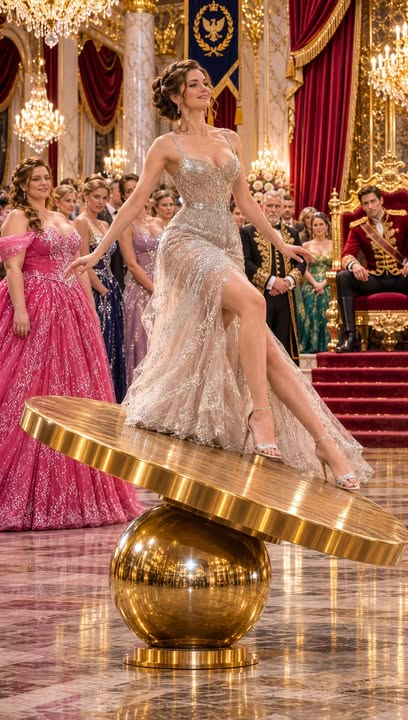
Part 6 – A Floor That Moved for Everyone
Adrian did not reach for the note in Isabella’s hand.
He looked first at her face, then at the careful writing on the page, as though the answer might be there without his needing to take it from her.
“May I read it?” he asked.
She passed it to him.
The advisor stood very still beside the open access log.
Mr. Vale had paused with one hand on the archive box, his attention fixed on the small sheet.
Adrian read the sentence aloud, softly.
“I was told the platform would stay still, and I was the one who unlocked it.”
For a moment, the ballroom’s quiet seemed to deepen.
Then Adrian looked toward the adjoining room where the candidates had gathered.
“Would you like to come with us?” he asked Isabella.
“Yes.”
He turned to the advisor.
“And you?”
The advisor drew a slow breath.
“If the writer is willing to speak with me there, I should be present.”
“Then we go together,” Adrian said.
They crossed the ballroom without approaching the platform.
Its cloth cover caught the lamplight, hiding the gold beneath, and Isabella found herself watching it as she might watch a door that had been left ajar.
The candidates were still in the east salon, speaking in small groups after the earlier announcement.
Celeste stood near the window with two other women.
When she saw them enter, she stepped forward.
“Is something wrong?” she asked.
“We received a note,” Adrian said. “Someone says they unlocked the platform.”
The conversation in the room quieted, but no one was asked to stand apart.
Adrian held the note where everyone could see it.
“We don’t know who wrote this, and we won’t guess,” he said. “If the person who sent it is here, they may speak with us privately, or they may ask Mr. Vale to arrange a time.”
He let his gaze rest on the group without settling on any one face.
“No one will be punished for coming forward. We need to understand what happened, not force a confession from anyone.”
A young woman near the mantel rose from her chair.
She was not the most striking candidate in the room, and Isabella could not recall seeing her near the platform during the ceremony.
Her hands were clasped tightly, but she met Adrian’s eyes.
“It was me,” she said.
The room remained quiet.
Adrian did not move toward her.
“Would you be comfortable speaking with us in the small sitting room?” he asked. “You can bring someone with you, if you wish.”
The woman looked around at the other candidates.
“I’d like Celeste to come.”
Celeste glanced at her, then nodded.
“Of course.”
The candidate introduced herself as Marianne Hale.
She had been a clerk in a regional school office before coming to the palace, and had spent the previous two days believing she had made a mistake by accepting the invitation.
In the sitting room, she chose a chair beside Celeste and kept her hands folded in her lap.
Adrian sat across from them.
The advisor remained near the doorway, not blocking it.
Isabella took a seat at the end of the table.
Mr. Vale opened his notebook.
“You can tell us only what you remember,” Adrian said. “If there is something you don’t know, you can say so.”
Marianne nodded, though her expression remained strained.
“I was asked to bring a tray of water to the ballroom before the candidates entered,” she began. “A member of the event staff said the platform would be used in its stable setting, and that the manual release had to be unlocked so it could be reset between demonstrations.”
“Who told you?” Isabella asked.
“A stage attendant named Rowan. He was coordinating the room with the palace staff.”
The advisor’s eyes narrowed slightly in thought, but he did not interrupt.
“Did Rowan ask you to operate the release?” Adrian asked.
“No. I was supposed to open the panel and hand him the key. He said he would check the indicator himself.”
Marianne’s fingers tightened.
“When I reached the panel, I could see the key was still in the lock. Rowan was called away by another attendant. I heard someone ask whether the candidates were ready, and I thought the platform needed to be reset before they came in.”
“You unlocked it?” Celeste asked gently.
“I turned the key. I thought that was all it took to let the engineers adjust it.”
“Did you touch any other control?” Adrian asked.
“No.”
“Did you see the platform move before Isabella stepped onto it?”
“No. I thought it was still in the stable setting. I didn’t know that opening the panel could activate anything.”
She looked toward Isabella.
“I’m sorry. I thought I was helping the staff finish their work. I didn’t know what would happen.”
Isabella studied her face.
Marianne was not trying to make herself the hero of the story, and she did not seem to expect Isabella to comfort her.
“You didn’t know the platform would move,” Isabella said.
“No.”
“Did anyone tell you to unlock it because I would be on it?”
“No. I didn’t know who would be first.”
“Did anyone tell you it was meant to test me?”
“No.”
The answer came without hesitation.
Adrian glanced at the advisor.
“Could unlocking the panel have released the assessment mechanism?”
“It could have,” the advisor said. “If the safety latch had not been fully seated, the manual key may have released the restraint.”
“Why was the key in the lock?” Adrian asked.
The advisor’s face turned grave.
“I don’t know. It should have been removed after the platform was set.”
“Who was responsible for checking it?”
“Normally, the engineering lead.”
“Was that check recorded?”
Mr. Vale looked through his notes.
“The access log records the key, but there is no separate confirmation that it was removed.”
Marianne lowered her eyes.
“I should have asked someone before I touched it.”
“You should have been given clear instructions,” Isabella said. “You were told one thing and left with a key in a control panel that no one had explained.”
Marianne looked up.
“Still, I was the one who turned it.”
“Yes,” Isabella replied. “And you came forward when you realized the mistake might matter.”
Adrian held her gaze.
“Thank you for telling us the truth, Miss Hale.”
The advisor stepped closer, but stopped at a respectful distance.
“I should have ensured the instructions were clear,” he said. “The key should not have been left there. I’m sorry you were placed in that position.”
Marianne seemed surprised by the apology.
She nodded, not because everything had been settled, but because the words had been offered without qualification.
“Was the platform’s movement dangerous?” she asked.
“The engineers found no structural failure,” Adrian said. “But it should never have been activated without a safety check. We will complete that inspection before anyone stands on it again.”
“Will the selection continue?” Marianne asked.
“Not in its old form,” Adrian replied. “The records and the process are being reviewed. No candidate will be asked to participate until the purpose and conditions are clear.”
Marianne let out a breath.
“I’d like to be part of that review.”
“You may,” Adrian said. “If you still wish to take part.”
“I do.”
The meeting ended without a public accusation or a relieved declaration that everything had been solved.
The facts were clearer, but the truth still carried weight.
Marianne had opened the release because she believed she was helping.
The advisor had allowed a process to become so familiar that its instructions were no longer examined.
The staff had worked from assumptions passed along without enough care.
And Adrian had stood in the ballroom, waiting for the moment to explain itself instead of asking what the room required of him.
No single person had planned to make Isabella a spectacle.
That did not mean the spectacle had not happened.
As Marianne returned to the east salon, Celeste walked with her.
The other candidates made room, and one of them offered her a cup of tea.
It was a small gesture.
It changed the shape of the room.
Adrian turned to Isabella.
“I’m glad she came forward.”
“So am I.”
“I’m sorry the answer involved someone who meant no harm.”
“That doesn’t make the mistake meaningless.”
“No.”
“But it does mean we can learn from it without making her carry all of it.”
He looked toward the doorway where Celeste and Marianne had disappeared.
“That is what I want the review to do.”
“Then let the review hear from the people who were in that room.”
“It will.”
That evening, the palace released the queen’s letter, the original drawings, and the maintenance records.
The statement named what was known and what remained uncertain.
It acknowledged that the candidates had been told the platform would remain stable, though the late queen’s design had called for a carefully supervised assessment setting.
It explained that an access key had been left in the control panel, and that a candidate had turned it without knowing the platform’s mechanism might engage.
It did not identify Marianne.
It did not describe her as careless.
It did not call the incident harmless.
Adrian’s statement began with his own responsibility.
“I allowed an incomplete process to continue because I believed that tradition and the judgment of people I trusted were enough,” he wrote.
“I was wrong.”
He acknowledged that his silence during the mockery in the ballroom had made the court’s welcome conditional.
He apologized to the candidates and to everyone who had been asked to prove their worth under rules they had not been fully given.
He did not suggest that Isabella’s ability to adapt had repaired the selection.
He stated plainly that no candidate’s performance could make an unfair process fair after the fact.
The statement concluded by announcing an independent review, with representatives chosen by the candidates, the archive, the engineering office, and the council.
When Adrian read it aloud to Isabella before it was sent, she listened without interrupting.
“Is that what you want people to understand?” she asked when he finished.
“Yes.”
“Then send it.”
He did not look relieved.
He looked as if he understood that the words were the beginning of a difficult responsibility, not the end of it.
The public ceremony went forward three days later, though there was no succession announcement.
The palace opened its doors to representatives from the town, the regional councils, and the press.
The golden platform stood uncovered in the ballroom.
Its control housing had been inspected, repaired, and tested by engineers who explained each setting before anyone approached it.
The assessment movement remained disabled during the ceremony.
Adrian had made clear that no one would be asked to use it that day.
At the center of the ballroom, beneath the pale banners, he read the queen’s letter aloud.
When he reached the line about the room being part of the test, his voice steadied.
When he reached the warning not to make the floor still out of fear, he paused.
His eyes moved across the guests.
The court listened.
The candidates stood among the public, not in a separate row arranged for display.
Celeste stood beside Marianne.
Isabella stood near the front, wearing the same bright pink dress she had worn the first evening.
It was not the dress that had made people look at her differently.
It was the knowledge that the court had a responsibility to look more carefully than it had before.
Adrian spoke about the review, the advisor’s part in changing the platform’s use, and his own failure to question a process he had inherited.
The advisor stood beside him.
When Adrian finished, the advisor stepped forward.
“I made decisions that I believed would protect the crown and the candidates,” he said. “I failed to see that removing the challenge also removed the chance to examine the court’s response.”
He did not ask the public to understand him.
He did not offer his devotion as a defense.
“I am responsible for the changes I authorized and for the explanations I failed to give,” he continued. “I will provide the review team with every record in my keeping and will serve only if they believe my knowledge is useful.”
The words cost him.
Adrian could see it.
He could also see the dignity in the advisor’s willingness to remain present without demanding that the old trust return at once.
After the ceremony, the review began.
It took months.
The engineers rebuilt the platform’s safety controls and documented every movement.
The archives opened the selection records to public examination.
Candidates were invited to share their experiences, but no one was required to turn personal pain into evidence.
Celeste served on the review group and became one of its most thoughtful members.
Marianne helped redesign the staff instructions, insisting that every person who handled the platform understand its controls before being asked to touch them.
The advisor remained at the palace, but his role changed.
He taught the review team what he knew and accepted questions about the choices he had made.
Some days he and Adrian spoke easily.
On others, silence stood between them.
Neither pretended that trust was the same as loyalty without question.
It took time for them to build a new kind of confidence in one another.
During that time, Adrian did not ask Isabella to wait for him.
He did not announce her as his choice, or make private affection a substitute for public change.
He asked her what she wanted from the work, and listened when her answer had nothing to do with him.
Isabella returned to the palace for meetings because she wanted to help revise the selection, not because anyone had promised her a crown.
She proposed that candidates be told every condition of every test before agreeing to participate.
She suggested that a candidate’s questions should count as part of the process, and that the court should be asked to explain its own decisions.
She pushed for a public record of how the selection was run, so that no one could quietly transform a test into a ceremony and continue calling it the same thing.
The changes became the beginning of something larger.
The palace opened a fellowship for people who had ideas about public service but had never been invited into royal rooms.
The council began holding listening sessions beyond the capital.
The selection process was rewritten, then reviewed again when candidates pointed out what the first revision had missed.
Nothing changed overnight.
But the palace stopped pretending that tradition was proof of fairness.
A year after the first evening, the review team presented its final report in the ballroom.
The platform remained at the center of the room.
This time, no one was expected to approach it in a gown.
The guests wore what made them comfortable, and the staff explained that the platform would move only after every participant had given informed consent.
The report confirmed that the assessment setting had been restricted after the queen’s death out of concern for safety and the stability of the succession.
It found no evidence that anyone had deliberately targeted Isabella.
It also found that the court’s habit of praising appearance had shaped the candidates’ experience long before the platform moved.
The advisor’s decisions had been made from fear, not malice.
His fear had still narrowed the choices available to everyone.
Adrian listened as the findings were read.
Then he thanked the review team and announced that the platform would never again be used as a test of marriage or personal worth.
It would be used, if ever used at all, as a demonstration of how systems responded to change.
The observers would be part of the exercise.
The room would be asked what it noticed, what it offered, and what it chose to do when someone else’s balance shifted.
When the formal proceedings ended, the guests moved toward the windows and tables.
Celeste found Isabella beside the platform.
“I used to think a perfect performance meant no one could criticize you,” she said.
“And now?”
“Now I think it may only mean the room liked watching.”
Isabella smiled.
“You’ve changed.”
“I hope so.” Celeste glanced toward the refreshment table, where Marianne was speaking with the engineers. “I still don’t like admitting I laughed.”
“You don’t have to like it.”
“I’m glad you let me do something after it.”
“You chose to.”
Celeste accepted that with a small nod.
Across the ballroom, Adrian was listening to a young council delegate who had asked why the palace had waited so long to publish the queen’s letter.
He did not look toward Isabella to see whether she approved of his answer.
He gave the delegate the whole of his attention.
That, more than any public gesture, made her hopeful.
When the conversation ended, he crossed the room to her.
“You have been avoiding me,” he said.
“Only when you were busy.”
“That seems fair.”
“I’ve had work to do.”
“I know.”
He looked toward the platform.
“The review is complete. The selection will reopen, but under the new process. Anyone who wants to take part will be considered on the same terms.”
“Will you be part of it?”
“I will not judge the candidates alone,” he said. “And I won’t ask anyone to decide whether they want me before they know what the role requires.”
“That sounds sensible.”
“I’ve learned that I’m not always the best judge of what sounds sensible.”
She smiled.
“That sounds honest.”
He looked at her with the quiet seriousness she had come to recognize.
“I would like to ask you to stay in my life,” he said. “Not as a candidate, not as proof that I’ve changed, and not because the court expects it.”
Isabella waited.
“I want to know you,” he continued. “And I want to build something with you, if you want that too.”
His words held no claim on her answer.
No promise that love would solve the work.
No suggestion that the palace’s new doors had been opened for her alone.
“I do want to know you,” she said. “But I won’t give up my own work to become an ornament beside you.”
“I wouldn’t want you to.”
“And if I disagree with you in public?”
“I hope you will.”
“If the court prefers me quiet?”
“Then the court will have to get used to being disappointed.”
The answer made her laugh, softly but without reservation.
She looked around the ballroom.
A year ago, she had stood there while the room waited for her to prove she belonged.
Now the guests were scattered among the platform, the windows, and the tables, talking in voices that did not fall silent when she passed.
There was still much to do.
There always would be.
But the palace had begun to learn that welcome was not a favor granted after someone performed well.
It was a choice the room made before the test began.
“Then yes,” Isabella said. “I want to see what we can build.”
Adrian did not reach for her as though the answer had settled everything.
He offered his hand, palm open.
She placed hers in it.
His fingers closed gently around hers, and they stood together without asking either of them to lead.
A little later, the engineers cleared the space around the platform and explained the controls one more time.
The movement had been tested and repaired, but no one was required to step onto it.
Adrian looked at Isabella.
“Would you like to?”
“Only if we both go.”
“Together?”
“Together.”
They walked to the golden platform side by side.
Before they stepped on, the engineer reviewed the safety settings and confirmed that either of them could ask for the movement to stop.
Adrian listened carefully.
So did Isabella.
Then they stepped onto the platform at the same time.
The first shift was gentle.
Adrian’s weight moved left.
Isabella felt the floor angle beneath her feet, and she adjusted without gripping his arm.
He did the same without turning her into something he needed to steady.
The platform shifted again.
They widened their stances, balanced separately, and stayed close enough to choose one another without leaning their whole weight on the other.
Around them, the ballroom watched.
This time, no one was waiting to see whether one person would prove she deserved the room.
The room was watching itself.
Isabella turned her head toward Adrian.
His smile was small, unguarded, and entirely his.
She returned it.
The platform moved beneath them once more, and neither of them tried to make the other carry the balance alone.
**–THE END–PLEASE
Share your thoughts or feedback to motivate us to create more stories ♥️
* * *
[PREVIOUS: PART 5](https://storyly.idolsgift.com/blog/part-5-the-question-beneath-the-silence-053-5)
✓ Lynn R. Adams
Part 6 – A Floor That Moved for Everyone Adrian did not reach for the note in Isabella’s hand. He looked first at her face, then at the careful writing on the page, as though the answer might be the…