PART 6 (THE END): The Promise in the Yellow Envelope 034
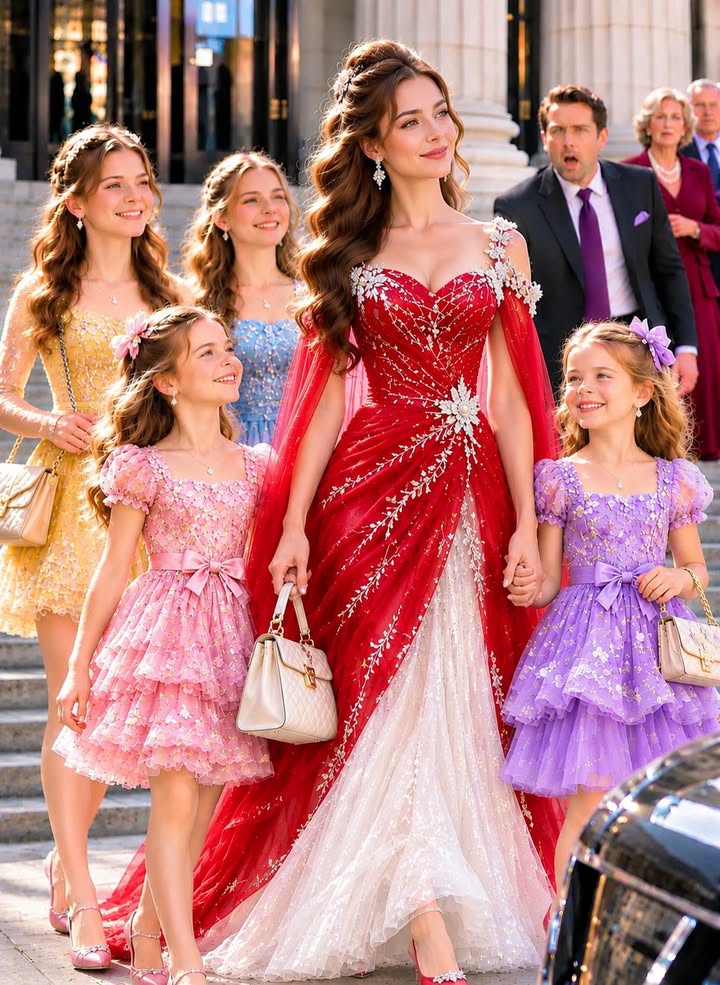
Part 6 – A Promise for Every Daughter
“Before you sign,” Rachel said, “there’s one more page in the envelope.”
I looked from the note on my screen to the settlement beside my laptop.
“What does the page say?”
“I don’t know yet,” Rachel replied. “Teresa says it was folded behind the letter. She’s photographing it now.”
Across the kitchen, my daughters had gone quiet.
Gabriella stood beside the window, watching me with the wary patience she had learned from too many adults who promised answers and delivered half of them.
I set down my pen.
“I won’t sign until we know what it is.”
“That’s sensible,” Rachel said. “I’ll call as soon as Teresa sends it.”
The pause that followed felt longer than it was.
I could hear Sarah rinsing a cup at the sink, and the soft scrape of Zoe’s colored pencil moving across paper in the living room.
The ordinary sounds steadied me.
For the past few weeks, every new fact had seemed to pull the floor out from beneath some old belief.
My parents’ money had built the first workshop.
The forty-three percent had been promised to me before Richard and I married.
The signature transferring my shares was forged.
And now the founder’s note said that the papers were not to be released to Adele or Richard without me present.
It did not say why.
It did not prove who had set the transfer in motion.
It did not tell me whether Richard had known the document was false.
It was only another door, waiting to be opened.
Rachel called again twenty minutes later.
“Teresa sent the photograph,” she said. “I’m forwarding it now.”
My phone chimed.
The page was a letter, smaller than the first, folded into quarters and worn along its creases.
The handwriting matched the founder’s.
I read slowly, moving my finger beneath each line.
He wrote that the forty-three percent belonged to me in recognition of my parents’ investment and my work, and that the original records should remain in my care once I was old enough to understand the company’s affairs.
He had written that my father was entrusted to safeguard the papers until then.
The final paragraph was brief.
It said the family’s contribution was not to be treated as a favor, a loan to be forgotten, or a promise that could be reassigned for the benefit of a future heir.
I read that sentence twice.
Then I read it again.
“What does it change?” I asked Rachel.
“It strengthens the history behind your ownership and makes the founder’s intention clearer,” she said. “It does not tell us who forged the transfer, but it gives the independent review an essential record.”
“What about the settlement?”
“We should revise it to identify both the letter and the ledger as documents the reviewer must examine. We should also make sure the company acknowledges that your forty-three percent was the share promised to you from the founding investment.”
“Can that be included without pretending we know who caused the transfer?”
“Yes. We can be precise. The transfer was made using a forged signature. The company’s records will be reviewed to determine how it was prepared and approved. Your shares will be restored while that work continues.”
I touched the edge of the phone.
“Then I’ll sign when the revised language is ready.”
“I’ll prepare it.”
When the call ended, I turned toward the girls.
“It says the forty-three percent was meant for me,” I told them. “The founder wrote that my parents’ investment was not a loan to be forgotten, and that the share could not be reassigned for the benefit of a future heir.”
Zoe looked up from her drawing.
“Does that mean you get the company?”
“It means I get my shares back. It doesn’t mean I own the whole company.”
“Will we have to go back to Chicago?”
“Not unless we choose to.”
Gabriella came closer to the table.
“What about Dad?”
“I don’t know everything he knew. The review may tell us more.”
“Do you still want to settle?”
“I do, if the agreement makes the truth part of the process instead of burying it.”
She thought about that, then nodded.
“I think that’s different from letting him off.”
“It is.”
Her shoulders loosened just a little.
Rachel sent the revised agreement the next morning.
The company would restore my forty-three percent and void the transfer.
An independent monitor would oversee the records and report the review’s findings to the board and to me.
The letter and ledger would be examined as part of the review, and the company would preserve every document connected to the recent transfer.
Adele would no longer control company records or decisions about ownership.
Richard would surrender his voting control until the review was complete.
The agreement did not declare anyone guilty of arranging the forgery.
It did not ask me to conceal what had happened.
It allowed the company to keep operating while the truth was investigated.
I read every line with Rachel on the phone.
Then I read it again alone.
When I finally signed, my hand did not shake.
It felt less like triumph than the end of a long refusal to be erased.
The board approved the agreement that afternoon.
Rachel called to tell me, and for a moment neither of us spoke.
Then she said, “Your ownership is restored.”
I closed my eyes.
“Thank you.”
“You did the hard part.”
“I couldn’t have done it alone.”
“No,” she said. “You didn’t.”
When I shared the news with the girls, Zoe climbed into my lap and wrapped her arms around my waist.
“Are we safe now?”
“We are safer,” I told her. “And we have a plan.”
She considered this answer, then tucked her head beneath my chin.
Gabriella was standing by the kitchen doorway.
“Does Grandma Adele lose the company?”
“She loses her authority over the records and the ownership decisions. She still has her own shares.”
“Is that enough?”
“It’s a beginning.”
Gabriella looked down.
“I wanted her to have to say she was wrong.”
“Maybe she will. Maybe she won’t.”
“That seems unfair.”
“It may be,” I said. “But I can’t build our future around waiting for her to understand what she did.”
Gabriella came to sit beside me.
“Do you think Dad will actually change?”
“I don’t know.”
“You keep saying that.”
“Because it’s the truth.”
She leaned her elbows on the table.
“I don’t want to trust him just because he apologizes.”
“Then don’t. Trust is not something you owe him in advance.”
“What if he calls?”
“You get to decide whether to answer.”
“What if he asks to see us?”
“You get to decide that, too. And we can talk about it together.”
For the first time in days, she smiled, though it was only a small one.
“I like that answer.”
The independent review began in Chicago.
Rachel arranged for Teresa to provide her account in a quiet office with counsel present, so no one would press her into saying more than she remembered.
Teresa described the evening when she heard Adele tell the accountant to fix the ownership records so the family’s future would be secure.
She also made clear that Richard was not in the room, and that she had not seen him approve the forged transfer.
The reviewer obtained the company’s filing records, the accountant’s notes, and archived documents from the years when Leo was born.
The examination took several weeks.
While it continued, the girls and I stayed in Savannah.
I found temporary consulting work with a small design firm Sarah knew, helping them organize vendor contracts and project schedules.
It was not the work I had done at Sterling, but it felt good to use my mind without hearing Richard’s family name in every room.
Paula enrolled in classes and made friends at school.
Mara joined a neighborhood reading group, where she discovered she could be quiet without having to be lonely.
Zoe began drawing houses with wide porches and enough bedrooms for everyone.
Gabriella did not call Richard.
He sent each girl a separate letter, and none of them was pressured to answer.
Zoe read hers aloud to me, stopping whenever she wanted.
Richard told her he loved her and that he was sorry for making her feel as though having a brother changed her place in the family.
He did not ask her to forgive him.
She folded the letter carefully and placed it inside the drawer where she kept her drawings.
“I’m not ready to write back,” she said.
“You don’t have to be.”
“Maybe later.”
“Maybe.”
Gabriella read her letter alone.
For two days, she said nothing about it.
Then, one evening, she came to the kitchen while I was making tea.
“He said he should have stopped Mom from talking about Leo like he was the only future of the family,” she said.
I set the kettle down.
“Did he say anything else?”
“He said he thought the company was the most important thing he could give us.”
She looked at the steam rising from her mug.
“He still doesn’t get that the company wasn’t what we wanted.”
“No,” I said. “But it may be the first time he’s understood that he was wrong about what we needed.”
She carried the letter back to her room.
The review’s findings arrived near the end of summer.
Rachel called first, then sent me the full report.
The old letter and ledger were authentic.
The bank record showed my parents’ farmland proceeds had gone directly into Sterling’s founding workshop account.
The ledger confirmed that the contribution had been recognized as the basis for my forty-three percent ownership.
The founder’s promise had not been a private favor that vanished when the company grew.
It was part of the company’s original understanding, recorded in the documents that had been kept out of reach.
The report also traced the forged transfer.
Adele had arranged for the accountant to prepare it using an old sample of my signature.
She had wanted the shares placed under Richard’s control before Leo was named the company’s heir.
The accountant had submitted the document through the standard filing process, but the process had failed to verify my consent.
Richard’s earlier correspondence showed that he knew Adele was pressing to secure Leo’s future and had agreed to let her work with the accountant on succession planning.
The records did not show that Richard knew my signature would be forged.
They did show that he understood my shares might be affected and did not ask to see the final documents before they were filed.
I read the report at Sarah’s kitchen table.
The facts did not make Richard a stranger.
They made him more difficult to understand.
His ignorance had not been complete, and his innocence was not clean.
He had not signed the forged transfer, but he had chosen not to look closely at the plan that benefited him and his son.
When I finished, I sat with the pages spread before me.
Sarah sat across the table, her hands around a mug.
“Do you feel relieved?” she asked.
“Partly.”
“And the rest?”
“Sad. Angry. Tired.”
“Those can all be true.”
I looked at the report again.
“What do I do with the part of me that still wishes he had been better?”
“Let it wish,” she said. “You don’t have to turn every wish into a decision.”
Rachel recommended that the company make the report available to the board and that the appropriate authorities review the forged transfer.
The settlement remained in place.
The shares were restored, Adele’s authority was ended, and the independent oversight would continue until the company’s recordkeeping was rebuilt.
The criminal inquiry would not be concealed, though no one was promising what it would conclude.
I was asked whether I wanted to pursue a separate civil claim against Richard for his role in the earlier succession discussions.
I could have.
The evidence supported the argument that he had benefited from a plan he had not questioned.
But I had already secured the return of my shares and a transparent review.
What I wanted next was not another year spent having the same pain translated into legal language.
I told Rachel I would not bring a personal claim at that time.
“I’m not asking the company to hide what he did,” I said. “But I’m not going to spend my life trying to make him feel the cost of it.”
“That is your choice,” she replied. “And it can remain your choice without becoming forgiveness.”
The company began rebuilding its governance under the independent monitor.
The board added two outside directors and a written rule requiring every ownership transfer to be verified directly with the owner.
The accountant cooperated with the review and stepped away from the position while his conduct was examined.
Adele no longer attended the company’s operating meetings.
Her departure from authority was quiet, not dramatic.
There were no public speeches or scenes in front of the employees.
The people who worked at Sterling received a clear explanation that the transfer had been voided, the ownership record corrected, and the company would continue operating under independent oversight.
They did not need to know every private wound that had led there.
They did need to know that their work would not be used as a reason to silence questions.
A week later, Richard called.
I asked the girls whether they wanted to speak with him.
Zoe wanted to hear his voice.
Paula wanted to wait.
Mara said she could listen but did not want him to ask questions about whether she missed him.
Gabriella said, “I’ll decide when I’m ready.”
The call began with Zoe.
Richard spoke gently, asking about her drawings and the rabbit she carried everywhere.
He did not ask whether she forgave him.
He did not mention the company.
When Zoe passed the phone to me, he said, “Thank you for letting me talk to her.”
“She chose to talk.”
“I know.”
There was a pause.
“I’m sorry,” he said. “Not only for what I said at the courthouse. I’m sorry I let my mother and the company become the center of every decision.”
I watched the afternoon light move across Sarah’s kitchen floor.
“You knew she was trying to secure Leo’s place,” I said.
“Yes.”
“You knew those conversations involved ownership.”
“Yes.”
“And you did not ask what it meant for me.”
“No.”
His voice was quiet, but he did not turn the admission into an excuse.
“I was afraid that if I challenged her, I’d look disloyal to my family,” he said. “I told myself the accountant would handle it properly. I let that be enough.”
“It wasn’t.”
“I know.”
“Do you?”
“I’m beginning to.”
I wanted to believe him.
I also knew that wanting and trusting were different things.
“Your daughters will decide what relationship they want with you,” I said. “You have to respect their pace.”
“I will.”
“And you can’t make promises you won’t keep.”
“I understand.”
“Then start with showing up when you say you will.”
“I will.”
The first visit was arranged for the following month.
Richard came to Savannah for one afternoon, staying at a hotel rather than Sarah’s house.
We met in a public garden beneath the shade of old oak trees.
The girls chose who wanted to come.
Paula stayed with Sarah.
Mara joined us but kept close to me.
Zoe held Richard’s hand for a few minutes, then returned to mine without being asked to choose.
Gabriella came last, arriving after the rest of us had been seated.
She stood several steps away from her father.
Richard rose, then stopped himself from moving closer.
“Hi, Gabriella,” he said.
“Hi.”
“I’m glad you came.”
“I wanted to see whether you’d let me be angry without trying to fix it.”
Richard looked at her.
“I can try.”
“That’s not the same as doing it.”
“No,” he said. “It isn’t.”
She sat down across from him.
For a while, they talked about school, about the trip, and about ordinary things that did not ask either of them to heal on command.
When Richard left, he did not ask Gabriella for a hug.
She watched him walk away.
“I don’t feel better,” she said.
“You don’t have to.”
“I feel like I know more.”
“That can be its own kind of progress.”
She leaned her shoulder against mine.
“He’s still my dad.”
“Yes.”
“And I’m still mad.”
“Yes.”
She breathed out slowly.
“I think both can be true.”
“They can.”
By winter, the girls had begun to think about Illinois again.
Not the old house, and not the life we had left behind, but the place where their friends and memories lived.
I visited Sterling before making any decision.
The workshop floor sounded much as it always had, machines humming beneath the high metal ceiling while workers moved through the aisles with the steady concentration I remembered.
A few of them stopped to greet me.
One of the supervisors told me they were glad the ownership had been settled.
I told him the review was still ongoing, but the company was operating under new safeguards.
No one asked me to defend the choices I had made.
The independent monitor met with me in the conference room where I had once planned contracts with Richard.
The old letter and ledger had been returned to secure company storage after examination, with copies provided to me.
I held the letter carefully, aware of the long distance it had traveled to reach my hands.
My name was written in the first line.
Not Mrs. Sterling.
Not an accessory to Richard’s story.
My name.
The founder had written that my family’s contribution was no secret to him.
He had meant for the record to survive.
I placed the letter back in its protective sleeve and looked around the room.
“I want the next generation of this company to understand that ownership is a responsibility, not a birthright,” I said. “No child should be told that a brother matters more, and no business should confuse a family name with the right to decide who belongs.”
The monitor wrote down the statement.
“Would you like that included in the company’s leadership guidelines?” she asked.
“Yes.”
I returned to Savannah with no promise that the girls would love Illinois again.
They did not need to.
We talked about the move as a family, considering school, work, money, and the distance from Sarah.
Zoe wanted to bring her rabbit and the drawing of the house she had made in Savannah.
Mara wanted to keep the reading group.
Paula asked whether she could finish the school year where she was.
Gabriella listened to everyone before she said what she wanted.
“I want us to decide because we’re ready,” she said, “not because the Sterling family expects us back.”
“That’s exactly what I want, too,” I told her.
So we waited until the school year ended.
Then we returned to Illinois on our own terms.
We did not move back into the old house.
We rented a place near the lake with enough room for the girls to have space of their own, and we kept the Savannah house available for visits.
Sarah did not say goodbye as though we were leaving her behind.
She hugged each of us and made us promise to return for the summer.
The girls kept their promise.
I joined Sterling’s board as a restored shareholder, not as Richard’s former wife or the woman who had once worked seventy-hour weeks to prove she belonged.
I worked with the independent directors to strengthen financial review and build a succession policy based on skill, not gender or family preference.
The company remained in operation.
Its employees kept their jobs.
The ownership transfer remained void, and the review findings stayed in the permanent record.
Adele sent me one letter.
She wrote that she had believed securing Leo’s future was a way to protect the family, and that she had not understood how much she was asking others to give up.
She did not ask me to absolve her.
I did not answer immediately.
For a while, I kept the letter in the drawer beside the founder’s copy.
Then, one afternoon, I wrote back that I was willing to speak with her if she could meet me without deciding what the girls’ future should be.
She accepted.
Our first conversation was polite and brief.
Nothing was repaired in an hour.
Still, when she asked whether she could see Zoe’s newest drawing, she did not call it an heir’s portrait or ask who would carry the company name.
She simply asked to see what her granddaughter had made.
Richard continued to show up.
He attended a school concert when he said he would.
He remembered Mara’s reading group presentation and asked Paula about her classes.
He called Zoe each Sunday, unless she told him she did not feel like talking.
He did not ask Gabriella to hurry.
Some weeks she answered his messages.
Some weeks she did not.
Slowly, she began to believe his attention might last beyond the moment when he feared losing her.
One spring afternoon, Richard visited our home and brought the family’s gold signet ring.
The gold was warm in his palm, the carved crest worn smooth from generations of handling.
Zoe looked at it without reaching for it.
“I thought Grandma said it was for the heir,” she said.
Richard nodded.
“She did.”
“Then why are you showing it to me?”
“Because I want you to have it,” he said. “Not as a prize, and not because you have to carry the company. I want you to know that you belong to this family whether or not you ever work there.”
Zoe’s gaze moved from the ring to his face.
“Do my sisters belong, too?”
“Yes,” Richard said. “All of you. I was wrong to act as if that needed to be proved.”
He looked toward Gabriella, Paula, and Mara, who had gathered in the doorway.
“I was wrong to make any of you feel less important because Leo is a boy. You deserved better from me.”
He did not ask them to forgive him.
He did not tell them the ring would solve what he had broken.
Zoe reached out at last, not to claim the ring, but to touch its worn edge.
“Can we keep it somewhere everyone can see?”
Richard looked at me.
The question belonged to Zoe, so I let her decide what answer she wanted.
“We could put it in the living room,” she said. “Not in anyone’s bedroom.”
“Why there?” I asked.
“So it doesn’t belong to just one person.”
Gabriella looked at the ring, then at her little sister.
“I like that.”
Paula nodded.
Mara smiled softly.
We placed the ring in a small glass box on the living-room shelf, beside the photograph of my parents standing outside the farmland they had sold and the letter the founder had written to me.
The three things looked different together than they had in separate places.
A family’s sacrifice.
A promise kept in writing.
A ring that no longer pointed toward a single heir.
That evening, after the girls had gone to bed, I stood by the shelf and watched the last light settle over the gold.
I thought about the woman who had climbed into the taxi at O’Hare, terrified that her daughters’ future had been taken from them.
She had believed she was carrying them away from everything they had known.
She had not understood that leaving was only the first choice.
The harder work had been learning to stay beside them while the truth unfolded, without making their worth depend on whether Richard understood it, whether Adele admitted it, or whether the company finally wrote it down.
The girls had never needed a ring to prove they belonged.
But now the ring stood where all of them could see it, a small reminder that belonging was not inherited by one child at another’s expense.
It was a promise we could make together.
And this time, every daughter was included.
**–THE END–PLEASE
Share your thoughts or feedback to motivate us to create more stories ♥️
* * *
[PREVIOUS: PART 5](https://puretales.idolsgift.com/blog/part-5-the-promise-in-the-yellow-envelope-034)
✓ Lynn R. Adams
Part 6 – A Promise for Every Daughter “Before you sign,” Rachel said, “there’s one more page in the envelope.” I looked from the note on my screen to the settlement beside my laptop. “What does the…