PART 6 (THE END): The Promise Beneath the Scar 055
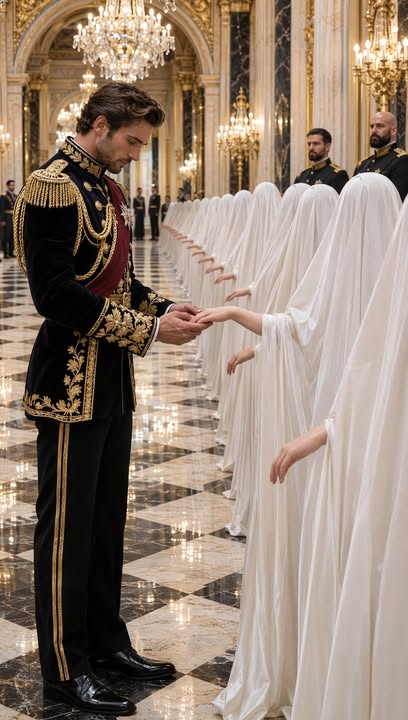
Part 6 – The Promise Remembered
For a long moment, Alexander could only look at the missing page’s empty place in the file.
The sentence beneath his father’s signature seemed to darken as he read it again: Clara must never be allowed to see this.
Clara stood beside him, her hands resting on the table, the old scar on her thumb pale in the lamplight.
“Do you think my father wrote that?” she asked.
“I don’t know,” Alexander said. “The handwriting is different from my father’s, but I can’t identify it yet.”
“Could it be Mr. Lawrence’s?”
“Perhaps. Michael is comparing it with the notebook.”
Alexander did not try to shield her from the uncertainty, and Clara seemed to notice.
“Then we wait until we know,” she said.
Michael returned with the archivist a few minutes later, carrying the notebook and a magnifying glass.
He examined the sentence, then compared it with several notes in Mr. Lawrence’s hand.
“The writing is very similar,” he said at last. “I can’t say it is his with absolute certainty, but the shape of the capital letters matches.”
“Did he remove the final page?” Clara asked.
“The letter’s fold suggests it was once attached,” the archivist replied. “There are impressions on the sheet beneath it, though they’re faint.”
She placed a thin piece of paper over the letter and angled a lamp across its surface.
Slowly, the pressure marks appeared.
A few words emerged, then a name.
Michael bent closer.
“Thomas Lawrence,” he said. “That was Mr. Lawrence’s full name.”
Alexander read the remaining impressions carefully.
They showed the beginning of a sentence about a conversation with his father, but the rest was too faint to recover.
The missing page did not reveal who had written the accusation, nor why the person had insisted Clara must never see it.
It did, however, make the silence surrounding the letter more understandable.
Mr. Lawrence had known that Clara’s father was innocent, and he had been afraid to let the truth leave the family’s private records.
“He kept the page,” Clara said. “Or removed it.”
“It may have been lost later,” Michael replied. “We can’t know which.”
“But someone decided it shouldn’t reach my father.”
Alexander looked at the unsigned portion of the letter.
“My father wrote that he had enclosed the name of the person who accused yours.”
“Then he meant to tell him,” Clara said.
“Yes.”
“But he never sent it.”
“No.”
Clara’s gaze rested on the sentence written beneath the signature.
“Perhaps my father’s name was the one the family couldn’t afford to bring into it.”
“Perhaps,” Michael said. “But we should not claim more than the records show.”
She nodded.
“Then we say exactly what we know.”
That was what they did in the days that followed.
The estate counsel examined every surviving document, while the archivist prepared certified copies and a careful account of how each paper had been found.
Mrs. Price reviewed her statement and approved it without asking for anything in return.
The surviving receipt confirmed that Alexander’s uncle had pawned the reliquary to settle debts, and Mr. Lawrence’s notebook supported the account that he had retrieved it and returned it to the chapel.
The records did not establish that Mr. Lawrence had been the person who first accused Clara’s father.
They did establish that he signed the report that made the accusation official, knew the reliquary was not missing, and kept the truth from reaching the man who had been dismissed.
Alexander’s father’s letter showed that he later learned what had happened and chose to keep the family’s secret rather than clear an innocent man’s name.
No document could explain every fear or private motive that had shaped those decisions.
Alexander refused to fill the gaps with guesses.
When the evidence was ready, he asked Clara to read the public statement before it was released.
They sat together in the small library, where the morning sun rested across the same table at which they had first seen the recovery entry.
The statement named her father, Elias Bennett, as a groundskeeper who had been falsely accused of stealing the family reliquary.
It explained that the reliquary had been pawned by Alexander’s late uncle, recovered shortly after Mr. Bennett’s dismissal, and returned to the private chapel.
It acknowledged that Alexander’s father had learned of the recovery and failed to correct the accusation, and that the estate had allowed Mr. Bennett’s name to remain under suspicion for the rest of his life.
The statement included an apology to Clara and her family, along with a promise to preserve the documents and make them available for public review.
It also announced the creation of a community trust in Elias Bennett’s name, supporting public gardens and local green spaces, the kind of places he had cared for throughout his life.
Clara read the pages slowly.
When she reached the paragraph about the trust, she looked up.
“Make sure this doesn’t sound as though money makes it right.”
“It doesn’t,” Alexander said. “The apology comes first, and the trust is only one way to honor the work he did.”
“And it should be managed by people from the community, not by the family deciding what they need.”
“I’ll make that clear.”
She returned to the statement.
“And don’t call him a loyal servant.”
“I won’t.”
“He was a person who worked here. He deserved the same truth anyone else would have.”
Alexander took the draft and added the change.
“I want the statement to say that plainly.”
Clara watched as he wrote.
For a while, neither of them spoke.
The trust was not compensation for a life, and neither of them pretended it could restore the years her father had carried his shame.
It could, however, protect the places he had loved and help others care for them without needing the favor of a royal family.
When Clara finished reading, she set the pages down.
“It’s honest,” she said.
“Is that enough?”
“It’s what should have been done.”
The statement was released two days later.
Alexander stood before the press in the estate’s old garden hall, not beneath a portrait or beside the family crest, but in front of a plain wooden table where the original records lay in clear view.
Michael stood at his side.
Clara sat in the front row with Mrs. Price, her hands folded in her lap.
Alexander read the statement without embellishment.
He named his father’s failure, his uncle’s actions, and the estate’s long silence.
He did not claim that he had been responsible for decisions made when he was a child, but neither did he use his age or his title to distance himself from the institution that had benefited from those decisions.
“My family had the truth and did not act,” he said. “Mr. Elias Bennett deserved to have his name cleared while he was alive. We failed him, and we are sorry.”
When he finished, there were questions from the gathered reporters, and he answered what the documents could support.
When he did not know something, he said so.
When a question asked him to speculate about a dead person’s motives, he declined to guess.
He did not look toward Clara for approval.
The choice belonged to him, and the apology belonged to the family.
The family council met again that evening.
They accepted the release of the records, though not without disagreement.
They also confirmed that Alexander would step away from his place in the succession while the council reviewed the future structure of the family’s public work.
Alexander was not dismissed from every responsibility, but he would no longer be expected to inherit the title and power that had shaped his life.
When the decision was made, he felt the old fear rise in him.
Then he realized that the house had not vanished around him.
The rooms remained, the gardens still needed tending, and people still waited for answers and practical help.
His life had changed, but he was still himself.
Michael found him later in the garden hall, where the press table had been cleared and the evening light lay across the empty chairs.
“You did what your father could not,” Michael said.
“I did what he should have done.”
“That distinction matters.”
“Does it make what you didn’t do matter less?”
“No,” Michael replied. “It doesn’t.”
He stood with his hands clasped behind him, a posture Alexander had seen hundreds of times.
Tonight it looked less like the bearing of an adviser and more like a man trying to keep his regret from becoming an excuse.
“I was loyal to the family,” Michael said. “I believed that meant keeping its difficulties contained. I see now that I used loyalty to avoid asking whether the family had done right.”
“Will you stay?”
“If you want me to.”
“I do, but not because you agree with me.”
Michael looked up.
“I’ll stay because I have work to do, and because I should have started it sooner.”
Alexander offered his hand.
Michael took it.
Their understanding was not unchanged, but it was more honest than before.
Over the following weeks, the estate published the full account of the case and opened its archive records for independent review.
The family issued a formal public apology, naming Elias Bennett and acknowledging that the accusation had never been supported by evidence.
Mrs. Price’s testimony was included, along with the household register, the pawn receipt, Mr. Lawrence’s notebook, and Alexander’s father’s letter.
The family did not pretend that the trust could replace what had been lost.
They invited the Bennett family, the village council, and local gardeners to help decide how it would be run.
Clara chose not to serve on its board.
She did, however, attend the first meeting and suggest that the trust support the neglected public garden near the school where her father had worked after leaving the estate.
“It’s a good place for children,” she told the group. “He would have liked that.”
The garden was restored over the next several months.
The stone paths were repaired, the old fruit trees were pruned, and beds of herbs and flowers were planted along the sunny wall.
A wooden plaque was placed near the entrance, bearing Elias Bennett’s name and a sentence Clara had chosen:
He cared for the ground, and taught those who came after him to care for one another.
She stood before it at the small opening ceremony, while local families gathered around the garden.
Alexander attended without a procession or a formal announcement.
He spent the morning carrying soil, moving benches, and helping a group of children plant young apple trees.
His cuffs became muddy, and he laughed when a child pointed out that the prince had dirt on his sleeve.
“I’m not a prince today,” he said.
The child looked puzzled.
“Then what are you?”
Alexander thought about the question.
“Someone who is learning to be useful.”
Clara heard him from nearby and smiled.
The choice to step away from the succession did not make every difficulty disappear.
There were meetings, questions, and long conversations about what the family could responsibly change.
Some relatives remained hurt by the public release.
Some believed Alexander had acted too quickly.
He listened when they spoke, but he did not withdraw the truth to soothe them.
The estate gradually became less of a place arranged around his inheritance and more of a place where the community could come for work, learning, and shared care of the gardens.
Alexander began spending part of each week helping local projects, first because the family’s public foundation needed someone to oversee its transition, and later because he discovered he loved the work itself.
He learned the names of people who had lived near the estate all their lives and had never expected to be invited beyond its gates.
He learned that service did not always mean standing at the front of a room.
Often it meant showing up early, listening carefully, and staying after everyone else had gone home.
Clara did not return to the estate as a bride chosen by a challenge.
She returned because she wanted to see the orchard, because she had decided that the past would not keep every path closed to her, and because she had begun to trust the man Alexander was becoming.
Their closeness grew without announcements or demands.
They spoke about the years they had lost, sometimes with tenderness and sometimes with the ache of knowing they could not recover them.
Alexander listened when Clara told him what her father had been like as an adult, not only what he had meant to her as a child.
Clara listened when Alexander spoke of the loneliness of being surrounded by people who had been trained to agree with him.
Neither tried to make the other’s pain smaller.
One evening, they walked along the garden wall after a meeting of the new trust.
The trees were bare, the air cool, and the first stars had appeared above the estate roofs.
“You don’t have to keep proving you made the right choice,” Clara said.
“I’m not sure I know how to stop.”
“You don’t need a title to be useful.”
“I know that now.”
“Do you know it in your heart?”
He considered the question.
“I’m beginning to.”
She slipped her hand into his.
It was the first time she had done so without the question of the old case between them.
He held her hand gently, his thumb near the scar that had brought them together and then led them back toward the truth.
“I used to think I chose you in that ballroom,” he said.
“You did.”
“I thought the choice meant I had found the answer to my life.”
“It was an answer to one afternoon.”
“And you came for the chance to speak.”
“I did.”
“Not to be chosen.”
“No.”
He looked at her.
“If there were no challenge, no title, and no family expecting anything from you, would you still want to be here?”
Clara studied his face, seeing no demand in the question, only the fear that he might mistake gratitude for love.
“I wouldn’t be here because you chose me,” she said. “I’m here because I have chosen you.”
He stopped beneath the bare branches.
The words did not erase the past, but they gave him something true to carry into the future.
He bent and kissed her, softly, with the care of someone who understood that affection was not a prize awarded for doing the right thing.
When they parted, Clara rested her forehead against his.
“Don’t promise me you’ll never forget,” she whispered. “Just keep showing me you remember.”
“I can do that.”
The next spring, they married in the estate garden.
There were no grand invitations, no formal procession, and no row of veiled women.
The ceremony took place beneath the old apple tree, whose branches had begun to blossom again.
Clara wore a simple ivory dress, and her hands were bare except for a small ring made from gold that had belonged to her mother.
Alexander wore no crown, no uniform, and no family insignia.
Only Michael, Mrs. Price, a few friends, and the members of both families stood with them in the garden.
The community garden’s children had brought baskets of flowers, and several of the gardeners had arranged them along the path.
Before the vows, Alexander took Clara’s hand.
The small scar rested beneath his thumb, pale and familiar.
He looked at it, then at her.
“When we were children, I promised you I would remember you,” he said.
“I remember.”
“I thought remembering meant holding on to a name and a summer and a promise made under a tree.”
“And now?”
“Now I know it means listening when you speak, telling the truth when it costs me something, and showing up after the words are over.”
Clara’s eyes filled.
“I can live with that promise.”
“I’ll keep learning how.”
She smiled through her tears.
“Good. We have time.”
He slipped the ring onto her finger.
When the ceremony was finished, they remained beneath the apple tree as their guests drifted toward the garden paths.
The afternoon was bright with spring light, and somewhere nearby a child laughed while trying to catch a drifting blossom.
Alexander held Clara’s hand.
For the first time, the old garden did not feel like a place where the past waited to be corrected.
It felt like a place where something honest could begin again.
He remembered the promise.
And this time, he knew how to keep it.
**–THE END–PLEASE
Share your thoughts or feedback to motivate us to create more stories ♥️
* * *
[PREVIOUS: PART 5](https://storyly.idolsgift.com/blog/part-5-the-promise-beneath-the-scar-055-7)
✓ Lynn R. Adams
Part 6 – The Promise Remembered For a long moment, Alexander could only look at the missing page’s empty place in the file. The sentence beneath his father’s signature seemed to darken as he read it…