PART 6 (THE END): The Promise Anton Never Shared 053
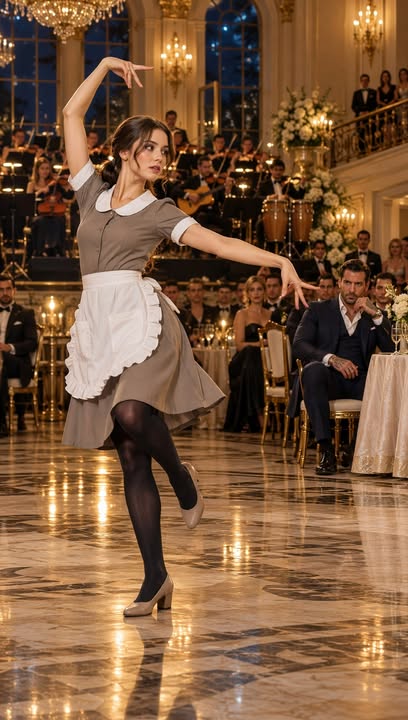
Part 6 – The Step They Chose
Mara placed one finger beside the name.
“Then you should know that the family who raised you may have chosen a name for you before they ever met you.”
Vincent looked at the faded ink.
For a moment, the street around them seemed to fall away, leaving only the old form, the patient woman holding it, and the question that had traveled farther than any of them expected.
Emma stood beside him, the silver medal warm in her palm.
Mara did not hurry him.
“The record is incomplete,” she said. “It gives us a name, but not the whole story.”
Vincent’s eyes remained on the page.
“What name?”
“Elias,” Mara said. “Elias Vale.”
The name seemed to reach him before he could decide what to feel about it.
He repeated it softly.
“Elias.”
It sounded unfamiliar and intimate at once, like a melody heard from another room.
“Do you know what happened to the family?” Emma asked.
Mara turned to her.
“The records show that a baby named Elias was placed temporarily with a family after his mother became seriously ill. The family who cared for him later adopted him. The paperwork is incomplete, and some of the people involved have passed away, so we can’t tell you everything.”
“But they chose Vincent Graham,” Emma said.
“They did,” Mara replied. “The adoption record identifies Vincent as the name they gave him. It doesn’t say they were trying to conceal his birth name. It may simply have been the name they wanted for the child they loved.”
Vincent took in a slow breath.
For years, he had imagined the answer as something hidden from him, taken away or withheld.
Now he was being offered a possibility gentler than that.
The name had not been a locked door.
It had been one beginning, followed by another.
“Can I see the record?” he asked.
“Certainly.”
Mara handed him a copy, then explained which office could help him request the complete file and what information they would need to confirm.
She made no promises about what the records might reveal.
Vincent thanked her and folded the paper carefully, as if it were both fragile and his to carry.
After she left, Emma waited with him beneath the Continental’s entrance lights.
“You don’t have to decide what to do with the name tonight,” she said.
“I know.”
“Do you want to use it?”
“I don’t know yet.”
“That’s all right.”
He looked down at the copy in his hands.
“I thought knowing would feel like finding something I’d lost.”
“And?”
“It feels like learning there was more than one place I began.”
Emma understood that feeling.
Her father had lived a whole life before she was born, and for years she had thought she knew him completely because she knew the way he smiled when she danced.
Now she knew there had been rooms in him she had never entered.
She could be grateful for the memories she had without believing they were all he had been.
“Elias,” Vincent said again, testing the sound.
“Vincent,” Emma replied, not to correct him but to remind him that one name did not erase the other.
He looked at her.
“I think I want both.”
“Then keep both.”
A few weeks passed before the formal inquiry into Warren Pike’s claims was completed.
The records Levi had preserved were reviewed, and the messages Pike had sent were assessed without fanfare.
The authorities confirmed that he had no basis to demand anything from Vincent or to involve Emma in an old dispute.
They also made clear that the best way to keep matters settled was to preserve the evidence, avoid private confrontations, and let any further contact be handled through proper channels.
Pike stopped contacting them.
There was no dramatic final scene, no triumphant return to old feuds, and no need for Vincent to prove that he could make someone afraid of him.
He gave his statements, turned over what he had, and let the process finish without trying to control its outcome.
Levi did the same.
For Vincent, it was not an easy kind of strength.
It asked him to remain still when every old instinct urged him to act, and to accept that a lawful process could be slower than the certainty of command.
Still, he kept choosing it.
The Continental changed too.
The club had been built on habits that people had once called tradition: conversations kept from the staff, concerns handled in private, and decisions made by those with the most influence.
Vincent and Levi worked with the people who ran the venue to establish clearer procedures for complaints and safety, and to make sure the employees had a voice in decisions that affected their work.
Gregori insisted that no one call it reform until the staff had seen it practiced.
He was right.
For a while, Emma did not return to her old position.
She applied for other work, sat through interviews, and tried to decide what she wanted rather than what she could endure.
June helped her revise her résumé, then reminded her that an interview was not a dance exam.
“You don’t need to prove you deserve to take up space,” June said as Emma stood in front of her mirror, smoothing the collar of a simple blouse.
“I know.”
“Do you?”
Emma smiled.
“I’m working on it.”
She found a part-time position helping organize classes at the neighborhood arts center, where Gregori taught beginners and people who had not danced in years.
The work was modest, the hours manageable, and the pay steadier than the shifts at the Continental.
Most importantly, no one expected her to disappear into the edges of a room.
At first, she told herself she was only helping with registrations, schedules, and the occasional lost shoe.
Then Gregori asked whether she would lead a warm-up for the beginner class.
“I’m not ready to teach,” she said.
“Then don’t teach,” he replied. “Show them how to listen to the music.”
So she did.
She stood at the front of the studio, chestnut hair tied back, one hand resting lightly at her waist as she counted the first measure.
“One, two, three.”
The students moved cautiously, watching their feet.
“Again,” Emma said. “Not faster. Listen.”
Gregori smiled from beside the piano.
After the class, he found her gathering the practice cards.
“Your father would have liked that,” he said.
Emma paused.
She still did not know everything Anton had done before she was born, or every reason he had kept certain things private.
She knew enough now to see that his silence had not been empty.
It had held fear, care, and a belief that love should not make a person’s choices smaller.
“I think he would have told me to straighten my shoulders,” she said.
“He would have.”
“And to stop counting under my breath.”
“He would have told you that too.”
Emma laughed, and the sound felt like a small window opening.
Months after the inquiry ended, Vincent visited the arts center on a Thursday evening.
He came alone.
No one announced him, and he did not arrive with a proposal or a promise.
He waited by the door until the beginner class had finished, then asked Gregori whether Emma had time to speak.
Gregori looked at her.
Emma could have said no.
Instead, she set down the stack of class cards.
“Give me a few minutes,” she said.
Vincent followed her into the hallway, where children’s paintings brightened the walls.
“I wanted to ask you something,” he said.
“Go ahead.”
“Would you consider helping Gregori expand the classes here?”
Emma’s expression tightened.
“Are you offering money?”
“I am, if you’re interested.”
“Why?”
“Because the studio needs new flooring, and there are more people asking for lessons than Gregori can fit into the current schedule.”
“Does Gregori know you’re asking me?”
“I spoke with him first.”
“And what does he think?”
“He thinks the studio should belong to the people who use it.”
“That sounds like him.”
“It also sounded like a condition I needed to respect.”
Emma leaned against the painted wall.
“What would you want in return?”
“Nothing.”
“No. That’s too simple.”
He nodded, accepting the correction.
“I would want clear terms. A budget reviewed by the studio committee, a written agreement that leaves the teaching and programming decisions with the instructors, and no use of the classes to promote the Continental.”
“And no special access to the students.”
“Agreed.”
“No naming the studio after you.”
“Agreed.”
“No turning this into a way to tell me I owe you.”
“I don’t want you to owe me anything.”
“Then the funding would be a donation to the studio, not a favor to me.”
“Yes.”
“Reviewed by Gregori and the committee.”
“Yes.”
“And I want a paid position managing the schedule and outreach, if I’m going to help build the program.”
Vincent’s eyes warmed.
“That seems fair.”
“It isn’t a favor. It’s work.”
“I understand.”
She watched him carefully, looking for the impatient certainty she had once mistaken for confidence.
It was not there.
He stood with his hands relaxed at his sides, ready to accept a no as readily as a yes.
“Then I’ll talk to Gregori and the committee,” she said. “We’ll decide whether your offer fits the studio’s needs.”
“Thank you.”
“Don’t thank me yet.”
“I won’t.”
The committee took several weeks to review the proposal.
They asked questions, requested changes, and rejected two of Vincent’s first drafts because they made the funding sound more generous than the studio could responsibly use.
Vincent accepted every revision.
When the agreement was signed, the studio received new flooring, improved lighting, and enough support to add evening classes for people who worked during the day.
Emma took the paid position, and Gregori kept the final say over the lessons.
Vincent did not attend the first class after the renovation.
He came later, when Gregori invited him to observe, and sat quietly near the back.
During the warm-up, Emma looked toward him once.
He did not signal to her or call her over.
He simply listened.
By then, Vincent had begun setting aside parts of his old life that once seemed inseparable from him.
He worked with Levi to close out business arrangements that depended on fear or secrecy, keeping only what could be managed openly and lawfully.
Some people thought the change was too slow.
Others thought it would never last.
Vincent did not ask Emma to reassure him.
He kept going anyway.
He also contacted the office Mara had recommended and began the careful process of learning what the records could tell him about Elias Vale.
The file confirmed the name and the early placement.
It did not give him a complete account of his mother, whose illness had taken her life before he was old enough to remember her.
There were no hidden fortunes or dramatic revelations waiting in the pages.
There was only a small record of a child entrusted to a family who later chose to adopt him.
The Grahams had named him Vincent because they loved the name, and because they wanted a son who would grow into a life of his own.
When Vincent finally told Emma, they sat together on the studio steps after closing.
“I think I’m grateful to Anton for leaving me the possibility,” he said.
“Even if he never told you the name?”
“Especially because he didn’t choose what I should do with it.”
“And what will you do?”
“I’ll keep both. Vincent is the person who learned to dance with Anton. Elias is the person who began before I knew him.”
Emma touched the medal beneath her blouse.
“That seems right.”
“I don’t want to pretend the years between those names were simple.”
“You don’t have to.”
He looked toward the windows, where warm light spilled from the studio onto the pavement.
“Your father gave me a way to think about my life that I didn’t have before.”
“He gave you a question, not an answer.”
“Yes.”
“And you had to choose.”
“I still do.”
Emma let that answer rest between them.
There had been a time when she might have wanted a clean story, one in which a single promise transformed everything and all uncertainty vanished.
Life had not offered them that.
It had offered smaller decisions, repeated and imperfect.
A question asked without pressure.
A boundary respected.
A difficult choice made again the next day.
In the spring, the studio held its first open-house evening.
Neighbors filled the restored ballroom, some arriving in polished shoes and others in sneakers.
Gregori’s musicians played gentle waltzes while Emma welcomed newcomers at the door and helped children pin their name tags straight.
June came early with a tray of sandwiches.
She had taken a new position in the city and seemed brighter for it.
When she saw Emma, she pulled her into a hug.
“You did it,” June said.
“We did it.”
“Don’t make me emotional before I’ve had a sandwich.”
Emma laughed and waved Gregori over to introduce them to a family who had just arrived.
By the time the last class began, the ballroom was full of people moving at different speeds, missing steps, laughing, and trying again.
Vincent waited near the doorway.
He wore a simple dark suit, without the ivory layers that had once made him seem untouchable.
Emma walked over when she had a moment.
“Are you staying?” she asked.
“If you want me to.”
“I’m not asking what I want yet.”
He nodded, understanding the distinction.
“Then I’ll wait.”
She looked at his hands.
The silver medal hung from a chain at her throat, tucked beneath the neckline of her dress.
“I brought Dad’s medal,” she said.
“I see.”
“Do you remember what it says?”
“Choose your own step.”
“Good.”
The next waltz began.
Gregori introduced it as an old favorite, then called Emma to the floor to demonstrate the first turn.
She moved with the music, not as the girl she had been before her father became ill, but as the woman who had carried that girl through every year that followed.
When the demonstration ended, people applauded.
Emma stepped aside to make room for the class.
Vincent remained by the doorway.
He did not assume the dance was his.
That mattered to her more than he knew.
She crossed the floor toward him.
“Would you like to dance?” she asked.
His expression opened with surprise, then warmth.
“Only if you’re sure.”
“I’m sure.”
He offered his hand without closing it around hers.
Emma placed her fingers in his.
They took their positions beneath the soft glow of the restored lights.
For one brief moment, Vincent seemed to wait for the music to tell him what to do.
Then the first measure began.
He listened.
His hand rested lightly at her back, leaving room for her to move, and his steps followed the rhythm instead of demanding it.
Emma smiled.
“You’re not off time.”
“Not yet.”
“Don’t get overconfident.”
“I wouldn’t dare.”
They turned beneath the lights, moving together and apart, each step answered rather than imposed.
The music carried her back to the night she had first crossed the floor at the Continental, certain she had only stepped out of invisibility.
She understood now that she had stepped into something else as well.
Not a debt.
Not a rescue.
Not a story in which one person saved another and claimed the ending.
Just a choice, made freely, and another choice after it.
When the music ended, Vincent released her hand at once.
“Would you like another?” he asked.
Emma touched the medal beneath her blouse, feeling its familiar cool edge.
Then she looked at him and smiled.
“Yes,” she said. “This one.”
**–THE END–PLEASE
Share your thoughts or feedback to motivate us to create more stories ♥️
* * *
[PREVIOUS: PART 5](https://storyly.idolsgift.com/blog/part-5-the-promise-anton-never-shared-053-2)
✓ Lynn R. Adams
Part 6 – The Step They Chose Mara placed one finger beside the name. “Then you should know that the family who raised you may have chosen a name for you before they ever met you.” Vincent looked at…