PART 6 (THE END): The Place They Could Choose 052
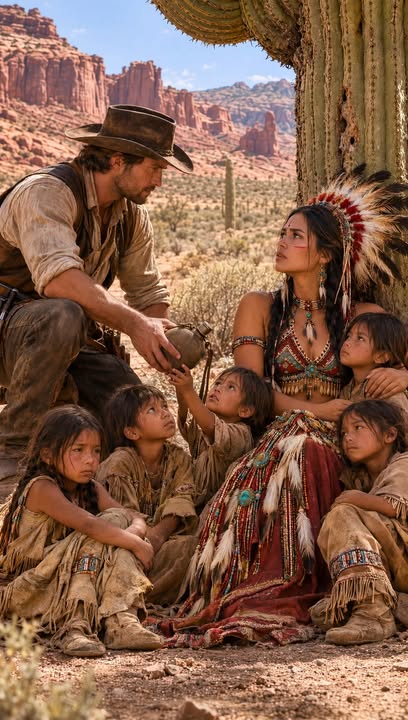
Part 6 – The Home They Chose
The sheriff turned the page so they could see the signature.
The name written there was Alma Voss.
For a long moment, Ryland could only stare at the familiar handwriting.
Then he stepped closer and read the rest of the document beneath the signature.
The county had appointed his late mother as temporary guardian of the children, based on the letter and statements delivered to the clerk’s office years earlier.
“The date,” Yara said, her voice barely audible.
Ryland looked again.
The appointment had been made before Alma died, and its authority had never been formally withdrawn.
“She named you as the person to carry out her wishes,” the sheriff explained. “The clerk was trying to settle the matter with the records available. The notice from Lydia Vale arrived first, but this document was already on file.”
“Then she was expected to come here?” Yara asked.
“No,” the sheriff replied gently. “Alma was. The appointment was written while she was alive. It names her as guardian and identifies the house by the windmill as the children’s intended refuge.”
Ryland read the words once more, though they seemed to blur at the edges.
His mother had not merely hoped he might open the door.
She had written down what she meant to happen.
“Does this mean the children can stay?” Yara asked.
“It means the county has recognized Alma’s arrangement as legitimate,” the sheriff said. “The clerk will still need to review the false notice and the statements we’ve gathered, but the central question is no longer who should take them. Alma’s papers name this home, and the children have chosen to remain with Yara here.”
The sheriff looked toward Ryland.
“You’ll need to agree to serve as the responsible adult named in the appointment.”
Ryland glanced at the front-room window, where lamplight shone through the curtains.
“I agree.”
Yara studied him.
“You don’t have to answer so quickly.”
“I’ve had a long time to think about it without knowing I was thinking about it.”
The sheriff nodded and folded the document.
“I’ll send word to the county office at first light. Until then, the children stay here, just as I promised.”
Yara let out a breath she seemed to have been holding since the knock at the gate.
“Thank you,” she said.
The sheriff tipped his hat and returned toward town, carrying the papers that would put the truth where it belonged.
Ryland remained on the porch with Yara as the last of the dust settled over the lane.
“My mother knew,” he said.
“She knew what your house could become.”
He looked at the dark outline of the windmill against the evening sky.
“I thought it was just the place she left me.”
“Perhaps she trusted you to discover the rest when you were ready.”
Yara’s words were gentle, and they carried no demand.
Ryland turned toward her.
“Are you ready to stay?”
She looked through the window at the children.
Kea was spreading blankets near the wall, while Daro measured the distance between each bedroll as though he were making sure no one could be separated by accident.
Reco and Sani were arguing softly over who would keep the little lamp beside them.
Merie sat in the middle of the room, the blue strip around her wrist catching the light.
“I am ready to let them choose,” Yara said. “And they have.”
“That isn’t quite the same as answering for yourself.”
“No,” she admitted. “It isn’t.”
She glanced toward the road, where the desert stretched away into the dark.
“For a long time, I thought staying anywhere meant I was asking someone else to carry my share.”
“You don’t have to stop carrying your share.”
“I know. But perhaps I can carry it without carrying everything alone.”
Ryland felt the words settle warmly between them.
“You can,” he said.
Yara turned to him, and the guardedness in her face had not vanished, but it had become something she could set down for a moment.
“I want to stay,” she said.
The next morning, the county clerk’s reply arrived before noon.
The sheriff brought it himself, along with a second letter from the mission, signed by Mrs. Bellweather and witnessed by two members of the sewing circle.
The county accepted Alma’s appointment, recognized Ryland as the adult responsible for the children’s care, and recorded Yara as their aunt and primary companion until they were grown enough to make their own decisions.
The false notice was withdrawn.
Lydia Vale’s name was removed from the record, and the sheriff wrote down Mara Bellweather’s full statement, including how Toan had asked her to use another name and claim a family tie that did not exist.
Mara confirmed that she had carried Aven’s letter for a time, but had been separated from the party on the road and later told that the children had gone north with Toan.
She had not known they were abandoned.
She had not known her aunt still lived in Dusty Creek.
When she finally arrived, Toan had persuaded her to use the false name and the story of an aunt because he believed it would draw attention to the children without exposing the route they had taken.
The letter, he admitted, had been lost during the confusion after Aven’s death.
He had found Alma’s appointment among the papers in Aven’s pack, but had hidden it, telling himself that the plan was no longer safe.
He had not meant for Yara to be left alone in the desert.
He had not intended for the children to be in danger.
But he had made a choice for all of them, and then allowed the consequences to become someone else’s burden.
In his statement to the sheriff, Toan acknowledged that the children had never been his to claim.
He also wrote that he would not seek custody or interfere with their life in Dusty Creek.
Yara read the statement in silence.
When she had finished, she folded it carefully and returned it to the sheriff.
“Does this make what happened easier?” Ryland asked later.
“No,” she said. “But it makes it clear.”
She looked through the open doorway at the children, who were outside by the windmill.
“I don’t need him to be a monster to know he was wrong.”
Ryland nodded.
“Sometimes the truth is harder when someone thought they were doing the right thing.”
“Yes,” Yara replied. “But the children deserved better than his certainty.”
No one asked her to forgive Toan.
No one asked her to forget Aven’s last days or the miles they had walked beneath a merciless sun.
There would be time, if she wanted it, to understand what she felt.
For now, there was food on the stove, clean water in the kitchen, and a house that would remain theirs the next morning.
The children began to settle into ranch life in the way children often do: slowly at first, then all at once.
Kea discovered the porch steps were perfect for watching the clouds drift over the valley.
Reco became the unofficial keeper of Flint’s grooming brush, though Flint seemed just as pleased to be brushed by any of them.
Sani liked the quiet hours before supper, when Ryland mended tack and Yara sorted cloth at the kitchen table.
Daro asked a thousand practical questions about the ranch, and listened closely to every answer.
Merie followed Yara from room to room until she learned which floorboards creaked and which cupboard held the cups.
The children still slept together in the front room.
Ryland offered them the upstairs room again, but Daro shook his head.
“We’ll tell you when we want to move,” he said.
“That’s fair,” Ryland replied.
Yara watched the exchange from the doorway.
“You really will let them choose,” she said after the children had gone outside.
“I said I would.”
“Most people think children need to be told what is best for them.”
“Sometimes they do.”
“And when you’re not sure?”
“I’d rather ask them.”
Yara looked at him for a moment.
Then she smiled, not almost, but fully.
Weeks passed.
The valley changed from the dusty gold of late summer to the softer colors of autumn, and the children learned the names of the ranch’s familiar sounds: the windmill’s slow turn, the barn door’s groan, Flint’s soft snort when he wanted an apple.
Dusty Creek learned their names too.
At first, the town welcomed them cautiously, curious about the story behind the notice and the strange paper bearing Alma Voss’s signature.
But there was no spectacle in the matter, no grand trial, no public accusation.
The sheriff kept the inquiry orderly.
The county received the mission records, Toan’s statement, and Aven’s letter, and the false claim was formally set aside.
By the time the first frost touched the grass, most people in town had stopped asking questions and begun asking whether the children needed anything.
Yara accepted help more easily when she could offer something in return, so she began mending clothes for the families who brought them.
She never charged more than the cost of thread.
Before long, Mrs. Bellweather invited her to the mission sewing room.
The old room had tall windows, a long table, and shelves of fabric scraps arranged in baskets.
Sunlight fell across the table in bright squares.
Yara stood at the doorway on her first morning there, unsure whether she belonged.
Mrs. Bellweather placed a basket of cloth in front of her.
“Aven used to say she wanted a place where women could sew without having to explain why they needed to be there,” she said.
Yara touched the fabric.
“She told me that once.”
“Then perhaps you can help make the place she imagined.”
Yara looked at the empty chairs around the table.
“Not only for women who already know how to sew.”
“Especially not only for them,” Mrs. Bellweather agreed.
Yara began with a simple offer.
Anyone could come in, take a cup of tea, and learn a stitch or two.
No one had to bring finished work.
No one had to tell a story.
People came at first because they were curious, then because they liked the quiet company.
Some brought shirts to mend.
Others brought children’s clothes, worn blankets, or pieces of fabric they had kept for years without knowing what to make.
Yara showed them how to thread a needle, how to make a seam strong, and how to hide a knot so the cloth would lie smooth.
She did not make anyone speak.
In time, the room filled with conversation of its own.
The children came with her when they wished.
Kea learned to sew a straight line.
Reco made a crooked pouch and declared it perfect for carrying marbles.
Sani practiced small loops along a scrap of blue cloth.
Daro pretended he had only come to carry the basket, but Mrs. Bellweather noticed him mending a torn pocket when he thought no one was looking.
Merie kept the original strip of blue cloth safe in a small wooden box Ryland had lined with soft cotton.
They did not place it away because they wanted to forget it.
They placed it there because it mattered.
Aven’s letter rested beside it in the box, protected from dust and sunlight.
Ryland kept the box on the shelf above his mother’s sewing chest.
One winter afternoon, he finally opened the chest all the way.
He went through every folded piece of fabric and every pattern, not to search for another hidden message, but to learn the quiet history in the things his mother had left behind.
He found a small child’s shirt with blue thread at the cuff.
He found scraps from blankets and a list of names written in Alma’s hand.
He found a note to himself, written many years earlier, reminding him to oil the windmill before the spring rains.
At the bottom lay a letter addressed to him.
It was not about the children.
It was about the house.
Alma had written that she hoped he would build a life in it, rather than simply keep it standing.
Ryland read the line twice.
Then he set the letter beside Aven’s, and for the first time, the house did not seem like a place he had inherited from the past.
It seemed like a place still being made.
That evening, Yara found him on the porch with the letter in his hands.
“What did it say?”
“That she hoped I’d build a life here.”
Yara sat beside him.
“Have you?”
“I think I’m beginning to.”
She rested her hands in her lap.
“I used to believe that if I stopped moving, something would catch up with us.”
“Does it still feel that way?”
“Sometimes.”
Ryland waited.
“But now,” she continued, “when the windmill turns, I know where I am.”
He looked toward the children in the yard.
Daro was trying to teach Flint to follow him without a lead rope.
Flint was following only because Reco held an apple in front of the horse’s nose.
Kea and Sani sat on the steps, sharing a book.
Merie was showing Mrs. Bellweather a new stitch.
The sight brought a quiet smile to Yara’s face.
“You don’t have to be their mother,” Ryland said.
“I know.”
“Aven is still theirs.”
“I know that too.”
Yara leaned her shoulder lightly against his.
“I spent years trying to prove I could keep them safe without needing anyone.”
“And now?”
“Now I know I can still be their aunt, even when someone else helps.”
Ryland turned his hand palm-up on the porch between them.
Yara looked at it, then placed her fingers in his.
The gesture was small, and it asked for nothing beyond the moment.
He held her hand without closing his own around it too tightly.
By the time spring came, the ranch had changed in ways neither of them could have predicted.
A second table stood in the kitchen because the first could no longer hold all the children’s elbows.
A row of small boots lined the porch.
The front room walls held drawings and practice stitches, and the windmill had been painted a brighter white by the children, who had persuaded Ryland that it looked too serious before.
Yara’s sewing circle met twice each week.
Mrs. Bellweather attended whenever she could, and Mara came from the northern road to visit her aunt.
The first time she returned, she brought no false name and made no claims.
She sat quietly beside Yara and told the children a story about their mother at the mission.
Aven had been the fastest person at the sewing table, Mara said, though she often pretended not to know how skilled she was.
She had once finished a child’s jacket during a long rainstorm and then given it away to a family who had arrived with nothing.
“She always said there would be another piece of cloth,” Mara told them. “And if there wasn’t, we would find a way to mend what we had.”
Merie touched the blue cloth around her wrist.
“Mama said that?”
“She did.”
“Did she laugh?”
Mara smiled.
“Very often.”
The children listened, then asked for more stories.
Yara listened too.
Some of the memories hurt.
Some made her laugh.
She learned that remembering Aven did not take the children away from her, and caring for them did not mean replacing their mother.
On a clear evening near the end of spring, Ryland and Yara prepared supper while the children set the table.
Daro placed one plate too many.
“Who’s that for?” Ryland asked.
Daro looked toward the empty chair beside Yara.
“For whoever might come by.”
Yara caught Ryland’s eye.
He smiled.
“Then we’ll make sure there’s enough.”
The windmill turned above the ranch, steady against the evening sky.
Aven’s letter and the blue cloth rested safely in their box, together at last.
At the table, Kea asked for more bread, Reco spilled a little milk, and Sani tried to pass the beans before Daro had finished serving them.
Merie sat close to Yara, her shoulder against her aunt’s arm.
Ryland sat opposite them, with no need to count the chairs or wonder how much room remained.
There was room.
There had always been room.
After supper, the children carried their plates to the kitchen, arguing cheerfully over who would wash and who would dry.
Yara stood in the doorway watching them, the lamplight warm on her face.
Ryland came beside her.
“Are you all right?” he asked.
She leaned against the doorframe.
“I am home.”
The words were quiet, but nothing in her voice wavered.
Outside, the desert wind moved over the valley without frightening anyone.
Inside, five children laughed around the sink, and the house held them all.
**–THE END–PLEASE
Share your thoughts or feedback to motivate us to create more stories ♥️
* * *
[PREVIOUS: PART 5](https://storyly.idolsgift.com/blog/part-5-the-place-they-could-choose-052)
✓ Lynn R. Adams
Part 6 – The Home They Chose The sheriff turned the page so they could see the signature. The name written there was Alma Voss. For a long moment, Ryland could only stare at the familiar handwritin…