PART 6 (THE END): The Piece That Shouldn’t Have Been There 058
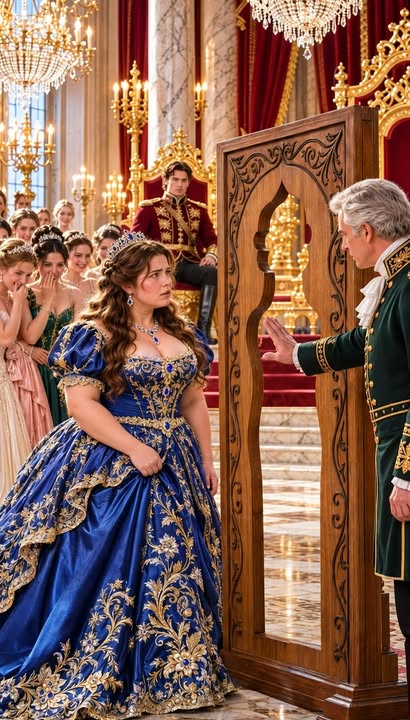
Part 6 – The Measure of a Promise
For a few moments, no one spoke.
The paper lay beneath William’s hand, its old ink suddenly more present than the king himself.
Alexander read the final note again, then looked at his father.
“You were told the frame had been narrowed.”
“I was,” William said. “I don’t remember seeing this order, but my name is there.”
The king’s voice held no evasion, only a troubled effort to understand how something so important could have slipped from memory.
Emily looked at the smaller writing beneath his signature.
“Who wrote that?”
The archivist bent toward the page.
“The hand resembles the notes from Lord Voss’s office,” she said. “But resemblance is not proof.”
William lowered himself into the nearest chair.
“Then we will not pretend it is.”
A hush spread through the room, reaching the candidates who had gathered at the far end.
Alexander placed his hand on the table, near his father’s but not over it.
“We need to tell them what this says,” he said.
William nodded, though his face remained drawn.
“Yes. And we need to explain what we know, what we do not, and what I failed to remember.”
He rose and addressed the candidates once more, asking them to join him in the throne room.
No one hurried.
The women came in together, curious and uncertain, while the archivist carried the document and the queen’s letter.
Emily stood near the end of the group, no longer at the center of the room, and felt a quiet gratitude for that.
William spoke from the floor rather than the dais.
“This morning, we learned that Lord Voss’s office arranged for the inner strip to be fitted,” he said. “A newly discovered order indicates that I was told the opening had been narrowed.”
He paused.
“I do not remember receiving that information, but the written record bears my signature. I will not deny it because I cannot recall it.”
The candidates listened without moving.
“The note beneath the order appears to have been written by someone in Lord Voss’s office,” the archivist explained. “We have not yet established who wrote it, or whether the king saw that part of the document.”
William continued.
“Whatever the answer, I should have asked what was being changed and why. I did not. The frame’s purpose was lost, and the competition used it in a way its maker had warned against.”
Alexander stepped forward.
“For that, we are sorry. We will not resume the competition.”
A candidate in lavender raised her hand slightly.
“Will the inquiry continue?”
“Yes,” William said. “The records will be preserved, and the people involved will be asked to account for their decisions. Lord Voss will not oversee that process.”
“And the candidates?” another woman asked. “What are we expected to do now?”
“Nothing is expected of you,” Alexander said. “Your expenses will be paid, and you may leave whenever you wish. If you choose to stay a little longer, you will be our guests. No one will be asked to take part in another trial.”
The woman near the window looked at Emily.
“You were right to insist we be told.”
Emily met her gaze.
“I only wanted everyone to know the same thing.”
The woman’s expression softened.
“I thought you were trying to make the prince choose you.”
“I understand why you wondered.”
“That wasn’t an apology.”
“No,” Emily said gently. “But it is a start.”
The woman gave a small, rueful smile.
“It is.”
The candidates spent the next hour reading the copied records and speaking with the archivist.
Some chose to leave that afternoon.
Others decided to stay until morning, grateful for the chance to rest before traveling.
A few asked whether the palace would invite them again if a new, fairer way of meeting the prince were ever devised.
Alexander answered that he could make no such promise, but would welcome a conversation if they wished one.
No one was asked to remain for his sake.
By evening, the throne room had emptied.
The wooden frame stood near the wall, its opening broad again now that the strip had been removed.
The carpenter had made no attempt to polish away the marks left by the alteration.
He had placed the strip beside it, each piece carefully labeled and documented for the inquiry.
Emily paused before the old carving.
Without the added wood, it looked less like a doorway and more like a question waiting to be asked.
The carpenter joined her, his hands folded over the worn handle of his tool case.
“I’ll make a proper drawing of the original shape,” he said. “Then the frame can be restored without pretending the strip was never there.”
“That seems right.”
“Some repairs should be visible,” he said. “So people remember why they were needed.”
Emily traced the air beside the frame, careful not to touch the freshly exposed edge.
“Do you know what it will be used for now?”
“That is for the king and prince to decide.”
She looked across the hall, where Alexander was speaking with his father.
“Perhaps it doesn’t need to be used as a test at all.”
The carpenter smiled.
“Perhaps not.”
Alexander came over once William had finished speaking with the archivist.
“My father would like to thank you,” he said. “But he doesn’t want to make you feel obliged to accept another audience.”
“I’ll thank him for thinking of that.”
“I’ll tell him.”
They stood beside the frame, looking at the broad, open space.
“I’m leaving tomorrow,” Emily said.
Alexander’s expression changed, but he did not ask her to stay.
“I understand.”
“I don’t want to remain because the court has decided I represent a lesson.”
“You shouldn’t.”
“And I don’t want to stay because everyone is waiting to see whether the prince chooses the woman who noticed the frame was wrong.”
“I wouldn’t ask you to.”
She looked at him.
“Would you ask me to stay for yourself?”
He took his time.
“I would like you to,” he said. “But I don’t want that to become another expectation placed on you.”
“I appreciate the difference.”
“I hope you’ll return someday, if you want to. Not as a candidate, and not because anyone needs you to finish this story.”
Emily smiled faintly.
“I’ll think about it.”
“That’s all I can ask.”
“Then ask nothing else.”
“I won’t.”
She left the hall the next morning with her travel expenses paid and the blue gown carefully packed away.
The palace did not ask her to make a statement or pose beside the restored frame.
Alexander did not come to the carriage.
She had half expected him to, then realized that his restraint was part of what made the choice feel like hers.
On the road home, she thought often of the people she had met: the candidates who had listened to one another, the carpenter who had kept an old mark in his memory, the archivist who had followed a record through shelves of forgotten paper.
She thought of Alexander, too, though she tried not to turn their conversations into promises they had never made.
Weeks later, the palace sent her a letter.
It contained no request to return and no grand declaration.
The king wrote that the inquiry had confirmed the inner strip was ordered through Lord Voss’s office after the frame’s restoration.
Lord Voss had admitted he authorized it, believing the altered edge would make the frame easier to handle and failing to consider how much the change narrowed its opening.
He had also accepted that he should have recorded the work and questioned the way the court had begun using the frame.
The note under William’s signature had been written by a clerk in Voss’s office, not by the courtier himself.
The clerk had believed the king would be spared unnecessary detail while the workshop completed its work.
That decision had kept the alteration from being properly examined, though it had not been made as part of a plan to favor any particular candidate.
The courtier had no scheme to produce one obvious winner.
Instead, the frame’s narrowing had grown from carelessness, old assumptions, and a habit of protecting appearances by withholding inconvenient questions.
Lord Voss was removed from oversight of the royal competitions and required to answer for the unrecorded order.
He would remain in his post only in a reduced role, with all workshop changes subject to independent review.
The inquiry found that King William had failed to follow up on the notice he had received.
He did not use his forgotten memory to excuse himself.
At the next public council, he said so plainly.
He also announced that no royal courtship or marriage process would be organized as a contest in which people were ranked for the Crown’s convenience.
If Alexander chose to marry, the choice would be his, and the person he chose would be free to accept or refuse without public trials.
The frame was restored beneath the carpenter’s careful hand.
Its carved opening was returned to its original width, and the added strip was preserved in the palace archive beside copies of Eleanor’s letter.
A small plaque was set beside the frame, not to praise the royal family, but to record what had happened.
It explained that the frame had once been meant to invite questions about fairness, that its purpose had been forgotten, and that its opening had been narrowed without proper review.
It ended with Eleanor’s words: “Every standard must answer for whom it serves.”
When Emily read the notice, she thought of the queen not as a perfect figure in a portrait, but as a woman who had written down a concern because she knew that good intentions were not enough.
The king’s next letter arrived several months later.
It included a simple invitation to visit the palace whenever Emily wished, as a guest rather than a candidate.
She did not go at once.
She waited until the invitation no longer felt like an answer to the story that had begun in the throne room.
Then, on a clear spring morning, she returned.
The palace gardens were bright with new leaves, and the air smelled of damp earth and blossoms.
The candidates were gone.
The antechamber stood empty, its tall windows open to the garden.
Emily walked through the throne room without wearing her sapphire gown or a tiara.
She had chosen a comfortable green dress and left her hair loose over her shoulders.
No one announced her arrival.
No one gathered to watch.
Alexander was waiting near the restored frame, speaking with the carpenter about a small crack in the lower rail.
When he saw her, he excused himself from the conversation and came toward her with a smile he did not try to hide.
“Hello, Emily.”
“Hello, Alexander.”
For a moment, neither seemed sure whether the old distance still belonged between them.
Then he asked, “Would you like to see what they’ve done?”
“I’d like that.”
He walked beside her to the frame.
The opening was wide enough to see through without passing beneath its arch.
The new plaque rested on a low stand nearby.
Emily read it in silence.
“They kept the alteration beside it,” she said.
“They thought it mattered that people see what was removed, not only what was restored.”
“I agree.”
Alexander looked toward the pale strip preserved behind glass in the archive case.
“Father visits the plaque sometimes.”
“Does he?”
“He says it reminds him that regret is only useful if it changes what happens next.”
Emily glanced at him.
“That sounds like something he learned rather than something he was born knowing.”
“He would probably agree.”
They began walking toward the gardens.
There was no court to impress, no candidate list to complete, no wooden test between them.
Alexander told her about the changes he had made to the royal household’s review process.
Emily told him about returning to her life at home and the friends who had been surprised to hear that her most memorable royal encounter involved a piece of wood and several old ledgers.
He listened without turning every story back to the palace.
That afternoon, she stayed for tea with the king.
William thanked her for insisting that the candidates be told the truth.
“I was not the only one who insisted,” Emily said. “The others wanted to understand what had happened, too.”
“You are right,” he replied. “I should not turn their courage into your story alone.”
It was a small correction, and she was glad to hear it.
When she left the palace, Alexander walked with her as far as the garden gate.
He did not ask when she would return.
Instead, he said, “I’m glad you came.”
“So am I.”
“Would you come again?”
“Yes,” she said, “if I choose to.”
He smiled.
“I’ll look forward to that.”
She returned again in early summer, and once more as the leaves began to turn.
Each visit was ordinary in the best way.
They spoke about books and the stubbornness of palace gardeners, about the pressure Alexander felt to treat every decision as a symbol, and about Emily’s wish to build a life in which she was not measured by how easily she fit another person’s expectations.
He told her when he was uncertain.
She told him when she thought he was using duty to avoid a difficult conversation.
They disagreed sometimes, and neither mistook disagreement for betrayal.
The affection between them did not arrive as a rescue from the past.
It grew in the room left after the competition was gone.
Months later, when the palace gardens were quiet beneath a soft evening sky, Alexander asked Emily to meet him by the restored frame.
He had chosen the place not because it belonged to the court, he told her, but because she had once stood there without letting anyone decide what her presence meant.
There were no attendants waiting nearby, no gathered nobles, no hidden audience.
The plaque stood beside the frame, and the opening remained broad and empty.
Alexander held no ring in his hand.
He had brought only himself and the question he had spent months learning how to ask without making it an expectation.
“Emily,” he said, “I love the way you see what other people have learned not to notice.”
She looked at him, her heart suddenly unsteady.
“I love that you tell me the truth even when it would be easier to keep the peace. I love how you make room for other people’s choices without forgetting your own.”
He paused, leaving the silence open for her answer rather than filling it with reasons.
“I don’t want to choose you as a symbol, or because you changed the palace, or because a story would be simpler if it ended with a crown.”
Emily felt tears gather, though she was smiling.
“I want to ask whether you would choose a life with me,” he said. “Not because the court expects it, and not because you owe me anything. If you say no, I will still be grateful for every honest thing we have shared.”
The restored frame stood beside them, no longer a test, no longer a doorway someone else had shaped for them.
Emily reached for his hand.
“Yes,” she said. “I would choose that.”
His relief was so clear and unguarded that she laughed softly through her tears.
He leaned his forehead toward hers and waited until she closed the last inch between them.
When they kissed, the palace did not applaud.
There was no witness to rank the moment or decide what it proved.
There was only the warmth of his hand around hers, the evening air in the garden, and the quiet happiness of being asked without being measured.
Their wedding took place the following spring in a hall filled with flowers, friends, and the people who had stood with them when the truth was difficult.
The candidates who wished to attend were welcomed as guests, not as participants in a second contest.
The carpenter stood near the front beside the archivist, and King William spoke of Queen Eleanor’s courage to question a custom she feared the court would misuse.
He spoke, too, of his own failure to listen closely enough, and of the work that remained to keep the palace worthy of the people who lived within it.
Emily entered the hall in a gown of deep blue, embroidered with small golden flowers.
Her dress was magnificent, but it was not a costume for winning anyone’s approval.
She wore it because she loved it.
Alexander waited at the end of the aisle, his eyes bright and his smile unguarded.
When he took her hand, he did not look at her as though she had passed a trial.
He looked at her as his equal, his beloved, and the person he had chosen freely—and who had freely chosen him.
After the ceremony, they stood together beside the restored frame.
Its opening was empty, wide enough to let the garden light pass through.
People paused before it, not to judge themselves against its shape, but to read the words beside it and remember what had happened.
Emily slipped her hand into Alexander’s.
“Do you think they’ll remember?” she asked.
“Some will,” he said. “And when they forget, the record will still be here.”
She looked through the frame toward the sunlit garden.
The wood had never been the measure of her.
Neither was the crown, the applause, or the approval of a court.
What mattered was that she had entered the room as herself, and that the man beside her had learned to meet her there.
Together, they stepped into the bright afternoon, leaving the frame open behind them.
**–THE END–PLEASE
Share your thoughts or feedback to motivate us to create more stories ♥️
* * *
[PREVIOUS: PART 5](https://storyly.idolsgift.com/blog/part-5-the-piece-that-shouldn-t-have-been-there-058)
✓ Lynn R. Adams
Part 6 – The Measure of a Promise For a few moments, no one spoke. The paper lay beneath William’s hand, its old ink suddenly more present than the king himself. Alexander read the final note again…