PART 6 (THE END): The Photograph in His Wallet15 026
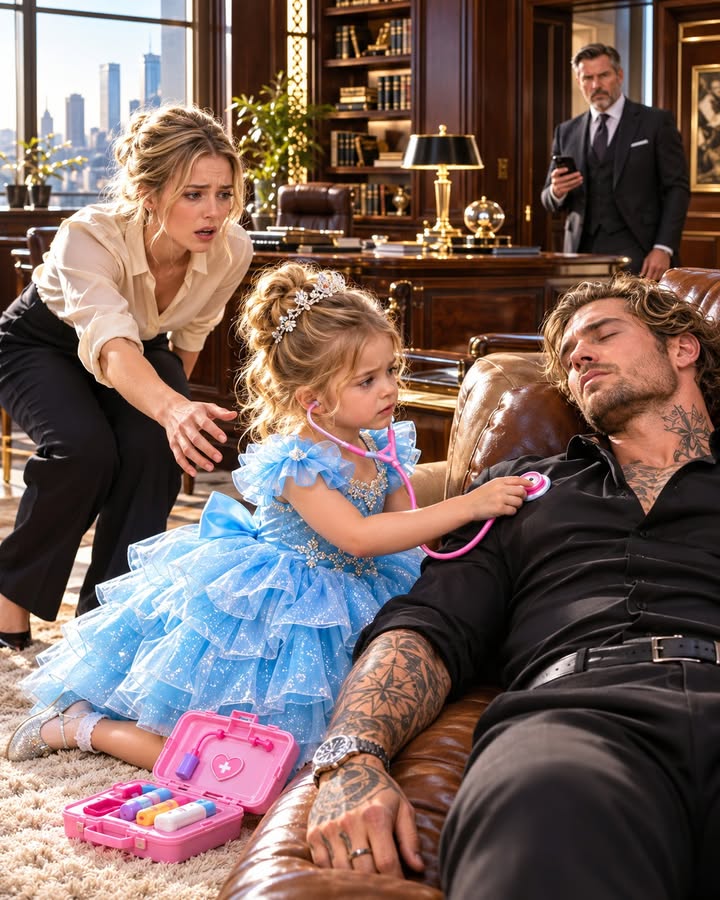
Part 6 – A Family by Choice
“Frank Peterson,” the woman repeated, holding the envelope without offering it yet.
Alex’s hand remained on the railing.
For a moment, the mansion seemed to gather all its old silences around him: the closed doors, the guarded windows, the rooms where memories had waited without being named.
“Is my father alive?” he asked.
The woman glanced at the man beside her, then nodded.
“He is, sir.”
Alex’s face changed, but he did not move.
“He has been in contact with our office for several months,” she continued. “He learned you were preparing to cooperate and asked us to deliver this statement. He wanted it reviewed by your attorney before you read it.”
Daniel stepped closer.
“Who are you?”
“My name is Elena Ruiz. I work with the legal team coordinating Mr. Peterson’s cooperation.”
Her companion introduced himself as a records specialist, then handed Daniel a card.
Neither visitor looked like the sort of person who belonged in the mansion’s old stories.
That, I thought, might have been the point.
Alex descended the steps slowly, one hand on the railing.
I could see the strain in his face, but I could also see the determination he had found since the stroke.
He stopped a few feet from Elena.
“What does my father say?”
“That he wants to clarify his role in Lily’s care and in the decisions made during that period.”
Alex’s gaze fell to the envelope.
“Why now?”
“He says he didn’t understand how much you blamed yourself until recently.”
Alex gave a small, pained laugh.
“He had years to ask.”
“Yes,” Elena said. “He acknowledges that.”
There was no defense in her voice, and no attempt to soften the truth.
She handed Alex the envelope.
He looked at it for a long moment before taking it.
“I’m not sure I want to hear from him.”
“You don’t have to read it now,” she said. “You don’t have to respond at all.”
The simplicity of that choice seemed to unsettle him more than any demand might have.
He looked toward the car where Sophie and I waited.
Sophie had one hand wrapped around mine, her eyes moving between Alex and the envelope.
“Would you like to read it somewhere private?” I asked.
Alex’s expression softened.
“Would you stay?”
“If you want me to.”
“I do.”
I looked at Sophie.
She glanced at the envelope and then at Alex.
“I can wait in the car,” she said.
“Thank you, sweetheart.”
Daniel arranged for Elena and her colleague to meet with Alex’s attorney the following morning.
They left the statement with him, and the car that had been sent to take us to our apartment waited at the gate.
Alex did not open the envelope until we had gone inside.
We sat together in the mansion’s quiet library, where afternoon light rested on the old books and the dust motes drifting above them.
Sophie settled on the rug with her medical kit, close enough to see us but content to make a row of toy bandages into a parade.
Alex held the envelope between both hands.
“Your father’s name has been in this house for a long time,” I said. “But you don’t have to let his letter decide anything for you.”
“I know.”
He studied the sealed edge.
“I spent a long time thinking my father’s decisions had taken Lily away from me.”
“Do you still believe that?”
“I don’t know.”
He opened the envelope carefully and unfolded the pages inside.
The first was a short note asking Alex to read the attached statement only if he wished.
The statement itself was written in Frank’s steady, formal hand.
Alex began silently.
He read the first page, then the second.
His breathing grew shallow, not from the stroke but from the effort of holding himself inside the words.
When he finished, he placed the pages on his knee.
“What does it say?” I asked.
“That my father made the decision to take me out of town,” he said. “He believed Lily had a common illness and that she was being cared for.”
He looked down at the statement.
“When the doctors realized it was something more serious, my mother called him. He turned the car around as soon as he could.”
“Did he get back in time?”
“He made it to the hospital before Lily died.”
Alex’s eyes lowered.
“I thought he kept me away because he wanted me not to see her sick.”
“Did he say that?”
“No. I assumed it.”
He read a line again, his fingertips following the ink.
“He says he should have called me as soon as he knew she was in danger. He thought he was protecting me from panic while he tried to get home. He says he was wrong.”
The admission seemed to leave Alex without a place to rest his gaze.
“He didn’t know how serious it was at first,” I said.
“Neither did the doctors.”
“He was trying to make the best choice he could with what he knew.”
“That doesn’t erase the choice.”
“No,” I said. “But it may explain it.”
Alex leaned back, exhausted by more than the pages.
“For years, I pictured him deciding I didn’t need to be there,” he said. “I thought he had made the choice for all of us.”
“He did make a choice,” I said. “But the truth sounds different from the story you had to build alone.”
He closed his eyes.
“I was angry with him.”
“You had every right to be angry.”
“I never told him.”
“Maybe you didn’t know how.”
His eyes opened again.
“I don’t know if I want to forgive him.”
“You don’t have to decide that today.”
Sophie looked up from the rug.
“Did Grandpa Frank write you a letter?”
“Yes,” Alex replied.
“Is he sad?”
Alex glanced at the page.
“I think he is.”
“Maybe you can talk to him when you’re ready.”
He watched her return to her toy bandages.
“She makes things sound possible.”
“She hasn’t learned to give up on people yet.”
“I hope she never does.”
I thought of the difference between hope and obligation, and of how often adults mistook one for the other.
“You don’t have to invite him back into your life because he’s sorry,” I said. “And you don’t have to keep him out because you were hurt.”
Alex folded the statement and placed it beside Lily’s photograph.
“I need time to know what I want.”
“Then take it.”
He did.
Over the next few weeks, Alex’s cooperation with the authorities became more than an intention.
With his attorney and Daniel’s help, he gave a detailed account of the violent associates who had operated alongside his legitimate businesses.
He provided records, names, and the information needed to separate lawful employees from people who had used the organization’s reach to cause harm.
The process was careful and quiet.
There were no grand announcements, no dramatic speeches, and no sudden transformation that made the past disappear.
There were lawyers, long meetings, difficult questions, and days when Alex returned from an appointment looking tired enough to sleep in his chair.
He kept going.
Daniel worked beside him, making sure employees who wanted to leave could do so safely and helping them find lawful work elsewhere.
Some of the businesses were closed.
Others were placed under new management with legal oversight.
Alex did not pretend that everything he had built could be kept.
He chose what could be made honest and let the rest go.
When I asked him whether he regretted it, he answered carefully.
“I regret the years I spent telling myself I was protecting people by keeping control.”
“What about what you’re doing now?”
“I don’t regret trying to make the damage smaller.”
The danger did not vanish overnight, but the authorities kept the process confidential, and Alex’s attorney made sure we were not drawn into the investigation.
I stayed in our small apartment near the lake, where the pipes clanked in the morning and Sophie’s books were stacked in uneven towers beside her bed.
It was not as grand as the mansion, but every key belonged to me.
I found a job at a neighborhood clinic, organizing appointments and helping patients find the right rooms.
The work was ordinary in ways I had once taken for granted, and I grew to love it.
Sophie started preschool nearby.
She made friends, learned to recognize letters, and continued to carry her medical kit on outings where no one had asked her to bring it.
Alex kept his promise not to arrange our lives for us.
He sent no money except for Sophie’s drawings that she insisted he needed for his recovery, and he never asked me to return to work at the mansion.
When I told him I had found the clinic job, he said he was proud of me.
He did not say he wished I had stayed.
That mattered more than I could explain.
We visited him when it was safe, usually once a week.
Sometimes we met at the mansion, where the rooms were becoming quieter as the old life loosened its hold.
Sometimes Alex joined us at a small café near the lake, moving carefully with his cane and allowing Sophie to choose the table.
She took this responsibility very seriously.
“You need to sit where you can see the window,” she told him one afternoon.
“Is there a medical reason?”
“So you can see if it’s raining.”
“I hadn’t considered that.”
She chose the chair by the glass.
Alex’s recovery was slow, but it was real.
His speech grew clearer, his balance steadier, and his left hand more reliable.
He still had difficult days when frustration rose before words could catch it.
On those days, he learned to ask for help rather than pretend he did not need it.
Sophie continued to supervise his exercises.
She brought her schedule everywhere and checked each circle with a small green crayon.
At first, Alex called it “Sophie’s plan.”
Then, after she corrected him, he began calling it “the plan.”
She was pleased.
“Now you’re listening,” she told him.
“I’m trying.”
“You’re doing better than trying.”
He looked at me as if to ask whether he was allowed to believe her.
I smiled.
“She’s the doctor.”
The story about Frank did not end with the statement.
After several weeks, Alex called him.
He told me beforehand that he wanted to speak with his father, but he was unsure what he hoped to hear.
“I don’t want to pretend we can fix everything in one conversation,” he said.
“You don’t have to.”
“I don’t want to blame him for everything I felt.”
“You don’t have to do that, either.”
He called from his study while Daniel waited outside the door.
The conversation lasted less than half an hour.
Afterward, Alex sat alone for a while.
When I saw him the next day, he told me Frank had asked to meet.
“Will you?”
“I don’t know yet.”
“Then you don’t need to answer today.”
He smiled faintly.
“You keep giving me permission not to decide.”
“Someone should.”
A week later, he agreed to meet Frank for lunch in a quiet restaurant.
Daniel offered to go with him, but Alex declined.
When he returned, he did not describe the meeting in detail.
He only said his father had cried.
“And you?” I asked.
“I didn’t.”
“Did you want to?”
“I don’t know.”
“Was it a good meeting?”
“It was an honest one.”
He told me that Frank had apologized for taking so long to explain what happened and for making decisions without considering what Alex might need.
Frank had not asked to be forgiven.
He had not asked Alex to forget the years between them.
“He listened,” Alex said. “That was more than I expected.”
“Will you see him again?”
“Perhaps.”
The answer was small, but it was his.
Months passed.
The new life Alex was building remained uncertain, but the people around him began to speak less about the past and more about what came next.
The lawful businesses were reorganized.
Some former employees found new work through Daniel.
Alex gave up the rooms he no longer needed and moved into a smaller home with a garden he could reach without climbing a long flight of steps.
It was not far from the mansion, but it felt like a different beginning.
When Sophie saw the garden, she immediately began planning where flowers should go.
“Lily’s flowers should be over here,” she said, pointing to a patch of morning sun.
Alex looked at the soil.
“What kind did Lily like?”
“Roses,” I said. “My mother wrote about them in an old note.”
“Then we’ll plant roses.”
He did not turn the garden into a memorial.
He planted a few rose bushes along the fence and left the rest open, with a bench where Sophie could sit and draw.
The first spring, the roses grew slowly.
Sophie measured them with a ruler every time she visited.
Alex pretended not to care how tall they had become, though he always asked.
One afternoon, he brought Lily’s photograph and my mother’s letter outside.
He had kept them together, protected in a small frame with a clear cover.
The photograph was still faded, but the little girl’s eyes remained bright.
“Would you like me to read the letter?” I asked.
“I’ve read it enough times that I remember most of it.”
“Do you want to keep it framed?”
“Yes,” he said. “But not because I need it to prove she was loved.”
He placed the frame on the bench.
“I want to remember that someone took the time to tell me.”
Sophie set her medical kit beside it.
“Can I tell Lily about my school?”
Alex looked at her with a gentleness that had become easier over time.
“You can tell her whatever you like.”
Sophie sat on the bench and began explaining her classroom, her new friend, and the book she had been reading.
She did not speak as though Lily were a mystery to solve or a person she was meant to replace.
She spoke as one child might speak to another, with the natural confidence that the past could be remembered without asking the present to give anything up.
When she finished, Alex thanked her.
Then he told her a story about Lily.
“She used to hide little paper stars in my books,” he said. “I’d find them weeks later.”
“What did they say?”
“Usually nothing. She just liked knowing I’d discover them.”
Sophie considered this.
“Maybe she wanted you to remember she was there.”
Alex looked toward the photograph.
“Maybe.”
They spent the rest of the afternoon making paper stars.
Sophie folded hers carefully and set one beside the frame.
Alex made a clumsy star with the fingers that were still learning to move as they once had.
Sophie declared it perfect.
That evening, as we walked back to our car, Alex came with us to the garden gate.
“I’m glad you stayed nearby,” he said.
“I’m glad we did, too.”
“I’m glad you didn’t stay in the mansion because you felt you had to.”
“So am I.”
He looked toward Sophie, who was explaining that a paper star needed to be folded “with professional concentration.”
“I didn’t understand, at first, that wanting someone near me didn’t give me the right to decide where they belonged.”
“You understand now.”
“I’m still learning.”
“So am I.”
He nodded.
There was affection between us, and a trust that had been tested by truth rather than protected from it.
We had not become a family because I worked for him or because he had offered to take care of us.
We had become something closer because he had allowed us to choose our own lives.
Years passed with the ordinary changes that make a life feel both brief and full.
Sophie grew taller, her curls lengthened, and her medical kit gave way to schoolbooks and notebooks filled with questions.
She kept noticing what other people missed.
At eight, she noticed when a classmate stopped joining the playground games and sat with him until he was ready to talk.
At twelve, she helped a younger child find the nurse after he fell and scraped his knee.
At sixteen, she volunteered at the same neighborhood clinic where I worked.
Alex remained part of our lives.
He walked with a slight stiffness when he was tired, but he could manage the garden and the lake path without help.
He never regained every part of his old strength.
He stopped measuring his worth by what his body could do in a day.
His lawful businesses grew more modestly than his old empire had, but they grew with clean books, fair contracts, and people who knew exactly what they were signing.
Daniel stayed by his side, not as a shadow or a guard, but as a friend and adviser.
Frank and Alex learned to speak more often.
Their conversations were not always easy, but neither man tried to force them into something they were not.
The first time Frank came to the garden, he stood for several minutes beside the rose bushes before turning to Alex.
“She would have liked these,” he said.
“I think so.”
They did not embrace.
They did not need to.
They sat on the bench together and spoke about Lily, each remembering a different part of her.
Sophie listened from the grass, drawing the rosebushes with the concentration of an artist.
When she was accepted into medical school, she came to Alex’s home with the letter held in both hands.
She had received the news that morning and had waited until evening to tell him because she wanted to bring it in person.
Alex read the letter once, then read it again.
“You did it,” he said.
“We did it,” she replied. “You made me practice checking everything.”
“I believe that may have been your contribution.”
“And you listened.”
“I had an excellent teacher.”
She laughed, and I watched him take in the sound as though it were a gift he had not expected to receive.
That night, he gave Sophie a small box.
Inside lay Lily’s faded photograph and my mother’s letter, protected behind clear glass.
Sophie looked up at him.
“Are you sure?”
“Yes,” he said. “I want you to have them, if you want them.”
She touched the frame gently.
“I don’t want to take Lily away from you.”
“You won’t.”
“Will you still tell me stories about her?”
“Whenever you ask.”
Sophie held the frame against her chest.
“Then I’ll keep it safe.”
Alex’s eyes shone, but his voice stayed steady.
“That’s all I could ask.”
He paused, then added, “You helped me understand that remembering someone doesn’t mean asking another person to become them.”
Sophie put the box down and hugged him.
He held her with the gentleness that had once seemed so unexpected in him.
I stood beside them, thinking of a frightened little girl on a polished floor, looking carefully at a stranger’s face while the adults around her waited for someone else to understand.
She had not known that the moment would change all of us.
She had only noticed that something was wrong and spoken.
Years later, on the morning Sophie left for medical school, she placed Lily’s letter in the front pocket of her bag.
“Why take it with you?” I asked.
“So I remember to listen,” she said.
“To patients?”
“To everyone.”
Alex waited beside the car with Daniel, holding Sophie’s old pink medical kit.
He had repaired the loose clasp and replaced the worn handle, though the plastic case still showed the marks of years of play.
“You don’t have to take this,” he said.
“I’m not taking it to school,” Sophie replied. “I’m leaving it with you.”
He accepted the kit.
“Then I’ll keep it safe.”
“You have to use it when your exercises get hard.”
“I suspected there would be conditions.”
“And don’t skip the circles.”
“I wouldn’t dare.”
She hugged him, then hugged Daniel.
When it was time to leave, she got into the car and looked back at us through the open window.
“I’ll call tonight.”
“Of course,” I said.
Alex raised a hand.
“Go become the doctor you always wanted to be.”
“I’m going to become the doctor who listens,” she answered.
Then the car pulled away.
Alex and I stood together at the gate, watching it disappear down the tree-lined street.
The silence that followed was not the old silence of the mansion.
It did not hide anything.
It made room for pride, grief, affection, and all the things we had learned to say.
Alex looked toward the garden, where the roses Lily had loved were blooming.
“She’ll be all right,” he said.
“She’ll have to learn, like the rest of us.”
He nodded.
“And she won’t be alone.”
“No,” I said. “She won’t.”
I looked at the man beside me, no longer only the feared name in the city or the grieving brother who had kept a photograph hidden in his wallet.
He was a man who had learned to face what he had done, what he had lost, and what he could still choose.
And somewhere beyond us, Sophie was carrying a letter written by my mother, a photograph of Lily, and the same clear-eyed kindness that had once made her cry out when everyone else was afraid to look.
**–THE END–PLEASE
Share your thoughts or feedback to motivate us to create more stories ♥️
* * *
[PREVIOUS: PART 5](https://puretales.idolsgift.com/blog/part-5-the-photograph-in-his-wallet15-026)
✓ Lynn R. Adams
Part 6 – A Family by Choice “Frank Peterson,” the woman repeated, holding the envelope without offering it yet. Alex’s hand remained on the railing. For a moment, the mansion seemed to gather all i…