PART 6 (THE END): The Photograph in Her Mother’s Wallet 041
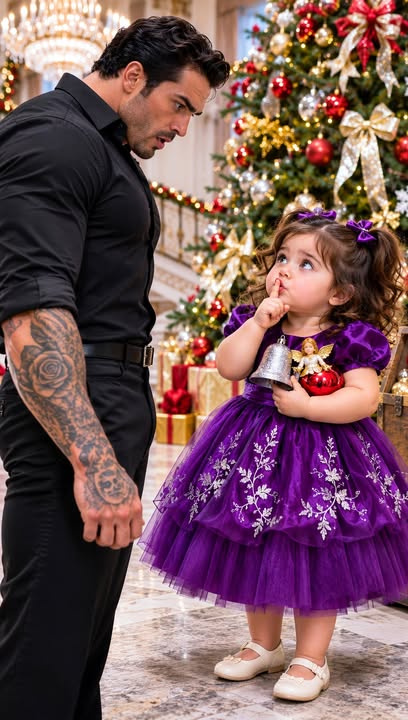
Part 6 – The Star Beside the Angel
Vincent looked at Elena’s message again, then asked Bellini to read the name aloud.
“Rosa,” the lawyer repeated. “Your mother wrote that Rosa was not the only person who helped her get you out of the house.”
Vincent turned toward the window.
Snow rested on the sill in a pale, quiet line, and the city beyond it seemed to hold its breath.
“Could she mean Rosa’s family?” he asked.
“I don’t know,” Bellini said. “The page says Rosa’s name, then adds, ‘She did not leave alone.’”
A curious warmth moved beneath Vincent’s unease.
“Was there another person with her?”
“There may have been.”
“Can you bring the page to the meeting?”
“If Elena’s mother is comfortable seeing it.”
“Then ask her first.”
“I will.”
Vincent ended the call and replied to Elena, agreeing to meet wherever her mother chose.
She sent him an address: a neighborhood community room near her mother’s home, plain and familiar, with a small kitchen and a view of the winter street.
He arrived that afternoon carrying no folder and no ornament, determined not to make the meeting feel like another investigation.
Elena was already there with Lucy, while Maribel sat at a table with a wooden box before her.
The room smelled of cinnamon tea and the cookies Lucy had brought in a paper bag.
“Thank you for coming,” Vincent said.
Maribel nodded toward the chair opposite her.
“I thought it was time we finished what Rosa began.”
Elena watched him closely, but the guardedness in her expression had softened into something more complicated: caution still, and a willingness to see what he did next.
“Bellini found another page,” Vincent said.
“He believes it may explain something about the night Rosa carried me away.”
Maribel’s hands rested on the box.
“Is he coming?”
“He asked if you wanted him here.”
“I do.”
Vincent called Bellini, who arrived a few minutes later with the page sealed in a clear archival sleeve.
He set it on the table without opening the sleeve.
“This belongs to Maria’s papers,” Maribel said.
“Then it should remain with the other records,” Vincent replied.
He did not reach for it.
Maribel examined the page through the sleeve.
Maria’s handwriting crossed its surface in short, careful lines.
At the bottom was a note in a different hand, faded but legible.
Rosa did not leave alone.
Maribel looked up.
“Do you know who this means?”
“I think I might,” Bellini said.
He took a breath, then continued.
“The housekeeper’s daughter, Teresa, drove the delivery van that night.”
Vincent frowned, searching the edges of his memory.
“Teresa?”
“She worked in the kitchen,” Bellini said. “Her daughter was around twenty. She had a car and knew the back roads.”
“Why wasn’t she mentioned before?”
“Because Maria asked that no one put her name in the household record.”
Maribel’s expression grew thoughtful.
“Rosa once said a young woman had driven them somewhere safe.”
“She told you that?”
“Years later, when she was ill,” Maribel replied. “She said she hadn’t been alone, but she wouldn’t say who had helped.”
Elena leaned closer to the page.
“Did the driver take Rosa and Vincent out of the city?”
“According to the note, they drove to a small house belonging to Maria’s cousin,” Bellini said. “They stayed there until the family understood the danger had passed.”
Vincent looked at the words again.
“Did Teresa know what was happening?”
“She knew enough to help,” Bellini replied. “Not the full story.”
“And she was never blamed?”
“No. She was never named at all.”
Maribel folded her hands, letting the discovery settle.
“So Rosa wasn’t the only one who kept the secret.”
“No,” Vincent said. “My mother trusted several people, and each carried a piece of it.”
“Why did the angel become part of the accusation?” Elena asked.
Bellini looked at the small wooden box.
“Your mother’s letter says the angel was given to Rosa as a keepsake. After she left, the family could not find it in the house.”
“And rather than admit Maria had entrusted it to her, they decided Rosa had taken it,” Vincent said.
Bellini lowered his eyes.
“That is what I believe happened.”
Maribel’s voice was quiet, but steady.
“Rosa kept it because Maria asked her to.”
“Yes,” Vincent said.
“And then she kept the photograph because she wanted someone to remember what had really happened.”
“Yes.”
Lucy had been listening with a solemnity that did not quite suit her bright, knitted hat.
“So Grandma Rosa helped you,” she said.
“She did,” Vincent replied.
“And the driver helped, too.”
“Yes.”
Lucy nodded as if filing the facts in the proper place.
“Then everybody was brave.”
Maribel smiled, tears bright in her eyes.
“Some people were.”
For a moment, no one spoke.
The community room’s old clock ticked softly above the doorway, and traffic hissed along the snowy street outside.
Vincent looked at Elena.
“I want to make one more correction,” he said.
“Not a bigger announcement,” she replied. “Just the truth, where it belongs.”
“Exactly.”
He had already placed the family’s records in a public archive, including the dismissal entry and his own written correction.
Now he wanted the archive to include Maria’s letter and the photograph, but only if Maribel agreed.
He also wanted a record of Teresa’s help, without making her into a symbol or exposing more of her life than she wished.
Maribel studied the page.
“My mother wouldn’t want this turned into a family legend,” Elena said.
“Then it won’t be,” Vincent answered. “It can simply say what each person did.”
“And if Teresa is still alive?”
“Bellini can ask her permission before anything is added.”
The lawyer nodded.
“I know where she lives.”
Maribel looked at the page once more, then gave a small nod.
“Ask her,” she said. “Let her choose.”
Bellini promised he would.
After he left, Maribel opened the wooden box and took out Maria’s Christmas card.
She had kept it inside a protective sleeve, and the paper had been cleaned and preserved by an archivist at Vincent’s expense, after the family agreed to the work.
Maribel read the card in silence, then placed it beside the photograph.
“For a long time, Rosa thought keeping quiet was the only way to keep us safe,” she said.
“She was wronged for it,” Vincent replied.
“Yes.”
“I’m sorry my family made that choice.”
Maribel looked at him, and he did not look away.
“Thank you for saying it without asking me to forgive you.”
He felt the weight of her words.
“I can’t ask that of you.”
“Good,” she said. “Forgiveness isn’t a receipt.”
Elena’s gaze rested on Vincent, something like recognition in it.
He had learned that the hardest part of apologizing was not finding the right words.
It was accepting that the person receiving them did not owe him relief.
Maribel closed the box and pushed it gently toward her granddaughter.
“Lucy, would you like to help me put everything back?”
Lucy climbed onto the chair beside her.
Together they arranged the letters, the photograph, and the Christmas card in the box.
The red-and-gold cloth went beneath them, folded carefully around the keepsakes.
Lucy lifted the small silver bell and shook it once.
Its note was soft and clear.
“Grandma Rosa kept a lot of important things,” she said.
“She did,” Maribel answered.
When the box was closed, Maribel asked if Vincent would come with them to her home.
“There’s something I’d like you to see,” she said.
He glanced at Elena.
She considered the invitation, then nodded.
They drove in separate cars through the early evening, following the same route toward a modest brick house on a quiet block.
Maribel’s home was warm with the smell of bread and the soft glow of lamps.
A small artificial tree stood beside the living-room window, its branches decorated with ornaments collected over many years.
Maribel led them to a cabinet beneath a shelf of family photographs.
She removed a narrow wooden frame and handed it to Elena.
Inside was a photograph of Rosa as a young woman, wearing a simple blouse with a sewing tape around her neck.
Her smile was broad and unguarded.
“Your grandmother,” Vincent said.
Elena nodded.
“She always looked serious in the pictures I knew.”
“This one was taken before the winter,” Maribel said. “She had just finished making a dress for my mother.”
Lucy peered up at the picture.
“Grandma Rosa was little.”
“She was small,” Elena said. “But she could fix almost anything.”
Maribel placed the photograph beside the wooden box.
“I want the archive to have a copy of this, too.”
Elena looked at her mother.
“You’re sure?”
“I want people to know her as more than a name in a ledger.”
The decision seemed to settle something in the room.
Vincent understood that this was the part he could not provide for them.
He could correct his family’s record, but only Rosa’s family could choose how her life should be remembered.
“I’ll have the archivist come here,” he said. “You can decide what gets copied and what stays with you.”
Maribel nodded.
“Thank you.”
That evening, Elena and Lucy did not leave right away.
They sat with Maribel at the kitchen table while she poured tea, and Vincent stayed in the living room, giving them the privacy of a family conversation.
Lucy eventually appeared in the doorway with a plate holding two cookies.
“Mommy says you can have one,” she announced.
“Only one?”
“One for you and one for me.”
“That seems fair.”
She placed a cookie in his hand, then climbed into the chair beside him.
“You’re not sad now?” she asked.
Vincent considered the question.
“I’m still sad about what happened to Rosa.”
“Me too.”
“But I’m glad we know the truth.”
Lucy looked toward the kitchen, where Elena and Maribel were speaking softly.
“Grandma Rosa knows?”
“Not anymore,” Vincent said gently. “But we can remember her.”
Lucy absorbed this, then leaned against his arm.
“I’ll remember her.”
He sat very still.
The small weight of her shoulder against him felt like a gift freely offered, with no condition attached.
When it was time to go, Elena helped Lucy into her coat.
“Will you be at the mansion tomorrow?” Lucy asked him.
“If your mother says it’s all right.”
Elena looked at her daughter, then at Vincent.
“We can come by tomorrow afternoon.”
“Only if you want to,” he said.
“I do,” she replied.
It was not a grand declaration of trust.
It was a choice made carefully, and that made it more precious.
The following weeks brought neither instant peace nor a sudden transformation.
The family archive received copies of the documents with the consent of Maribel, Elena, and Teresa, who agreed to let her name be included but declined to attend any public gathering.
Her place in the story was recorded plainly: she had driven Rosa and the child to a safe house, then returned home without revealing what she had done.
The archive also included Vincent’s correction, the ledger entry, and a statement from Bellini acknowledging that he had known Rosa was loyal and had failed to challenge the accusation more forcefully.
He did not make excuses for himself.
At a modest press gathering, Vincent read the corrected account aloud.
He did not describe the night’s danger beyond what the documents supported, and he did not mention Elena or Lucy.
He spoke of Maria’s courage, Rosa’s loyalty, Teresa’s quiet help, and the harm caused when people with authority chose silence over a truthful record.
Then he announced a holiday fund in the names of Maria Moretti and Rosa, created to support neighborhood families facing winter expenses.
The fund provided groceries, heating assistance, and small grants for children’s school needs, without requiring families to tell their stories publicly.
Vincent did not present it as payment for the past.
He presented it as work that should have been done all along.
Bellini helped establish a board that included people outside the Moretti family, and the fund’s accounts were made public.
The family name did not emerge untouched.
Some relatives objected to the correction, while others thanked Vincent quietly for ending a story they had heard in fragments.
He did not argue with either group.
He let the records speak and continued the work.
Elena watched from the back of the small gathering, with Lucy beside her and Maribel seated between them.
She had chosen to stay in Chicago.
Not because Vincent asked her, and not because the new fund promised anything for her family, but because his actions had begun to match his words.
Afterward, she approached him beneath the winter lights outside the archive.
“You said what you knew,” she told him.
“I tried.”
“You didn’t turn my grandmother into a story you owned.”
“I couldn’t have.”
“You could have tried.”
He accepted the truth of that.
“I’m glad you didn’t,” she continued.
“Me too.”
Lucy tugged at his sleeve.
“Big Mister, did you bring the angel?”
“It’s at home.”
“Can we put it on the tree?”
He looked at Elena.
She smiled.
“We can go see it,” she said. “If you have time.”
“I do.”
That Christmas Eve, the old family room held a smaller tree than the one that had first drawn Lucy beneath its branches.
Its boughs were full of ordinary ornaments: painted wooden birds, silver bells, a blue glass ball, and a paper chain Lucy had made with Maribel.
The golden angel rested in a shallow wooden stand on the table.
It had been cleaned and stabilized by an expert, but its chipped wings and crooked painted face remained untouched.
Beside it lay a framed copy of the photograph of seven-year-old Vincent with Maria.
The original stayed with Rosa’s family, as it should.
Elena placed a small silver frame beside the photograph.
It held Rosa’s portrait, her bright smile looking out at the room.
“Are we ready?” Lucy asked.
Vincent lifted the angel carefully.
Elena steadied a low branch while Lucy guided his hand toward the tree.
They hung the angel where a child could see it.
Lucy stepped back, hands on her hips.
“Now we need a star.”
“I made one,” she said, and brought forward a sheet of gold paper.
The star she cut that year was still crooked, with one point longer than the others.
She climbed onto a small stool while Elena stood beside her.
Vincent held the branch steady as Lucy fastened the star above it.
For a quiet moment, the three of them looked at the tree.
The angel gleamed near the center.
The star leaned a little to the left.
Elena’s hand rested lightly on Vincent’s arm, not by accident, but not as a promise of anything beyond that evening.
He understood the difference.
“Mommy,” Lucy said, “the tree’s happy.”
“Yes,” Elena replied.
“It is.”
Maribel came in carrying a plate of cookies, and the room filled with familiar conversation.
She told Lucy a story about Rosa’s sewing tin and how she used to keep one bright button in a special pocket for repairing a child’s favorite coat.
Lucy listened with her chin in her hands, then asked whether she could have a sewing tin of her own someday.
“Of course,” Maribel said.
Vincent watched them beneath the tree, his mother’s photograph beside Rosa’s, the angel between them.
He had spent years believing that love was safest when kept private and loyalty meant protecting the family from the truth.
Now he understood that care could be quiet without being hidden, and that responsibility did not end when an apology had been spoken.
It continued in the next choice, and the one after that.
Lucy reached for his hand.
“Big Mister, will you come next Christmas?”
“If your mother invites me.”
Elena met his eyes, her smile gentle and certain.
“You’re invited.”
He looked at the angel, then at the star Lucy had made.
“I’ll be here.”
Outside, snow drifted over Chicago, softening the streets and rooftops.
Inside, the little tree shone with the warm light of remembered kindness, freely shared.
And each Christmas after, Maria’s golden angel and Lucy’s crooked star hung side by side, beneath the framed photograph of two women whose courage had carried a child to safety and, years later, brought a family closer to the truth.
**–THE END–PLEASE
Share your thoughts or feedback to motivate us to create more stories ♥️
* * *
[PREVIOUS: PART 5](https://echoesofstories.idolsgift.com/blog/part-5-the-photograph-in-her-mother-s-wallet-041)
✓ Lynn R. Adams
Part 6 – The Star Beside the Angel Vincent looked at Elena’s message again, then asked Bellini to read the name aloud. “Rosa,” the lawyer repeated. “Your mother wrote that Rosa was not the only pers…