PART 6 (THE END): The Photograph Anna Tried to Hide 041
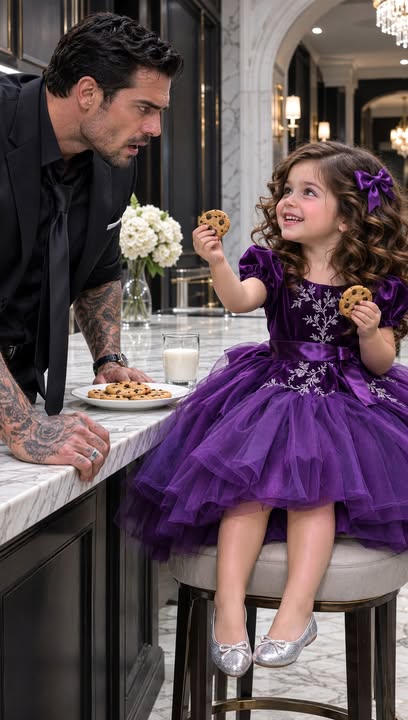
Part 6 – Room for All of Them
“Vincent, if Lena is alive, the truth you were given is not the truth I was told.”
For a moment, the words seemed to take the air from the room.
Vincent held the letter with both hands, afraid that if he gripped it too tightly, the paper might give way beneath the weight of his father’s handwriting.
Anna stood close beside him, her shoulder nearly touching his.
“Read the rest,” she said softly.
He unfolded the page.
“My father wrote that after the hospital, he was told Lena had gone to live with Anna’s mother while Anna recovered,” Vincent began.
His voice faltered at the name.
Anna lowered her gaze, but she did not step away.
“The plan was for me to meet the baby when I was well enough,” he continued.
“I remember my father saying there had been a loss, but he never told me the baby was still alive.”
Vincent took a breath and read on.
“Then he says he was told she died at the clinic.”
The room remained still.
His sister sat nearby, hands clasped together, letting the two of them have the moment without leaving them alone in it.
“Who told him?” Anna asked.
Vincent searched the next lines.
“A doctor, apparently. Or someone from the clinic.”
“Apparently?” she echoed.
He nodded and read the sentence again.
“My father says he never saw a death certificate. He says he asked for one, but the clinic told him the records had been lost during a transfer.”
Anna’s face tightened with grief and concentration.
“So he believed the baby had died.”
“He says he did.”
“And he told us both different things.”
“Yes.”
Vincent looked down at the letter, feeling no sudden relief, no clean answer that could make the years disappear.
His father had believed one lie and helped it grow into another.
“He knew you held her,” Anna said.
“He knew I visited the hospital.”
“Did he say why he kept the photograph?”
“He says he wanted me to have it when I was older.”
Vincent’s eyes moved down the page.
Instead, his father had sent the photograph to Anna’s mother with the bracelet and a note asking her to keep them safe.
The arrangement had been meant to last only until Vincent recovered and Anna could decide what she wanted for the baby.
Then the clinic had reported Lena’s death, and his father had been too frightened of reopening the grief to question the account further.
He had paid the clinic bills because he believed Lena was being cared for there.
He had continued making payments after the reported death because the clinic claimed there were outstanding expenses.
“That doesn’t make what he did right,” Anna said.
“No.”
“He could have told me what he knew.”
“Yes.”
“He could have asked whether I wanted to see her.”
“Yes.”
“He could have told you the truth, even if he thought she was gone.”
“Yes.”
Vincent lowered the page.
“He made choices for us because he thought he knew what we could bear.”
Anna’s expression softened, but sadness stayed in it.
“That sounds like protection,” she said.
“It also sounds like control.”
He could hear the words more clearly now than he ever had when his father was alive.
The letter did not excuse the silence.
It did not make it harmless.
But it gave the silence a human shape: fear, assumption, and a man who had mistaken the absence of questions for peace.
“Is there anything about where she went?” Anna asked.
Vincent read the remaining lines.
His father had written that the clinic’s director later told him Lena had been buried in an unmarked cemetery plot after her illness.
The clinic had promised to send the location.
No location ever came.
His father had asked twice, then stopped when the clinic said the records were no longer available.
“I’m sorry,” Vincent said.
Anna took the page from him and read the final lines herself.
“Was there a name for the clinic director?”
“Not here.”
“Did your father mention the cemetery?”
“He says it was outside the city, but he didn’t know exactly where.”
Anna rested one hand on the desk.
“So he believed Lena died, but never knew where she was buried.”
“That’s what he wrote.”
She closed her eyes.
Vincent waited beside her, the letter held between them.
When she opened them, her face was wet with tears, but her voice was steady.
“I need to know whether that part is true.”
“So do I.”
“And if it is, I want us to find where she rests.”
“We will.”
“Not to prove anything.”
“No.”
“Not to make anyone responsible in public.”
“No.”
“Just to bring her into our family’s memory.”
Vincent looked at the letter in her hands.
“That’s all I want too.”
The next morning, they called the hospital privacy office together.
Vincent’s sister stayed with Ruby, who was busy choosing which paper scraps could become windows for her palace.
The hospital representative listened carefully as Anna explained the records they had found and the sealed letter that had come from Vincent’s father.
She could not confirm the details over the phone, but she told them that the clinic had closed many years earlier and that some of its files had been transferred to a regional archive.
The old clinic’s name matched the receipts in Anna’s keepsake box.
The representative gave them the archive’s contact information and explained what consent forms they would need to submit.
“We’ll do it properly,” Anna said.
They did.
There were forms to fill out, identity records to provide, and several weeks of waiting while the archive reviewed the request.
Neither of them expected the papers to restore what had been lost.
They only wanted to understand what remained.
During those weeks, the household learned new rhythms.
Ruby insisted that Vincent eat breakfast at the kitchen island instead of reading work reports at the far end of the room.
Anna encouraged him to take off his suit jacket when he got home.
Vincent discovered that Ruby had strong opinions about bedtime stories and that she preferred pancakes with strawberries arranged into a smiley face.
He began answering his phone when Anna called.
Not every call was urgent.
Sometimes she only wanted to ask whether he had seen Ruby’s missing shoe or whether he still had the old family photographs in his study.
He answered anyway.
One afternoon, he came home early and found Anna sitting in the garden while Ruby played with a set of wooden blocks.
Anna watched the girl stack them into a crooked tower, then glance over every few seconds to make sure her mother was still there.
“She checks on you without even thinking about it,” Vincent said.
“She’s had to learn that the world can change quickly.”
He sat beside her.
“I wish I could make it feel steadier for both of you.”
“You’re trying.”
“I didn’t used to be good at trying.”
“You used to be good at deciding what everyone else needed.”
He accepted the gentle truth.
“I’m learning to ask.”
“That matters.”
Ruby’s tower fell, and she laughed as the blocks tumbled across the grass.
Vincent smiled.
The sound no longer felt like an interruption in his guarded house.
It felt like a reason for the house to be open.
The archive’s response came on a rainy Thursday morning.
Anna read the email twice at the kitchen table before handing her phone to Vincent.
The clinic’s records had not survived in full, but a burial register had been found in a county archive.
A child named Lena Moretti had been recorded as buried in a family plot several miles west of the city.
The entry included a date and a plot number.
The date was several months after Vincent’s father had been told she died.
Anna pressed her hands together.
“So he was right about that part.”
“It seems he was.”
They requested a copy of the burial register and drove to the cemetery the following week.
Ruby stayed with Vincent’s sister, believing the grown-ups were visiting an old family garden.
The cemetery was small, tucked beyond a row of trees and a quiet road.
A caretaker met them by the gate and helped them find the plot number.
The grave was marked by a simple stone shared with several members of an old family Anna did not recognize.
Lena’s name had been added in small letters along the lower edge.
Anna knelt in front of it.
Vincent remained beside her, giving her the space she needed.
The grass was soft with recent rain.
A few bright leaves had caught against the stone.
“Hello, Lena,” Anna whispered.
Vincent’s throat tightened.
He had no memory of the child whose name was carved before him, but some part of him still knew the shape of the photograph, the careful curve of his younger arm around her.
“I’m sorry I didn’t get to know you,” he said.
Anna placed a small bundle of white flowers at the base of the stone.
“I’m sorry I wasn’t given the chance to choose,” she said.
Neither apology could reach backward and change what had happened.
Still, they stood together before the grave, speaking Lena’s name as though the years of silence had finally ended.
Vincent took out the photograph he had asked Anna to copy.
He looked at his younger self holding the bundled infant.
“I wish we had been told the truth,” he said.
“So do I.”
“We can’t give her the years we lost.”
“No.”
“But we can remember her.”
Anna nodded.
“That’s what I want.”
They stayed until the rain began again, fine and light across the grass.
On the drive home, neither tried to make the grief smaller than it was.
When they returned, Ruby ran to them with a drawing in her hands.
“I made something for you.”
The page showed three tall figures beneath a yellow sun, with a smaller figure in a pink dress standing between the adults.
Beside them, Ruby had drawn a tiny, bright shape with a crown.
“Who’s that?” Vincent asked, pointing to the small figure.
“That’s Lena.”
Anna crouched beside Ruby.
“Why did you draw her with a crown?”
“Because she gets one too.”
Anna wrapped her arms around her daughter.
“That’s very kind.”
Ruby leaned into the embrace, satisfied.
“Did you find her garden?”
“We did,” Anna said. “We found where she rests.”
“Can she hear us?”
“We don’t know,” Vincent replied. “But we said her name.”
Ruby nodded, thinking.
“Then she knows we remember.”
Anna looked up at Vincent.
For the first time since the photograph had come into their lives, the sadness in her face made room for something peaceful.
That night, after Ruby had gone to bed, Anna and Vincent sat in the kitchen with the wooden keepsake box between them.
They had returned the original hospital records to the archive.
Anna kept her mother’s letter, Vincent’s father’s letter, and the photograph together in the box.
The bracelet rested beside them, its faded band folded gently around the date.
“I’m still angry with my mother,” Anna said.
“I understand.”
“And I miss her.”
“I understand that too.”
“I don’t want the good things about her erased by what she kept from me.”
“They won’t be.”
“She loved me.”
“Yes.”
“She loved Lena too, in the only way she knew how.”
“I think so.”
Anna ran a finger along the edge of the box.
“She was young when she made those choices.”
“So were you.”
“I don’t want that to become an excuse.”
“It doesn’t have to.”
“Maybe we can let it explain something without letting it erase the hurt.”
Vincent nodded.
“I’m trying to learn the difference.”
She looked at him.
“You’ve changed.”
“Have I?”
“You listen now.”
“I’m trying.”
“You still get distracted.”
“I do.”
“But you come back.”
He let the words settle inside him.
For years, he had imagined that repairing a broken relationship would require one grand apology, one perfect explanation, or one final discovery that could make everything understandable.
Instead, it seemed to ask for small acts repeated until they became trustworthy.
A phone answered.
A promise kept.
A question asked without demanding an answer.
“I’m sorry I wasn’t there for you,” he said.
Anna drew in a quiet breath.
“I’m sorry I kept the photograph and the bracelet from you after I found them.”
“You were afraid.”
“So were you.”
“Yes.”
“I thought you had chosen not to know.”
“I thought you had stopped trying to reach me.”
They had both been wrong about parts of the story.
They had both been hurt by choices that had begun before either of them understood the cost.
“I don’t expect us to go back to what we were,” Vincent said.
“Neither do I.”
“Could we build something different?”
Anna looked at the photographs in the box, then at him.
“Yes,” she said. “We can try.”
The next day, she told Ruby a simple version of the truth.
She chose the words carefully, and Vincent sat beside her without adding more than she asked him to.
“Before you were born, there was a little girl named Lena,” Anna said.
“Vincent loved her, and I cared for her when I was young.”
“Grown-ups made decisions that were confusing and painful, and for a long time we didn’t understand what had happened.”
Ruby leaned against her mother’s side.
“Did they mean to hurt Lena?”
“I don’t think so,” Anna said. “But sometimes people make mistakes, even when they are trying to help.”
“Did they hurt you?”
“Yes,” Anna said gently. “And they hurt Vincent too.”
“Are you still mad?”
“Sometimes.”
“Can you still love someone when you’re mad?”
Anna smiled sadly.
“Yes.”
Ruby thought about it.
“Can you be sorry and still be family?”
Vincent felt something loosen in his chest.
“Yes,” he said. “You can.”
Ruby rested her head against Anna’s shoulder.
“Good.”
She looked up at Vincent.
“You loved Lena?”
“I did.”
“Even when you didn’t know where she was?”
“Yes.”
“Do you love us?”
Vincent glanced at Anna.
“I do.”
Ruby seemed pleased by the answer and reached for the box of crayons.
“Then I’m making you a crown.”
She drew a circle on yellow paper, added uneven points, and decorated it with blue stars.
When she presented it to Vincent, he bowed his head so she could place it on him.
“There,” she said. “Now you’re a good uncle.”
He touched the paper crown with great care.
“Am I?”
Ruby nodded solemnly.
“Good uncles answer their phones.”
Anna laughed, the sound soft and surprised.
“I’ll remember that,” Vincent said.
“You have to remember pajamas too.”
“I’ll work on it.”
The house seemed warmer as the afternoon light moved across the kitchen.
It was still large, still built of marble and glass and all the things Vincent had once believed would keep life orderly.
But Ruby’s drawings now covered the refrigerator.
A pair of tiny shoes stood beside the entryway.
Anna’s books sat on the guest-room table, no longer packed inside her suitcase.
And beside the old family photograph in the hall, Vincent placed a copy of the picture showing him with Lena.
He did not hide it.
He did not make an announcement about it.
He simply gave it a place where the people he loved could see it.
A few days later, Ruby asked whether she could make the guest room her room for as long as they stayed.
Anna glanced at Vincent.
He understood that she was not asking him to decide their future for them.
She was asking whether there was room for a beginning.
“There’s room,” he said. “As long as you need it.”
Ruby considered this.
“Can I have a purple pillow?”
“We can find one.”
“And can Mommy stay too?”
Anna’s eyes met his.
“If she wants to.”
Anna looked down at Ruby, then back at Vincent.
“I want to stay,” she said.
The words did not mean that the hurt had vanished or that every question had been answered.
They meant she was willing to stop leaving before either of them had a chance to try.
Vincent nodded.
“Then there’s room for both of you.”
Ruby threw her arms around his neck, nearly knocking the paper crown from his head.
“Good,” she said. “Because you need people.”
Vincent closed his eyes for one brief moment and held her gently.
He had spent years convincing himself that needing no one was the same as being strong.
Ruby had never believed him.
When she finally let go, Anna stood beside them, her hand resting on his shoulder.
Vincent looked toward the photograph in the hallway, where the younger version of himself held Lena carefully beneath the hospital lights.
He could not change what had been hidden from them.
He could not give Anna back the choices that should have been hers, or give Lena the life she had lost.
But he could honor the truth without making it a weapon.
He could let Anna decide what their family carried forward.
He could answer when Ruby called.
And in the home that had once seemed too quiet to hold anything tender, he made room for the living, remembered the lost, and let himself belong.
**–THE END–PLEASE
Share your thoughts or feedback to motivate us to create more stories ♥️
* * *
[PREVIOUS: PART 5](https://echoesofstories.idolsgift.com/blog/part-5-the-photograph-anna-tried-to-hide-041)
✓ Lynn R. Adams
Part 6 – Room for All of Them “Vincent, if Lena is alive, the truth you were given is not the truth I was told.” For a moment, the words seemed to take the air from the room. Vincent held the lette…