PART 6 (THE END): The Passage Beneath the House 029
Part 6 – The Way Home
For several seconds, I could only stare at Daniel’s message.
She asked for you, Alejandro, but you were not the one who answered the door.
Elena stood beside the table, her hand resting on its edge.
“Did he say who answered?” she asked.
“Not yet.”
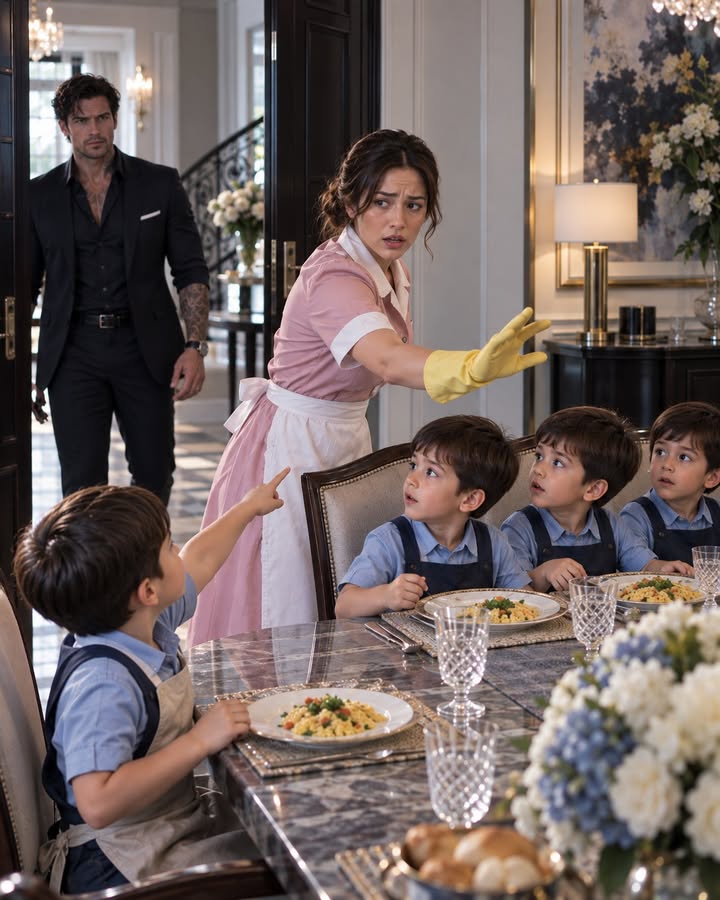
The boys had stopped eating.
They watched me with the solemn attention children give to a grown-up who has suddenly become very still.
I put my phone facedown.
“Your uncle has information about your mother,” I said. “I’m going to find out what happened, and I’ll tell you what I learn.”
“Will you go alone?” Mateo asked.
“No. Elena will come with me.”
He glanced toward her, then back at me.
“Will you come back?”
I could have promised him everything.
Instead, I stood there in the quiet kitchen and gave him the truth he had asked for before.
“I will come back as soon as I can. Elena will stay with you, and I’ll tell her where I am.”
Mateo studied my face.
“All right,” he said at last, though he did not sound convinced.
This time, I did not ask him to be.
Daniel agreed to meet us the next morning at a small office near the river, where Mara Levin could hear his statement.
He arrived early and waited in the lobby with his hands clasped in front of him.
He looked older than I remembered, though he was only a few years younger than me.
The long crease between his brows had deepened, and his coat hung loosely on his shoulders.
For a moment, we stood across from each other without speaking.
Then he looked at Elena.
“I’m glad you came,” he said.
“So am I,” she replied. “Someone has to remember the children are part of this.”
Daniel lowered his gaze.
“I know.”
Mara led us into a private room and closed the door.
She placed a recorder on the table, explained how the statement would be taken, and asked Daniel to begin wherever he thought the truth began.
He looked at me.
“It began with Victor,” he said. “But it didn’t end with him.”
He explained that, during the weeks before Sofia’s accident, Victor had been trying to keep our partnership from breaking apart.
Several men who stood to lose money had helped him conceal payments and pressure the people who might persuade me to stay.
Daniel had discovered the transfers while reviewing the company accounts.
He had confronted Victor, who told him the payments were for security and that no one had been put in danger.
Daniel had believed him.
He had also signed off on an account summary without examining every approval attached to it.
Mara asked about the signature beside the payment in the folder.
Daniel stared at the paper she showed him.
“That is my brother’s signature,” he said. “But the approval was copied from a different document.”
My throat tightened.
“You knew someone had used my signature?”
“I found out after Sofia died.”
“Why didn’t you tell me?”
He pressed his palms against his knees.
“Because Victor told me you had approved the payments. He said you knew what they were for, and that the danger was over.”
“And you believed him.”
“I wanted to believe him.” Daniel looked up at me. “After Sofia died, you were barely speaking to anyone. I thought the truth would break what little was left.”
“You decided that for me.”
“Yes.”
He did not try to excuse himself.
“I’m sorry,” he said. “I was afraid of losing the company, afraid of losing you, and afraid of what it would mean if I admitted I had helped make the payments possible.”
The room held his confession without softening it.
Mara asked him what happened the night Sofia returned to the house.
Daniel looked at his hands.
“I was there,” he said. “I had come to bring you paperwork. You were out, and Elena had gone to her apartment with the boys.”
My mind caught on the detail.
“Where were the boys?”
“Not with me. I didn’t know about them.”
He took a slow breath.
“Sofia came to the front door. She looked frightened and tired, but she was standing on her own. She asked for you.”
“Why didn’t you call me?”
“I thought she had died.”
“She was standing in our doorway.”
“I know.”
“What did you tell her?”
“I said you weren’t home. I told her you were at a meeting and that I didn’t know when you’d return.”
“You could have waited with her.”
“I should have.”
Daniel’s eyes reddened, but he did not look away.
“She asked whether you had learned the truth about the payments. I said I didn’t know what she meant. Then she asked me to tell you she had come back.”
“What happened next?”
“She heard a car outside. She looked through the window and went pale. I told her I would call you, but she said there wasn’t time.”
He faltered, then continued.
“She left a note on the table. She said she would try again when she knew the house was safe.”
“Where is the note?”
“I kept it.”
Elena leaned forward.
“Where?”
“In my apartment. I brought it with me.”
Daniel placed a small envelope on the table.
The paper had softened at the folds, but the handwriting was unmistakable.
Sofia had written only a few lines.
Alejandro,
I came home because I wanted to tell you the truth.
I am sorry I could not stay.
Please don’t let my fear decide who you are forever.
If I get another chance, I will come back.
I read it once, then again, and felt five years of silence settle into its proper place.
She had come back.
Not to erase me from the boys’ lives, but to try to bring us together.
And someone else had answered the door.
I folded the note carefully and handed it to Elena.
She read it without speaking, her thumb resting over Sofia’s name.
Daniel sat with his head bowed.
“I should have called you,” he said. “I should have stayed with her. I should have questioned everything Victor told me.”
“Yes,” I said.
He lifted his eyes.
“I’m not asking you to forgive me.”
“I know.”
“I’ll give Mara everything I have. The old account records, my messages with Victor, every document I kept.”
“You need to tell the whole truth.”
“I will.”
Mara gathered the papers and spoke with each of us about the next steps.
The investigation would take time.
There would be questions about my business, about Daniel’s role, and about the people who had approved the payments.
I was not promised immunity or a painless way through.
I was asked to cooperate fully, and I agreed.
When we left the office, Daniel stopped me near the lobby door.
“I don’t expect us to be brothers again because I told the truth today,” he said.
“Good.”
He gave a small, rueful nod.
“I’ll keep cooperating, even if you never trust me the way you did.”
“I don’t know what I’ll trust yet.”
“That’s fair.”
I looked at him for a moment.
Then I said, “Keep telling the truth, even when it costs you.”
“I will.”
It was not reconciliation.
But it was a beginning built on something more honest than the one we had before.
The SUV owners were identified within the week.
One had been hired by a man who had worked for Victor during the partnership.
The other had been asked to watch the roads leading to the house and confirm whether the boys were there.
They had not been sent to take anyone.
They had been sent to find out where the children were and report back.
It was still frightening enough.
It was also the kind of fact that could be proven, examined, and addressed without turning the boys’ lives into another private war.
Victor gave investigators the records he had promised.
He admitted that he had concealed the payments, that he had let me believe Sofia’s death left no questions to answer, and that he had delayed telling me the truth because he thought silence would keep both our businesses intact.
He did not ask for forgiveness.
Neither did I offer it.
He was arrested several weeks later, after investigators traced the payments and confirmed the roles of the people who had helped arrange the threats.
Daniel cooperated.
So did I.
My companies were examined, my accounts were reviewed, and I answered every question I was asked.
Some of the businesses closed.
Some were transferred to new management while their records were examined.
I lost money, influence, and the protection that had once made people step aside when I entered a room.
For the first time, I understood that losing those things was not the same as losing my family.
It was the price of finally refusing to make them pay for my choices.
The house changed slowly.
Not because I ordered it to, but because Elena and the boys began changing it.
The great dining room remained too large for a while, its polished table still holding the memory of years when no one sat there.
Then, one morning, Nico asked if they could eat breakfast at the big table.
Elena looked at me.
I waited for her answer.
“If you all want to,” she said, “we can.”
The boys carried their bowls into the room themselves.
Luca lined up the spoons before anyone asked.
Tomás put the old photograph beside his cup, careful to keep it away from the milk.
Mateo climbed into a chair and looked at me across the length of the table.
“Are you eating with us?”
“If you’d like me to.”
He shrugged, pretending the answer did not matter.
“You can.”
I sat at the far end.
It was not yet the same as belonging.
But it was a place at the table.
The days that followed were made of small things.
I learned which boy disliked peas and which one wanted his apple sliced into thin crescents.
I learned that Nico’s sleeve buttons were not a habit he had outgrown; he still turned them when he was thinking, though he no longer did it only when he was nervous.
Luca continued arranging his cars in precise rows.
Tomás kept his thumb moving in circles over the backpack strap whenever the room grew too quiet.
Mateo still watched before he spoke.
I did not try to make any of those things mine.
They belonged to the boys.
I was grateful to see them.
At night, I read stories aloud from the books Elena chose.
Sometimes the boys listened.
Sometimes they interrupted to correct me when I gave a bear the wrong voice or skipped a page.
Once, Tomás fell asleep with his cheek against Elena’s arm.
Another night, Nico leaned against my shoulder for half a page before noticing where he was and straightening up.
I did not mention it.
In the mornings, I learned how to help them get ready for school.
I buttoned one shirt incorrectly and had to begin again.
I packed the wrong snack for Luca.
Mateo told me the lunchbox belonged to Nico, not him, and waited while I checked the names on all four.
“Dad,” he said, pointing at the note Elena had tucked into the side pocket, “you wrote the wrong one.”
It was the first time he had called me that.
He said it as if the word had slipped out without permission.
I did not turn it into a promise or a question.
I simply took the lunchbox from him and corrected the name.
“Thank you for catching it.”
He nodded, then ran to join his brothers.
Elena stood beside the kitchen counter, watching me.
Neither of us spoke.
Some silences no longer felt like walls.
Months later, she came to the study with a small stack of letters.
“These were Sofia’s,” she said. “The ones I told you about.”
The envelopes had been worn soft at the edges.
One was addressed to me.
The seal was still closed.
I recognized Sofia’s handwriting.
“Did you read any of them?”
“No.”
“Why keep them?”
“Because she asked me to.”
I turned the sealed envelope in my hands.
For a long moment, I considered opening it.
Then I looked at Elena.
“Would you read it with me?”
She nodded.
We sat by the window, and I opened the letter carefully.
Sofia had written about ordinary things first.
The boys’ first laugh.
The way Mateo watched the rain.
How Nico fell asleep with one hand curled around a button.
How Luca tried to share every toy he owned.
How Tomás reached for her whenever he woke from a dream.
She wrote that she missed me, and that missing me had not made the choices easy.
She wrote that she hoped I would one day understand her fear without needing to hate her for it.
Then, near the end, she wrote:
If the boys find you, let them meet you slowly.
They do not need a legend or a rescuer.
They need the man who sits down, listens, and comes back tomorrow.
I folded the letter and held it against my chest.
Elena rested her hand over mine.
“I wish she had lived to see you learning that,” she said.
“So do I.”
The boys were ready to visit Sofia’s grave the following Sunday.
They had asked questions for weeks, and Elena had answered what she knew while leaving room for what she did not.
I was careful not to tell them their mother had been perfect.
She had been frightened.
She had made choices I did not understand.
She had loved them fiercely, and she had tried to find a way home.
The cemetery was quiet beneath a pale autumn sky.
Elena came with us, carrying a small bundle of flowers.
The boys walked beside her, four matching coats moving through the rows of stone.
At Sofia’s grave, I knelt first and brushed a few fallen leaves away from the inscription.
The boys gathered around us.
“Your mother loved you,” I said. “She kept you safe while she was trying to find a way back to us.”
“Was she afraid of you?” Nico asked.
I did not look away from him.
“She was afraid of the life I had built. Some of that fear came from choices I made, and some came from people who used those choices to frighten her.”
“Are you still that person?” Mateo asked.
“I’m still responsible for what I did. But I’m working to live differently now.”
He looked at the gravestone.
“Did she know we would find you?”
“I think she hoped we would.”
Tomás held the old photograph in both hands.
He had kept it in a protective sleeve, but the crease down the center was still there.
“Can we put it here?” he asked.
“Yes.”
He placed it carefully beside the flowers.
For a moment, the four boys stood shoulder to shoulder, each carrying some small piece of Sofia in the way he moved or watched or held on to the world.
I thought about the first day they had appeared in my dining room.
I had seen four faces that looked like mine.
It had taken much longer to understand that they were not evidence of what I had lost.
They were four whole people, with their own fears and habits and hopes, and they had every right to meet me in their own time.
Elena came to stand beside me.
The boys did not ask whether we were going home.
They already knew where we were going.
On the drive back, Mateo sat beside me.
Nico and Luca argued softly over which story Elena should read that night.
Tomás fell asleep with the photograph resting safely in his lap.
At home, the dining-room lights were on.
There were four small place cards on the table, written in Elena’s careful hand.
She had added a fifth for me.
When I sat down, Mateo pushed a basket of bread toward me.
“Can you pass it?”
I did.
The room was no longer silent.
Spoons touched plates.
Luca told a story with the beginning in the wrong place.
Nico corrected him.
Tomás woke just long enough to ask for water, then settled against Elena’s side.
And when Mateo laughed, the sound carried down the long table and filled the empty spaces that grief had kept for years.
I had come home early that Tuesday expecting to find a secret.
I had found my sons, a photograph, and the truth about the woman I loved.
But it was not one grand decision that brought us home to each other.
It was breakfast.
A story read badly.
A school morning with the wrong lunchbox.
An apology offered without being demanded.
A chair left open at the table, day after day, until the boys knew it would still be there tomorrow.
For the first time since Sofia died, no one sat alone at dinner.
And when Elena set the old photograph beside the flowers on the mantel, it no longer looked like a warning.
It looked like the beginning of the way home.
**–THE END–PLEASE
Share your thoughts or feedback to motivate us to create more stories ♥️
* * *
[PREVIOUS: PART 5](https://puretales.idolsgift.com/blog/part-5-the-passage-beneath-the-house-029-1)
✓ Lynn R. Adams
Part 6 – The Way Home For several seconds, I could only stare at Daniel’s message. She asked for you, Alejandro, but you were not the one who answered the door. Elena stood beside the table, her ha…