PART 6 (THE END): The Numbers That Changed 058
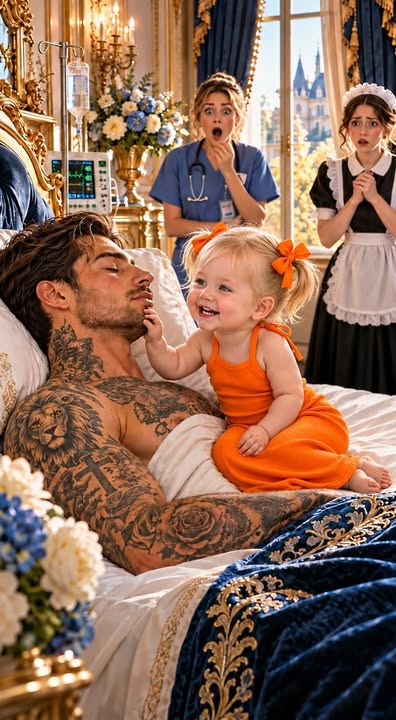
Part 6 – The Song That Stayed
The name was Rafe Moretti.
But beneath it, in smaller handwriting, someone had added a note that had not been visible at first.
“Do not tell Isabella.”
And on the reverse, in Lorenzo’s own hand, were three words.
“Ask Elena why.”
Elena stared at the paper as if it had become something heavier than its size allowed.
“Did you sign this?” I asked.
She shook her head, but her eyes stayed fixed on the note.
“I’ve never seen this form before.”
“Then why would Lorenzo write your name?”
“I don’t know.”
Her voice was steady, but her fingers had tightened around the paper.
The monitor continued its calm, regular pattern beside us.
Lorenzo’s hand rested open on the blanket now, empty where the strip had been.
Elena placed the paper inside a clear sleeve without smoothing the creases.
“We need to call his physician and the investigator,” she said. “We mustn’t assume this note explains anything.”
She was right.
The form showed that Lorenzo had reported a soft brake pedal before the crash.
Rafe’s signature showed that he had acknowledged the vehicle’s release.
And the note, in Lorenzo’s own hand, asked someone to ask Elena why.
It did not tell us why.
I called Isabella.
She arrived a few minutes later, still carrying the papers from the clinic review.
When she saw Elena’s face, she set them down at once.
“What happened?”
Elena explained what we had found and showed her the sleeved form.
Isabella read it without speaking.
Her gaze paused on Rafe’s signature, then moved to the small handwritten note.
“Do you know why Lorenzo wrote that?” she asked Elena.
“No,” Elena replied. “I don’t.”
“You worked with him before the crash?”
“Yes. I was his nurse, not his mechanic. I didn’t have access to the car.”
“Did he ever ask you to keep something from me?”
Elena hesitated.
“Not about the car. Not that I remember.”
Isabella’s eyes lifted to hers.
“Then we’ll wait until you do.”
There was no accusation in her voice, only a tired need for the truth.
The physician arrived shortly afterward.
He examined Lorenzo and reviewed the circumstances in which the paper had been found.
He reminded us that an unconscious patient’s movement did not prove he had intentionally placed it in his hand.
The paper might have been caught in the bedding or tucked among his belongings before the crash.
The apparent finger movement could have shifted it into view.
“We will preserve it and let the investigators examine it,” he said. “No one should question Mr. Moretti or interpret the movement as a message.”
Isabella nodded.
Elena agreed.
I did too, though the three words on the reverse stayed with me.
Ask Elena why.
The investigator arranged to meet us the next morning.
Until then, the form remained secured with Lorenzo’s other records, and the house settled into a strained, sleepless quiet.
Isabella and Elena sat together in the sunroom after midnight, going over the last week before the crash.
I stayed with Mia, who had woken once and asked for Bunny.
When I tucked the rabbit beside her, she patted its head and fell back asleep.
The next morning, Elena came to our room.
She looked as though she had not slept.
“I think I remember,” she said.
I sat up.
“Remember what?”
“Why Lorenzo might have written my name.”
She led me downstairs, where Isabella was waiting with two cups of tea.
Elena did not touch hers.
“About a week before the crash, Lorenzo asked me to check whether the medication schedule had been entered correctly,” she said. “He had been sleeping badly and felt unsteady. I reviewed his chart and found no mistake.”
“That’s ordinary,” Isabella said.
“It was. But later that day, he asked whether I had received a call from the garage about his car.”
“Had you?”
“No. He said someone had told him the brakes had been inspected and were fine, but he hadn’t authorized an inspection.”
Isabella’s fingers tightened around her cup.
“What did you tell him?”
“That I knew nothing about it. He asked me to make a note of the conversation in his private medical file, not the household log.”
“Why?”
“He said he didn’t want the staff repeating it as gossip. He wanted to check the service records himself.”
Elena paused.
“I thought it was a matter between him and the garage. I didn’t know Rafe’s name was on the form.”
“Did you write anything down?” I asked.
“I made a brief note in the private file. It should still be there.”
The physician had the file brought from the medical office.
Inside, beneath a routine record of Lorenzo’s sleep and medication, Elena found the note she had made.
It stated that Lorenzo had reported receiving conflicting information about a brake inspection and wished to review the vehicle’s service history.
The note had been entered six days before the crash.
No one had been asked to hide evidence.
No one had altered the medical record.
But the note connected Elena to a concern Lorenzo had already raised.
“Perhaps that’s why he wrote my name,” she said. “He wanted someone to look at the entry.”
The investigator arrived just before noon.
He took photographs of the paper, the medical note, and the old dispatch records.
He asked Elena about her conversation with Lorenzo, then asked Isabella what she knew of Rafe’s role in arranging the inspection.
“Nothing beyond what we’ve found,” she said. “I can’t tell you what Rafe intended.”
“That’s all right,” the investigator replied. “We’re looking for what the records can establish.”
He was careful and patient, with the manner of someone who understood that families were not made clearer by pushing them to guess.
He told us an independent mechanic had already examined the surviving brake component from the car.
The cut appeared clean and deliberate, though the specialist was still comparing it with the damage caused by the crash.
The service records showed that the vehicle had been taken to a garage the week before Lorenzo’s death, but the paperwork did not include a complete inspection report.
A mechanic had written that the car was safe to drive.
No testing data supported that conclusion.
“Who arranged the inspection?” Isabella asked.
“The garage’s records point to Mr. Moretti,” the investigator said. “We’re speaking with him and reviewing the communications.”
He stressed that the investigation was ongoing.
The evidence raised serious questions, but it had not yet established who had damaged the brake line or when.
Rafe was asked to provide his phone and business records voluntarily through his lawyer.
For several days, the house waited.
Isabella continued to oversee the clinic’s accounts with the independent solicitor.
The doors remained open, and the families who depended on the clinic continued receiving care.
Elena kept working beside Lorenzo’s physician, never allowing the investigation to turn his room into a place for speculation.
I watched the two women become more honest with each other, even when honesty was difficult.
Isabella told Elena about the things she had concealed to protect Lorenzo’s privacy: letters she had left unopened, questions she had not asked, and the years she had mistaken his silence for a request not to be known.
Elena admitted she had sometimes used professionalism as a shield, afraid that caring too much would cloud her judgment.
Neither woman tried to excuse herself.
They simply listened.
Once, when Isabella apologized for doubting her memory of the brake conversation, Elena reached across the table and touched her hand.
“You don’t have to remember everything perfectly to have loved him,” she said.
Isabella lowered her eyes.
“I’m learning that.”
The investigation moved forward quietly.
No one was taken away in a dramatic scene.
No one made a speech in the courtyard.
The truth came through records, interviews, and the patient work of people who understood that suspicion was not the same as proof.
A week after the first interview, the investigators called Isabella to say they had found more.
Lorenzo’s letter had mentioned two companies tied to the clinic property.
The financial review showed that Rafe had used one of them to move estate money into a separate account, then arranged an option agreement for the sale of the land where the clinic stood.
He had kept the arrangement from Lorenzo.
When Lorenzo discovered the transfers, he refused to approve the sale and began gathering documents.
The garage’s records revealed that Rafe had arranged the inspection after Lorenzo complained about the brake pedal.
The mechanic who signed the report later admitted he had not performed the full check he had claimed to perform.
He said Rafe had told him the vehicle needed to be released quickly and that the safety issue could be handled at a later service appointment.
The mechanic had not cut the brake line.
The investigators traced the deliberate damage to a work period after the car left the garage and before Lorenzo drove it.
Security footage from a nearby service yard showed Rafe’s vehicle entering after hours.
A maintenance worker remembered seeing him there.
Rafe’s lawyer arranged for him to meet with investigators.
The evidence was now too clear to explain away.
He had tampered with the car to stop Lorenzo from reaching Isabella with the financial records.
He had not planned for the brakes to fail on the highway.
That did not make the choice smaller.
It only made the consequences more heartbreaking.
The falsified timeline had begun as an attempt to conceal where Rafe had gone that night and why he had been near the vehicle.
When the first report came in, he knew the car was off the road before the official emergency call.
He did not place the later call himself, but he delayed the security office from reporting the location while he tried to learn whether Lorenzo had been found.
The delay cost the responders precious minutes.
The investigator told Isabella these facts in the same quiet tone he had used from the beginning.
He did not ask her to forgive Rafe.
He did not tell her what she ought to feel.
She listened with both hands folded in front of her, then asked whether the clinic property could be protected.
“The sale has been stopped,” the solicitor confirmed. “The disputed funds are being recovered. The clinic’s operating account is separate and secure.”
“And Rafe?”
“He has been arrested,” the investigator said. “The charges relate to the financial scheme, the vehicle tampering, and the attempt to conceal the timeline. The court will determine what follows.”
Isabella closed her eyes.
For a long moment, the only sound in the room was the clock on the mantel.
When she opened them, she looked neither triumphant nor relieved.
She looked grieving.
“I thought knowing would make the waiting easier,” she said.
“It doesn’t always,” I replied.
“No.”
She took a breath and straightened the papers in front of her.
“But at least now the truth belongs to more than the house.”
Elena stood beside her.
“You don’t have to carry it alone.”
“I know,” Isabella said. “I’m trying to believe that.”
The months that followed did not make Lorenzo’s recovery quick or easy.
His doctors remained careful about every change.
Some days there was no visible response at all.
On others, his eyes moved beneath their lids, his fingers shifted, or his breathing changed when familiar voices filled the room.
Elena recorded what she observed without promising what it meant.
The specialists adjusted his care as his condition changed, and Isabella learned to accept progress in small pieces rather than measuring it by the single moment she longed for.
Mia visited only when she asked.
Sometimes she sat on my hip at the open doorway and hummed a few notes.
Sometimes she only waved and brought Bunny along.
Once, she told Lorenzo about the blocks she had stacked in the playroom, explaining that one tower had fallen “because Bunny pushed it.”
No one asked her to stay longer.
No one asked her to sing twice.
The song remained hers.
I kept humming it to her at bedtime, just as I always had.
Weeks passed.
Then more weeks.
Lorenzo began responding more consistently to voices and familiar sounds.
His hands grew stronger through the careful work of nurses and therapists.
He still could not speak, and waking fully remained uncertain.
Yet the physicians began to believe his awareness was returning.
One afternoon, Isabella found me in the garden with Mia.
She was holding a letter from the solicitor.
“The clinic is secure,” she said. “The funds that were diverted are being restored through the estate’s insurers and the court’s recovery process.”
“That’s good.”
“It is.”
She sat beside us on the low stone bench.
“The trustees have agreed to keep the property in a separate charitable trust. No one will be able to sell it without independent oversight.”
Mia offered Isabella a dandelion.
Isabella accepted it with solemn gratitude.
“Thank you,” she told her.
Mia smiled.
“You’re welcome.”
After a moment, Isabella said, “I’d like to ask you something, and I want you to know you can say no.”
I looked at her.
“The room and the job I offered you were meant to be temporary at first,” she said. “I’d like to offer you something more secure: a position in the household on terms you choose, with proper hours and a salary written clearly into a contract.”
She paused before continuing.
“There’s also a small house on the estate’s edge. It has its own entrance and enough room for you and Mia. It would be yours to rent at a fair rate, not a favor I could take back.”
I thought of the bags I had packed and unpacked.
I thought of all the years I had depended on arrangements that could disappear without warning.
“Why are you offering this now?” I asked.
“Because you deserve a choice that doesn’t depend on my gratitude. And because I have come to care about you both.”
Her voice was steady, but her eyes shone.
“I don’t want you to stay because you feel indebted. If you accept, I want you to accept because it suits your life.”
I considered the little house, the written terms, and the work that had begun to feel like more than survival.
“I’d like to see the contract,” I said.
“Of course.”
“And the house.”
“Of course.”
“Then we can decide.”
Isabella smiled.
“That’s exactly what I hoped you’d say.”
In the months that followed, I read every page before I signed.
I asked for changes to the hours.
I asked for a savings allowance for child care.
The solicitor made the changes without complaint.
Isabella honored them.
The small house became ours.
Mia chose the room with the window that looked toward the garden and declared Bunny would sleep beside her, not on the shelf.
I did not have to beg for stability.
I was given the terms in writing and the space to choose them.
The day we moved, Isabella helped carry a box of books.
Elena brought a kettle and two mugs, explaining that every new home needed something warm to drink.
Mia carried Bunny herself, gripping him by the middle and marching ahead of all of us.
“Bunny house,” she announced.
“Yes,” I said. “Bunny’s house.”
The first time Lorenzo opened his eyes, the room was quiet.
I was not there.
Isabella was reading beside his bed, while Elena checked his pulse.
His eyelids lifted, then closed again, too quickly for anyone to know whether he had seen them.
The doctors recorded the moment and waited.
It happened again the next day.
Then, several days later, he kept his eyes open long enough to focus on the window.
The room filled with careful questions and measured observations.
The physicians spoke to him, asked him to follow a light, and tested his responses.
He tired quickly.
He was weak, confused, and unable to understand at first how much time had passed.
Isabella never told him he had to remember.
She stayed beside him and let him learn his own story at his own pace.
When I visited with Mia, we stood near the doorway.
Mia held Bunny against her chest.
Lorenzo’s eyes moved toward her, then toward the rabbit.
His lips parted.
The first sound was breath, rough and uncertain.
Elena leaned closer, but did not finish the word for him.
Lorenzo tried again.
“Song,” he whispered.
Isabella covered her mouth with one hand.
He swallowed, visibly tired.
“Again,” he said.
No one rushed to fill the silence.
The doctor checked his breathing and asked whether he was comfortable.
Lorenzo gave the smallest nod.
Mia looked at me.
“Mommy song?”
I glanced at the physician, who nodded that a few quiet notes were fine.
So I sang the lullaby.
Not loudly.
Not as a test.
I sang it the way my mother had sung it to me, and the way I had sung it to Mia when rain tapped the windows and the night felt too big.
Mia hummed along.
Lorenzo’s eyes stayed open.
When the melody ended, his hand moved across the blanket until his fingers touched the gray ear of Bunny, which Mia had carefully placed beside the pillow.
His mouth lifted at one corner.
A smile, small and tired, but unmistakably his.
Isabella sat beside him with her hand around his.
For a while, she said nothing.
Then Lorenzo looked at her and tried to speak.
She leaned close enough to hear.
“I’m here,” she told him.
His eyes closed, not as they had during the long months of waiting, but with the weary choice of someone who needed rest.
The doctors continued his care.
His recovery took patience, therapy, and time.
He had to relearn ordinary things: how to sit without shaking, how to lift a cup, how to bear the memories that came back in fragments.
He never became a different man overnight.
Some days he was frightened by what he could not remember.
Some days he was angry about what he did remember.
Isabella stayed beside him without trying to smooth away every difficult feeling.
Elena helped him understand what the records could show and what they could not.
When Lorenzo learned that Rafe had been arrested, he asked for the documents.
He read them slowly, then asked the lawyer to make sure the clinic’s staff were protected from the financial dispute.
He did not ask anyone to call him a hero.
He did not pretend his survival erased what had been done.
He made his statement, cooperated with the investigators, and began the long work of recovery.
The clinic stayed open.
Its funding was placed under independent oversight, and Lorenzo asked that its services be expanded gradually, with the staff consulted at every step.
He visited only after his doctors approved, and when he did, he listened more than he spoke.
The first time he met the children there, he sat in a chair near the window while a young boy showed him a drawing of a blue music box.
Lorenzo studied it seriously.
“That’s a good tune,” he said.
The boy shrugged.
“My grandma sings it.”
Lorenzo looked toward Isabella.
For a moment, the old mystery sat gently between them.
We never discovered exactly how the lullaby had traveled from Lorenzo’s mother to my mother.
My grandmother’s family had moved through several towns, and the song could have passed between neighbors, church gatherings, or a traveling music teacher.
The music box had been a gift from Lorenzo’s mother, who had believed every child deserved a song to carry.
There was no secret bloodline or hidden plan.
Only a melody, carried by ordinary people who had loved the children in their care.
That answer satisfied Lorenzo.
It satisfied me too.
On the first spring afternoon when he was strong enough to come outside, he sat beneath the garden arbor with Isabella beside him.
His movements were slow, and a cane rested against the bench.
Mia was playing on the grass, moving Bunny from one patch of sunlight to another.
She had grown taller, though her pink bows were still almost as wide as her cheeks.
Lorenzo watched her with a soft, curious smile.
“Does she still sing to the rabbit?” he asked.
“All the time,” I said.
He looked at me.
“Thank you for not making her sing when she didn’t want to.”
“I never would have.”
“I know.”
His hand rested on the cane, but he did not grip it tightly.
The afternoon breeze carried the scent of wet soil and the first flowers opening along the path.
Isabella leaned against his shoulder.
For a long while, the four of us watched Mia make Bunny take a very serious walk around the garden.
Then Lorenzo asked, “Would you sing it again?”
I looked at Mia.
She was already humming, distracted by a butterfly that had settled on the grass.
“I think she’s got it,” I said.
Lorenzo listened.
His smile widened, not because the song promised anything, but because it was there.
Mia’s voice wandered through the notes and found them again.
Isabella slipped her hand into Lorenzo’s.
I stood beside them, no longer a frightened employee at the edge of a family’s closed door, but a woman with a home of her own and a place she had chosen.
The song rose softly through the garden.
It belonged to no one now and, somehow, to all of us.
And this time, Lorenzo heard every note.
**–THE END–PLEASE
Share your thoughts or feedback to motivate us to create more stories ♥️
* * *
[PREVIOUS: PART 5](https://storyly.idolsgift.com/blog/part-5-the-numbers-that-changed-058)
✓ Lynn R. Adams
Part 6 – The Song That Stayed The name was Rafe Moretti. But beneath it, in smaller handwriting, someone had added a note that had not been visible at first. “Do not tell Isabella.” And on the rev…