PART 6 (THE END): The Note Beneath the Golden Rose 069
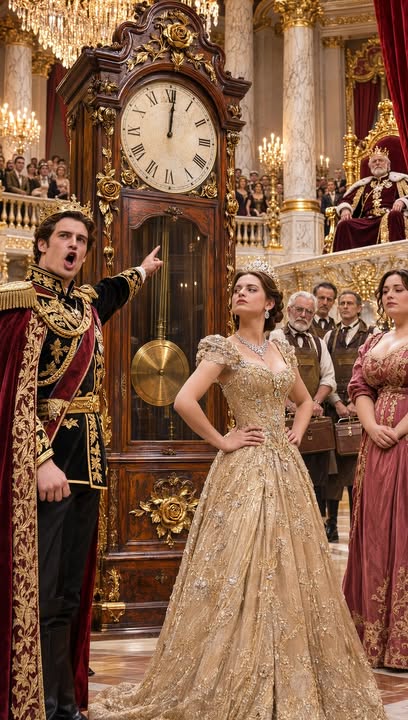
Part 6 – The Chime That Belonged to Her
For one suspended moment, no one in the ballroom seemed to breathe.
Rose looked down at the line beneath her father’s signature.
The king’s order had not erased her name from the record.
It had given her a name before the court could take one from her.
She traced the words with her eyes, hearing the quiet care within them, and the fear that had surrounded them.
“Did you write this?” she asked Richard.
The king stepped nearer, but he did not reach for the register.
“I did.”
“Why?”
“Because your mother asked me to make sure you would have a name that belonged to you, even if the court could not yet know where you belonged.”
His voice was unsteady, but he met her gaze.
“I thought that was the safest thing I could give you.”
“And then you let Elara be blamed.”
“Yes.”
The admission did not soften the hurt, but it stood plainly beside it.
Richard lowered his eyes to the register.
“I told myself that if I kept the secret, I was protecting you. I did not understand that the secret was also taking your history from you, and that silence was leaving Elara to carry the blame.”
The elderly clerk held the document case close to his chest.
“I preserved the duplicate because the queen instructed me to keep one copy beyond the palace records,” he said. “She told me that a truth should have more than one place to survive.”
Rose looked at him.
“Why did you wait until now?”
“I was afraid of putting the wrong person at risk by speaking without proof,” he answered. “When I heard of the key and the letters, I brought the register to the king. He asked me to wait until he understood what it meant.”
Richard’s face tightened, but he did not contradict him.
“I should have brought it to you sooner,” the clerk continued. “I am sorry.”
Rose accepted the apology with a small nod.
She could not ask every person in the palace to undo the years, but she could insist they see what their choices had made.
Her gaze returned to the line in the register.
“Then my name was never a disguise.”
“No,” Richard said. “It was yours from the beginning.”
Rose closed the document case gently.
The key still waited in the clock’s lower lock.
Behind her, the assembled court remained silent, its attention fixed not on the clock now, but on the woman who had once stood by the velvet curtains while others decided what she was worth.
Rose looked toward the great face.
“Master Bell,” she said, “is the bell ready?”
“It is,” he replied. “The key will release the latch. The music box will turn the second catch.”
“Will it change anything?”
“Only what people can no longer pretend they haven’t heard.”
Rose drew a breath.
The words were not a promise that the court would become kind overnight, or that every wound would close when the bell sounded.
They were simply true.
She turned the golden key.
A soft click traveled through the clock’s case.
The hidden rose opened, revealing the narrow compartment and the small music box within it.
Rose lifted the box from the ledge.
Its faded painted roses looked almost warm beneath the chandelier light.
Her mother had carried that lullaby through years of quiet, giving it to Rose when there were no answers she could safely offer.
The queen had placed it in the clock so that, one day, the melody could guide Rose back.
Rose set the music box in its carved hollow.
The tiny brass cylinder turned.
The lullaby unfolded in the ballroom, gentle and clear, rising above the rustle of the crowd.
Rose closed her eyes as the first three notes sounded.
For a moment, she was small again, listening beside a cottage window while Elara’s hands moved through a piece of cloth.
The tune rose.
Then it paused, exactly where her mother had always paused to breathe.
Rose opened her eyes.
The hidden mechanism answered.
Inside the clock, a lever slipped into place.
The pendulum swung once, then again, its measured movement drawing the melody toward its final note.
The ordinary clock face remained still.
The great hands did not leap forward or backward.
Nothing changed in time.
Then the concealed bell rang.
Its tone was clear and warm, deeper than the music box and brighter than any ordinary chime.
It passed through the ballroom and lingered beneath the painted ceiling.
One note.
A thirteenth chime, not to alter the hour, but to mark the moment a truth had come home.
No one applauded.
No one needed to.
The silence that followed was not the silence of a court waiting to judge Rose.
It was the silence of people listening.
Richard stepped forward.
“My name is Richard, and I am Rose’s father,” he said. “She is the daughter of Queen Anne, and she was placed in Elara’s care with the queen’s trust and my agreement.”
He looked across the room, not hiding from the faces before him.
“I signed the order dismissing Elara when she returned the key and left the palace. I accepted an incomplete account and failed to give her the chance to explain. I allowed her name to be clouded by suspicion, and I let my silence continue long after the danger had passed.”
The king paused.
“I cannot undo that. I can only correct the record, tell the truth, and ask that Elara be remembered for the courage and love she showed.”
The court remained quiet.
Rose saw the truth of his regret in the way he stood without the shelter of his throne.
He did not ask her to absolve him.
He did not ask the room to overlook what he had done.
Vincent stepped beside him.
“Rose is my sister,” he said. “I did not know it until today, but I am grateful to know it now. I also knew the clock held an old secret and chose not to press for answers because I wanted to protect my father from a story I did not understand.”
He turned to Rose.
“That was my choice, and I regret it.”
Rose felt something tender move through her, though it was not yet trust restored all at once.
It was a beginning.
Victoria came forward, her eyes bright with emotion.
“I laughed at Rose when she stood before us,” she said. “I thought I understood what made someone worthy of being heard. I was wrong.”
She looked toward Rose, not expecting a reward for saying so.
“I am sorry.”
Rose remembered the girl who had mocked her in the ballroom, and the young woman who had later offered her family’s records without asking for praise.
“Thank you,” Rose said.
Victoria let out a breath, as if the answer was enough.
A murmur began in the ballroom, but it held no laughter.
Several courtiers lowered their heads.
The elderly clerk opened his case and placed the duplicate register beside the queen’s letter.
“Let the records be corrected,” he said.
Richard nodded.
“They will be.”
Rose looked toward the court.
“I want Elara’s name restored,” she said. “Not as a servant dismissed under suspicion, but as the woman entrusted with the queen’s child and the courage to keep her safe.”
“It will be done,” Richard replied.
“And the record should say that she raised me as her own.”
“It will.”
“No private version and public version,” Rose said. “No careful wording that leaves people guessing whether she did something wrong.”
Richard’s face tightened with shame.
“No,” he said. “The correction will be plain.”
That was the answer Rose needed, though she did not mistake it for repair.
Repair would take time.
It would take letters sent to old servants and a public account entered into the kingdom’s history.
It would take listening when people spoke of Elara’s absence and resisting the urge to explain it away.
It would take Richard returning to the truth after the ballroom emptied.
Rose knew this, and she did not have to decide tonight whether she could forgive him.
When the court began to disperse, no one rushed toward her with congratulations or demands.
Some approached to offer a quiet word.
Others simply bowed and left, perhaps understanding that the evening belonged to her before it belonged to the crown.
Rose was grateful for the space.
Vincent remained near the clock.
“So,” he said, trying for lightness and not quite managing it, “I owe you an apology for the impossible marriage challenge.”
“You do.”
“And for making the court think the prize was a wife.”
“You do.”
“And for not asking better questions about the clock.”
“You do.”
He nodded solemnly.
“That is a long list.”
“It is.”
“Would you consider letting me begin with breakfast tomorrow?”
Rose looked at him.
“What kind of breakfast?”
“Whatever the kitchen staff make for people who have just discovered they have a sister.”
“They probably make porridge.”
“Then I will learn to appreciate porridge.”
A smile touched Rose’s face.
It was small and tired, but it was real.
“Breakfast tomorrow,” she said. “You can begin there.”
Vincent’s shoulders relaxed.
“I’ll meet you in the courtyard.”
“Beside me?”
“Beside you.”
Victoria approached with the queen’s letter and the music box.
“Would you like me to help you carry these back?” she asked.
Rose took the letter from her.
“I’ll keep it with me.”
“Of course.”
Victoria glanced toward the departing court.
“I hope I can become your friend.”
Rose considered her.
“Friendship takes longer than one apology.”
“I know.”
“But I’d like to see whether we can start.”
Victoria’s smile was quieter than her ballroom confidence and far more sincere.
“I would like that.”
Master Bell remained by the clock, checking the mechanism with careful hands.
The great face had not changed, but the concealed bell had gone quiet again.
The thirteenth chime was finished.
Rose rested her fingertips on the wooden case.
For three hundred years, people had called the clock impossible, as if the only wonder worth believing in was a machine that could do what time itself could not.
Now she understood that its true work had been quieter.
It had kept a note safe.
It had held a melody.
It had waited for someone to ask what the silence meant.
“Will it ever ring thirteen again?” she asked Master Bell.
“I don’t believe it was made to do so,” he replied. “The hidden bell has served its purpose.”
“Then perhaps that is enough.”
He bowed his head.
Richard came to stand a short distance away.
The court was nearly gone, and the ballroom lights seemed softer without its crowded splendor.
“I have sent for the royal archivist,” he said. “The record of Elara’s dismissal will be corrected tomorrow. I will also speak with the families of those who served in the nursery.”
Rose nodded.
“I want to help with that.”
“If you wish.”
“I do.”
He looked at her carefully.
“Thank you for allowing me to stand beside you tonight.”
“I allowed you to speak the truth.”
“Yes.”
“Standing beside me will take longer.”
“I understand.”
“Don’t promise you understand everything.”
Richard accepted the correction with a quiet nod.
“I will try to listen.”
That, Rose thought, was a better beginning than any promise he could make.
For a while, they stood together in the ballroom without saying anything.
The clock ticked steadily behind them.
It was an ordinary sound, yet Rose found comfort in it.
Time had not changed.
Neither had the years she had lived without knowing her place in the palace.
What had changed was that the story no longer belonged only to those who had kept it quiet.
In the days that followed, Richard spoke before the council and entered a full account into the royal record.
The court learned that Queen Anne had given birth to a daughter named Rose, and that Elara had been entrusted with her care during a dangerous period of uncertainty.
The order dismissing Elara was formally withdrawn.
A new record named her not as a thief, but as Rose’s devoted guardian and the queen’s trusted friend.
The palace did not become perfect in a day.
Some nobles still whispered.
Some found it easier to admire the story than to question their own part in the laughter that had greeted Rose at the ball.
But the truth remained in the open, written in the same ink as the old records, where no one could quietly remove it.
Rose asked that the first room restored in Elara’s name be the old nursery.
She helped the palace workers clean its shelves, mend the curtains, and bring in blankets for the children of servants who needed a warm place while their parents worked.
The painted stars remained on the ceiling.
The cradle stayed by the window, though it was no longer used for a royal secret.
Now the room held books, cushions, and a small cabinet where the nursery songs were written down for anyone who wished to learn them.
The queen’s letter rested in a glass-covered frame beside Elara’s note, their handwriting close enough that Rose could imagine the two women sitting together.
The music box belonged to Rose.
She kept it in her room and wound it only when she wanted to hear the lullaby.
Sometimes she sat with Victoria while it played.
Victoria learned to listen without asking what Rose planned to do next.
She offered help with the nursery and never treated the offer as a way to erase her earlier cruelty.
Their friendship grew by small, ordinary choices: shared tea, honest apologies, and long conversations in which neither of them needed to win.
Vincent kept his promise about breakfast.
The first morning, he arrived with porridge and two spoons, then confessed that he had never learned how to make it himself.
Rose told him that being a prince did not excuse him from learning.
He laughed, and she laughed with him.
Their new bond did not appear all at once.
It grew through walks in the garden, small questions about Queen Anne, and quiet visits to the nursery where they tried to piece together the person they had both loved without knowing the other existed.
Vincent told Rose stories of their mother’s patience and her fondness for green apples.
Rose told him how Elara had sung the lullaby while teaching her to mend a torn sleeve.
Sometimes their memories fit together.
Sometimes they did not.
They learned that love did not require a perfect account of the past.
It required room for both stories to be true.
Richard came to the nursery often, but never assumed Rose wanted him there.
He sat with her when she invited him and left when she asked for quiet.
He told her what he remembered of Queen Anne, and he listened when Rose told him about Elara.
He did not ask Rose to forgive him.
Months later, when she found she could sit beside him without feeling the need to hold every grievance close, she offered him her hand.
It was not the end of her hurt.
It was the start of a different kind of relationship, one built upon truth rather than duty.
The king bowed his head over her hand, and Rose saw tears gather in his eyes.
She did not tell him that everything was forgiven.
She told him she was willing to keep learning who they could be to each other.
That was enough for both of them.
The marriage competition was never held again.
When the council asked Vincent what he intended to do about his future, he told them he would not marry because of a riddle or a deadline.
He would choose his own life when he was ready.
Rose refused every attempt to turn her discovery into an instant claim on the throne.
She wanted time to learn the palace, to meet the people who kept it running, and to understand what she might offer without being told what she owed.
She spent her mornings helping in the nursery and her afternoons learning the work of the palace kitchens, gardens, and infirmary.
The servants who had once passed her in the corridors began asking her questions, not because she was a princess, but because she listened.
Rose kept the deep-rose gown from the night of the challenge.
It reminded her of the moment she had stepped forward while the court laughed and chosen to trust what she saw.
Years later, when visitors asked whether the old clock could truly strike thirteen, Rose would smile and say that it had, once, when it was ready.
Then she would tell them that the bell had not changed the hour.
It had changed the story.
On the first anniversary of the chime, the palace gathered in the restored nursery.
There were no crowns on display and no formal speeches prepared.
A small group of servants, children, and family stood around the window while the evening light touched the painted stars.
Vincent brought a green apple for Rose.
Victoria placed a fresh flower beside the framed letters.
Richard stood with them, quiet and unadorned, his hands folded before him.
Rose wound the music box.
The familiar lullaby rose through the room, tender as a hand smoothing a blanket.
She remembered Elara’s cottage, the queen’s letter, and the strange path that had carried her from the edge of the ballroom to the heart of her own history.
She did not feel as though she had returned to a life that had been waiting untouched for her.
She felt she had made a life from what love had left behind.
The music box reached its final note.
From the great hall came the clock’s ordinary chime, marking the hour.
Rose listened until it faded.
Then she turned toward the people gathered around her, each of them present by choice, each of them learning how to make room for the truth.
The clock had given her no crown, no perfect answer, and no command about what to become.
It had given her the right to ask.
The right to know.
And the right to choose what came next.
**–THE END–PLEASE
Share your thoughts or feedback to motivate us to create more stories ♥️
* * *
[PREVIOUS: PART 5](https://storyly.idolsgift.com/blog/part-5-the-note-beneath-the-golden-rose-069)
✓ Lynn R. Adams
Part 6 – The Chime That Belonged to Her For one suspended moment, no one in the ballroom seemed to breathe. Rose looked down at the line beneath her father’s signature. The king’s order had not era…