PART 6 (THE END): The Note Behind the Photograph 047
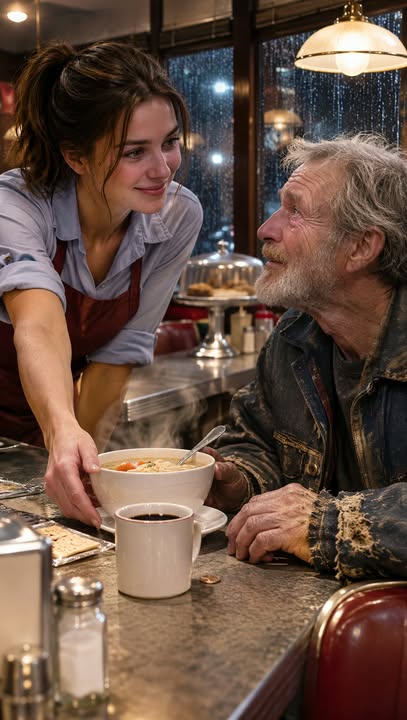
Part 6 – A Place at Stool Four
“Harper, if your brother has brought you here, then it’s time you both understood why I kept you apart.”
Arthur’s voice faltered as he read the line, and he lowered the paper to gather his strength.
Harper stood beside the window, one hand resting on the back of his chair, while Alexander remained near the door.
For a moment, neither of them spoke.
Then Arthur looked up, troubled by the words he had read.
“I don’t know why I wrote that,” he said. “It sounds as if I meant to keep you apart.”
Harper took the paper carefully.
The page was creased and yellowed, the handwriting unmistakably Eleanor’s.
“May I read it?” she asked.
Arthur nodded, and Alexander moved closer so they could both see.
The letter began in Eleanor’s familiar hand.
My dear Harper and Alexander,
If you are reading this together, then the story has finally found its way back to the people who belong in it.
Harper’s breath caught.
She glanced at Alexander, who stood very still.
Eleanor continued.
I never wanted to keep either of you from the other.
I wanted to protect Harper from a story that was painful and unfinished, and I wanted to protect Arthur from believing he had no family left.
But protection, when it is built from silence, can become another kind of distance.
Harper read the lines again, feeling her mother’s tenderness and regret in every careful stroke.
The letter explained that Eleanor had never known Arthur was still trying to find her after they lost contact.
She had believed he’d chosen to leave her behind when she was young, and the pain of that belief had quieted over time, though it never disappeared.
When Arthur later helped her with nursing-school tuition, she had understood it as a kindness offered by someone who knew what it meant to be alone.
She had not understood that he was her father.
Eleanor had learned the truth only years afterward, when one of Arthur’s old letters finally reached her through a relative who had been sorting the family papers.
She tried to write back, but the addresses she had were out of date, and the replies she expected never came.
The letter she held now revealed the final missing piece.
Miriam had not wanted to hurt either of them, Eleanor wrote.
She had believed Arthur would be better off if he stopped searching for a relationship that had already caused him so much sorrow.
When Eleanor’s letters arrived, Miriam had delayed passing them on, hoping to spare her brother another disappointment.
Over time, she persuaded herself that silence was kinder.
Harper paused, her eyes stinging.
The choice had been wrong, but the letter did not paint Miriam as a villain.
It showed a person who had mistaken control for protection, and who had never understood what her silence would cost.
“I’m sorry,” Arthur whispered.
Harper looked at him.
“You didn’t write the letter that stopped the others from reaching you.”
“No,” he said, “but I trusted what I was told instead of looking for the truth.”
“You were trying to survive the hurt you already had.”
Arthur lowered his eyes.
“I should have asked more.”
“Maybe,” Harper said. “But the past doesn’t need us to make it worse by blaming ourselves for every part of it.”
She returned to the letter.
Eleanor wrote that she had never told Harper the whole story because her daughter was still young when she became ill, and because she wanted Harper’s life to be shaped by choices rather than obligations.
She had feared that learning about Arthur would make Harper feel responsible for repairing a family history she had not broken.
I wanted you to meet him because you wished to, she wrote.
I wanted him to know you because he loved you before he knew your name.
But I could not make a promise on either of your behalf.
The last paragraph was addressed to them both.
If the two of you have found each other, let this be enough for today: you were never kept apart because either of you was unwanted.
You were kept apart by grief, confusion, and people trying to make a painful story easier to bear.
Do not let that silence decide what happens next.
Choose each other freely.
Harper lowered the paper.
The room seemed brighter than it had a moment before, though the afternoon clouds still covered the window.
Alexander stepped toward Arthur and placed a hand on his shoulder.
“I’m sorry you had to carry so much without knowing the whole story,” he said.
Arthur looked up at him.
“I’m sorry I let you think you were the only family I had.”
Alexander’s expression softened.
“I never thought that.”
“You did.”
“Sometimes,” Alexander admitted. “But I knew you loved me.”
Arthur nodded, taking in the answer.
“And now I know you have a sister.”
Harper let out a shaky laugh.
“I’m not sure we’re ready to start using that word.”
“No,” Alexander said. “We don’t have to rush.”
He offered his hand, not as a declaration or a claim, but as an invitation.
Harper looked at it, then at him.
“I’m glad we found each other,” she said.
“So am I.”
She took his hand.
Arthur watched them, his eyes bright with tears.
“I spent a long time thinking a family was something you could lose all at once,” he said.
Harper moved to his side and touched his shoulder.
“Maybe it can also be something you find one piece at a time.”
Arthur covered her hand with his.
“That sounds right.”
The years that followed did not turn their family into a perfect story.
They still had misunderstandings, difficult days, and moments when grief arrived without warning.
Arthur’s memory did not return all at once, and some details of his life remained beyond his reach.
But his health improved, his steps became steadier, and the garden at his care community came alive again in the spring.
He planted tomatoes in the largest wooden bed, with Harper beside him and Alexander holding the watering can.
The first crop was small and uneven.
Arthur declared every tomato delicious.
Harper suspected he was being generous.
She enrolled in the nursing program that autumn.
The decision was hers, made after meeting with an adviser and comparing the costs with her work schedule.
She chose a part-time course load, knowing it would take longer but would allow her to keep earning while she studied.
Alexander kept his promise not to direct her choices.
When she asked about financial help, he showed her the details of a scholarship fund being developed through the school, and she reviewed its terms before applying.
The fund was named for Eleanor Lane.
It offered support to adult students pursuing nursing who had faced financial obstacles and who demonstrated a commitment to compassionate care.
There were no work requirements, no private conditions, and no obligation to any member of the Whitmore family.
Harper applied on her own.
When the acceptance arrived, she read it at the kitchen table three times before she believed it.
Then she called Arthur.
“I got in,” she said.
There was a pause on the other end.
“You got into nursing school?”
“Yes.”
“Your mother would be proud of you.”
“I wish she could know.”
“She would know.”
Harper pressed the letter to her chest.
For the first time, she imagined her mother not as someone whose absence defined every milestone, but as someone whose hopes had traveled forward with her.
At the diner, the payroll review ended with the missing wages restored.
The accountant also changed the process for recording staff meals and corrections, so no one could have money removed from a paycheck without a documented explanation.
Stan was dismissed after the review found that he had repeatedly taken deductions from workers without proper approval and had pressured employees not to question them.
Harper felt no satisfaction in his leaving.
What mattered was that the truth had been heard and that the people who worked at Belle’s no longer had to fear that speaking up would cost them their livelihood.
The staff welcomed her back with apologies, some awkward and some heartfelt.
The cook who had once passed Arthur a second bowl of soup without charge pressed a paper bag of fresh rolls into Harper’s hands.
“I should’ve said something sooner,” he told her.
“So should I,” another server admitted.
Harper listened, accepted their words, and let herself forgive them without pretending the hurt had never happened.
She returned to Belle’s Diner, though not to the same arrangement she had before.
The owner offered her steady hours and a chance to help review the diner’s new meal-assistance program, which provided a hot meal to anyone who needed one without requiring an explanation.
Harper insisted that the rules be clear and the funding tracked openly.
The program began quietly, with a pot of soup and a note by the register saying, If you need a meal, ask.
No one was asked to prove they deserved it.
One Saturday afternoon, after Harper’s nursing-school orientation, she brought Arthur to the diner.
Alexander came with them.
The rain had eased into a fine mist, silvering the windows and turning the streetlights soft.
Stool four waited near the counter, as familiar as ever.
Arthur eased himself onto the seat, moving carefully but with growing confidence.
“I remember this place,” he said.
“You were here quite a lot,” Harper replied.
“I remember the soup.”
“You used to say it was too hot.”
“It was.”
“You still ate it.”
“I was hungry.”
Harper smiled and set three bowls on the counter.
Alexander took the seat beside Arthur.
For a moment, the three of them sat together without rushing to fill the silence.
Then Harper placed a small wooden box on the counter.
Inside lay the tarnished penny from Eleanor’s envelope, polished just enough to reveal its old copper color.
Beside it, she set her first nursing-school acceptance letter.
Arthur looked from the penny to the letter.
“Your mother kept that coin for you,” he said.
“She did.”
“And now it’s here.”
“I thought it belonged with the beginning.”
Alexander lifted his bowl.
“Then what belongs at the end?”
Harper considered the question.
“Nothing ends here.”
Arthur’s eyes warmed.
“Good answer.”
The owner had placed a small brass plaque on the wall near stool four, after Harper and the diner staff agreed on its wording.
It did not name a benefactor or tell a story about a famous family.
It read:
KINDNESS DOES NOT ASK FOR PROOF.
Harper looked at it, then at Arthur.
“I thought it should be simple.”
“It is,” Arthur said. “That’s why it will last.”
They ate their soup slowly.
Outside, the city moved through its ordinary afternoon: buses hissing at the curb, people hurrying beneath umbrellas, a child tugging at a parent’s sleeve.
Inside, warmth gathered around the counter.
Harper had once spent her last seven dollars on a stranger because she knew what it meant to feel unseen.
That choice had not rescued Arthur, or erased the years he and Eleanor had lost.
It had not fixed the mistakes that separated their family.
It had done something smaller and, in its own way, just as important.
It had made room for him to return.
Now Arthur sat beside the son who had searched for him, and the granddaughter he had once hoped to meet.
Alexander listened while Arthur recalled a piece of a summer day with Eleanor.
Harper listened while Alexander filled in what his father could no longer remember.
Between them, the old gaps began to feel less like walls and more like places where stories could be told.
When Arthur finished his soup, he lifted the tarnished penny from the box and turned it over in his palm.
“I used to leave one of these for you,” he said.
“I know.”
“I thought it was a thank-you.”
“It was.”
He looked at her.
“And now?”
“Now it’s a reminder.”
“Of what?”
“That kindness can return without becoming a debt.”
Arthur closed his fingers gently around the coin, then placed it beside Harper’s acceptance letter.
“That’s a good thing to remember.”
Harper looked at the letter, at the penny, and at the two men seated beside her.
For so long, she had believed that love meant giving until there was nothing left to give.
Now she understood that love could also mean accepting help without surrendering her choices, welcoming family without owing them a version of herself, and allowing care to move in more than one direction.
She reached for her soup.
“Eat while it’s warm,” Arthur said.
Harper laughed.
“I was about to tell you the same thing.”
“Then we agree.”
They ate together at stool four, while the rain traced soft lines down the windows and the old diner held them in its familiar light.
On the counter, the penny rested beside the acceptance letter.
Neither one looked like a debt.
Together, they looked like a beginning.
**–THE END–PLEASE
Share your thoughts or feedback to motivate us to create more stories ♥️
* * *
[PREVIOUS: PART 5](https://echoesofstories.idolsgift.com/blog/part-5-the-note-behind-the-photograph-047)
✓ Lynn R. Adams
Part 6 – A Place at Stool Four “Harper, if your brother has brought you here, then it’s time you both understood why I kept you apart.” Arthur’s voice faltered as he read the line, and he lowered th…