PART 6 (THE END): The Night His Mother Died 046
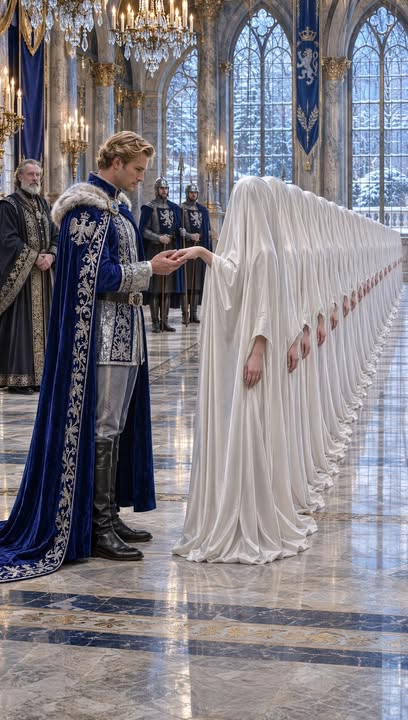
Part 6 – The Life They Chose
I looked at the old sentence beneath the light, and understood that the next choice would not be between what was safe and what was dangerous.
It would be between a truth I could control and one I had never been allowed to hear.
“Tell them I will receive them,” I said to the guard. “But no bargain will be made in private.”
The guard bowed and left.
I carried the warning to the archive room, where the council’s appointed investigators had begun sorting the records.
The keeper read the hidden line with me, then placed it beside the queen’s note and the childhood journal copy.
“If this is her hand,” he said, “it establishes that she feared Lord Armand.”
“It establishes that she feared his access to me.”
“It does not establish what he did.”
“No,” I said. “That is why the papers must be examined.”
Michael stood by the open cabinet, listening.
He had not slept either.
His face showed the weariness of a man who had spent the night considering what it meant to tell the truth when he could no longer choose how much of it to tell.
“Lord Armand’s household may have letters,” he said. “If they are surrendering them, we should accept them.”
“Under the inquiry’s authority.”
“Yes.”
“And we will not agree to name you as the only person responsible for Evelyn’s exile.”
Michael’s eyes met mine.
“I did have a part in it.”
“You did.”
“Then the inquiry should say so.”
“It will say what the evidence supports.”
He lowered his gaze to the queen’s warning.
“I should have looked more closely at what she tried to tell us.”
“So should I.”
“That does not excuse me.”
“No.”
The truth between us had become less comfortable than trust, but it was more useful.
The members of my uncle’s household arrived before noon, accompanied by their own counsel and two representatives of the council.
They were not conspirators in a melodrama, nor did they come with threats.
They were people protecting a family name they had been taught to regard as inseparable from the kingdom’s stability.
Their spokesman, Lord Carden, placed a small wooden case on the council table.
“These are the surviving papers from Lord Armand’s private rooms,” he said. “We were told the inquiry would consider them.”
“It will,” I replied.
He rested his hands on the case.
“We would ask that the matter of the queen’s death remain sealed unless the evidence is conclusive.”
“Why?”
“Because the accusation would touch the king’s brother, the royal household, and the succession. Lord Armand is dead and cannot answer.”
“That is a reason to examine the evidence carefully, not to hide it.”
Lord Carden looked toward Michael.
“We understand that your adviser has already accepted responsibility for the irregularities concerning Miss Ward.”
“Michael will answer for what he did,” I said. “He will not answer for what someone else did merely because that would be convenient.”
The council representatives shifted in their seats.
Lord Carden opened the case.
“There are letters between Lord Armand and several members of the household. Some concern private family matters. Others may be relevant to the inquiry.”
“Then the investigators will review them.”
“And if they find nothing conclusive?”
“Then the report will say so.”
“And if they find something?”
“It will say that too.”
He studied me, as if searching for the part of my answer that might soften when spoken outside the chamber.
I did not offer one.
“Your Majesty,” he said, “the family is not seeking to protect a crime. We are asking for restraint.”
“So am I.”
I opened the case myself.
Inside were bundles of letters tied with faded ribbon, a few household ledgers, and a narrow packet bearing the old crest of my uncle’s estate.
I did not read them in the room.
I gave the case to the investigators and asked that each item be recorded before it was opened.
Lord Carden left without the promise he had come to seek.
The council’s representatives remained long enough to ask whether I understood what a public inquiry might cost.
I told them I did.
That afternoon, the investigators began their work.
The queen’s handwriting was compared against letters from the same year.
The warning about Armand was hers.
So was the note instructing the household to tell me she was asleep.
The line about the key had been added by another hand, one that the keeper traced to a former chamberlain who had served my uncle.
He had died years earlier, but his ledgers were still kept in the estate packet.
In one, the chamberlain recorded that Lord Armand had asked him to retrieve a small key from the queen’s apartments on the night she became ill.
The key was described as opening a narrow cabinet built into the writing desk.
The investigators found no surviving cabinet, but an old inventory described its contents: private correspondence, medicine receipts, and a small glass vial kept by the queen.
The vial itself had never been entered into the household records after her death.
The key had been carried to Michael and returned unopened.
The physician had not been told.
That did not prove what Lord Armand wanted from the cabinet, but it showed that he had sent for its key and then kept the doctor outside the chain of events.
In the case of letters from his estate, the investigators found a page addressed to the chamberlain, written the day after my mother died.
It referred to the queen’s “last draught” and instructed him to say nothing about the physician’s concerns until the household had settled.
The language was guarded, but the meaning was plain.
A later letter, sent several weeks afterward, made the reason clearer.
My uncle feared that the queen’s private papers might reveal that she had discovered his efforts to gather influence around the succession.
He had wanted access to the cabinet before anyone else could examine it.
The physician’s sedative had offered him an excuse to enter the north passage.
The queen had become seriously ill after supper, and he had seized the confusion to reach her room.
He had not intended for her to die.
But he had brought her a compound disguised as a remedy, believing it would leave her weak and disoriented long enough to take the papers from her cabinet.
The physician’s records showed that the compound he had been asked to prepare was not the one eventually given.
The investigators could not identify the exact substance, but the surviving household accounts recorded a purchase of a bitter root extract known to cause sudden collapse when mixed with the queen’s prescribed tonic.
A kitchen attendant’s letter, written years later to her sister, placed the vial in Lord Armand’s hand.
She had seen him leave the queen’s room with a dark red mark on his cuff.
The mark had not been paint.
The letter did not describe what she had seen inside the room, only that Lord Armand returned to the corridor pale and trembling, and ordered her not to summon Doctor Venn again.
At first, the council wanted the letter kept out of the official file.
Then the investigators found a second account in the chamberlain’s book, confirming that my uncle had arranged for the queen’s body to be prepared before Doctor Venn could finish his examination.
The evidence, taken together, was enough.
Lord Armand had poisoned my mother while trying to seize private papers and strengthen his influence.
He had intended to make her ill, not to kill her.
But he had caused her death, then used the confusion that followed to hide his part in it.
The missing seal had become his cover.
He had arranged for it to be placed in the workroom after Evelyn was sent away, ensuring there would be an object around which a false confession could be constructed.
He had chosen her because she was close to me, because a young seamstress could be made to look like an easy culprit, and because sending her away would remove one person who might remember the night clearly.
Michael had helped the story stand.
He had not killed the queen, but he had trusted my uncle’s account, failed to question the late records, and pressed me toward an order before the evidence existed.
Then he had allowed that failure to harden into a lie that ruined Evelyn’s life.
When the inquiry was ready to present its findings, the council asked me to hear them first.
I invited Evelyn, Michael, and the investigators to sit beside me.
There was no throne in the room, only a long table and the open window through which the first warm air of spring drifted.
The lead investigator read the findings in a steady voice.
He named my uncle’s guilt, the physician’s failure to complete his examination, the alteration of the household record, and the late entry of the seal into evidence.
He named Michael’s part in presenting an unverified statement and advising me to sign an order without a hearing.
He named my own signature.
I listened until the report was finished.
“Evelyn Ward is cleared of the accusation of theft and of the false confession attributed to her,” the investigator concluded. “The order of exile was issued without reliable evidence and without a hearing.”
The room remained quiet.
Evelyn’s hands rested together on the table.
She did not look triumphant.
She looked as though a door that had been closed for years had finally been opened, revealing not a new life but the long corridor she had once been forced to leave behind.
I turned to her.
“The kingdom will publish the finding,” I said. “Your name will be cleared in the record. The crown will compensate you for the years of work and home you lost.”
“I want the record corrected,” she said.
“It will be.”
“I want the compensation placed under my control, not offered as a condition.”
“It will be yours without condition.”
“And I don’t want to be asked to forgive anyone because the court has made a public statement.”
“You won’t be.”
She looked at Michael.
He had sat very still through the report, his hands folded as if any movement might look like a plea.
“I told the inquiry what I remembered,” he said. “I also told them where I had failed to ask.”
“You should have asked,” Evelyn replied.
“Yes.”
“You told the prince I had confessed when you had not heard me say it.”
“Yes.”
“You let him believe the order had been properly supported.”
“Yes.”
She took a breath.
“Why?”
Michael did not reach for a defense.
“I was afraid the household would fracture if the queen’s death became an accusation before we knew what had happened. Lord Armand told me that you had confessed and that the seal had been found. I believed him because I wanted the matter to end. I told myself that a quiet decision was safer than an uncertain truth.”
“And afterward?”
“I convinced myself the lie had protected the throne.”
“Did it?”
“No.”
His voice was low and clear.
“It protected me from admitting I had been wrong.”
For a moment, no one spoke.
Evelyn looked down at her hands.
“I can understand why a frightened man chose silence,” she said. “That does not restore what silence took from me.”
“I know.”
“I am not ready to forgive you.”
“I know.”
“And I may never be.”
“I understand.”
Michael bowed his head.
He did not ask her to reconsider.
He did not tell her he had suffered too.
The restraint of it did not erase his part, but it allowed his apology to belong to the person who had been harmed rather than to the man making it.
The council imposed a fair sentence for his role in the false record and wrongful exile.
He was removed from office, required to surrender his estate’s royal appointments, and ordered to serve a term overseeing the correction of the archive and the compensation process.
His sentence was not designed to make an example of him.
It was designed to make him answer for the specific harm he had done.
He accepted it without appeal.
Before he left the chamber, he asked whether Evelyn would permit him to speak with her once more.
She considered the question.
“Not today,” she said.
He bowed.
“I understand.”
Then he turned to me.
“I have served you for most of your life,” he said. “I would like to say that I did my best.”
He stopped, reconsidered, and shook his head.
“That would sound like I am asking the work to excuse the harm. I will not.”
“You did serve me,” I said. “You also failed me.”
“Yes.”
“I don’t yet know how I will remember you.”
“You don’t have to decide that today.”
For a moment, the words seemed to return to him from the many times he had told me that a matter could wait until the court had settled.
This time, he did not use them to postpone the truth.
He bowed and left with the council officers.
The public report was released the following week.
I stood before the assembled court without Michael beside me and read the finding myself.
I acknowledged that I had signed Evelyn’s exile order without hearing her or examining the evidence.
I acknowledged that the record had been manipulated after the decision was made.
I acknowledged that the crown had concealed uncertainty behind official language, and that my mother’s death had been recorded in a way that protected the household from questions rather than answering them.
I did not say I had been a child when my mother died.
I did not say I had been badly advised as if that made my signature less mine.
When I finished, I offered the court no defense of my actions.
The silence that followed was not approval.
It was attention.
That was enough for the first day.
In the months that followed, the archive was reorganized under a process that required two independent signatures before any sealed record could be altered or removed.
A hearing became mandatory before an exile order could be issued.
An accused household member gained the right to see the evidence against them and answer it before judgment.
No adviser could present a confession without a signed statement verified by the person accused and a witness outside the royal household.
The reforms were not grand.
They did not make the palace kind by decree.
They made it harder for a single person’s assumption to become another person’s entire life.
Evelyn watched the work without being asked to stand beside me for its public ceremonies.
She returned to the capital after the inquiry, but she chose her own rooms and kept the old journal with her.
She refused the title offered by the council.
She accepted the compensation, not as a favor but as what the crown owed her.
She used part of it to reopen the small seamstress’s room near the service courtyard, where anyone working in the palace could bring a garment to be mended or a page to be read without first proving they belonged there.
I visited one afternoon and found her teaching a young kitchen boy how to sew a loose button.
“You have a great many people asking you to mend things,” I said.
“Buttons are honest,” she replied. “They come loose for a reason.”
The boy looked up at me, thread caught around one finger.
“Your Majesty,” he said.
“Call me sir,” I answered. “I’m only here to learn.”
Evelyn raised an eyebrow.
“You already learned once.”
“Then I should be better at it.”
She handed me a needle and a coat with a torn cuff.
I sat across from her while the boy watched.
I held the fabric too tightly and stabbed my thumb.
“You’re still rushing,” she said.
“I’m trying not to make a mistake.”
“That is often how people make one.”
The boy laughed.
I laughed too, surprised by how easily the sound came.
For a while, we spoke of ordinary things: the weather, the price of good thread, the state of the palace roof over the west passage.
We did not discuss marriage.
We did not discuss forgiveness.
When I left, Evelyn did not walk me to the door.
That was all right.
I had begun to understand that closeness was not measured by how quickly someone met you halfway.
Time passed.
The inquiry’s report was copied into the public record, alongside the evidence clearing Evelyn and the statement of my own responsibility.
Michael served his sentence.
I visited him once, not to ask for forgiveness and not to offer it on Evelyn’s behalf.
We spoke about the archive reforms and the work remaining to repair the damage he had helped conceal.
He told me he had started keeping a journal.
“I thought you would have taught me to do that earlier,” he said.
“Someone did.”
He looked down at the small book in his hands.
“I suppose she did.”
He never asked me to restore him to office.
I never did.
The kingdom settled around the truth more quietly than the council had feared.
There were questions in the streets and arguments in the court.
Some people believed the investigation had weakened the crown.
Others believed the crown had grown stronger by admitting what it had done.
Both were right, in their own way.
The next year, I ended the bride selection.
I did not announce a new one.
When asked why, I said that marriage was not a contest the court could arrange on my behalf.
I did not name Evelyn.
I did not place her in the path of a public expectation she had never asked for.
The choice to come closer had to remain hers.
We spent time together because we wanted to, not because a council had seated us beside each other.
Sometimes she let me join her at the workroom table.
Sometimes she sent me away because she had other things to do.
I learned to accept both answers without treating one as a hidden promise.
She told me about the years she had spent away from the palace: the village where she first found work, the woman who had taught her to bargain for fair wages, the small rooms she had rented and the friendships she had kept.
I told her what it had been like to grow into a crown while still carrying the fear of an eight-year-old who believed questions might make the people he loved disappear.
She did not tell me that love made everything simple.
She did not tell me the past could be mended until no seam showed.
She told me that some seams held because they had been repaired carefully, and that I would have to learn the difference between hiding damage and tending to it.
Two years after the inquiry, Evelyn left the capital for several months.
She said she wanted to visit the places she had lived before, and to remember them without hearing the palace in the background.
I did not ask her to stay.
Before she left, I gave her a small wooden box.
Inside was the old royal order, now kept in the archive with a clear record of its false evidence and the findings that overturned it.
I had made a faithful copy for her, marked with every correction.
“You don’t have to carry it,” I said.
“I know.”
“I thought you might want to see that it no longer tells the story alone.”
She ran a finger over the copied seal.
“I do.”
Then she placed the paper in her traveling case, beside the blue cloth that held the childhood journal page.
She returned in the spring.
I saw her first from the palace steps, speaking with one of the seamstresses and laughing at something the woman had said.
Her hair had silvered more at the temples.
She looked older than the girl I remembered, and more familiar than the woman who had first stood before me beneath a white veil.
I did not hurry down the steps.
When she came to me, I waited until she had stopped.
“I’ve been thinking,” she said.
“So have I.”
“That may be dangerous.”
“It has been before.”
Her smile appeared, then stayed.
“I don’t want to return to the selection.”
“You don’t have to.”
“I don’t want to be rewarded with a title.”
“You won’t be.”
“I don’t want to pretend that the years between us can be put away.”
“They can’t.”
She looked toward the old courtyard where the service stairs caught the afternoon light.
“I would like to build something with you,” she said. “Not a courtship arranged for the kingdom. Not a pardon dressed up as romance. A life, if we can make one honestly.”
My throat tightened.
“I would like that.”
“Then we begin slowly.”
“As slowly as you need.”
“I may change my mind.”
“Then you may tell me.”
“And I may tell you to mend your own coat.”
“I deserve that.”
“You do.”
She reached into her pocket and drew out the small mending needle she had carried since returning to the palace.
Its handle was worn smooth from use.
She held it out to me.
I took it carefully.
“Do you remember the first thing you mended?” she asked.
“A coat sleeve.”
“You remember what I told you?”
“That mending is easier when you stop pretending the tear isn’t there.”
“You were a clever child.”
“I had a good teacher.”
She closed her fingers around mine, then let go.
It was not a vow.
It was a beginning that did not ask either of us to lie about the past.
We married the following year in the small garden behind the old workroom.
There were no crowns, no public selection, and no grand procession beneath the chandeliers.
A few friends stood among the early flowers, along with the seamstress who had taught Evelyn to bargain for fair wages and the kitchen boy who had once watched me struggle with a button.
The council attended only after asking whether we wanted them there.
We said no.
They respected it.
Before the vows, Evelyn placed her old mending needle on the table between us.
I had kept a journal beside it.
The first page held no account of politics or duty.
It held one sentence written slowly, in a hand more careful than the child’s writing I had once seen.
I am here because she chose to return, and I will spend the rest of my life remembering that choice is hers.
Evelyn read the line.
Then she looked at me, not as a subject, not as a memory, and not as a woman standing beneath a veil.
She looked at me as herself.
“I choose you,” she said.
This time, the words belonged to her alone.
I took her hand.
“And I choose you,” I replied. “Not because I owe you. Not because I remember who you were. Because I know who you are, and I want to keep learning.”
She slipped the needle back into its cloth.
Outside the garden wall, the palace bells marked the hour, and beyond them the city went on with its ordinary, unhurried life.
For the first time, I did not mistake a quiet day for a hidden danger or an easy answer.
The past remained part of us, but it no longer stood between us like a sealed door.
We had opened it, read what was inside, and left no one else to decide what the words meant.
Then we began our life together, not beneath a veil, but in the clear light of a morning we had chosen.
**–THE END–PLEASE
Share your thoughts or feedback to motivate us to create more stories ♥️
* * *
[PREVIOUS: PART 5](https://echoesofstories.idolsgift.com/blog/part-5-the-night-his-mother-died-046)
✓ Lynn R. Adams
Part 6 – The Life They Chose I looked at the old sentence beneath the light, and understood that the next choice would not be between what was safe and what was dangerous. It would be between a trut…