PART 6 (THE END): The Name She Tried to Forget 061
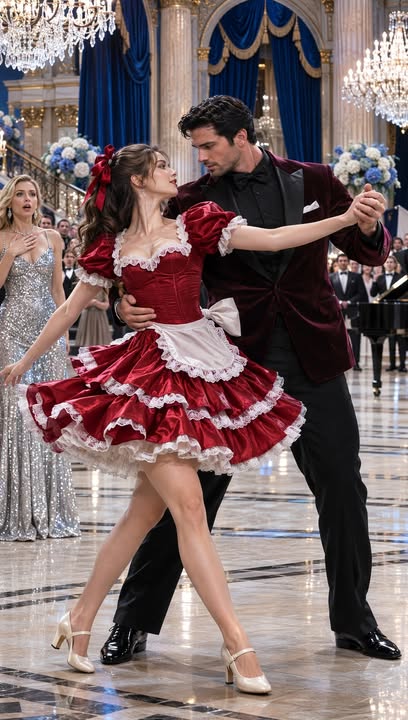
Part 6 – A Dance of Her Own
I wrote three sentences, deleted them, and began again.
When I finally stopped, the page held no accusation and no request for sympathy.
It held the truth I could stand behind.
Vanessa had interfered with a floor fixture during rehearsal, believing she could halt a lift she feared would cost her a scholarship.
She had not intended for anyone to be hurt, but she had created a risk, failed to disclose it, and later allowed others to blame me.
Julian had asked for the lift and then concealed that fact, leaving me to carry a story that was never mine.
The archive footage was incomplete, but it supported the account we had chosen to share.
I would release the recording with the archivist’s explanation, Vanessa’s statement, and Julian’s confirmation.
I would not share details of Julian’s medical recovery, and I would not make his private life the price of clearing my name.
At the bottom, I added one more sentence.
I am not seeking punishment; I am asking that the truth be allowed to replace the story people chose before they knew it.
I read the statement once, then sent it to Julian and Vanessa.
Julian replied first.
You have my consent.
Vanessa’s message followed.
I confirm every detail in my statement, and I will answer for what I did.
The next morning, the archive director reviewed the materials and arranged for the footage to be released through the arts center’s website.
The center included a careful note about the recording’s age, poor image quality, and limits.
No one claimed the footage proved more than it showed.
No one claimed my statement erased the harm.
That mattered to me.
The first news report appeared before noon.
By evening, a few more had followed, each linking to the archive rather than running the old headline alone.
Some people asked whether Vanessa should lose her scholarship years after the fact.
Others wanted to know whether Julian would dance again.
I answered neither question.
The choice to tell the truth did not mean I owed strangers every part of myself.
Vanessa released her own statement without asking me to approve the wording.
She named what she had done, admitted her silence, and apologized to Julian and me.
She did not call herself a victim of fear or make her old scholarship sound like an excuse.
The arts center confirmed that it had referred the historical record to the theater’s board for review.
The board later acknowledged that its original inquiry had relied too heavily on incomplete witness accounts and had not adequately examined the floor fixture or the timing of the report.
It did not pretend the past could be neatly corrected with a new announcement.
But it added a note to the archive, linking the old account to the evidence and statements that had been missing.
My name was no longer alone beneath the word scandal.
It was attached to the truth, too.
A few days after the statement was released, Nathaniel called.
“Would it be all right if I came by?” he asked.
“I’m working.”
“I can wait until you’re free.”
“That’s not what I asked.”
A pause followed.
“Would you like me to come by?” he asked.
I considered the question.
“Not tonight,” I said.
“Understood.”
He did not ask why.
He did not send flowers or make another donation in my name.
He simply let the answer stand.
The following week, I attended a meeting with the gala’s medical fund committee.
Nathaniel had transferred the fifty thousand dollars as an unrestricted donation, as I had requested.
The committee gave no public announcement beyond its ordinary donor report, and my mother’s name never appeared.
The grant program could now help several patients, including my mother, whose care team had submitted an application on her behalf.
When the approval came, I read the letter twice before calling the hospital.
My mother was resting after an appointment when I told her.
“It’s enough to begin the next stage,” I said. “The rest will be decided as we go.”
She reached for my hand.
“Then we’ll take it as it comes.”
I bent to kiss her forehead.
Her skin was warm, and for a little while the room felt lighter than the hospital corridor outside it.
The treatment began the following month.
There were difficult days and hopeful ones, and no promise that everything would be easy.
But my mother had access to the care her doctors recommended, and I no longer felt that every hour with her was measured against a bill I could not pay.
At the gala, the charity committee had also heard about the old story and the way dance had carried me through the years after it.
A community arts foundation contacted me with an offer to help build low-cost classes for adults and young people who had been pushed away from training because of money, injury, or circumstance.
They did not ask me to tell my whole history.
They asked what kind of program I wanted to create.
I told them I wanted a place where no one had to earn the right to begin again.
The foundation offered me the position of dance director.
I accepted.
For the first few weeks, I split my time between waitressing and planning the program.
I worked with the foundation to find a small studio above a neighborhood arts center, its windows overlooking a brick courtyard and a row of plane trees.
The floor was worn but level.
We checked it twice before the first class.
Luis helped me carry boxes of donated shoes up the stairs.
“You know you don’t have to keep serving shifts forever,” he said as we set a box beside the mirrored wall.
“I know.”
“You have a habit of making things harder than they need to be.”
“I’ve heard that.”
He smiled.
“I mean it kindly.”
“I know that, too.”
He glanced around the studio.
“Looks like you’re where you’re supposed to be.”
“I’m where I chose to be.”
He nodded, pleased by the distinction.
On the first evening, eleven students arrived.
Some were children whose families had never been able to afford classes.
Some were adults who had danced once and stopped.
One woman stood near the door, twisting the strap of her bag and watching the others take their places.
I recognized the look in her face.
“I’m not sure I can do this,” she told me.
“You don’t have to know yet,” I said.
“Everyone else seems to know what they’re doing.”
“They’re new, too.”
She glanced at the mirror.
“What if I’m bad?”
“Then you’ll be learning.”
I offered her my hand, and she took it.
We began with simple steps.
No music at first, only the quiet counting of feet against the floor.
Then I put on a recording of piano music, and the room filled with movement.
No one was perfect.
No one had to be.
When class ended, a little girl in a red sweater stayed behind to gather the scarves we had used for balance exercises.
“Are you going to dance with us next time?” she asked.
“I am.”
“Not just teach?”
I looked at the scuffed floor, at the empty space between the mirrors, at my reflection standing without an apron or a performance gown.
“Maybe both,” I said.
She grinned and ran to catch up with her mother.
Several months passed.
My mother’s treatment continued, and she grew stronger in small, steady ways.
She began sitting by the window during my visits and asking about the studio.
I showed her photographs of the classes, careful not to turn the children into a story for anyone else.
She liked seeing the room full of ordinary, focused faces.
“They look like they belong,” she said.
“They do.”
“So do you.”
I leaned my head against her shoulder.
By then, the attention around the old scandal had begun to quiet.
A few people still recognized me from the video.
Most did not.
For the first time in years, that felt less like disappearance and more like freedom.
Julian and I began speaking again.
Our conversations were cautious at first, with long pauses where we once would have known what to say.
He had no wish to return to competitive dance, and I never asked him to.
He did, however, come to one of my classes and sit in the back while the students practiced a simple traveling step.
Afterward, we walked together through the courtyard.
“I’d forgotten how quiet it feels after a class,” he said.
“Quiet?”
“Not empty. Just settled.”
I understood what he meant.
“Would you ever teach?” I asked.
He thought about it.
“Maybe not dance. But I’d like to help with balance training or strength work.”
“There might be room for that.”
“Only if you need it.”
“I do.”
He smiled.
For a while, we had been partners because a competition demanded it.
Now, if we stood side by side, it was because we had chosen to.
That felt different.
Vanessa also made a choice.
She left the public relationship she had built with Nathaniel once she understood how much of it had been arranged for appearances and business.
Their separation was quiet, without interviews or competing accounts.
She issued no grand declaration about the past beyond the statement she had already made.
She did, however, follow through with the theater board and answer its questions.
She lost the place on the gala’s advisory committee that she had hoped to join, and her family’s company ended its sponsorship of one of the arts center’s programs.
She did not ask me to make that easier for her.
Months later, she wrote to ask whether I would meet her.
I waited several days before answering.
Then I invited her to the studio after the last class.
She arrived without jewelry, carrying a paper bag of pastries from a bakery near the arts center.
“I wasn’t sure whether to bring anything,” she said.
“Then why did you?”
“I was afraid of arriving empty-handed.”
The answer almost made me smile.
We sat on the floor near the mirrors.
For a while, neither of us spoke.
“I’ve been going to counseling,” Vanessa said at last. “I wanted to understand why I thought being afraid was a reason to let someone else take the blame.”
“I’m glad you’re trying to understand it.”
“I don’t expect that to change anything between us.”
“It might change something in you.”
She lowered her eyes.
“I used to think the worst thing that could happen was losing the scholarship.”
“And now?”
“Now I think I knew what the right thing was and chose not to do it.”
I let that sit between us.
“I’m not ready to call us friends,” I said.
“I understand.”
“I don’t know when I will be.”
“I understand that, too.”
“But I’m willing to stop pretending you’re a stranger I never knew.”
Her eyes lifted.
It was not forgiveness, and she did not treat it like a prize.
“Thank you,” she said.
We shared the pastries.
We did not speak about the championship for the rest of the evening.
When she left, I watched her cross the courtyard and disappear through the front doors.
I felt no triumph.
Only a small loosening, like a muscle learning it did not have to stay clenched.
Nathaniel stayed away from the studio until I invited him.
It took me longer than I expected to decide.
His first apologies had been sincere, but sincerity did not erase the fact that he had used his power to turn my need into entertainment.
I did not want him to be saved by the same grand gestures that had once made him feel untouchable.
When I finally called, I invited him to attend a community performance as a guest, not a sponsor.
“You don’t have to donate anything,” I said.
“I won’t.”
“You don’t have to speak to the press.”
“I won’t.”
“You can sit in the back.”
“I’d be happy to.”
The performance took place six months after the gala, in a modest theater with wooden seats and a narrow stage.
The students had built a series of short dances from their own movements.
One boy had designed a sequence around a skipped stone.
The woman who had been afraid to begin made a slow, bright piece about opening a window.
I stood in the wings, waiting for my turn.
My mother sat in the front row beside Luis.
Julian was near the aisle, his hands resting loosely on his knees.
Vanessa had sent a note wishing the students well, without asking for a seat.
Nathaniel sat in the back row as promised.
He wore no tuxedo and had brought no entourage.
When my name was announced, a familiar stillness gathered in my body.
For a moment, I was back under the ballroom chandeliers, surrounded by phones and expectation.
Then I looked toward the front row.
My mother smiled at me.
The music began.
I stepped onto the stage.
I had not performed in front of an audience since the night my name had been recognized at the gala.
This time, there was no prize money, no challenge, no demand to prove that I still belonged.
I danced because I wanted to feel the floor beneath me.
I danced because my body had carried me through years when I thought I had lost the only language I knew.
I danced because the woman I had become deserved to move without asking permission from the woman I used to be.
The steps were not flawless.
One turn came slower than it once would have, and my left ankle tightened near the end.
I adjusted.
The music carried me forward.
When it ended, the room held a breath before the applause rose.
I looked at the faces in the audience.
No one was laughing.
No one was waiting for me to prove a story.
They were simply there.
Afterward, my mother hugged me carefully.
“You looked like yourself,” she whispered.
“I felt like myself.”
Julian gave me a small bow.
“Good to see you on a floor again.”
“Good to see you here.”
He smiled and went to help one of the students gather a dropped scarf.
Nathaniel waited near the doorway while the audience filtered out.
He did not approach until I saw him and nodded.
“You were wonderful,” he said.
“Thank you.”
“I was glad to be here.”
“I’m glad you came.”
He took a breath, then let his hands rest at his sides.
“I’m not going to ask what happens next.”
“Good.”
“I just wanted you to know I’m proud of what you’ve built.”
“You don’t have to be proud of me to support it.”
“I know.”
We stood in the quiet theater, the stage lights cooling behind us.
He looked different without a gala around him, or perhaps I had finally learned not to confuse a grand room with a grand person.
“I’d like to know you,” he said. “Not as a story I can fix, and not as someone I get to claim because I helped once.”
I watched his face.
“And if I don’t want that?”
“Then I’ll respect it.”
“And if I do, but not right away?”
“I can wait without making it your responsibility.”
I considered the man who had once made a wager about marrying me for the pleasure of hearing strangers laugh.
Then I considered the man who had listened when I told him he could not decide what mattered.
“I’d like to have coffee,” I said. “As friends.”
His smile was quiet.
“Coffee sounds good.”
“Not at your hotel.”
“Not at my hotel.”
“And no wagers.”
“None.”
“Then we can start there.”
Outside, the evening air smelled of rain and warm pavement.
My mother waited beneath the theater’s awning, her scarf tucked close around her neck.
Julian was beside her, telling her about a student who had forgotten which way to turn and invented a new step instead.
Luis was calling for a car.
Nathaniel stood a few paces away, leaving me free to join whichever conversation I chose.
I went to my mother first.
She reached for my hand, and I took it.
For five years, I had believed my life had ended in the wings of a theater, beneath bright lights and a story that was never fully mine.
But my life had not ended there.
It had waited in the quiet places where I kept choosing what was true, what was private, and what I wanted next.
My mother squeezed my fingers.
“Ready?” she asked.
I looked back once at the open theater doors, then toward the city beyond them.
“Yes,” I said.
And this time, the next step was mine.
**–THE END–PLEASE
Share your thoughts or feedback to motivate us to create more stories ♥️
* * *
[PREVIOUS: PART 5](https://storyly.idolsgift.com/blog/part-5-the-name-she-tried-to-forget-061)
✓ Lynn R. Adams
Part 6 – A Dance of Her Own I wrote three sentences, deleted them, and began again. When I finally stopped, the page held no accusation and no request for sympathy. It held the truth I could stand …