PART 6 (THE END): The Name She Couldn’t Forget 053
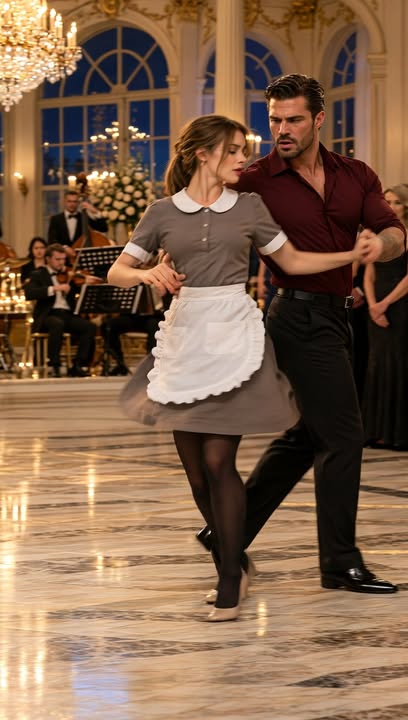
Part 6 – A Dance of Their Own
“And I was hurt, and I didn’t know how much of the story had been lost to me,” Emma continued.
She held the microphone steadily, though the words had made her heart beat faster.
“For a long time, I believed my silence meant I had no story worth telling.”
She glanced toward Vivian.
“But silence can leave room for someone else to tell it for you.”
Vivian took a breath.
“I let people believe Emma had caused the crash, and I let them believe she left dance because she was ashamed.”
Her voice wavered, but she did not look away from the audience.
“Neither was true.”
She told them about the storm and the shortcut she had insisted on taking, about the fallen branch and Emma’s quick turn of the wheel.
She admitted that fear had made her protect herself first, and that shame had kept her quiet long after the danger had passed.
“I’m sorry,” Vivian said. “Not because I want anyone to tell me it’s all right, but because Emma deserved the truth.”
Emma took the microphone again.
“My mother knew there was more to the story,” she said. “She wanted me to hear it when I was ready, and she trusted me to decide what came next.”
Her gaze passed over the people in the room, then settled briefly on Alex.
“I can’t recover every memory, and I can’t reclaim the years I spent away from dancing.”
She looked at Vivian.
“But I can choose what the dance means now.”
The audience remained quiet, not with the awkward silence of the gala, but with the attention of people willing to hear what came after.
Emma set the microphone aside.
The orchestra began the piece she had chosen, its opening notes gentle enough to leave room for a breath.
Vivian offered her hand.
Emma accepted it.
They took their places, not in the exact starting position they had once used, but in one that felt comfortable to both of them.
The first steps were measured.
Emma listened for the music and for Vivian, letting neither one pull her faster than she wanted to go.
Vivian followed her lead.
Their timing wavered near the first turn, and Emma felt her heel catch lightly against the floor.
For a fraction of a second, the old fear rose—that one small mistake would turn the dance into a failure people could point to.
Then Vivian steadied her own step and waited.
Emma found the beat again.
They moved on.
The dance was not flawless.
There were moments when their hands met a little late, and a turn that Emma remembered more clearly than her body did.
But they did not pretend those moments had not happened.
They adjusted.
They listened.
When the music opened into its fuller phrase, Emma felt the room recede, not because she had forgotten the audience, but because she no longer needed to perform for its approval.
She was there because she had chosen to be.
Vivian was there beside her, carrying her part of the past instead of asking Emma to carry it alone.
They reached the final sequence.
Emma paused for half a breath before the turn she had once loved.
Vivian waited.
Then Emma moved.
The turn was not as quick as the one she remembered, but she completed it with her balance intact, and the music carried them into the final measure.
They stopped together.
For one quiet heartbeat, the ballroom held still.
Then applause filled the room, warm and sustained.
Emma felt it rise around her, but she did not bow.
She simply stood beside Vivian, breathing hard, both of them present beneath the lights.
The applause did not erase the silence that had come before.
It did not make everything right.
It marked something smaller and more honest: that they had stood together, told the truth, and chosen what to do next.
The arts program director stepped forward after the clapping eased.
She spoke about the children’s classes, the rehearsal space the donations would help maintain, and the importance of making room for people to begin again at any age.
This time, the evening belonged to the work ahead, not to the story behind Emma and Vivian.
Donors asked practical questions.
Families spoke about the classes their children were excited to join.
A young girl in a green cardigan told Emma she liked the turn and asked whether she had been nervous.
“Very,” Emma said.
The girl’s eyes widened.
“But you looked happy.”
Emma smiled.
“I was.”
Across the room, Alex watched from beside the program director.
He did not come forward while the guests were still congratulating Emma and Vivian.
He did not turn the evening into a victory that belonged to him.
He waited until Emma had returned the microphone and found a quiet place near the windows.
“Are you all right?” he asked.
“I’m tired,” she said.
“Good tired or escape-the-room tired?”
“Both.”
He smiled gently.
“I can help you escape the room.”
“I’ve been escaping rooms for a long time.”
“I know.”
She looked at him.
“I don’t want to leave yet.”
“Then we won’t.”
They stood side by side, watching the volunteers gather around the arts program table.
“I’m proud of you,” Alex said.
Emma considered the words.
“Thank you.”
“I’m not proud because you danced.”
“I know.”
“I’m proud because you made the choice yourself.”
That landed differently.
Emma felt the warmth of it and let herself keep it.
“Thank you,” she said again.
Alex glanced toward Vivian, who was speaking with the program director.
“I should tell you something clearly,” he said.
Emma’s posture grew still.
“All right.”
“Vivian and I have talked.”
“How did it go?”
“Honestly.”
“That sounds harder than polished.”
“It was.”
He gave a rueful smile.
“I told her I care about her, but that I haven’t been in love with her for a while.”
Emma looked toward Vivian.
“Did she know?”
“I think part of her did.”
“Was she hurt?”
“Yes.”
“And what happens now?”
“We’ve ended the relationship.”
His voice stayed quiet, without blame or relief disguised as a joke.
“We’re both sad about it. We’ll need time to be friends, if that’s possible.”
“I’m sorry.”
“So am I.”
He did not say that Vivian had done something to deserve it.
He did not ask Emma to comfort him or tell him he had made the right choice.
After a moment, he said, “There’s something else I want to say, but only if you’re comfortable hearing it.”
“Go ahead.”
“I’d like to take you to dinner sometime.”
Emma looked at him carefully.
“Not as a thank-you for the event,” he added.
“Not because you danced, and not because I think I’m owed an answer.”
His expression was open, his voice unhurried.
“I’d like to know you better when neither of us is working.”
Emma felt a smile begin before she could decide whether to hide it.
“You’re asking plainly.”
“I thought I should.”
“Good.”
He waited.
Emma looked around the room—the chairs, the tables, the people who had come to support an arts program rather than witness a wager.
She thought of the ballroom where Alex had first pointed at her and made her a joke, and of how he had listened when she told him what his apology needed to mean.
A changed person was not someone who had never been careless.
It was someone willing to hear the cost of carelessness and behave differently afterward.
“I’d like that,” she said.
Alex’s smile was quiet and real.
“Dinner?”
“Dinner.”
“Somewhere without a ballroom.”
“Definitely.”
“Would you like to choose?”
“Yes.”
“Then you can pick the place.”
Emma nodded.
“Ask me again tomorrow, when we’re not standing in the middle of an event.”
“I will.”
The next few weeks did not transform the past into something simple.
Emma still woke sometimes with the vague impression of rain on glass.
She still had moments when the old newspaper headline came to mind, especially when she passed a display of dance photographs or heard a familiar piece of music.
But those memories no longer arrived as an accusation.
She had learned the difference between what she remembered and what others had told her.
She had learned that the gaps in her past were not proof that she had done something unforgivable.
The hospital billing office confirmed her payment plan, and the money Alex had paid for the dance gave her enough room to meet the overdue bills without losing her apartment.
The eviction notice came down from her kitchen wall.
In its place, Emma taped the receipt from her final overdue payment, not because she wanted to remember the worry, but because she wanted evidence of what she had managed.
Her mother’s care had cost more than Emma could ever repay.
Still, she could make sure that the debt no longer shaped every decision she made.
The charity event’s donations secured another season of community classes and helped the arts center keep its evening rehearsal hours.
Emma continued working at the hotel, but the event office offered her additional planning hours.
She accepted a few, keeping the work separate from her regular shifts and the terms written down as she preferred.
Alex respected the arrangement.
He did not ask her to dance for hotel guests, and he did not use their dinner to talk about the event.
Their first date was at a small neighborhood restaurant with mismatched chairs and a menu written on a board near the counter.
Alex arrived in a dark sweater and jeans, looking more like a man waiting for dinner than a billionaire accustomed to being announced.
Emma chose a table by the window.
They talked about the food, the city, and the small pleasures they had each learned to notice.
Alex admitted that he had once thought being decisive was the same as being right.
Emma told him that, in her experience, the people most certain of their choices were not always the ones who had considered everyone they affected.
He listened without getting defensive.
They did not discuss marriage.
They did not discuss wagers.
At the end of the evening, Alex walked her to the bus stop and asked whether he could see her again.
Emma said yes.
Vivian kept her promise.
At the next foundation gathering, she spoke openly about the crash and about her decision to remain quiet afterward.
She did not tell the story as an act of bravery.
She did not ask the room to admire her for confessing.
She said that she had been afraid of losing her reputation, and that protecting it had cost Emma years of being understood.
When people asked questions, Vivian answered what she could and admitted what she did not know.
She did not claim to remember every detail perfectly.
She did not pretend the apology repaired everything between them.
Emma was not present for every conversation, and Vivian did not ask her to attend as proof of forgiveness.
When they met, they spoke carefully at first.
They discussed work, then their mothers, then the competition circuit they had left behind.
Some memories made them laugh.
Others made them quiet.
They did not try to rebuild their friendship in a single evening.
They allowed it to become something different from what it had been: more cautious, less effortless, but honest enough to grow.
One Sunday, Vivian brought Emma the medal with the blue ribbon.
“I thought you should have it,” she said.
Emma turned the medal in her hands.
The metal was still worn, and the ribbon had faded almost to gray.
“You kept it.”
“I did.”
“Why?”
Vivian looked down.
“After the crash, I wanted to give it back, but I couldn’t make myself come to your house.”
She drew a breath.
“I carried it for a while. Then I put it away because seeing it reminded me of what I had done.”
Emma ran her thumb over the engraved edge.
“And the other medal?”
“I gave that to you after the competition.”
“You said that.”
“I wanted you to have both for a little while, because you’d helped me through my first solo finals.”
The memory was faint, but this time it did not disappear immediately.
Emma saw Vivian holding out the second medal with a proud, crooked smile.
She heard herself laughing and saying that Vivian was making a fuss over a runner-up award.
The memory had no dramatic clarity.
It was only a small piece of a day returning to her.
Emma set the medal beside the one she had carried for years.
“I don’t remember all of it,” she said.
“You don’t need to.”
“I know.”
She did not wrap the medals in the handkerchief again.
She placed them together in a small wooden box on her kitchen shelf.
They no longer needed to travel everywhere she went.
They could be part of her life without being the whole story.
Months passed.
Emma’s dance shoes were not the first thing she bought with her remaining money, nor were they something she felt she needed in order to prove anything.
When she finally chose a pair, she bought simple black shoes from a local studio after trying several styles and asking the clerk for a pair she could comfortably wear for practice.
She began taking one evening class at the community arts center.
At first, she stayed near the back and avoided the mirrors.
The instructor never asked her to explain where she had trained or why she had stopped.
Emma was grateful.
She learned the steps at her own pace.
Some returned easily, while others belonged to a body that had changed and a life that had moved on.
She did not demand that her present self match the dancer in her memories.
She let them be two versions of the same woman, joined by music and separated by years that had mattered.
Vivian came to one class after asking permission.
She stood at the back and did not try to partner Emma until Emma invited her.
They danced a simple sequence.
They missed a step, laughed, and started again.
The laughter was not the old kind, bright and uncomplicated.
It was something gentler, built from the knowledge that they had almost lost the chance to share it.
Alex began joining Emma after class when his schedule allowed.
He was not a dancer, and he made no claim to become one.
He waited for her outside the studio with a coffee or walked with her to the bus stop.
Sometimes he asked how class had gone.
Sometimes he asked about something else.
Emma came to understand that his interest was not in the story of the woman who had once danced.
It was in the woman who was deciding what she wanted now.
One evening, as the class emptied and the instructor turned off the lights, Emma lingered near the floor.
A group of young students remained to put away the chairs.
They had been laughing over a missed turn, and one of them began counting aloud as they tried again.
“Five,” she said.
“Six,” another answered.
“Seven.”
“Eight.”
Emma felt the old rhythm settle into her, no longer like a voice calling her back to a vanished life, but like an invitation she could accept or refuse.
Alex waited by the doorway.
“Are you ready?” he asked.
Emma looked at the students, then at the floor.
“In a minute.”
He nodded and stayed where he was.
She watched the young dancers try the turn again.
One stumbled, caught herself, and laughed.
No one hurried to make the mistake disappear.
No one called it failure.
Emma stepped onto the floor in her own time.
Vivian, still beside the chairs, watched her without reaching out.
The students made space, and Emma joined their loose line.
The music started again, quiet at first, then brightening as they found the count.
Emma missed the first turn.
She tried again.
This time she found it.
Alex remained by the door, smiling without making the moment about him.
Emma met his gaze and smiled back.
Then she turned toward the others, feeling the floor beneath her shoes and the music ahead of her.
She was no longer a maid disguised as a ghost, or a dancer defined by the accident that ended her partnership.
She was Emma Walsh, carrying her past without surrendering her future, stepping onto the floor because she wanted to be there.
The count began again.
Five, six, seven, eight.
This time, she moved with everyone else.
**–THE END–PLEASE
Share your thoughts or feedback to motivate us to create more stories ♥️
* * *
[PREVIOUS: PART 5](https://storyly.idolsgift.com/blog/part-5-the-name-she-couldn-t-forget-053-7)
✓ Lynn R. Adams
Part 6 – A Dance of Their Own “And I was hurt, and I didn’t know how much of the story had been lost to me,” Emma continued. She held the microphone steadily, though the words had made her heart bea…