PART 6 (THE END): The Name on the Paper 008
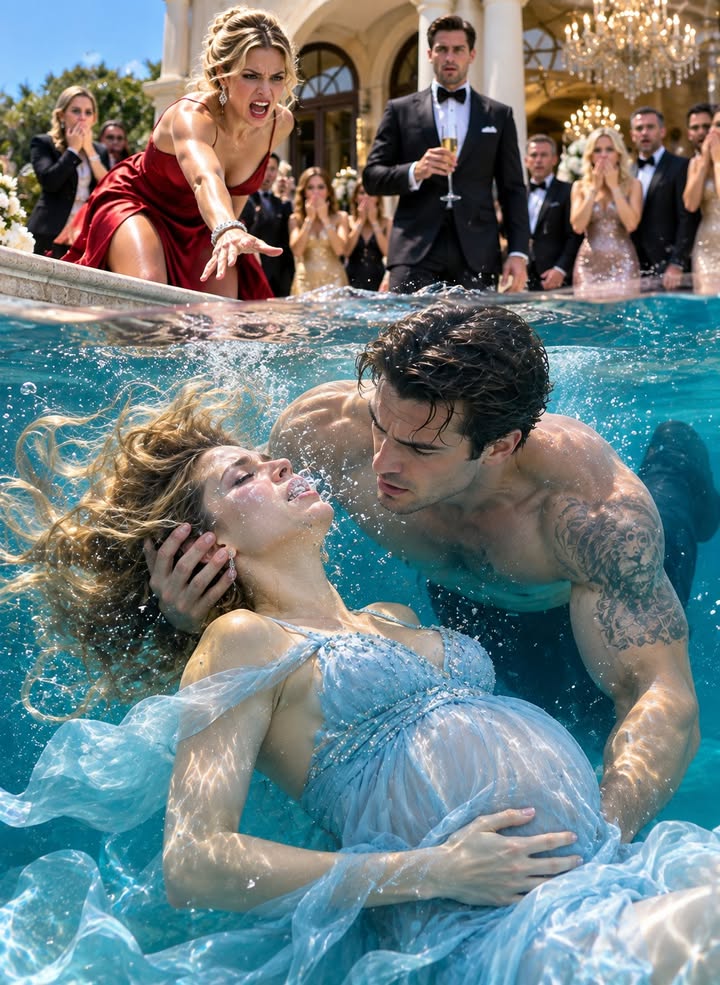
Part 6 – The Voice I Chose
Elena glanced toward the nursery, then back at me.
“‘Change the plan if Ava says no.’”
The sentence did not settle anything.
It opened another door.
“Does that mean he was willing to change the plan?” I asked.
“It means the message says that,” Elena replied. “We need the full thread before we can know what he meant or what happened afterward.”
I looked again at the papers in my hands.
“Please ask Owen to preserve the original messages and send them through you.”
“I will.”
“And no one contacts David yet?”
“Not until we have the full record and can ask questions in the right way.”
I set the papers down beside the photograph of the baby.
The nursery lights were low, and the small shape beneath the blanket rose and fell with each careful breath.
For a while, I watched that rhythm instead of trying to decide what David had meant.
The next morning, Elena arrived with the full message thread, preserved by Owen’s attorney and reviewed alongside the production schedule.
The message had been sent from David’s account to the Northline coordinator on the morning of the party.
It continued: “Change the plan if Ava says no. We are not doing anything she refuses.”
A reply from the coordinator read: “Understood. We’ll keep the reveal covered until the cue.”
There was no message in which David told Sophia to push me.
There was also no message showing that he had told her to ask my permission.
The thread did not erase the run sheet, the cameras, or the poolside plan that had been arranged without my knowledge.
It did not make the surprise harmless.
But it answered one question I had been afraid to ask: the available evidence did not show that David had ordered the shove or wanted me to be hurt.
What it showed was still painful enough.
He had approved a filmed stunt around my pregnancy, believed the plan could proceed unless I objected to a secret I did not know existed, and trusted other people to decide that a pool was safe for me.
He had not made room for my consent before the cameras were ready.
“Does this change what I should say?” I asked Elena.
“No,” she replied. “You’ve told the truth about what you experienced and what you saw. This message belongs in the record too.”
I nodded.
“I don’t want to make him worse than he was.”
“Then don’t. You aren’t responsible for protecting him, but you are responsible for being accurate. You have done that.”
I called David that afternoon.
I did not call to comfort him or to ask him to make the story easier to bear.
I called because I wanted to hear his answer in his own voice.
When he came to the hospital, we sat in the family room while Rachel stayed with the baby.
Elena remained nearby, available if either of us needed her, but she gave us space.
“I read the messages,” I said.
David’s hands rested together on the table.
“I’m glad you have the whole thread.”
“Did you think I knew what the plan was?”
“I thought you knew there would be a surprise. I knew the crew was setting up for a filmed reveal.”
“That isn’t what I asked.”
He looked down at his hands.
“I didn’t think you knew about the pool.”
“Then why did you approve it?”
“I believed the producer when he said it was controlled. I thought you’d be brought to the steps, the cameras would capture the announcement, and the staff would help you back out.”
“And if I said no?”
“I told them to stop.”
“After you had already brought me into a room full of guests, with cameras pointed at the pool and everyone waiting.”
He took a slow breath.
“Yes.”
There was no defense in the word.
“I thought the excitement would carry you along,” he said. “I didn’t stop to understand what that meant.”
I looked through the glass toward the nursery.
The baby slept, the tiny hands tucked close.
“You made a decision about my body because you thought the moment would be good for us.”
“Yes.”
“You didn’t ask me.”
“No.”
“Why?”
“I thought you would say no.”
His honesty was quiet, and it hurt more than a polished explanation would have.
“So you arranged it before I could.”
He closed his eyes briefly.
“Yes.”
I waited for him to add that he had meant well, or that the producer had misled him, or that the night had gone wrong in ways no one could have predicted.
He said none of those things.
“I was so focused on the project,” he continued, “on the story and the deal and what I thought it could do for us, that I stopped seeing the difference between a surprise and a choice. I’m sorry.”
“I believe that you’re sorry.”
He looked up.
“But I don’t know what that changes.”
“It may not change anything for you.”
The answer seemed to cost him something.
“I’ve spent a long time believing that if I could manage the details, I could keep everything safe,” he said. “I called it helping. I can see now that I was deciding for you.”
I thought of the hospital inquiry, the appointments he had wanted to know about, the way his hand had rested on my back at the party as if the evening belonged to him.
“What you do next matters more than what you call it,” I said.
“I understand.”
“I hope you do.”
He did not ask me to forgive him.
He did not ask me to keep the discovery private.
When he left, there was no promise between us that the marriage could be repaired, and no sudden tenderness to make the truth simpler.
There was only a careful beginning to the harder work of being honest about what had happened.
The investigation continued.
The police and the attorneys reviewed the statements, the medical records, the production documents, and the video.
The video showed Sophia pushing me.
It showed David laughing after I fell.
It did not show him instructing her to do it.
Owen’s testimony and the messages established that the poolside reveal had been planned as part of a filmed family-content package intended for a media deal.
The plan had been approved without my knowledge, despite my late-stage pregnancy and the absence of my doctor’s approval for any water-birth activity.
Sophia’s own account was difficult but important.
She said David had told her the pool was warm, that staff would help me, and that the fall was intended to be controlled.
She had believed the stunt was staged safely.
She also acknowledged that she had chosen to push me, rather than wait for a cue or ask what I wanted.
“I thought I was doing what he asked,” she told Elena and the investigators.
“I understand now that I made my own choice.”
I did not ask her to explain further.
I did not owe her comfort, and I did not want an apology shaped around the hope that I would make the consequences disappear.
She provided the messages she still had and confirmed the timeline.
It was useful evidence.
It was not forgiveness.
The legal process took months, moving through interviews and hearings while the baby grew stronger.
David surrendered his rights to the footage and withdrew from the media deal.
He cooperated with the investigation and acknowledged that he had approved the plan without my consent.
The court established clear, supervised arrangements for his contact with the baby, with the possibility of review as trust and circumstances changed.
The schedule was based on the child’s needs, the hospital’s guidance, and the court’s decisions—not on David’s public image or my anger.
There were days when I resented how much energy the process required.
There were other days when the careful recordkeeping made me feel less alone.
The truth did not arrive as one grand revelation.
It arrived through documents, testimony, and people finally saying what they knew.
It also arrived in quieter forms: a nurse asking what I wanted before adjusting the room, Rachel reminding me that I was allowed to rest, and my own voice saying no without turning the word into an apology.
The hospital finally cleared the baby to come home.
On the morning of discharge, the nurse placed the baby in my arms and showed me how to fasten the carrier.
The tiny face was mostly hidden beneath a soft cap, but the mouth moved in a sleepy, searching pout.
Rachel stood beside me with the folded blanket she had knitted.
“Ready?” she asked.
I looked toward the nursery one last time.
“I think so.”
Outside, the day was bright and mild.
There were no reporters, no cameras, and no guests waiting to see what happened next.
Just Rachel holding the door open while I carried my child into the world we would make together.
At home, I chose the smallest bedroom for the nursery because it was quiet and close to my own room.
The old decorations David and I had selected together stayed packed in boxes for a while.
I placed Rachel’s blanket over the crib and set the hospital photograph on the dresser.
The room did not look like a magazine spread.
It looked like a room where someone would be loved.
David visited according to the court-approved schedule.
At first, Rachel remained with us, and a family-services worker guided the visits.
David followed the rules.
He asked before picking up the baby and handed them back when the time was over.
He did not complain when I declined a photograph or asked that the visit end early because the baby needed to sleep.
Trust did not return simply because he behaved appropriately for a few hours.
But I could recognize a responsible choice without mistaking it for a promise that everything was healed.
Months passed.
The baby grew sturdier, then louder, then curious about every light and moving shadow in the room.
The small hands that had once curled around my fingertip began reaching for my hair, the edge of a blanket, the strings of my old guitar.
Some evenings, after the baby was fed and the house had gone quiet, I sat in the nursery chair and hummed.
At first I sang only fragments.
A line from a lullaby my mother had taught me.
A tune I used to play while warming up before a show.
A melody without words, made for no one but the child against my chest.
I had not planned to sing again.
I had told myself the stage belonged to the life I had left behind.
But the songs returned in small, patient ways, and I let them.
I did not announce it.
I did not call my former manager.
I did not record anything for anyone else.
The first audience was one sleeping baby and the quiet house around us.
A few months later, Michael called to ask whether I would consider visiting a maternal-health clinic supported by his foundation.
He made it clear that I could say no, and that there was no expectation I would speak publicly or perform.
“I can show you the program,” he said. “You can decide whether it feels right for you.”
“Could I bring Rachel?”
“Of course.”
We went together on a rainy Tuesday.
The clinic was bright and busy, with children’s drawings taped to the walls and a reception desk staffed by people who greeted families by name.
Michael introduced us to the director and the nurses, then stepped back while they explained the work.
No one asked me to be a symbol.
No one asked me to tell the story of the pool.
They showed me a room where new parents could sit with a counselor, a shelf of donated baby supplies, and a quiet space for people who needed time before going home.
I left with a folder of information and no obligation.
On the drive back, I found myself thinking about the people who had cared for me in the hospital.
“I’d like to help,” I told Rachel.
“You should decide what kind of help feels right.”
“Maybe I can sing.”
Rachel turned toward me.
“Only if you want to.”
“I want to see what it feels like.”
Michael’s foundation organized a small benefit for the clinic several weeks later.
The event was modest, held in a community hall with round tables and a simple stage.
There were no cameras pointed toward the audience, and no one had arranged a surprise.
The program said only that I would sing one song.
Before the performance, Michael found me near the side entrance.
“If you want to leave at any point, we can leave,” he said.
“I know.”
“And if you’d rather not sing, nobody will ask you to explain.”
“I know that too.”
He smiled.
“I’m glad.”
The baby was at home with Rachel, asleep in the nursery beside the knitted blanket.
I had checked on them twice before leaving.
The first note came easily.
The second was less certain.
By the third line, I could feel the old instinct to lift my voice and let the song carry beyond the room.
I did not perform the song I was famous for.
I chose a quiet one I had written years earlier, before the tours and the interviews, before I had learned how much of myself people could think they were entitled to.
I sang it for the families in the room.
I sang it for the nurses and the staff who helped parents find their footing.
I sang it for the person I had been when I first believed love meant being seen.
And I sang it for the person I was becoming, who understood that being seen and being owned were not the same.
When the song ended, the applause was warm but not overwhelming.
No one rushed toward the stage.
No one asked me to repeat the hardest parts of my life for a better headline.
Michael waited near the side door while I came down.
“You sounded like yourself,” he said.
“I felt like myself.”
“That’s better.”
We stood together for a moment, listening to people talk and the gentle clink of cups being gathered.
“I used to think coming back would mean going back,” I said.
“To the stage?”
“To the person I was before I stopped.”
Michael considered that.
“Maybe it only means bringing what you still have into the life you have now.”
I looked at him.
“That sounds like something your sister might have said.”
“She did,” he replied. “Usually while correcting me about something.”
I laughed, and the sound surprised me with how unguarded it was.
We did not turn that evening into a promise.
We exchanged messages over the next weeks, then coffee when our schedules allowed.
Sometimes we spoke about the clinic.
Sometimes we spoke about music.
Sometimes he told me about his sister, and sometimes I told him about the songs I had not been able to finish.
He never treated my past as an invitation to fix me.
He never asked me to make my pain useful.
When he sat with me, he listened.
That was how trust began: not with a rescue, but with the steady experience of being allowed to choose.
A year after the night at the pool, Rachel came over for dinner.
The baby sat in a high chair, solemnly examining a piece of soft fruit while Rachel told a story about getting lost on her way to the hospital.
I had heard the story before, but I laughed at the same place.
After dinner, Michael arrived with a small box of music books he had found in a shop near the clinic.
He asked before setting them beside the piano.
The baby reached toward the cover of one and made a sound of great determination.
“She approves,” Rachel said.
“She has strong opinions,” I replied.
The baby looked at me as if to confirm it.
Later, after Rachel had gone home and the baby was asleep, I stood by the window and watched the quiet garden.
The pool lay beyond it, still and dark beneath the night sky.
For a moment, I remembered the cold, the weight of my dress, and the way the water had swallowed every sound.
Then I remembered the hand that had caught my wrist, the nurses who had watched over us, my sister beside the bed, and the baby’s first small cry.
None of those memories erased the others.
They belonged to the same life, but they no longer defined it.
I had not been saved from every consequence.
I had been given a chance to speak, and I had learned to keep speaking.
The baby stirred in the next room.
I went to the crib and rested my hand near the small, warm body beneath the blanket.
The baby opened their eyes, found my face, and settled again.
I began to hum the song from the benefit, softly enough that it belonged only to us.
The melody filled the nursery without needing applause.
For years, I had thought my voice was something other people could claim because they had loved it first.
Now I understood that it had always been mine.
I could lend it to a room, a song, a cause, or a person I chose.
I could keep it quiet when I wanted.
And when the baby’s breathing found its easy rhythm, I sang on—not because anyone was watching, not because a story needed an ending, but because I was home and free to choose the next note.
**–THE END–PLEASE
Share your thoughts or feedback to motivate us to create more stories ♥️
* * *
[PREVIOUS: PART 5](https://puretales.idolsgift.com/blog/part-5-the-name-on-the-paper-008)
✓ Lynn R. Adams
Part 6 – The Voice I Chose Elena glanced toward the nursery, then back at me. “‘Change the plan if Ava says no.’” The sentence did not settle anything. It opened another door. “Does that mean he …