PART 6 (THE END): The Name on the Empty Chair 046
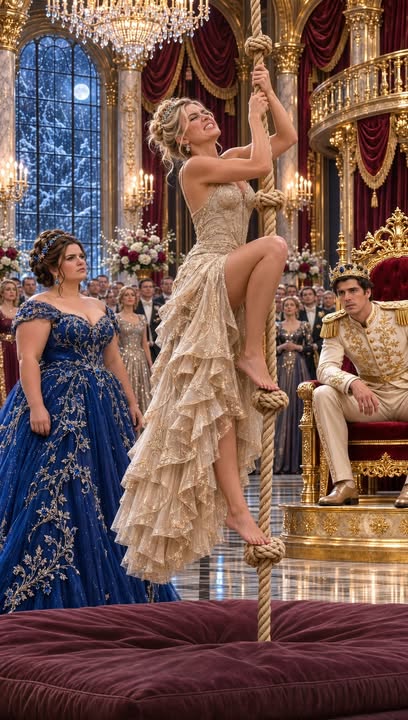
Part 6 – The Life We Choose
The last person to sign out the ledger was my mother.
For a moment, I could only stare at Mrs. Bell.
Behind me, my mother’s voice waited on the phone, small and tense.
“What does that mean?” she asked.
“I don’t know yet,” I said.
Mrs. Bell held the sealed envelope carefully in both hands.
“The record says your mother signed for the ledger years ago,” she explained. “But the date is unclear, and there’s no note showing when it was returned.”
My mother heard her through the phone.
“I never took the ledger,” she said. “I was asked to review some papers after Eleanor died, but I never removed anything from the archive.”
“Did you sign for it?” I asked.
“I signed for a folder of correspondence. I don’t remember a ledger.”
Mrs. Bell’s expression softened.
“The entry may have been filed under the wrong name,” she said. “Or the ledger may have been checked out with other materials.”
“Then why does it say my mother took it?”
“It shouldn’t,” Mrs. Bell replied. “I’ll look into the original log.”
The envelope she held was addressed to me.
The paper was thick and old, but the seal was new.
“Who left this?” I asked.
“It was on my desk when I arrived this morning.”
“Did you open it?”
“No.”
I looked at the note in my hand, the unfamiliar sentence claiming I had already been chosen, then at the sealed envelope that had appeared without explanation.
For the first time, the mystery seemed less like a hidden hand steering my life and more like a stack of old records that had been copied, moved, and misunderstood by people who believed silence was safer than clarity.
That did not make it harmless.
It did make it possible to face.
“I’m going to open it,” I said.
Mrs. Bell nodded and passed me a letter opener.
I broke the seal.
Inside was a single sheet, written in a neat, formal hand.
The household archive confirms that the charitable trust ledger was transferred to the community office for safekeeping during the review of Eleanor Williams’s records.
The entry naming Anne Williams as the last person to sign it out is incorrect.
A correction had been added at the bottom.
The ledger was received by the community office on the same date. It remains there, awaiting review.
I let out a breath I hadn’t realized I was holding.
“Can we verify this?” I asked.
“Yes,” Mrs. Bell said. “I’ll contact the community office first thing.”
My mother was quiet on the phone.
Then she said, “I always wondered what happened to those records.”
“You didn’t take them.”
“No.”
The relief in her voice was not triumph.
It was the easing of a burden she had carried without knowing how it had been placed on her.
Mrs. Bell glanced at the note in my other hand.
“And this?” she asked.
The words She has already been chosen remained stark on the page.
“I don’t know,” I said. “But I don’t think it was a prophecy.”
“No,” Mrs. Bell said gently. “It may have been a careless note, or a later annotation with no context. The archives are full of people’s assumptions written down as though they were facts.”
I thought of my invitation, the moved chair, the assumption that my mother had told me about Eleanor, and the belief that I would feel honored simply because the palace had intended to honor someone I loved.
“Then it should be corrected,” I said.
“It will be.”
My mother was still on the line.
“Come home when you’re ready,” she said. “I’ll show you every letter.”
“I want to see you.”
“I want that too.”
The simple answer quieted something inside me.
After we ended the call, I followed Mrs. Bell to the archive office, where she began tracing the ledger’s transfer.
Adrian was there when we arrived, standing by the open shelves with a stack of record boxes beside him.
He had changed out of his formal clothes, and his sleeves were rolled to his forearms.
He looked more like a young man helping someone move than a prince preparing for another ceremony.
“Any news?” he asked.
“The ledger may be at the community office,” I said. “The sign-out record was wrong.”
His shoulders eased.
“Good.”
“Good if it’s true.”
“Then we’ll make sure it is.”
He looked at the page in my hand.
“Have you decided what you want to do?”
“I’ve decided I don’t want anyone making the decision for me.”
He nodded.
“That seems a good place to start.”
The next day, the ledger was found in a locked cabinet at the community office.
It had been delivered there during Eleanor’s original review, then kept safely when the inquiry was paused after her death.
The transfer slip had been filed in a separate box, where it had been overlooked for years.
The ledger itself was weathered but intact.
Its pages showed the trust’s original grants, the families it had supported, and the careful notes Eleanor had made beside each payment.
The independent auditors confirmed what the records suggested: Eleanor had not mismanaged the funds.
Instead, a former court official had altered the way some accounts were categorized, making the trust appear inconsistent and casting doubt on her work.
The changes had not been enough to enrich him, but they had protected his department from scrutiny and delayed money reaching the families who needed it.
The palace had corrected some of the accounts after Eleanor died.
It had not corrected the public record because no one had wanted to reopen the dispute.
When the auditors finished, Adrian’s mother invited my mother to review their findings before anything was published.
My mother came to the palace two weeks later.
I met her at the station.
For a moment we stood facing one another beneath the clock, both of us holding small travel bags and all the words we had saved for later.
Then she opened her arms.
I stepped into them.
Her coat smelled of laundry soap and the winter air.
“I’m sorry,” she whispered into my hair.
“I know.”
“I thought silence was a wall that would keep the palace out.”
“It kept me outside too.”
She held me tighter.
“I know.”
We did not resolve every hurt at the station.
We did not need to.
We walked together to the car, and on the way to the palace she told me stories about Eleanor that had never made it into any official record.
Eleanor had kept peppermint candies in her desk for nervous children.
She had once stayed up all night helping my mother mend a school costume because the sewing machine had broken.
She hated speeches about service and preferred to ask what people needed.
“She was not a saint,” my mother said, looking out at the passing streets. “She could be stubborn, and she had a habit of thinking she could carry every difficult thing by herself.”
“That sounds familiar.”
My mother glanced at me.
“I suppose it does.”
The palace archives had prepared a room for the meeting.
This time, my mother was invited by name and asked where she wanted to sit.
She chose a chair beside mine.
The auditors presented their findings plainly.
They documented Eleanor’s work, explained the altered accounts, and listed the trust’s current balance.
The funds that had not reached their intended recipients would be restored through the trust, along with an independent oversight committee.
My mother read every page.
She corrected one date, pointed out a family name that had been recorded incorrectly, and asked that the report include the fact that Eleanor had never been formally accused of wrongdoing.
The auditors added it.
Adrian’s mother sat across from her, listening without interrupting.
When the report was complete, she stood.
“Anne,” she said, “the palace failed to protect your mother’s name, and then failed to tell you the truth about the place your family held in these records.”
My mother looked at her for a long moment.
“Yes,” she said.
“I’m sorry.”
“Thank you.”
There was no instant forgiveness in the room.
There was something better for that moment: a truth spoken without being softened, and an apology accepted without being asked to erase what came before.
The report was released publicly the following week.
It described Eleanor as a trusted royal adviser and the founding steward of a charitable trust that served families across several communities.
It corrected the mistaken account of her work and explained that the archive’s claims about the ledger had been unsupported.
The palace also released the records showing how the trust had been delayed.
Adrian stood beside his mother at the announcement.
He did not give a speech about how the palace had always meant well.
He apologized for the secrecy, the confusion, and the way its decisions had made my family’s story feel like a piece of court property.
My mother watched from the front row.
When he finished, she gave one small nod.
Vanessa helped ensure the trust’s restored funds reached the community organizations Eleanor had intended to support.
She had grown up knowing how to speak to donors and officials, and she used that knowledge without making herself the center of the work.
She asked hard questions, checked the proposed allocations, and insisted that local representatives sit on the oversight committee.
One evening, she and I sat together on the palace steps after a planning meeting.
The cold had turned the garden paths silver beneath the lamps.
“You were right,” she said.
“About what?”
“It matters who gets to tell the story.”
I looked at her.
“Are you talking about Eleanor?”
“I’m talking about the rope, the selection, my father watching me fall, all of it.”
She pulled her coat closer around herself.
“I thought being seen meant never making a mistake. Now I think it means deciding what you do after people see one.”
“That sounds harder.”
“It is.”
She smiled at me.
“But at least it’s mine.”
The selection committee eventually resumed its work, though not in the way it had been designed to.
The candidates were invited to decide whether they wanted to continue.
Several withdrew.
Celia chose to remain involved with the charitable program but left the marriage selection.
Vanessa also withdrew, saying she had come to understand that she wanted to build a life of her own rather than win a place in someone else’s.
The committee announced that there would be no final choice until the rules had been reviewed.
I declined the selection.
I did it in writing, with no speech and no apology.
I thanked the palace for the chance to learn about Eleanor’s work, then made clear that my family history did not obligate me to become a symbol of the court.
The palace accepted my answer.
Adrian did not ask me to change it.
He asked instead whether I would have coffee with him somewhere ordinary.
We met at a small café near the river, far enough from the palace that the waiter called him sir and never guessed who he was.
He arrived early and chose a table near the window.
“I wasn’t sure if you’d come,” he said when I walked in.
“I wasn’t sure either.”
“That seems fair.”
We ordered coffee and sat across from each other while the river moved beneath the gray afternoon light.
He told me he had begun asking questions about the household records long before he realized how often the palace’s first answer was simply the one that made the day easiest.
I told him I had started visiting the community center again, where the children still wanted to know whether the rope climb had been as difficult as it looked.
“What did you tell them?” he asked.
“That it was harder than I thought, and easier than I was afraid it would be.”
He smiled.
“I like that.”
We spoke for an hour without discussing marriage.
We talked about family, the trouble of knowing when to be patient, and how difficult it could be to trust a person who had inherited a title along with a set of habits.
When he walked me back to the station, he did not ask when I would return to the palace.
He asked whether I would like to see him again.
“Yes,” I said. “But slowly.”
“Slowly,” he agreed.
The months that followed belonged to us, one conversation at a time.
Adrian visited the community center without bringing a photographer or a household aide.
At first, the children were more interested in his polished shoes than in his name.
By the time they learned who he was, they had already decided he could be trusted with the task of holding the ladder while they tied a new practice rope.
My mother returned to the palace several times to help oversee the trust’s work.
She and I talked about Eleanor on the train rides there and back.
Some conversations were warm.
Others were difficult.
We learned that reconciliation did not mean pretending we had never hurt one another.
It meant telling the truth, listening through discomfort, and choosing to keep showing up.
One spring afternoon, the palace held a small gathering to mark the trust’s restoration.
It was not a royal ceremony.
There were no jeweled invitations or rows of formal chairs.
The event took place in the garden near the community office, where tables were covered with bright cloths and the people supported by the trust were welcomed as guests rather than as an audience.
A stone plaque stood beside the path.
It read:
Eleanor Williams
Adviser, neighbor, and steward of a trust created to serve others.
My mother ran one finger over the inscription.
“She would have complained about the word steward,” she said.
“Why?”
“She’d have said it sounded too important.”
“Would she have preferred neighbor?”
“She would have preferred her name on a list of people bringing food.”
I smiled.
Then my mother rested her hand on the stone.
“I’m glad you know her now,” she said.
“I wish I’d known her when she was here.”
“So do I.”
She looked at me, and for a moment I saw the girl she had once been, standing beside her mother in the palace, uncertain what kind of life she was allowed to choose.
“I’m sorry I made silence part of our family inheritance,” she said.
“I don’t want it to be.”
“Neither do I.”
I took her hand.
“Then we don’t have to pass it on.”
Adrian found us near the garden gate.
He was carrying a small paper bag from the bakery across the road.
“Vanessa sent these,” he said. “She said the committee meeting ran too long and she didn’t trust the palace kitchen to provide enough.”
My mother laughed.
“She’s probably right.”
Vanessa had become one of the trust’s most determined advocates, though she still insisted she was not interested in royal work.
She had started a foundation of her own, built around practical grants for young people pursuing careers they had chosen for themselves.
She came to the palace when she wanted to, left when she had somewhere better to be, and had stopped apologizing for either.
Adrian looked at me.
“Would you walk with me?”
“Where?”
“The old terrace. There’s something I’d like to ask.”
My mother’s hand tightened briefly around mine.
Then she let go.
“Go,” she said. “I’ll be here.”
The terrace was quiet, the garden below it bright with new leaves.
Adrian leaned his arms on the stone railing, leaving space beside him.
“I’ve been thinking about what you said before the selection,” he began. “That you wanted to know whether I could live with my choice after everyone stopped watching.”
“And?”
“I can.”
He turned toward me.
“I don’t mean that I know how to do everything right. I don’t. I mean I’m willing to be corrected, and I’m willing to keep asking what the honest choice is when the easy one would protect my family’s comfort.”
“That’s a beginning.”
“It’s all I have.”
“It’s more than most people offer.”
He smiled, but his eyes remained serious.
“I love you,” he said. “I don’t expect you to answer in the same way, and I don’t expect you to choose a life in the palace.”
My heart moved unevenly.
He continued before I could speak.
“I want to ask whether you would consider returning, not as a finalist, not as a symbol, and not because Eleanor’s name is written anywhere in the records.”
He took a breath.
“Return as my equal partner, with your own work, your own home, and the right to leave whenever you choose.”
I watched the leaves stir beyond the terrace.
“Would I have to stand beside you at ceremonies?”
“Sometimes, if you wanted to.”
“Would I have to agree with you?”
“I hope not.”
“Would you listen when I challenged you?”
“I would try.”
“That’s not a promise.”
“No,” he said. “It’s a promise to keep trying.”
I looked at his face.
He was not asking me to rescue the palace, or to turn Eleanor’s story into a romance.
He was asking whether I could imagine a life beside him that remained mine.
“I love you too,” I said.
His breath caught, though he did not reach for me until I offered my hand.
“I’m not accepting the selection,” I continued.
“I know.”
“I’m not taking a title because the palace thinks it would make the story complete.”
“I know.”
“But I would like to come back.”
His fingers closed around mine.
“On your terms.”
“On ours,” I said. “As long as we remember that neither of us owns the other’s life.”
“I want that.”
I leaned my shoulder against his.
For a while, neither of us spoke.
Beyond the terrace, my mother was laughing with Vanessa beside the tables.
The sound carried across the garden, bright and unguarded.
I had arrived at the palace believing the empty chair might tell me who I was.
It had not.
The rope had only asked whether I could find the next hold.
The rest had been a matter of listening, questioning, and choosing what to carry forward.
Eleanor’s name was no longer an invitation I had not understood, or a pattern sewn into a dress without explanation.
It was a name restored to the work she had done and the people she had served.
My mother’s silence was no longer the only story between us.
And the future Adrian offered was not a place assigned beside him, but a path we would have to make together.
When we walked back into the garden, my mother reached for my free hand.
She held it between hers as if it were still small enough to fit beneath her sewing table.
“Are you staying for supper?” she asked.
“Yes,” I said.
Vanessa lifted the bakery bag.
“Good. There are not enough pastries for people who plan to leave early.”
We laughed, and the gathering moved around us, full of voices, spring light, and work still to be done.
For the first time, there was no empty chair waiting for someone else to decide what it meant.
There was only a place at the table, offered openly, and the freedom to choose whether to take it.
**–THE END–PLEASE
Share your thoughts or feedback to motivate us to create more stories ♥️
* * *
[PREVIOUS: PART 5](https://echoesofstories.idolsgift.com/blog/part-5-the-name-on-the-empty-chair-046)
✓ Lynn R. Adams
Part 6 – The Life We Choose The last person to sign out the ledger was my mother. For a moment, I could only stare at Mrs. Bell. Behind me, my mother’s voice waited on the phone, small and tense. …