PART 6 (THE END): The Name on the Card 046
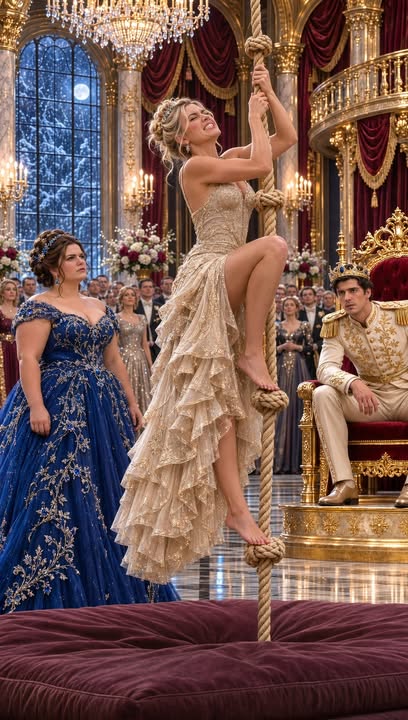
Part 6 – The Promise Kept
For a moment, the ballroom seemed to have become the quiet reading room where Eleanor’s words had waited for years.
My mother reached for the letter, then stopped before touching it.
“May I?” she asked.
Adrian gave her the page.
She read the sentence again, her lips moving softly over the words, and when she reached the final line her eyes filled.
“Not as a candidate,” she whispered.
“Not as someone to be judged.”
I felt the letter’s meaning settle inside me, distinct from the excitement of the competition and the possibility that Adrian might someday choose me.
Eleanor had wanted her granddaughter to come as a witness.
Not to win a place, but to see whether the palace could keep its word.
“I thought the chair was an invitation,” I said.
“It was,” Elias replied.
“But we misunderstood its purpose.”
He looked down at the old notice.
“Queen Helena’s order asked that your family be invited when the next selection brought the court together.”
“And Eleanor’s letter asked that I come to witness the correction,” I said.
“Not to compete for it.”
The realization reached through the room, touching each of us in a different way.
The palace had remembered enough to arrange the empty chair, but not enough to tell me why it was there.
Eleanor had trusted that one day her granddaughter might be present, even if the invitation arrived too late for her to see it.
Adrian stood beside the dais, no longer the prince announcing a choice, but a man waiting to learn what the moment required of him.
“I cannot undo the years your family waited,” he said.
“No,” I replied.
“But you can decide what happens now.”
He nodded, accepting the weight of that distinction.
“I can.”
The court’s secretary asked whether the proceedings should be adjourned until the archive had completed its work.
Adrian looked to Elias.
“Can the records be verified promptly?”
“The original commission, Eleanor’s letter, the sewing-circle notes, the review, and the palace secretary’s order all support one another,” Elias said.
“The legal office can examine them tonight, and I can present the complete catalog tomorrow.”
“Then tomorrow,” Adrian said.
He turned to the court.
“We will gather again in the same room, not to select a bride, but to hear the archive’s findings and formally answer the family whose name we invited here.”
The announcement did not sound grand.
It sounded like a promise made carefully, with enough room left for the people it concerned to say what they needed.
My mother folded Eleanor’s letter along its old creases.
“I want her words read aloud,” she said.
“They should be,” Elias replied.
“And I want her work described as it was.”
“The charitable sewing program,” he said.
“Created by Eleanor and the women who worked with her.”
My mother glanced at him, and a small, relieved smile appeared.
“Yes.”
“Would you like your name included among those who will speak?” Adrian asked her.
“I would rather listen first,” she said.
“Then that is what you will do.”
For the first time since I had entered the palace, the room seemed to make space for someone without asking that she prove why she deserved it.
The court adjourned.
Guests began to leave in subdued groups, talking quietly rather than crowding the doors.
No one applauded, and no one laughed.
The silence was not a rejection.
It was the sound of a room understanding that the story had not yet reached its proper ending.
Vanessa waited until her father had spoken with the secretary and Elias before she approached him.
“I’m sorry I told them what I knew without speaking to you first,” she said.
Lord Whitmore looked at her for a long moment.
“I would have preferred that you asked me.”
“I did ask you.”
“You asked me what I remembered.”
“You didn’t tell me everything you remembered.”
He lowered his gaze to the folded notice.
“No,” he said.
“I did not.”
His admission was quiet, but Vanessa seemed to hear the difference between an answer and an excuse.
“I don’t know why I left out the part about the review,” he continued.
“I believe I convinced myself it was not important, because I did not know what had happened after I was transferred.”
“You should have told me that.”
“Yes.”
She looked toward the ballroom doors, where the last guests were leaving.
“I was afraid that if I questioned you, it would mean I had stopped trusting you.”
“And now?”
“Now I think trusting someone should leave room for questions.”
Lord Whitmore’s eyes shone, though his voice remained steady.
“That is a better lesson than I gave you.”
“I didn’t want to hurt you.”
“I know.”
“I also didn’t want to help keep the record wrong.”
He reached for her hand, then paused, waiting for her to decide whether she wanted the gesture.
Vanessa took his hand.
“I should have looked more closely at how the trials were shaped,” he said.
“I advised the committee on what I believed would measure composure and judgment, but I did not ask whether the same trials would be familiar to every candidate.”
“You could have asked.”
“I could have.”
The simple acknowledgment seemed to loosen something between them.
Vanessa did not forgive him for everything that evening, because there was no need to pretend everything had been solved.
But she let him keep her hand, and he held it gently.
As they walked away together, she looked back at me.
“I’ll see you tomorrow,” she said.
“I’ll be there.”
“So will I.”
After the ballroom emptied, Adrian asked whether I would like a moment alone before my mother and I returned to the guest wing.
We walked into the gallery overlooking the garden.
Rain had begun to fall, silvering the paths and darkening the leaves.
Neither of us spoke until we reached the open window.
“Eleanor did not ask you to stay in the competition,” he said.
“No.”
“Are you disappointed?”
I watched a drop gather at the edge of the stone sill before it fell.
“I don’t know yet.”
“You can be.”
“I know.”
“And it would not make your decision to speak any less right.”
“I know that too.”
He leaned beside me, leaving a little space between our shoulders.
“I had imagined what I might say if I chose someone,” he admitted.
“I thought I could make the announcement sound like a beginning.”
“Could you?”
“I think I wanted the ceremony to make the beginning easier.”
I turned toward him.
“And now?”
“Now I know that if there is a beginning between us, it should not be announced before we have chosen it.”
The truth in his voice warmed me more than a declaration would have.
“I don’t want to be your answer to a public question,” I said.
“Then I won’t make you one.”
“I also don’t want us to pretend nothing has happened.”
“Neither do I.”
Rain tapped softly against the garden railing.
Adrian looked at me, and his expression held affection without expectation.
“Would you let me ask you to dinner one day, when the court is not watching?” he said.
“One day?”
“Soon, if you would like.”
“That depends.”
“On what?”
“Whether you can talk about something besides court records and public approval.”
He smiled.
“I can talk about music, although I should warn you my taste is not always considered suitable.”
“I’m willing to hear your defense.”
“Then I’ll ask again after tomorrow.”
“After the palace has answered Eleanor?”
“After the palace has answered Eleanor.”
It was not a promise that we would be together.
It was better than that.
It left room for us to find out.
The following morning, the ballroom was arranged simply.
The dais remained, but the candidates’ chairs had been moved to one side, and the front rows were filled with court members, palace staff, and several women Elias had located through the old sewing-circle notes.
Some were daughters or granddaughters of the women named in Eleanor’s records.
Others had known the program through family stories and had come because they wanted to see its work remembered.
My mother sat in the front row with Eleanor’s letter in her hands.
Vanessa stood beside her father near the aisle.
Adrian waited beside the court secretary rather than above everyone on the dais.
Elias presented the archive’s findings in a clear, measured voice.
He showed the original commission, which bore Martin Vale’s signature and credited him with the design.
He read the household entry that described Eleanor’s dismissal after the pattern went missing, then the later notation confirming that it had been recovered in the west workroom.
He presented Eleanor’s letter and the notes from the sewing-circle participants, whose names and comments were still legible in the old folder.
Finally, he read the review confirming that Eleanor had supplied the first drawing and that the women in the program had helped develop the pattern for teaching.
“The design was not created for a ceremonial robe,” Elias said.
“It was created to give new learners a pattern they could follow, adapt, and eventually call their own.”
He showed the order that had returned it to the charitable program and the unsigned amendment that had never replaced Vale’s credit in the official record.
“The file was left open pending confirmation from Eleanor’s family,” he continued.
“The family was never contacted in any record I could find.”
My mother held the letter more tightly.
Elias’s voice softened.
“Queen Helena ordered that Eleanor’s family be invited to the palace during the next bride selection, so the matter could be resolved with them present.”
He looked toward me.
“Eleanor’s final request was that her granddaughter be invited as a witness to the promise made.”
The court secretary stood.
“On behalf of the palace, I confirm the authenticity of the records and the accuracy of Mr. Bell’s findings.”
The room remained still.
The secretary read the corrected entry into the official record.
Eleanor Williams was named as the designer of the gold-vine pattern created for the charitable sewing program.
The women who had contributed to its teaching version were named alongside her.
Martin Vale’s credit was removed from the design, though the record noted that the evidence did not establish his private intentions or why he had accepted the attribution.
The court did not call him a villain.
It did not call Eleanor mistaken.
It corrected what it could prove and preserved the questions it could not.
Adrian stepped forward.
“The palace apologizes to Eleanor Williams, her family, and the women whose work was omitted from this record.”
His gaze moved to my mother, then to the women seated near her.
“We failed to complete the correction when we first recognized the truth, and we failed to make sure the family had a chance to answer us.”
He paused.
“We cannot return the years in which Eleanor’s work was credited to another person.”
My mother’s fingers trembled against the letter.
“But we can stop asking her family to bear the consequences of our unfinished promise.”
He looked at me.
“Miss Williams, would you like to say anything?”
I stood.
This time, I did not have to prove that I belonged in the room.
I was there because Eleanor had asked me to witness what the palace would do with the truth.
“My grandmother believed that the women who learned together should be remembered with the pattern they made possible,” I said.
“She did not want the design kept as a beautiful thing behind glass.”
My mother lifted her eyes.
“She wanted it used.”
I looked at the women from the old sewing circle’s families.
“If the palace is willing, I would like the program to return in Eleanor’s name, with the women who helped her named as its first teachers.”
A murmur passed through the gathered guests.
The secretary turned toward Adrian.
“The court has already approved the restoration of the charitable sewing program,” Adrian said.
“It will be called the Eleanor Williams Sewing Program, and its first group of teachers will be the women named in the archive.”
A woman in the front row brought a hand to her mouth.
Another reached for the person beside her.
My mother began to cry, but she was smiling through it.
“The program will offer free instruction and materials,” Adrian continued.
“It will also invite participants to create designs of their own, with clear records showing who made them and who helped.”
The words did not mend every part of the past.
They did make the future sound different.
After the formal proceedings, the women gathered around my mother and Elias.
They spoke of family stories, old patterns, and the names of people who had once sat together with cloth spread over their knees.
One woman remembered her grandmother saving small pieces of the gold-vine design in a tin.
Another said she had heard that Eleanor taught anyone who asked, even when the palace workroom was busy.
My mother listened, her grief easing into a kind of wonder.
For the first time, Eleanor was not only a woman in our family photographs.
She was part of a circle of women whose work had reached beyond any one household.
Vanessa joined us after speaking privately with her father.
“He asked whether he could help locate the rest of the sewing-circle families,” she said.
“Will you let him?”
“I think so.”
She glanced toward Lord Whitmore, who was speaking with Elias beside the archive table.
“He also offered to step back from the selection committee while the trials are reviewed.”
“That seems sensible.”
“He said he wants the rules examined by people who were never trained for them.”
“Do you believe he means it?”
“I believe he understands the question now.”
That was not the same as forgetting what had happened.
Vanessa seemed to know that.
“He has a lot to make right,” she said.
“So do I, in some ways.”
“You?”
“I spent the first night thinking I had to prove I deserved to be there.”
“Most of us did.”
“Perhaps that was the part of the competition that needed changing most.”
Vanessa looked around the room.
“I think I wanted to win because I believed winning would make everyone’s expectations feel worth it.”
“And now?”
“Now I want to know what I might do if I wasn’t trying to satisfy them.”
“That sounds like a better question.”
“It’s a frightening one.”
“You don’t have to answer it today.”
She smiled.
“Neither do you.”
The trials were suspended while the court reconsidered their design.
When they resumed several months later, the candidates were given clearer information, more time to prepare, and a chance to choose among different forms of challenge.
No single performance could erase a person’s gifts or decide her worth.
The balance beam remained, but there was also a team task, a conversation about public service, and an opportunity for each candidate to present work she cared about.
The rope was kept in the palace gymnasium, where anyone could learn to climb it before being asked to do so in front of an audience.
Vanessa joined the committee that reviewed the trials, though she began by insisting she would not have the final say on any change that affected her.
She and her father learned to speak honestly about the competition, sometimes awkwardly, sometimes with a silence that took a few days to soften.
He did not ask her to apologize for what she had said.
She did not ask him to pretend he had made no mistakes.
They began again from what they could both admit.
Elias became the first director of the Eleanor Williams Sewing Program.
My mother helped choose the fabric, thread, and beginner patterns.
At the opening, she brought Eleanor’s old gold-vine scrap in a small frame.
It was displayed beside a new teaching pattern, where the delicate lines were easy to follow and the central flower had been drawn large enough for a child to see.
The women named in the archive were honored beside Eleanor, not as a footnote to her story but as the people who had helped make the program live.
My mother stood before the framed fabric for a long time.
“She would have complained that the frame was too fancy,” she said.
“Probably.”
“She would have liked that the pattern was being used.”
“I know.”
My mother slipped her hand into mine.
“I’m glad she left the note.”
“So am I.”
“I’m also glad we don’t have to wonder anymore.”
The peace in her voice was not complete happiness, because the years lost to the mistake could not be returned.
It was something sturdier: a family no longer required to carry a suspicion that had never belonged to them.
Adrian did not ask me to return to the palace as a candidate.
He asked me to return as myself.
The first time, he invited me to dinner in a small room overlooking the garden, with no court members present and no ceremony waiting at the end of the table.
He told me about his mother’s habit of leaving unfinished books beside every chair.
I told him about the alterations shop where my mother worked and how I had learned to judge a garment by the care put into its seams.
We argued gently about music.
He confessed that he disliked the palace’s grandest ballroom because the echo made every conversation sound like an announcement.
I told him that was a very prince-like complaint.
He laughed, and the sound was unguarded.
We did not decide what we were to one another that evening.
We met again, and then again, each time with the freedom to ask more honest questions.
When we disagreed, no judge recorded the answer.
When one of us needed time, the other learned not to call silence rejection.
The court waited for a story it could announce.
Adrian and I chose not to give it one until we had lived enough of the truth to know what it was.
Months later, on a clear morning, I returned to the palace for the opening of the program’s second teaching room.
The courtyard was bright with new leaves.
My mother was waiting by the steps, carrying a parcel wrapped in brown paper.
“What is it?” I asked.
“A new piece of fabric,” she said.
“Not Eleanor’s?”
“No.”
She handed it to me.
“This one is for the next group.”
Inside was plain cream cloth, ready for someone to draw upon it.
“Are you going to teach them the gold vines?” I asked.
“I’ll show them the pattern.”
She touched the parcel’s edge.
“But I’ll also show them how to make their own.”
Across the courtyard, Vanessa was helping a group of young candidates find the new workshop.
She caught my eye and waved.
Her smile no longer looked like armor.
Beside the open doorway, the palace archivist had placed a small card beneath the framed pattern.
It read: Eleanor Williams and the women of the sewing circle, designers and teachers.
The old empty chair had once marked the place where my family’s story might have been heard.
Now there were many chairs around the worktable, none reserved for a person whose arrival had to be guessed at.
Adrian came to stand beside me.
“Do you remember the first time you entered this courtyard?” he asked.
“I remember wondering whether the palace would send me away again.”
“And now?”
“Now I know it has to keep proving it deserves the people it invites in.”
He considered that, then smiled.
“I think Eleanor would have agreed.”
“I think she would have asked what we planned to do next.”
“Would you like to help me answer her?”
“Together?”
“Only if you want to.”
I looked at the open workshop, where my mother was unwrapping the cloth and the first students were gathering around her.
Beyond them, the palace doors stood open.
“Yes,” I said.
“Together.”
And when I stepped inside, I did not feel like an overlooked guest or a candidate waiting to be chosen.
I felt like someone who had helped a promise reach the hands it was meant for.
**–THE END–PLEASE
Share your thoughts or feedback to motivate us to create more stories ♥️
* * *
[PREVIOUS: PART 5](https://echoesofstories.idolsgift.com/blog/part-5-the-name-on-the-card-046)
✓ Lynn R. Adams
Part 6 – The Promise Kept For a moment, the ballroom seemed to have become the quiet reading room where Eleanor’s words had waited for years. My mother reached for the letter, then stopped before to…