PART 6 (THE END): The Name Missing from the Royal Record 069
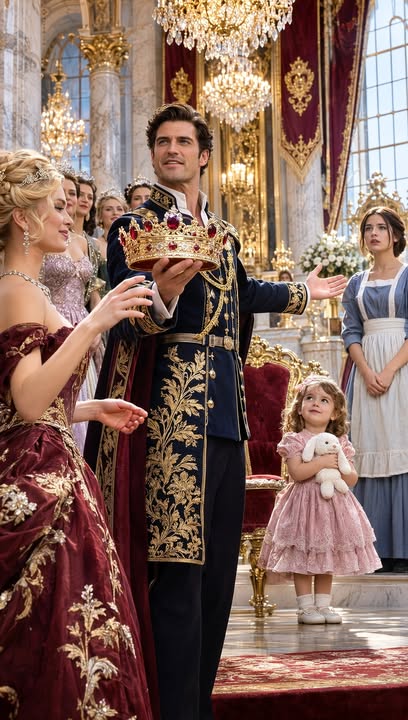
Part 6 – The Crown in the Open Gallery
The name belonged to the private secretary.
For a moment, Adriano only stared at it, as if the ink might rearrange itself into someone else’s hand.
Then the secretary stepped forward from beside the council table.
“I can explain,” he said, his voice unsteady but clear.
No guards moved toward him.
No one in the hall raised their voice.
The hush that settled was not the breathless fear of the crown ceremony, but the strained quiet of people waiting to learn whether trust had been misplaced.
Adriano held up the note.
“Chancellor Vale says the original letter is safe and that you know who took it.”
The secretary’s gaze lowered to the paper.
“I know who carried it away,” he said. “I did not take it for myself, and I did not destroy it.”
“Where is the letter?” Celeste asked.
“Locked in the old records room, inside a document chest.” He looked toward the council president. “I was afraid that if I brought it here, it would be taken before anyone had agreed how it would be examined.”
Sofia watched him closely.
“Why didn’t you tell us?”
The secretary seemed to search for an answer that would not excuse him.
“Because I thought I could keep it safe without drawing attention to it. I told myself I was protecting the evidence. Then the letter went missing, and I realized I had only made the truth harder to trust.”
Adriano’s disappointment showed in the stillness of his face.
“You let us believe it had been stolen.”
“I did.” The secretary swallowed. “I am sorry, Your Highness.”
“And Chancellor Vale knew?”
“He found me returning from the records room. I told him where the letter was. He asked me to send this note rather than come before the court with an explanation I could not prove.”
Sofia glanced at the line in Vale’s handwriting.
The chancellor had not taken the letter.
He had known where it was, and had chosen to let the court hear the truth only after it was clear that the evidence would not vanish.
It did not answer every question about him.
But it changed the shape of the question.
The council president rose.
“Bring the letter here, with witnesses,” he said. “No one is to handle it alone.”
The secretary bowed and left with two council clerks and a pair of guards.
Adriano turned back to the assembled court.
“We will wait for the document, and then the auditors will take custody of it under a written record.”
A councilor shifted in his chair.
“Your Highness, this entire matter has moved too quickly.”
“It has been hidden for generations,” Adriano replied. “Waiting longer will not make it simpler.”
The councilor fell silent.
Sofia stood near the crown’s glass case.
Its ruby light rested across the marble floor and touched the hem of her plain dress.
She had come into the palace wanting to draw attention to unpaid workers.
The crown had made her visible, but it had not changed what she wanted.
Still, she now understood that truth rarely stayed where it began.
It traveled from a ledger to a portrait, from a portrait to a family name, and from a family name to the people who had been expected to accept silence as history.
Celeste stood beside her.
“Are you afraid?” she asked quietly.
“Yes,” Sofia said.
“So am I.”
Sofia looked at her.
Celeste’s hand rested against the table, close enough for Sofia to touch if she wished.
“I keep thinking that if we learn my father’s money came from the palace accounts, everything I believed about him will change,” Celeste said.
“Maybe some things will.”
“I don’t want to defend what is wrong just because I love him.”
“You don’t have to choose between caring about him and telling the truth.”
Celeste’s eyes shone in the lamplight.
“I hope that’s true.”
“So do I.”
They stood without speaking until the secretary returned.
This time he carried a small wooden chest, its brass corners dark with age.
The council clerks witnessed its opening and recorded the condition of the lock.
Inside, wrapped in linen, lay Queen Elara’s letter.
The wax seal was broken, but the paper appeared undamaged.
Sofia recognized the graceful hand at the top and the uneven writing at the bottom.
The original had survived.
The council president asked an archivist who had been summoned from the independent records office to compare it with the copies.
The archivist examined the paper, ink, and handwriting without rushing.
She compared the letter with dated correspondence from the same period, and with the hidden inventory entry.
At last, she looked up.
“The letter is consistent with the materials and handwriting of its period,” she said. “The inventory entry is also genuine. The family list appears to have been updated across several generations, and the later entries are consistent with the dates recorded beside them.”
A quiet wave passed through the court.
“Can you confirm Miss Sofia’s descent?” the president asked.
“Not from these documents alone,” the archivist replied. “But the chain of household records connects the family named in the letter to Sofia’s mother, and the birth records we have requested will be needed to confirm every generation.”
She looked toward Sofia.
“The evidence is strong, but the final verification belongs to the auditors and genealogical records office.”
“That is fair,” Sofia said.
The archivist nodded, seeming to approve of the answer.
Adriano asked her to read the letter’s final paragraph aloud.
When she reached the words about the people being made whole from what had been taken in the crown’s name, the hall grew still once more.
No one clapped.
No one called for a new queen.
The sentence settled among them as a responsibility rather than a celebration.
The council president turned toward Adriano.
“The royal family must issue a statement acknowledging the hidden branch and the alteration of the public record.”
“Yes,” Adriano said.
“Before the lineage is fully verified?”
“We can acknowledge that the record was deliberately incomplete without claiming more than the evidence proves.”
The president considered this, then nodded.
“And the accounts?”
“The auditors begin tomorrow,” Adriano said. “They will have access to every ledger, including the royal treasury and the household offices.”
He looked toward the council.
“No one will be exempt because of a title, a family name, or a position in this palace.”
The words were not delivered as a threat.
They sounded like a promise made in the hearing of people who had waited too long for promises to mean something.
The audit took six weeks.
Those weeks were not easy.
The auditors found that wages meant for kitchen workers, laundresses, cleaners, and repair crews had been entered as paid though the payments had never reached them.
Some of the money had been redirected through old household accounts.
Other sums had been claimed for repairs that were never completed.
The trail led from the modern accounts back through a chain of offices where the records had been altered, renewed, and then buried among retired papers.
The earliest diversion had been authorized by an ancestor of Chancellor Vale.
The practice had not continued without interruption, but the old methods had been revived in recent years by officials who had learned that tidy records were rarely questioned.
Vale’s own office had failed to notice the pattern—or had allowed itself not to see it.
The auditors found no evidence that Vale had personally taken the money.
They did find that he had relied on reports from his office without checking the underlying payments, and that he had permitted records about Queen Elara’s branch to remain closed because he feared the political consequences of reopening them.
He did not deny either failure.
When the council asked him to answer for his stewardship, he stood before them without trying to soften the truth.
“I believed preserving the palace’s stability was the same as serving it,” he said. “I was wrong. Stability built on missing wages and erased names is only silence arranged to look orderly.”
He was removed from his office while the inquiry continued.
The officials who had altered the accounts were dismissed and required to repay what they had taken.
The palace treasury paid the staff the wages they were owed without waiting for those recoveries.
The repairs began with the west chimney, the laundry walls, and the leaking roofs above the servants’ quarters.
Sofia insisted that a representative chosen by the workers attend every repair meeting.
She also asked that the wage records be displayed in a form the staff could understand.
No one would again have to trust a line marked paid without knowing where the money had gone.
Celeste’s family records showed that her father had contributed to the engagement celebrations from his estate, as he had told her.
But the investigation also found that he had accepted reduced palace fees on several properties while the staff accounts were left short.
He had not known the workers were going unpaid.
He had known the palace was struggling and had chosen not to ask how the books balanced.
The distinction mattered, but it did not erase his responsibility.
Celeste spoke with him privately before the findings were made public.
She returned from that meeting pale and quiet, but she did not look away from what she had learned.
“My father will repay the fees,” she told Sofia. “He says he thought the arrangements were proper.”
“Do you believe him?”
“I believe he wants to believe himself.” Celeste took a breath. “I also believe he should have asked.”
Her family gave the auditors access to its records and began returning the money saved through the reduced fees.
Celeste helped arrange the restitution, not as a gesture meant to restore her family’s reputation, but as a practical duty owed to the people affected.
Then she ended the engagement formally.
The announcement was brief and made no mention of betrayal.
It said only that she and Adriano had decided, freely and together, not to marry.
In private, their parting was gentler.
They met in the garden where they had once walked as children, when the palace’s future had seemed to be something already written.
“I don’t regret caring for you,” Celeste said.
“Neither do I,” Adriano replied.
“I need to learn what my life looks like when it belongs to me.”
“I hope you find it.”
She smiled sadly.
“Perhaps I will find it by helping repair what our families allowed to break.”
Adriano offered his hand.
Celeste took it, then let go before either of them could mistake kindness for a promise.
She went on to work with the auditors and the staff council, bringing her family’s records to public review.
The court was less certain what to make of her once she stopped being the prince’s intended bride.
Celeste seemed relieved by that.
For the first time, people had to meet her without the title of future queen placed between them.
The genealogical records office finished its work in the spring.
Birth registers from the northern village confirmed the line from Queen Elara’s daughter, Amara, through the households that had guarded her descendants.
Sofia’s mother appeared in the final documents.
So did Sofia.
The court acknowledged her as Queen Elara’s great-granddaughter and the living descendant connected to the crown’s old inventory.
No one could say with certainty why the crown had shone for her.
The archivists believed its ruby settings had been protected by an old method that responded to heat and pressure, though no one could explain why the stones had remained dark for so long.
The crown’s response remained a mystery the experts could describe but not fully solve.
Sofia was content to leave that question open.
The family history, however, was no longer hidden.
Queen Elara’s name was restored to the public record, along with the story of the daughter she had entrusted to a loyal household.
The revised history did not call that daughter a threat or an accident.
It described her as a child whose life had been kept private by a mother who feared that powerful families would turn her into a prize.
When the council offered Sofia a royal title, she declined it.
When they offered her a claim to the throne, she declined that too.
“I don’t want my life decided by the same history that took my family’s names away,” she told them. “I want the records preserved, and I want the palace to answer to the people who live and work within it.”
After long discussions, the council created a permanent office of public stewardship.
Sofia accepted a formal role overseeing palace reforms and the preservation of Queen Elara’s history.
Her office had no power to rule the country.
It did have the authority to review household accounts, hear staff concerns, and require that palace records remain open to independent examination.
The first time she entered her new office, she found a ledger waiting on the desk.
It was bound in plain blue cloth, with room inside for every wage, every repair, and every decision made in the name of the palace.
Sofia ran her fingers over the blank pages.
It felt more important than the crown.
The crown itself was removed from its guarded case and placed in a public gallery.
The glass remained, not to keep people from seeing it, but to protect it while allowing everyone to stand before it.
Beside the crown hung Queen Elara’s portrait.
The silver locket appeared in a small display below the painting, though Sofia kept her own locket.
The inscription beside them did not call the crown a test of noble blood.
It read: “A symbol cannot make a person worthy. Truth, service, and the courage to listen must be chosen.”
On the day the gallery opened, servants stood beside councilors, auditors, families, and children from the city.
No one was placed at the back according to rank.
Sofia arrived in a simple dark-blue dress, her mother’s locket resting against her heart.
Adriano stood near the entrance, no longer in ceremonial robes.
He had spent the months after the inquiry learning to govern with fewer assurances and more questions.
He had begun attending staff meetings himself, sometimes listening so quietly that people forgot he was the prince.
The first time he sat in the kitchens, the head cook had given him a bowl of soup and asked whether he planned to pay for it.
Adriano had laughed.
Then he had paid.
Now he watched Sofia greet a group of kitchen workers who had come to see the gallery.
“You made them comfortable in a room that used to frighten them,” he said when they had moved on.
“I remember what it felt like to stand here and be treated as though I did not belong.”
“You belong in every room you choose to enter.”
Sofia looked toward the crown.
“I’m still learning to believe that.”
“You don’t have to believe it all at once.”
His answer held no demand.
Their relationship had grown slowly after the inquiry, through long conversations that were sometimes awkward and often honest.
Adriano had never asked her to become more royal, more agreeable, or more willing to be seen as a symbol.
Sofia had never promised to make his life easier.
They had met as two people trying to understand the parts of themselves their families had arranged before they were old enough to choose.
Sometimes they disagreed.
Sometimes they spent a day together and then several days apart, each returning to work that mattered.
There was no engagement announcement waiting to turn affection into an obligation.
There was only the possibility of a future they could make at their own pace.
Celeste joined them beside the gallery window.
She had cut her hair shorter and traded her elaborate gowns for dresses she could work in.
Behind her, her father was speaking with the auditors about the final repayment schedule.
“How does it feel to see the portrait here?” Celeste asked Sofia.
“Strange,” Sofia said. “But good.”
“I think she would have liked that you kept the locket.”
“I think she would have liked that the staff got paid more.”
Celeste smiled.
“Then she would have liked you.”
They stood together before the painting.
Queen Elara’s gaze was calm and direct.
The small crown-and-star locket around her neck caught the gallery light.
For generations, her story had been kept in a room beneath the kitchens, surrounded by records that someone had hoped no one would read.
Now children asked who she was.
Workers read the account of the missing wages and learned that the palace had repaid them.
Visitors saw a crown that no longer promised to choose their ruler.
It reminded them instead that a beautiful symbol could not make a dishonest system just.
The gallery filled with conversation.
The crown’s rubies shone beneath the lamps, red as they had in the great hall that first morning.
Sofia stood beside Adriano, Celeste, and the people whose names she had once feared would vanish among the palace’s tidy columns.
She did not wear a crown.
She did not need one to know that she had chosen her place.
Adriano offered her his hand, palm open, with no expectation that she take it.
After a moment, Sofia placed her hand in his.
Not as a subject.
Not as a queen.
Simply as herself.
Together they turned from the crown and walked toward the gallery doors, where the afternoon light waited beyond the palace walls.
**–THE END–PLEASE
Share your thoughts or feedback to motivate us to create more stories ♥️
* * *
[PREVIOUS: PART 5](https://storyly.idolsgift.com/blog/part-5-the-name-missing-from-the-royal-record-069)
✓ Lynn R. Adams
Part 6 – The Crown in the Open Gallery The name belonged to the private secretary. For a moment, Adriano only stared at it, as if the ink might rearrange itself into someone else’s hand. Then the s…