PART 6 (THE END): The Name in the Photograph 046
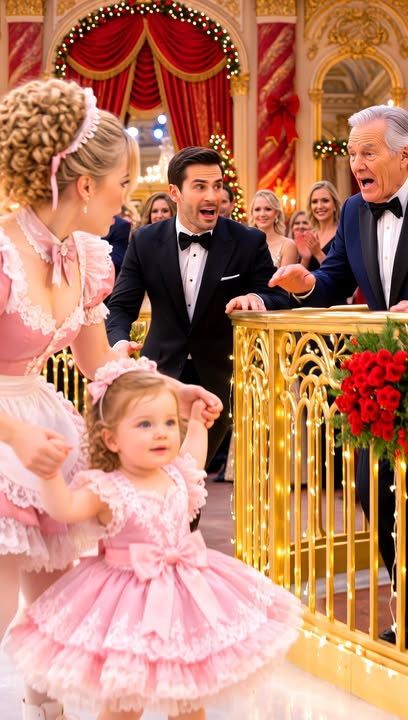
Part 6 – A Future of Their Own
“Damian,” Sophia whispered, “he says Eleanor knows where I am.”
For a moment, the room seemed to hold its breath.
Damian took in the photograph again, the handwritten message on its back, and the name of the rehabilitation clinic below.
He understood why Adrian had added those last words.
They were not proof Eleanor had harmed anyone.
They were proof that Adrian had once feared what she might know.
“Let’s not decide what that means before we speak with him,” Damian said gently.
Sophia nodded, though the photograph trembled between her fingers.
“What if he remembers me and doesn’t want to see me?”
“Then we’ll respect what he wants.”
“And if he doesn’t remember?”
“Then we’ll meet him as he is now.”
She looked at the picture.
“I used to imagine seeing him again,” she said. “For years, I thought it would be enough just to know he was alive.”
“And now?”
“Now I’m afraid the real meeting won’t resemble anything I imagined.”
Damian reached for her hand.
“It doesn’t have to resemble a dream to matter.”
They did not go to the clinic alone.
Before leaving, Damian called the family’s independent attorney, who arranged to meet them there and helped confirm that the clinic had received Adrian under his own name.
Walter joined them, carrying copies of the documents they had gathered.
Eleanor did not come.
She had sent word through her lawyer that she was willing to cooperate with the investigation, but would not attend the meeting unless Adrian requested it.
Sophia read the message twice.
“I don’t know whether that’s kindness or caution,” she said.
“Perhaps it’s both,” Damian replied.
The clinic stood in a quiet town beyond the city, surrounded by bare winter trees and a low stone wall.
It was a place built for recovery rather than spectacle, its rooms bright and plain, its staff accustomed to protecting patients’ privacy.
At the entrance, a nurse confirmed that Adrian had agreed to see them.
“He knows his brother is coming,” she said. “He asked that you enter one at a time.”
Damian looked at Sophia.
“Would you like me to go first?”
She drew a slow breath.
“No. I need to see him.”
The nurse led her along a sunlit corridor to a small room overlooking the garden.
Sophia stopped at the threshold.
A man sat beside the window, his hands resting on the arms of his chair.
His dark hair had thinned, and a pale scar crossed one temple.
The years had changed him, as they changed everyone, but the shape of his face was unmistakable.
He turned toward the door.
Sophia’s fingers rose to her lips.
“Adrian.”
He searched her face.
For a brief, painful instant, she saw uncertainty there.
Then his expression shifted, slowly, as a distant light finding its way through fog.
“Sophia?”
She crossed the room, but stopped a few steps away, giving him room to decide.
“I’m here.”
Adrian looked at her for a long moment.
“I knew you would come,” he said. “I just wasn’t sure I could remember you properly.”
Her eyes filled.
“You don’t have to remember everything today.”
“I remember the ice.”
A faint smile touched his mouth.
“You always said the first step was the hardest.”
“It usually is.”
“And the second?”
“Learning you can take another.”
He lowered his gaze to his hands.
“I’m sorry.”
Sophia shook her head.
“You don’t have to apologize for surviving.”
“I’m sorry you were left to believe I was dead.”
“I was told you were.”
“I know.”
His voice caught.
“I couldn’t reach you. For a long time, I couldn’t remember enough to know what I needed to say.”
Sophia sat in the chair across from him.
“Then we’ll begin with what we can say now.”
He nodded, eyes wet.
“I’m glad you came.”
“So am I.”
Damian waited in the corridor while they spoke.
He could hear no words, only the low murmur of voices through the closed door.
Walter sat beside him, holding the leather case against his knees.
“Do you remember Adrian before the crash?” Damian asked.
“Very well.”
“What was he like when he talked about the company?”
“Impatient with easy answers. He thought a number ought to mean what it said.”
“That sounds like him.”
“He was also kinder than he knew.”
Damian glanced at the closed door.
“I wish I had told him that.”
“You still can.”
The meeting lasted nearly an hour.
When the door opened, Sophia came out first.
She was crying, but her smile was real.
“He wants to see you,” she said.
Damian entered alone.
Adrian looked older than he had in the photographs, and more tired, yet his eyes still held a familiar brightness.
For a moment, Damian was twenty-three again, standing beside his brother on a dock while Adrian teased him for packing too many shirts.
Then the memory passed, and he was a grown man facing the brother he had mourned.
“I’m sorry,” Damian said.
Adrian’s brow furrowed.
“For what?”
“For believing the story was finished.”
Adrian considered this.
“You were told I was dead.”
“I could have asked more questions.”
“So could everyone.”
“I didn’t.”
“Neither did I.”
Adrian’s voice was gentle, without accusation.
“I don’t remember all of it, Damian. I remember pieces. The road. The impact. Someone telling me not to move. Then a hospital, and later another one.”
He paused, concentrating.
“I knew my name. I knew I had a brother. I didn’t know where either of you were.”
“You were listed as unidentified after the transfer?”
“The first hospital used a temporary name because my papers were missing. By the time my identity was confirmed, the records had been separated from the crash file.”
“How did you end up here?”
“A recovery organization connected to the clinic helped me. I had serious injuries and memory problems. They found my family name eventually, but I was afraid to contact anyone.”
“Why?”
“Because I had heard people discussing the company, the money, and the crash. I didn’t know who I could trust. I thought if I came home without proof, the same story would start over.”
Damian lowered his gaze.
“You shouldn’t have had to carry that alone.”
“I didn’t. The people here helped me.”
Adrian looked toward the window.
“They helped me build a life that wasn’t only waiting to remember.”
The words held no bitterness.
Only the hard-earned understanding of someone who had learned to live with what could not be hurried.
“I’m not the person I was,” he said. “I still lose pieces of time. Some memories return, and some don’t.”
“I don’t need you to be who you were,” Damian replied. “I want to know who you are now.”
Adrian’s eyes softened.
“I’d like that.”
They spoke for a long while about ordinary things.
Rosie’s age.
The house.
The old family sailboat, which Adrian remembered only in flashes.
The staff who had stayed at the mansion for years.
When Damian finally mentioned Eleanor, Adrian grew quiet.
“She came to see me once,” he said.
“When?”
“After I was moved to the rehabilitation center.”
“Did she tell you she knew?”
“She said she had learned I was alive. She brought papers for me to sign.”
“What papers?”
“I don’t remember every detail. I refused to sign anything until I knew what it was.”
“Did she threaten you?”
“No. She seemed frightened, but not of me.”
“Did she know where Sophia was?”
Adrian frowned.
“She asked whether I remembered the woman who had been with me in the car. I couldn’t remember clearly then.”
He paused.
“I didn’t know it was Sophia until Walter showed me the photograph.”
“Did Eleanor ask you to keep silent?”
“No. She said it would be better if the family dealt with it quietly.”
Damian absorbed this.
It was not an excuse for Eleanor’s choices.
It was another piece of the truth, complicated and incomplete, but human.
Adrian rubbed one thumb over the other.
“I don’t want my return to become a fight.”
“It doesn’t have to.”
“But the company?”
“We found the records.”
“Then the people who moved the money need to answer for it.”
Damian nodded.
“That’s what we intend.”
“Even if it costs the company?”
“If it survives only by hiding what happened, it isn’t worth protecting that way.”
Adrian looked at his brother, then gave a small, tired smile.
“You always were stubborn once you finally made up your mind.”
“I learned from you.”
“Then I owe you an apology too.”
“You don’t.”
“I do. I left you with a story you had no way to question.”
“You were hurt and afraid.”
“So were you.”
They sat with the silence between them, no longer a wall but a place where they could begin again.
The investigation took months.
The old travel logs, Walter’s preserved documents, and the company’s archive gave investigators a trail they could verify.
An independent audit confirmed that Miles Vane had used the consulting firm to move money from the Blackwood group.
The fraud had begun before Adrian discovered it and continued for a short time after the crash.
Vane had arranged for Adrian’s route to be altered through a false delivery notice, hoping to delay him and retrieve the documents he carried.
The crash itself had been caused deliberately by a hired driver, who had been paid to force Adrian’s car off the road.
Eleanor had not arranged the crash.
But she had learned that Adrian had survived, and she had chosen to conceal it.
Vane had convinced her that a public investigation would destroy the company and expose everyone connected to it.
He promised that Adrian would receive care, that Sophia would be left alone, and that the family could address the matter once the fraud had been controlled.
Eleanor had believed she was buying time.
In truth, she had helped turn an uncertain crisis into years of silence.
When investigators brought the evidence to her, she did not deny what she had done.
She explained how fear had narrowed her judgment until she could no longer tell the difference between protecting the family and protecting her own position.
“I thought I could keep the damage contained,” she told Damian. “I made the damage last.”
Her cooperation helped establish the full chain of events.
Vane was arrested and later convicted of fraud and arranging the deliberate crash.
Eleanor faced consequences for concealing Adrian’s survival and for withholding information from the investigation.
She resigned from the family company and agreed to provide a complete account of her actions.
It was not a clean ending, and no one pretended otherwise.
Some trust could not be restored by a single apology.
But Eleanor did not ask anyone to forget.
She came to see Adrian at the clinic when he invited her.
She sat beside him, hands folded, and told him what she remembered.
He listened.
When she finished, he said, “I don’t know what I can forgive yet.”
Eleanor nodded.
“You don’t have to decide.”
That was the first time Sophia believed her aunt’s remorse might be real.
The company survived, though it changed.
Damian replaced the directors who had failed to oversee the accounts, opened the books to independent review, and established protections for employees who reported concerns.
Some investors left.
Others stayed because they believed the company had chosen honesty over convenience.
The family’s name appeared in the news, but the story did not belong to strangers for long.
Damian and Sophia testified, each in their own words.
Sophia spoke about the crash, the hospital, the threats that had made her disappear from the skating world, and the years she spent believing the man she loved was gone.
She did not claim to remember what she could not remember.
She did not apologize for what fear had taken from her.
Afterward, when the hearing room emptied, Damian waited beside her without asking how she felt.
She turned to him.
“I thought telling it would make me feel smaller.”
“And did it?”
“No.”
She took his hand.
“It made the story mine again.”
Rosie was too young to understand the details, but she understood the people.
She learned that Uncle Adrian was someone who loved her, even if he sometimes needed to rest.
She learned that Sophia and Damian had stood beside him when he needed them.
She learned that families could make mistakes and still choose to tell the truth afterward.
When Adrian was ready, he began visiting the mansion.
At first, he came for short afternoons, sitting in the garden while Rosie showed him her wooden horse and the small collection of drawings she had made.
His memory returned unevenly.
Some days he remembered the names of old friends.
Other days, he forgot what he had eaten that morning.
No one treated either kind of day as a failure.
Sophia never rushed him.
Damian learned to let silence be part of a conversation.
And Rosie, with the unerring confidence of a child who had never known she should be cautious around a new friend, simply kept offering Adrian toys.
One spring morning, the Blackwood family returned to the rink.
The Christmas lights were gone, replaced by the pale blue brightness of a clear day.
Sophia stood near the boards, lacing her skates.
For months, she had wondered whether she could step onto the ice without hearing the old music of her career, the applause that had once defined her, or the silence that followed.
She finally understood that she did not need to return as the skater she had been.
She only needed to choose whether she wanted to skate now.
Rosie bounced beside Damian, wearing a little blue jacket and mittens that kept slipping over her fingers.
“Is Sophie going to spin?” she asked.
“If she wants to,” Damian replied.
Sophia stood and moved onto the ice.
Her first glide was careful.
Then she felt the familiar steadiness beneath her feet, the old balance returning without demanding that she become anyone she no longer wished to be.
She crossed the rink in a smooth, quiet line.
At the center, she turned once, arms open, and let herself smile.
No judges watched.
No one measured the height of her jump or the precision of her landing.
Rosie clapped with both hands.
“Again!”
Sophia laughed and skated back to the boards.
“Perhaps one more.”
Damian held Rosie securely as she leaned over the barrier.
Adrian sat in a chair nearby, a blanket across his knees, his face turned toward the ice.
When Sophia reached him, she offered her hand.
He took it, and she guided him in a slow circle beside the boards.
He did not skate alone, and he did not have to.
For a while, the four of them stayed beneath the high windows while winter sunlight brightened the ice.
Later, after Rosie had fallen asleep at home, Sophia stood with Damian in the garden.
The city shimmered beyond the iron gates, busy and indifferent, while the house behind them held the warm sounds of a family finding its shape.
“Do you ever wish we could return to the beginning?” she asked.
Damian thought of the years they had lost, the unanswered questions, and the brother he had learned to mourn twice.
“No,” he said. “I wish none of it had happened. But I don’t wish to become the people we were before we faced it.”
Sophia leaned against his shoulder.
“Neither do I.”
He kissed her hair.
“You once told Rosie you’d be right there.”
“I meant it.”
“I know.”
She looked back through the window, where the nursery lamp glowed softly.
“I used to think safety meant being invisible.”
“And now?”
“Now I think it means having people who will stand beside you when you’re seen.”
Damian reached for her hand.
“You won’t have to disappear again.”
She threaded her fingers through his.
“Neither will you.”
In the months that followed, Sophia returned to skating gradually, on her own terms.
She began with a community program, teaching children who were learning to trust the ice beneath them.
Rosie sat at the rink’s edge with Damian, cheering for every child, though she always cheered loudest when Sophia glided past.
Adrian continued his recovery, measured not by the memories he regained but by the life he rebuilt.
Some days, he recalled the laughter from their childhood.
Other days, he learned something new about the brother and woman who had refused to let the past decide what family meant.
And Damian, who had once believed strength meant keeping every uncertainty outside the gates, discovered that a home was not made safe by silence.
It was made safe by the people willing to tell the truth, forgive what could be forgiven, and remain beside one another while the rest took time.
One bright afternoon, Rosie skated between Sophia and Damian, holding each of their hands.
Adrian watched from the boards with Walter beside him.
The child’s laughter rose through the rink, echoing beneath the rafters where so many secrets had once seemed impossible to carry.
Now the sound belonged to a future they had chosen together.
**–THE END–PLEASE
Share your thoughts or feedback to motivate us to create more stories ♥️
* * *
[PREVIOUS: PART 5](https://echoesofstories.idolsgift.com/blog/part-5-the-name-in-the-photograph-046)
✓ Lynn R. Adams
Part 6 – A Future of Their Own “Damian,” Sophia whispered, “he says Eleanor knows where I am.” For a moment, the room seemed to hold its breath. Damian took in the photograph again, the handwritten…