PART 6 (THE END): The Name Hidden in the Recording 008
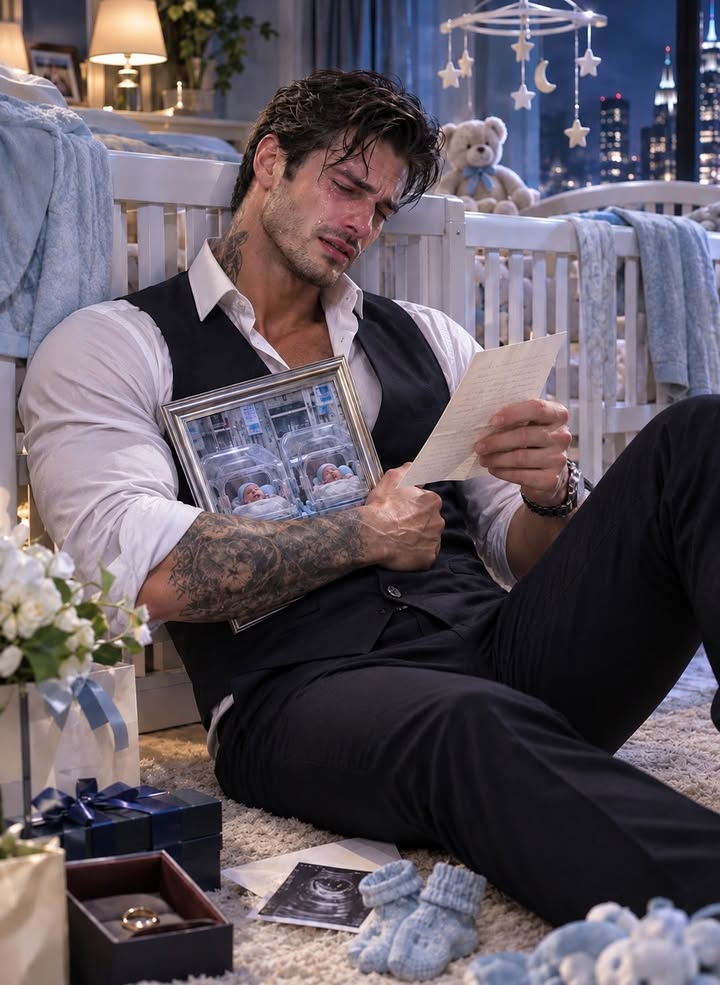
Part 6 – The Family We Chose
I answered the specialist’s call while Daniel’s name still glowed on my phone.
“Mr. Cole, this is Dr. Patel,” the doctor said. “Grace’s latest readings are stable, but the scan shows the opening has not closed as we hoped.”
Amelia stepped closer, listening.
“What does that mean?” she asked.
“It means we need to discuss the next stage of care,” Dr. Patel replied. “There is no immediate emergency, but we should schedule the procedure we talked about sooner rather than later.”
Sofia kept one hand on the twins’ carriers.
I looked at the board’s communications officer, who was waiting for me to take the other call.
“Can we speak somewhere private?” I asked Dr. Patel.
“Of course.”
We moved into a consultation room, Amelia beside me and Sofia following with the babies.
The board call continued to ring until it stopped.
Dr. Patel explained the procedure in measured detail, describing what the team would do, what they hoped to learn, and the risks they wanted us to understand.
Amelia asked about recovery and feeding, about how long Grace would need to remain under observation, and whether Caleb could stay nearby.
I asked how the doctors would keep Grace comfortable and what signs would tell us the procedure had worked.
No question erased the worry in the room, but the answers gave it edges we could hold.
When Dr. Patel finished, she left us with a consent form and time to talk.
Amelia sat beside the carriers, her fingers resting lightly on Grace’s blanket.
I looked at the phone in my hand.
“The board wants me back at headquarters,” I said. “They’re asking me to take command.”
“What do you want to do?” she asked.
“I want to stay here.”
“That isn’t the same as knowing what you should do.”
“No,” I said. “It isn’t.”
She watched my face, and I could feel how carefully she was separating my answer from what she hoped—or feared—it might mean.
“The doctors need both our consent,” she said. “We should make this decision together.”
“Yes.”
“Your company is important.”
“It is.”
“And you’ve worked your whole life to build it.”
“I have.”
She waited.
“I’m going to tell the board Daniel will continue leading the response,” I said. “I’ll be available if the doctors say it’s all right, but I’m not leaving you to handle this alone.”
Her eyes lowered to the consent form.
“I don’t want you to do it because you think I’ll forgive you afterward.”
“I know.”
“I won’t.”
“I know that too.”
The answer seemed to settle something—not between us, perhaps, but inside the space we had made for the truth.
I called Daniel.
He picked up immediately.
“We need you in the room,” he said. “The client has asked for a direct update, and the board is waiting.”
“The specialist has recommended a procedure for Grace.”
Daniel went quiet.
“Is she all right?”
“She’s stable. We’re making a decision about her care.”
“I understand.”
“I’m staying with my family. You have authority to lead the response and speak for the company.”
“Harrison, the board may vote on your position tonight.”
“Then they may.”
“You’ve worked too hard for this to walk away.”
“I’m not walking away from the company. I’m trusting the people I hired to do their jobs.”
“And if they decide you’re no longer necessary?”
“Then I’ll accept that.”
Daniel was silent long enough for the question behind his next words to become clear.
“Are you certain?”
“I’m certain I won’t make Amelia and the children pay for my fear of losing control.”
“All right,” he said. “I’ll tell them.”
“Thank you.”
When I ended the call, Amelia had not moved.
She looked down at the consent form and then at Grace, whose small hand had emerged from beneath the blanket.
“What did you tell him?” she asked.
“That he had the authority to lead, and that I would accept the board’s decision.”
“And if you lose your position?”
“Then I’ll have to find a way to be useful somewhere else.”
A faint breath escaped her, almost a laugh, though there was no humor in it.
“You sound less frightened than you should.”
“I am frightened.”
“Of losing the company?”
“Some,” I said. “More than that, I’m frightened of going back to the person who believed he had to control every outcome to prove he mattered.”
Amelia held my gaze for a moment.
Then she turned to the form.
“We should read this carefully.”
We did.
The doctors gave us time to speak with the cardiology team once more, and the next morning we signed the consent.
The procedure was scheduled for the following week.
In the days before it, I did not fill the hours with declarations.
I learned how to prepare bottles without asking Sofia to check every measurement.
I learned which blanket Grace preferred and how Caleb’s cries changed when he was hungry rather than tired.
I followed the routine Amelia had built, even when I felt clumsy, even when no one praised me for remembering.
When Amelia asked me to take Caleb for an hour so she could sleep, I did not treat it as a sign that we were becoming a couple again.
I took him, walked the quiet corridor, and let the weight of him rest against my shoulder.
When he woke, I changed him, fed him, and brought him back to his mother without asking her to notice how well I had managed.
The morning of Grace’s procedure, Amelia and I sat together in the waiting area.
Sofia had taken Caleb to a nearby room where the nurses could help with his feeding.
Amelia’s hands were clasped so tightly that her knuckles had gone pale.
I did not reach for them without asking.
“Would it help if I held your hand?” I said.
She looked at me.
“Yes,” she answered.
I placed my hand over hers.
It was the first time in months that she had allowed my touch without needing to explain it or brace herself against it.
We did not speak while the team prepared Grace.
We waited.
At last, Dr. Patel came through the doors and told us the procedure had gone as planned.
Grace would need monitoring, but her readings were steady.
Amelia shut her eyes, and the breath she released seemed to come from somewhere deep in her chest.
I kept her hand beneath mine.
She did not pull away.
The days that followed were ordinary in the way difficult days often are: charts, feedings, quiet questions, careful waiting.
Grace recovered steadily.
The doctors were pleased with her progress, though they reminded us that follow-up appointments would remain important.
Amelia listened, and I listened beside her.
When the hospital finally cleared Grace to go home, Sofia brought the car around while I carried the bags to the entrance.
Amelia held Grace close against her chest.
Caleb slept in his carrier, one tiny fist resting near his cheek.
Outside, the afternoon sun lay warm across the pavement.
“Home,” Amelia said softly, more to Grace than to me.
I looked at the infant carriers and then at Amelia.
“Would you like me to follow you?”
“Yes,” she said. “You can bring the bags.”
It was not an invitation back into her life as her husband.
It was a practical request from the mother of my children, and I carried it as carefully as anything I had ever been trusted with.
The next months did not transform us all at once.
They were made of night feedings, doctor’s appointments, laundry, and the slow education of being present after years of being absent.
I learned to arrive when I said I would.
If I was delayed, I told Amelia before she had to wonder.
I asked what help she wanted rather than deciding for her.
When she said no, I accepted it without turning my disappointment into a debt she had to comfort.
The board kept me in the role after Daniel’s response succeeded, but my authority changed.
I delegated more, listened longer, and stopped treating every problem as proof that the company could not function without me.
The family-support program was rebuilt around privacy, with an independent administrator and no reporting to executives.
I never told Amelia it was her doing.
She knew.
She also knew I had made the change without asking her to praise it.
Madison’s note stayed in the drawer beside the necklace receipt.
I did not keep the necklace.
I sold it and sent the proceeds to the hospital’s family-support fund, anonymously.
It could not repay what I had done, and I did not pretend it could.
The money became help for families who might otherwise hesitate to accept it.
That was all it could be.
One evening, several months after Grace’s procedure, Amelia invited me to have dinner after the twins were asleep.
The meal was simple, and the conversation began with feeding schedules and the next appointment.
Then the silence widened enough for something more difficult to enter.
“I’ve been thinking about the recording,” she said.
I set down my glass.
“You don’t have to play it for me.”
“I know.”
She studied me across the table.
“For a long time, I kept it because I wanted Caleb and Grace to know they had been wanted by both of us.”
“I’m glad you did.”
“I also kept it because it reminded me that the person I loved had existed.”
I waited.
“I didn’t know whether he was still there,” she continued. “Or whether I had remembered him more kindly than he deserved.”
“I’m sorry.”
“I know.”
She looked toward the dark window, where the room’s warm light reflected back at us.
“I listened to it once after the twins came home.”
“What did you hear?”
“The promise you made about ordinary days.”
I felt my throat tighten.
“I remember the promise now.”
“You used to say that the most important parts of a family wouldn’t make the newspapers.”
“I was right about that.”
“You were.”
She folded her hands on the table.
“I don’t want the recording to become an argument for giving us another chance.”
“It won’t.”
“I don’t want the old marriage back.”
“I don’t think we could go back to it.”
“No,” she said. “We couldn’t.”
The words were not a rejection of every future.
They were a recognition that the past could not be restored by wanting it.
“What do you want, Amelia?” I asked.
She looked at me, and for a moment I saw the woman I had first loved beneath the years of weariness.
“I want to know whether we can build something honest from where we are,” she said. “Not because we have children. Not because you’re sorry. Because we both choose it.”
I kept my hands on the table.
“What would that look like?”
“Slowly.”
“Slowly is fine.”
“Separate homes for now.”
“Of course.”
“Time for me to change my mind.”
“You can change your mind.”
“And no promises meant to reassure me in the moment.”
“I can promise to be honest,” I said. “I can show up. I can’t ask you to trust words more than what I do.”
She watched me closely.
“That’s the first thing you’ve said tonight that feels like an offer instead of a plea.”
I let the words reach me without trying to make them larger.
“I’d like to start again,” she said. “As partners and parents, if that’s still what you want.”
“It is.”
“Then we start with tomorrow.”
“Tomorrow,” I agreed.
She did not reach for my hand.
I did not reach for hers.
The space between us remained, but it no longer felt like a wall we were pretending not to see.
It felt like ground we might cross one careful step at a time.
Months later, on Caleb and Grace’s first birthday, Amelia invited me to the small celebration she planned at her home.
There were no photographers, no guests from the company, and no grand arrangements.
Sofia brought a cake.
Nia sent a card, but Amelia chose whether to open it.
The twins sat side by side on a blanket, both of them fascinated by the paper crowns Amelia had made from leftover wrapping.
Grace clapped when Caleb discovered the cake.
Caleb responded by patting frosting across the blanket with grave concentration.
Amelia laughed, and the sound moved through me like something I had missed and been given back in a new form.
When the candles were lit, we sang together.
Our voices were uneven and quiet, and Caleb tried to grab the flames before Sofia gently moved the cake farther away.
Afterward, Amelia stood beside me near the window while the twins played on the floor.
“I’ve been thinking about what you asked at dinner,” she said.
I turned toward her.
“You said we could start again slowly,” I replied.
“I did.”
“I’m still willing.”
“I know.”
She looked down at our children.
“I don’t trust you the way I once did.”
“I understand.”
“But I trust what you’ve done these past months more than I trust what either of us might promise.”
“That feels fair.”
“It doesn’t mean everything is settled.”
“I know.”
She breathed in, then let it out gently.
“I want to try,” she said. “Not to return to our old marriage, but to build a new one. A marriage where we say when we’re unhappy before we begin disappearing from each other.”
My eyes stung.
“I want that too.”
“Then we’ll go slowly.”
“We will.”
For a moment, she stood with her hand resting on the sill.
Then she placed it in mine.
I did not close my fingers around hers until she let them stay there.
Below us, Caleb crawled toward Grace, who had taken hold of a paper crown and was determined to eat its edge.
Amelia leaned against my shoulder, not as a promise that our past had been repaired, but as a choice made in the present.
I looked down at our children, then at the hand resting in mine.
For the first time, I understood that being a family was not a prize waiting at the end of remorse.
It was something we built in the ordinary hours, by showing up, telling the truth, and choosing one another without pretending choice could erase what came before.
Grace laughed.
Caleb answered with a delighted sound of his own.
Amelia’s hand tightened gently around mine.
We were not the family I had once imagined I could buy my way back into.
We were the family we had chosen, one honest day at a time.
**–THE END–PLEASE
Share your thoughts or feedback to motivate us to create more stories ♥️
* * *
[PREVIOUS: PART 5](https://puretales.idolsgift.com/blog/part-5-the-name-hidden-in-the-recording-008)
✓ Lynn R. Adams
Part 6 – The Family We Chose I answered the specialist’s call while Daniel’s name still glowed on my phone. “Mr. Cole, this is Dr. Patel,” the doctor said. “Grace’s latest readings are stable, but t…