PART 6 (THE END): The Name Behind the Salute 055
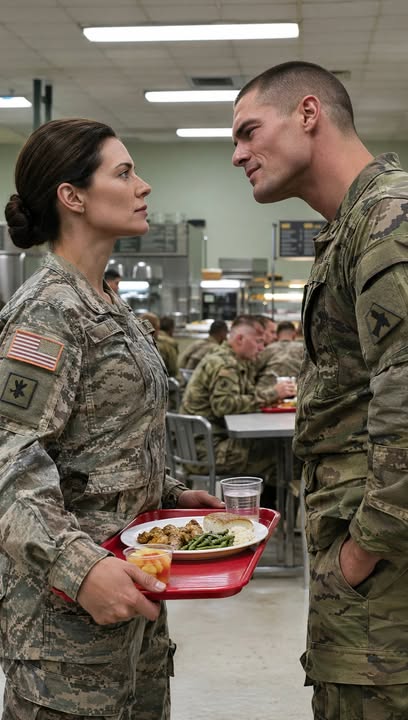
Part 6 – A Place at the Table
Mara held the copied maintenance note beneath the records room light and read the sentence in the margin again.
“Do not let Voss see this.”
The handwriting belonged to Colonel Rowan.
For a moment, the old room seemed to fall away.
There was only the paper, Eli’s worried face, and the knowledge that the investigation had just opened another door.
“Where did Danner find this?” she asked.
“Behind the work-order binder in the equipment bay,” Eli replied. “He said it might matter. He didn’t want me to bring it to you alone, so he told the duty officer too.”
“That was sensible.”
Eli’s shoulders eased a fraction.
“Do you know what it means?”
“Not yet.”
She read the note once more, resisting the urge to let the words answer more than they could.
The page showed that the old defect had persisted and that a replacement part had never been installed.
The margin showed that someone had wanted her kept away from it.
But the note did not show when Rowan had written those words, what he had been afraid of, or whether he had written them to conceal the defect or to preserve the evidence until he could act.
Mara turned the page over.
There was no date on the back, only a faded inventory stamp.
“Did anyone else see this?”
“Danner and me. The duty officer saw it in the envelope.”
“Good. We’ll document everyone who handled it, photograph both sides, and add it to the inquiry record.”
Eli nodded.
“Will Colonel Rowan know you found it?”
“He will.”
“Are you going to ask him what he meant?”
“Yes.”
Eli studied her face.
“Do you think he was hiding it?”
“I think we need to ask him before we decide what it means.”
The answer was measured, but the words did not make the discovery any less unsettling.
Mara placed the note in a clear evidence sleeve and wrote the time, date, and names of those who had handled it on the chain-of-custody form.
Eli watched her finish.
“Does this change what you think of him?” he asked.
“It changes what I need to know.”
“That’s what you said about General Hale.”
“It’s still true.”
Eli looked toward the door, where distant footsteps passed and faded.
“I used to think a person had to be either good or bad,” he said. “It was easier.”
“Was it?”
“Maybe not. But it was easier to know what to do.”
Mara capped her pen.
“People make choices,” she said. “The choices matter. So does the truth about them. But one page rarely tells the whole story.”
Eli gave a slow nod.
“I should get back.”
“Thank you for bringing this forward, and for making sure it was handled properly.”
He hesitated, then met her eyes.
“I’m not as worried about tomorrow as I was.”
“That doesn’t mean you shouldn’t be careful.”
“I know. I’m just not as worried.”
Mara understood the difference.
“Get some rest, Private.”
“You too, Colonel.”
After he left, she called the inquiry officer and reported the new evidence.
She described the note’s condition, its location, and the chain of custody, then asked that Colonel Rowan be interviewed about it before anyone treated the handwriting as proof of intent.
The inquiry officer agreed.
Mara sent Rowan a brief request to meet, making no accusation and offering no interpretation.
He arrived at the administrative building the next morning, before the rest of the review team had assembled.
The note lay inside its evidence sleeve between them.
Rowan looked at the sentence in the margin and lowered his eyes.
“I wrote this,” he said.
“Do you remember when?”
“Not precisely. It would have been during the earlier review, after the first maintenance reports came in.”
“What did you mean by it?”
He took a breath and held it for a moment before answering.
“I had learned that the system had a recurring defect. I wanted to keep you from seeing the note until I understood the extent of it.”
“Why?”
“Because you were assigned to review the old rescue accident, and I believed the record would make it look as though your unit had ignored a known danger.”
“Did you believe that was what happened?”
“No. I believed it might be how people interpreted the evidence.”
“Those are different things.”
“Yes.”
“Did you order anyone to remove the page?”
“No.”
“Did you ask anyone to conceal it?”
“No.”
“Did you report it to the inquiry?”
Rowan’s silence answered before he spoke.
“I should have,” he said. “I didn’t.”
“What happened to the page?”
“I put it behind the work-order binder because I intended to bring it to the command review once I had confirmed the equipment history.”
“And then?”
“I let the matter move on without bringing it forward.”
“Why?”
He pressed his fingertips together.
“I thought I was preventing a careless conclusion about your team. I was also trying to protect the training program from being shut down before we knew how widespread the defect was.”
“Those reasons do not cancel each other.”
“No,” he said. “They don’t.”
Mara watched him closely.
The cafeteria returned to her mind—not the commander who had saluted her, but the man who had chosen to wait until a private spoke before saying what he knew.
“I should have trusted the inquiry to distinguish your unit’s actions from the equipment failure,” he continued. “Instead, I tried to control what information reached you.”
“Were you trying to protect me?”
“Yes.”
“And the base?”
“Yes.”
“Your own command?”
Rowan did not look away.
“Yes.”
His answer hurt more for being plain.
Mara had spent much of her career learning that a motive could be understandable and still lead somewhere harmful.
The note had not been written by a monster.
It had been written by a commander who believed he could manage the truth until the right moment, and then failed to let that moment arrive.
“Your statement will include all of this,” she said.
“It will.”
“The inquiry will decide whether your actions require a formal hearing.”
“I understand.”
“You will not be the one managing the evidence from here.”
“I agree.”
Rowan rested one hand on the table.
“I’m sorry I tried to keep you from seeing it.”
Mara studied him.
It was the first apology he had offered without attaching a reason that might soften it.
“Thank you,” she said. “The apology doesn’t settle the findings.”
“I know.”
The review team began work an hour later.
They examined the archived note, compared it with Rowan’s statement, and added both to the evidence record.
They interviewed Danner, Eli, Hsu, the training staff, and Rowan separately.
No one was asked to agree on a shared version before speaking.
No one was told to protect the base from embarrassment.
Mara remained available to answer questions about the earlier rescue unit, but the inquiry assigned an independent officer to review the old accident so that her personal connection would not decide the findings.
The work was long and sometimes painful.
It did not move at the speed of a dramatic confession.
Instead, it proceeded through dates, signatures, work orders, interviews, and patient comparisons between records that had once been kept in separate offices.
The technical inspection confirmed that the sensor-control system had a defect capable of triggering a sequence before the safety check completed.
The defect had appeared in the old rescue unit’s accident report and in the current maintenance records.
The replacement part listed as necessary had never been installed in the older system.
At Fort Calder, the repair had also remained incomplete on the day of the training exercise.
The inquiry found that the altered entries had made the equipment appear cleared when the repairs had not been verified.
It found that the changes were approved through the senior command office during the earlier records review, and that General Hale had authorized the replacement page.
Hale’s statement confirmed that he had known the original report identified an unresolved defect.
He had withheld that finding because he feared Mara’s team would be blamed and lose future rescue assignments.
He had believed he could correct the underlying problem after the inquiry concluded.
He had not done so.
The inquiry did not conclude that Hale intended to endanger anyone.
It did conclude that he had knowingly allowed an incomplete account to stand, and that his decision had helped keep the defect out of view.
Hale accepted the finding.
At the formal hearing, he stood before the review panel and spoke without trying to turn his intentions into a defense.
“I wanted to protect a team I believed would be blamed unfairly,” he said. “I did protect them from that blame, but I also withheld information that belonged in the record. I should have told the truth and trusted the process to judge them fairly.”
Mara sat in the back of the room.
She listened as the man who had once steadied her hand acknowledged that his protection had been incomplete and his judgment wrong.
She did not feel the old trust return.
But something new took its place: the knowledge that he was finally willing to let the record say what he had once tried to soften.
Hale faced a fair hearing and was removed from duties involving safety oversight while the service reviewed his future assignment.
The decision was neither secret nor vindictive.
It was based on what he had known, what he had done, and the responsibility attached to his position.
Before leaving the hearing, he came to Mara.
“I’m sorry,” he said.
This time, he did not explain why.
Mara let the words stand between them.
“I believe you,” she said. “I’m not ready to tell you that everything is all right.”
“I wouldn’t ask you to.”
“Then we can leave it there for now.”
Hale bowed his head, accepting the limit.
They parted without the easy closeness they once shared, but without pretending the past had no value.
Mara knew she could miss the mentor he had been and still hold him accountable for what he had done.
Both truths belonged to her.
Rowan’s hearing was held soon afterward.
The inquiry found that he had ordered the exercise to proceed despite knowing the repair remained incomplete, and that he had failed to bring the archived defect note forward when it could have clarified the equipment’s history.
It also found that he had cooperated fully once the inquiry began, corrected his earlier statement, and accepted responsibility for his decisions.
He was formally censured and removed from installation command pending reassignment.
When he spoke with the unit afterward, he did not blame the training staff or the maintenance team.
“I made the decision to keep the schedule,” he said. “I had the information I needed to stop it, and I did not stop it. The responsibility for that decision is mine.”
The soldiers listened.
Some looked disappointed.
Some looked relieved that the truth had finally been said plainly.
No one applauded.
No one was asked to.
Danner also faced consequences.
The inquiry found that he had failed to ensure the work order remained open until the repair was verified and had not documented the malfunction accurately after the exercise.
It also confirmed that he had reported the initial fault, told his soldiers not to use the lane, and had been working under pressure from a schedule he did not control.
His bullying in the cafeteria and his treatment of junior soldiers were reviewed separately.
He received a formal reprimand, lost his position as squad sergeant, and was required to complete leadership counseling before he could be considered for another supervisory role.
He did not argue against the decision.
On the day his reassignment took effect, he gathered the squad in the equipment bay.
“I was wrong to make people afraid of speaking to me,” he said. “I was wrong to treat a correction like disrespect, and I was wrong to let the paperwork stand when I couldn’t verify the repair.”
His gaze moved briefly to Eli, then to the rest of the soldiers.
“I also should have told you when I thought I was trying to protect you. Keeping you in the dark didn’t protect you. It left you with less choice.”
He paused, as though there were more words he wanted to offer but knew they could not undo the months that had come before.
“I’m sorry.”
No one rushed to reassure him.
Eli stood near the back, his hands clasped at his sides.
“I believe you’re sorry,” he said. “I need to see what changes.”
Danner nodded.
“That’s fair.”
It was the first time Eli had spoken to him without lowering his eyes.
Danner’s apology did not earn immediate forgiveness.
It gave the squad something more modest and more useful: a place to begin.
The inquiry cleared Eli and the other soldiers who had reported the malfunction.
Their statements were not treated as disloyalty.
Their qualification schedules were adjusted so no one lost an opportunity merely because the system had been suspended.
The training staff rebuilt the program around inspected equipment, and the faulty system remained out of service until its replacement passed an independent safety review.
Mara made certain that every soldier who had given evidence received a written notice confirming that their participation had not damaged their standing.
Eli read his twice.
“Does this mean I don’t have to worry about someone holding it against me later?” he asked.
“It means the inquiry found no basis for punishing you, and the notice is part of your record,” Mara replied. “If anyone pressures you over your statement, report it.”
He folded the page carefully.
“I never thought a piece of paper could make me feel safer.”
“Paper can’t do everything.”
“No,” he said. “But this one helps.”
The investigation’s final report was thorough, not triumphant.
It named the equipment defect, traced the altered entries, and assigned responsibility to the people who had made or approved decisions.
It also made clear that the soldiers who reported the danger had acted appropriately.
Mara read the final version from beginning to end.
She found no perfect ending hidden between the pages.
There was no way to return the years that had been lost to the old silence, no way to give the rescue unit the account it should have received at the time, and no way to restore the trust she had once placed in Hale exactly as it had been.
But the defect was known now.
The system was suspended.
The current soldiers were cleared.
The old report was no longer buried.
And a new procedure was taking shape that would make it harder for one person to erase a concern by keeping it in the wrong drawer.
Mara stayed at Fort Calder to help build that process.
The new safety-reporting channel allowed junior personnel to submit concerns directly to an independent review officer, with confirmation that their reports had been received and a record of who accessed them.
The procedure did not promise perfect outcomes.
It promised that a concern would not disappear without an explanation.
Eli volunteered to test the process.
He read through the instructions, asked practical questions, and pointed out where the language assumed too much knowledge of military procedure.
Mara revised the wording with him.
“Most people won’t know what ‘initiate a technical review’ means,” he said.
“What would you say instead?”
“Tell them who to contact and what happens after they do.”
She changed the line.
Eli looked at the revised version.
“That’s clearer.”
“Good. Keep telling me when it isn’t.”
He smiled.
The smile appeared more easily now, though he still carried himself with the carefulness of someone learning that speaking up did not have to mean standing alone.
Danner attended his counseling and began work in a non-supervisory role.
He did not ask Mara to excuse the past or promise he would be made a sergeant again.
He took direction from others without turning every correction into a contest.
He learned to ask before assuming, and to listen long enough for a junior soldier to finish a sentence.
The changes were small, and some days they were clumsy.
They were also visible.
Several weeks after the investigation concluded, Mara saw him return a maintenance checklist to a private with a quiet request to verify one unclear entry.
He waited while the soldier checked it.
When the correction was made, Danner thanked him.
The private looked surprised.
Then he nodded and carried on.
Mara did not mistake one decent moment for a complete transformation.
She knew the difference between a promising beginning and earned trust.
Still, the moment stayed with her.
Hale wrote to her once after the hearing.
His letter did not ask for forgiveness.
He said that he had begun reviewing the records from every training unit he had overseen, and that he would provide the inquiry with anything else he found.
He wrote that he was learning to accept the difference between protecting someone and deciding what they were allowed to know.
Mara put the letter in a drawer.
She did not answer immediately.
Months passed.
Fort Calder replaced the faulty system with equipment that underwent independent testing before being approved for use.
The old lane remained closed until every sensor had been checked and the safety interlocks verified.
The first training exercise on the replacement system began with a briefing that included the maintenance staff, the trainers, and the soldiers who would use it.
Eli stood among them.
He was no longer the private who had hurried out of the cafeteria with his tray balanced in shaking hands.
He still spoke quietly, but people waited when he spoke.
Before the exercise began, he noticed an inspection sheet missing a confirmation mark.
He raised the issue.
The staff stopped, checked the system, and found that one sensor had not completed its final calibration.
It was a small delay.
The correction took less than an hour.
No one blamed Eli for noticing.
When the exercise resumed, it did so with every check complete.
Mara watched from the edge of the field as the first group moved through the course.
The equipment responded as designed.
The safety sequence held.
The soldiers finished their run, dusty and laughing, and returned to the staging area.
Eli came over, his expression bright with a pride he did not try to hide.
“It worked,” he said.
“It did.”
“And the check caught something before anyone got near the lane.”
“That’s what the process is for.”
He glanced toward the others.
“I’m glad we didn’t just accept the first answer.”
“So am I.”
The base was not transformed into a place where nobody made mistakes.
It had become a place where a mistake was less likely to remain invisible simply because the person who noticed it was young, tired, or uncertain.
That was not a perfect kind of safety.
It was something more honest: a community learning to correct itself.
On Mara’s final week at Fort Calder, the commander’s office sent a message inviting her to a cafeteria meal with the personnel who had helped during the inquiry.
She assumed it would be a formal thank-you and nearly declined.
Then Eli appeared at the door of her workspace.
“We’re having lunch,” he said.
“So I’ve heard.”
“We saved you a seat.”
Mara gathered her papers.
“Is this an official invitation?”
“No,” Eli replied. “That’s why we saved the seat.”
They walked to the cafeteria together.
The room had changed little.
The same windows looked out across the courtyard, the same tables stood beneath the lights, and the serving line still moved at its patient midday pace.
But the table near the window was no longer a place Mara had chosen to disappear.
Eli’s squad had gathered around it.
A few soldiers shifted their trays to make room.
Danner stood at the end of the table, no longer wearing the rank insignia he had once used as a shield.
He looked at Mara, then at the open chair.
“Colonel,” he said. “Would you like to sit with us?”
There was no command in his voice, no test hidden inside the invitation.
Only a question.
Mara set down her tray.
“I’d like that.”
Eli moved his chair to make space.
One of the soldiers began telling a story about the new training system, and another interrupted to correct the details.
The table filled with easy disagreement and quiet laughter.
No one fell silent because an officer had arrived.
No one hurried to turn the meal into a ceremony.
They passed the bread, made room for a crowded tray, and asked Mara whether she preferred coffee or tea.
She chose tea.
For a while, they talked about ordinary things: the weather changing, a stubborn vehicle, the best route across the grounds when the courtyard flooded.
Danner listened more than he spoke.
When one of the younger soldiers asked Eli a question, Eli answered without checking first to see whether Danner approved.
Danner simply nodded and let him finish.
Mara looked around the table.
The people gathered there had not become close because a colonel had uncovered a hidden record.
They had become closer because, when the record appeared, they chose to keep telling the truth even when it was inconvenient.
The old report had cost her an easier memory of Hale.
The new inquiry had cost Rowan his command and Danner his position as sergeant.
Those consequences were real.
So were the soldiers who had been cleared, the system that had been taken out of service, and the reporting process that would protect the next person who noticed something wrong.
Mara thought of her fallen teammates.
For years, she had carried the promise she had made to them as if keeping it meant finding a single person to blame.
Now she understood it differently.
Their memory was not protected by silence, or by a tidy report that spared everyone pain.
It was honored by making the danger visible, by telling the whole story, and by ensuring that no one else had to rely on a private’s photograph or a forgotten page in a cabinet to be believed.
Eli slid the bowl of fruit toward her.
“Are you staying long enough to try the new training course?” he asked.
“I’ll be here for the inspection next month.”
“Then you’ll have to come back.”
“I suppose I will.”
“That’s good,” he said.
He meant it simply.
Mara looked at the open chair, the crowded table, and the faces that had once watched her alone from a distance.
She had arrived at Fort Calder intending to inspect its leadership.
She was leaving with something less official and more enduring: a base where people had begun to listen before fear turned into silence.
Mara lifted her tea.
Around her, the conversation continued, warm and imperfect and alive.
For the first time in many years, the promise she carried did not feel like a debt to the past.
It felt like a path toward the people still here.
And when Eli asked if she had room for one more serving of bread, Mara smiled and passed him the basket.
**–THE END–PLEASE
Share your thoughts or feedback to motivate us to create more stories ♥️
* * *
[PREVIOUS: PART 5](https://storyly.idolsgift.com/blog/part-5-the-name-behind-the-salute-055)
✓ Lynn R. Adams
Part 6 – A Place at the Table Mara held the copied maintenance note beneath the records room light and read the sentence in the margin again. “Do not let Voss see this.” The handwriting belonged to…