PART 6 (THE END): The Name Behind the Rule 035
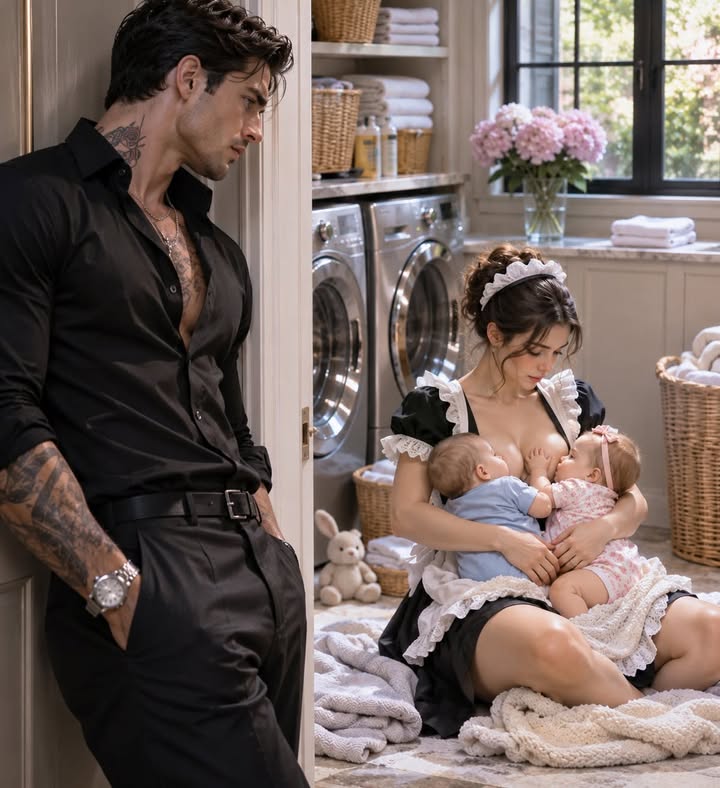
Part 6 – A Home That Stays
Celeste’s name remained in the space between Evelyn’s last words and my next breath.
I looked through the study doorway toward the garden room, where Nora was softly singing to the twins, and tried to imagine my sister visiting a storage facility year after year without telling me.
“Did Celeste collect the box?” I asked.
“No,” Evelyn said. “The records show the fees were renewed, but the box remained in storage.”
“Why keep paying for it?”
“I can’t answer that.”
“Did you speak to her?”
“Not yet. I thought you should know first.”
“Thank you.”
After we ended the call, I stayed at my desk with the phone in my hand.
The box might hold nothing more than old household papers.
It might hold the last piece of a story Ruth had tried to leave behind.
And Celeste had preserved it for years without telling me, just as she had helped Nora without explaining why.
I did not know whether that was another choice made out of fear, or an effort to keep a door open.
I only knew that I could not answer the question for her from across the house.
I found Celeste in the kitchen, seated at the small table where she usually reviewed household invoices.
A cup of tea sat untouched by her elbow.
“Evelyn called,” I said.
Her eyes lifted to mine.
“She told you about the storage account.”
“Yes.”
Celeste looked down at her hands.
“I thought the payments would show up eventually.”
“Why didn’t you tell me?”
“I kept thinking I would find the right time.”
“How long have you been renewing the fee?”
“Every year since Ruth left.”
“Do you know what’s in the box?”
“No.”
“Have you ever opened it?”
“No.”
“Why not?”
She took a breath and let it out slowly.
“Because it wasn’t mine to open.”
I pulled out the chair opposite her and sat down.
“Then why keep paying for it?”
“Because Mother told me it mattered.”
“When?”
“After Ruth left, I found the box in the office. Mother said Ruth had asked her to keep it safe for a little while.”
“Did she say what was inside?”
“Letters, I think. Records. She didn’t explain.”
“And the note from Father?”
“Mother showed it to me years later, after he was gone. She said the box should remain closed until you were old enough to understand what our parents hadn’t told you.”
I stared at her.
“Why didn’t either of them give it to me?”
“I don’t know.”
“Why didn’t you?”
Celeste held my gaze.
“Because I didn’t know what you would find. I was afraid it would tell you how little we had done for you.”
“The letters already told me that.”
“I know.”
Her voice faltered.
“I wanted to protect the part of you that still remembered them kindly.”
I looked at her, trying to understand how love and secrecy had become so tangled in our family that people could mistake one for the other.
“Did you think I wanted you to preserve their reputation?”
“I think I wanted that for myself.”
She folded her hands together.
“If the box had stayed closed, I could keep believing there was a reason for everything.”
“And now?”
“Now I know a reason isn’t the same as an excuse.”
The quiet between us was not comfortable, but it was honest.
That seemed enough to begin with.
“Will you come with me to get it?” I asked.
Celeste hesitated.
“If Nora wants to.”
“She should decide.”
“Then ask her.”
I found Nora in the garden room, where Emma was awake and pushing a soft cloth book across the rug while Eli slept in his crib.
Nora looked up from a basket of laundry.
“Is something wrong?”
“I learned where the blue box is.”
Her hands stopped.
“Where?”
“A storage facility in Evanston. My father arranged for it to be kept there after your mother left.”
Nora was quiet, her gaze fixed on the little book in Emma’s hands.
“Celeste knew?”
“She knew the box existed. She’s been paying the storage fee every year, but she never opened it.”
“Why?”
“She said it wasn’t hers to open.”
Nora looked down at Emma.
“That sounds like my mother.”
“What do you mean?”
“She believed there were some things you could preserve for someone without deciding what they had to mean.”
I thought of the letters, the ledger, and all the care our family had tried to give without asking what anyone needed.
“Would you like to go see it?” I asked.
Nora considered the question.
“Will you come with me?”
“If you want me there.”
“And Celeste?”
“She’ll come if you want her to.”
Nora brushed a stray curl from Emma’s forehead.
“I want to see the box,” she said. “I don’t know yet if I want anyone else to touch what’s inside.”
“That’s completely up to you.”
“Then you can come, and Celeste can come. But I open it.”
“Yes.”
“And if I decide I need to stop?”
“We stop.”
She searched my face, then nodded.
“Let me arrange childcare for the twins.”
“I can stay with them here,” I said. “Only if that helps.”
“I’d rather they came with us.”
“All right.”
“Thank you for asking instead of deciding.”
The words landed gently, but they mattered.
We drove to Evanston the next afternoon, with the twins in their car seats and a small bag of bottles, blankets, and toys in the back.
Celeste sat beside me in the front.
Nora was behind us, between the children, one hand resting near each of their seats.
The storage facility was quiet, tucked behind a row of small shops and a stand of bare trees.
A clerk led us to a unit at the end of a narrow hall.
The brass key I had found in the archive fit the lock.
Nora stood in front of the open door for a moment without moving.
Inside sat a plain wooden trunk with dark blue paint along its lid.
No label marked it as important.
No family crest or brass nameplate announced its history.
It looked like something a woman might carry from one home to another when she had no room for more than what mattered.
Nora stepped inside first.
“Do you want help moving it?” I asked.
“Not yet.”
She knelt and ran her fingertips over the blue-painted lid.
“My mother used to hum when she was thinking,” she said.
“She did that in this house,” Celeste replied. “I remember it now.”
Nora looked back at her.
“You remember?”
“I remember hearing someone hum outside Grant’s room. I never knew it was your mother.”
Nora nodded once and returned her attention to the trunk.
The lock turned easily.
Inside lay a stack of letters tied with faded ribbon, a small cloth pouch, several folded household records, and a wooden box painted a deep, unmistakable blue.
Nora lifted it carefully.
The box was small enough to rest in both her hands.
For a moment, she did nothing but hold it.
Then she looked at me.
“I’m ready.”
She opened the lid.
Inside were more letters, a photograph, and a narrow notebook filled with Ruth’s handwriting.
The photograph showed a woman standing in the garden of our home, holding a bowl in one hand.
She was younger than I had imagined and smiling at the camera as if someone behind it had just said something kind.
Beside her stood six-year-old me, pale and solemn in a striped pajama shirt, holding a spoon.
I recognized the room behind us.
The photograph must have been taken in the upstairs garden sitting room, where I had been sick.
“I remember that bowl,” I said.
Nora handed me the photograph.
“I think this is the only picture I have of her at work,” she said.
Celeste leaned closer but did not reach for it.
“You look so small,” she murmured.
“I was.”
“And you’re holding the spoon yourself.”
“I must have won the argument.”
A smile touched Nora’s face.
“She probably let you think you did.”
I turned the photograph over.
On the back, Ruth had written, “Grant took three spoonfuls and declared himself fully recovered.”
For the first time since I had discovered her letters, I laughed.
The sound surprised me, but it did not feel out of place.
Nora opened the notebook.
The first page held a list of household tasks.
The next few pages contained dates and brief notes about meals, medicine, and the hours I had slept.
Near the middle, Ruth had copied portions of letters she had sent to my parents.
There were also notes she had written to herself.
“Not to confuse a quiet child with an easy child.”
“Ask Celeste if she wants company before telling her she is old enough to manage.”
“Grant says he is not lonely. He watches the drive.”
Nora paused at the last line.
“She noticed everything,” she said.
“She noticed you too,” I told Celeste.
My sister nodded, her eyes shining.
“I wish I’d listened to her.”
“You were a child,” Nora said again.
This time, Celeste let herself accept the kindness in the words without trying to argue them away.
The cloth pouch contained a silver thimble, two buttons, and a small piece of paper folded into quarters.
Nora opened it.
The handwriting was her mother’s.
“My dear Nora,” she read aloud.
“If you have found this box, then perhaps I am no longer there to explain why I kept so many pieces of paper.”
Nora’s voice softened.
“I wanted you to know that a life can be changed by small acts of care.
A meal left warm.
A hand held when the night feels too long.
A person who notices you are waiting.”
Her voice caught, and she stopped.
She read the next lines silently before continuing.
“If you ever meet the little boy I once cared for, remember that you owe him nothing.
I helped him because he was a child who needed someone beside him, and because that was what I could give.
If he has grown into a kind man, you may know him.
If he has grown into something else, you still owe him nothing.
Let your own life belong to you.”
Nora lowered the letter.
The storage room seemed suddenly very quiet.
“I always wondered why she never talked about the families she worked for,” she said.
“Perhaps she wanted to keep you free of their stories,” I replied.
“She wanted me to be able to choose for myself.”
“Yes.”
Nora looked at me, and I understood that she was not asking me to agree out of politeness.
She was checking whether I knew the difference.
“I won’t ask you to carry what happened to me,” I said.
“I know.”
“You don’t owe me closeness because your mother cared for me.”
“I know that too.”
“But I’m grateful she was there.”
“That doesn’t make you indebted to me.”
“No,” I said. “It doesn’t.”
She folded the letter carefully and placed it back in the box.
Then she took the photograph and held it beside the picture in her own mind, comparing the woman she remembered with the young woman in the image.
“I want to keep the box,” she said.
“Of course,” Celeste replied.
“I’ll pay for the storage myself if it needs to stay there.”
“That won’t be necessary,” I said.
Nora glanced at me.
“I can cover the final transfer to your home as part of the records recovery,” I added. “It won’t be a payment to you, and it won’t come with any expectation.”
She thought it over.
“Then put it in writing.”
“I will.”
A small smile appeared at the corner of her mouth.
“I’m learning to ask.”
“I’m learning to answer.”
When we returned to the mansion, Nora carried the blue box herself.
Celeste did not offer to take it.
I did not either.
The box belonged to Nora, and respecting that felt like the first truly simple thing we had done.
The trustees met two weeks later.
They reviewed the account records, read the relevant letters, and asked Celeste to explain how she had arranged the childcare payments.
She told them plainly.
She did not defend her decision or disguise it as a formal benefit.
She admitted she had acted without permission and had told Nora something that was not true.
She also explained that her motive had been to keep Nora’s childcare secure, and that she had made the mistake of thinking secrecy would spare everyone discomfort.
The trustees did not remove Celeste from her position.
They did require a formal review of the family account and a written policy for anyone receiving support through it.
More importantly, they agreed that the letters and records would be preserved together, with copies made available to Nora.
When they asked me whether I intended to keep Celeste in charge of the household, I told them I did not want the decision made as a punishment or a reward.
Celeste had to decide whether the work was still right for her.
She chose to stay, though she stepped back from some of the household responsibilities she had carried alone for years.
For the first time, we hired a professional administrator to help with schedules, payroll, and staff policies.
Celeste remained in the house, but she no longer had to prove her worth by anticipating everyone’s needs before they had spoken.
The new staff policy took several weeks to finish.
It included predictable scheduling, paid family leave, and a childcare benefit that any employee could understand without guessing what it meant.
Nora reviewed the draft with the administrator and asked practical questions about hours, coverage, and what would happen if a child became ill.
No one called her difficult for asking.
When I offered her the permanent position, I gave her the contract and a full week to consider it.
She read every page.
She asked for a higher wage based on the work she was already doing, and I agreed.
She asked for a clear schedule, paid time off, and childcare support that could not be withdrawn without notice.
We put all of it in writing.
Then she accepted.
“This is a job,” she said when she signed the agreement. “Not a rescue.”
“Exactly.”
“And if I decide to leave?”
“I’ll respect that.”
“I know you’ll want me to stay.”
“I do.”
“But you won’t make that my responsibility.”
“No.”
She set the pen down.
“Then I’m glad to stay.”
Her decision did not make us family in the way a contract could.
It gave us the chance to build something more honest than the arrangements we had inherited.
The seasons changed slowly over the months that followed.
The lake turned bright beneath the summer sun, and the garden room windows stood open to the warm air.
Emma learned to clap when she heard music.
Eli learned to pull himself up against the low table and then looked surprised every time the room appeared to rise around him.
Nora kept Ruth’s blue box in her apartment, where she could open it when she wanted and close it when she needed.
She shared copies of the letters with me and Celeste, but kept the notebook for herself.
Celeste apologized more than once.
Not in a grand gesture, and not in a way that asked Nora to comfort her.
She apologized when a household rule reminded Nora of the months she had spent hiding the twins.
She apologized when a staff policy made clear how much she had decided for other people.
She apologized once when Emma reached for her and Celeste instinctively asked Nora before lifting her.
“You don’t have to ask me every time,” Nora said, smiling faintly.
“I know,” Celeste replied. “I’m trying not to assume.”
“Then ask when you’re unsure and trust me when I answer.”
Celeste nodded.
“That sounds fair.”
Her relationship with Nora did not become effortless.
It became honest, which was harder at first and better in the long run.
Celeste began spending time in the garden room, reading picture books to the twins or sitting beside them while they played.
She never claimed that closeness as something she had earned.
She simply showed up, again and again, until the children began to recognize her voice.
I learned how to show up too.
Not only when the house was quiet and I could fit the children into an empty hour, but in the ordinary middle of the day, when emails remained unanswered and the laundry basket needed carrying upstairs.
Some mornings I took Emma and Eli for a walk with Nora after breakfast.
Some evenings I helped stack toys while Nora finished her work.
I learned which song made Eli settle and which picture book Emma insisted on hearing twice.
I learned that a child could be tired, hungry, curious, and offended by the wrong spoon all within ten minutes.
I also learned that showing up did not mean taking over.
Nora remained their mother.
I remained Grant, the man who had once believed the house was quieter because that was how a house should be.
On the anniversary of the day I first heard the twins crying in the laundry room, rain returned to the windows.
I came home early from the office and heard a baby laughing in the garden room.
The sound carried through the hall, bright and unguarded.
I stopped outside the open door.
Emma sat on the rug, delighted with a stack of blocks she had just knocked over.
Eli had crawled toward the window and was attempting to pull himself upright against the sill.
Nora was kneeling nearby, sorting the pieces into a small basket.
Celeste sat in the armchair with a picture book open on her lap.
“What are you reading?” I asked.
“Something about a bear who refuses to go to bed,” Celeste said.
“Is it any good?”
“Not yet. The bear is being stubborn.”
“Sounds familiar.”
Nora looked up at me with a smile.
“Are you coming in?”
“I was hoping to be invited.”
“You are.”
I stepped into the room and sat on the rug beside Emma.
She pushed a block toward me.
I set it upright, and she immediately knocked it down, laughing as though she had invented the whole game.
Eli saw me and crawled over, his hands working steadily against the rug.
When he reached my knee, he pulled himself up by my trousers and looked at me.
Then he took my finger in his small hand.
For a moment, the old memory returned—the laundry room, the thin blanket, the rain, the astonishment of being held by someone who needed nothing from me except the chance to trust.
This time, I did not feel undone.
I felt present.
Emma laughed beside us.
Nora sat close enough to reach her, and Celeste was still reading about the stubborn bear.
The mansion was no longer silent.
It was warm with the ordinary sounds of people who had chosen to be there.
I looked down at Eli’s hand around my finger and thought of Ruth’s words in the blue box.
A meal left warm.
A hand held when the night feels too long.
A person who notices you are waiting.
For once, no one in the house was waiting alone.
I stayed until the book was finished, and then I stayed while Emma stacked the blocks again.
Outside, the rain softened over Lake Michigan.
Inside, the lights came on one by one, and the home we had spent years preserving finally became a place where everyone could live.
**–THE END–PLEASE
Share your thoughts or feedback to motivate us to create more stories ♥️
* * *
[PREVIOUS: PART 5](https://puretales.idolsgift.com/blog/part-5-the-name-behind-the-rule-035)
✓ Lynn R. Adams
Part 6 – A Home That Stays Celeste’s name remained in the space between Evelyn’s last words and my next breath. I looked through the study doorway toward the garden room, where Nora was softly singi…