PART 6 (THE END): The Name Behind the Photograph 041
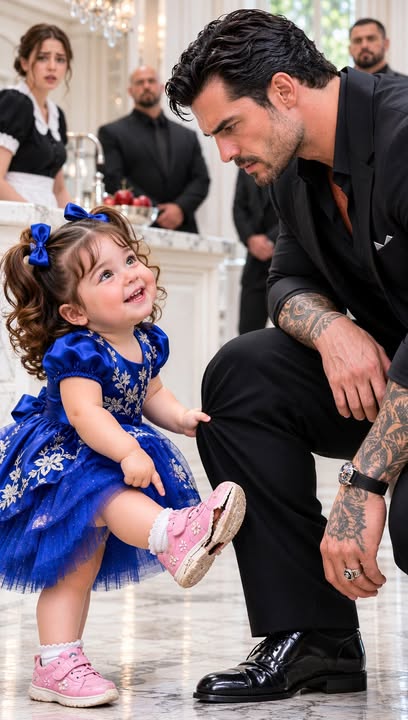
Part 6 – The Dance We Chose
“I think I may have been the family representative.”
Luca’s words rested between us, heavier than the faded ledger.
I looked at the signature, then at the man beside me.
“Do you remember taking Matteo from the infirmary?”
“No,” he said. “But I remember that day.”
His hand tightened around the page.
“My father told me Matteo was dead. He asked me to sign papers for the lawyer, and I did. I thought I was helping settle affairs after his death.”
“Could he have put the release form among those papers?”
“Yes.”
“Could he have told you who you were collecting?”
Luca looked down.
“He might have told me it was a patient from the business. Or that the person had no family. I can’t tell you what I knew if I don’t remember.”
The honesty in his answer did not bring comfort, but it kept us from building a story on a guess.
“What did the second notation say about where Matteo went?”
“Only that his destination was withheld by order of the family representative.”
“Your father?”
“Possibly. The initial could be either of us.”
“And the house by the lake?”
“It belonged to my father then. He used it when he wanted quiet.”
I folded my arms, trying to steady myself.
“Could Matteo have been there?”
“I don’t know.”
“Could you?”
“I don’t know that either.”
He took a slow breath, his gaze lingering on the ledger.
“But I will find out. Not by making the archive give us what it doesn’t have, and not by asking anyone to guess. I’ll look for records that can be checked.”
I nodded.
“Together?”
“If you want.”
I thought of the empty chapel envelope, the hospital note, and the small message in Matteo’s handwriting that I had carried in my coat.
“I want to know the truth,” I said.
“Then we’ll look for it.”
The search led us first to the old house by the lake.
It had been empty for years, its shutters closed against the weather, its gardens grown soft and wild around the stone path.
The caretaker who held the keys knew Luca’s family and let us in without asking why we had come.
Dust lay across the furniture, and the rooms seemed to have kept their breath since the last time anyone had lived there.
Marco joined us, bringing copies of the infirmary ledger and the memorandum from the archive.
He did not assume a place beside Luca.
He waited until I asked him to help.
In the small study, Luca found a drawer of old schedules and household accounts.
There were entries for deliveries, repairs, and staff wages, but nothing that named Matteo.
I searched the writing desk while Marco went through a cabinet along the wall.
The desk drawers were empty except for a few envelopes, a brass key, and a small paper packet of seeds.
When I lifted the bottom drawer to check beneath it, I saw that one corner of the lining had come loose.
I eased it back.
A narrow strip of paper had been tucked into the gap.
It was not a letter, only an old receipt from a nearby clinic, dated the week after Matteo had been released from the infirmary.
The patient’s name was written in the false identity from the hospital card.
A doctor’s initials appeared beside it, along with a note that the patient had been examined and transferred to a private nursing facility.
The facility’s name had faded, but the town was still legible.
Luca read it twice.
“That’s not far from here,” he said.
“Is it still open?” I asked.
“No. But its records may have gone to the county archive.”
“Then we ask.”
We did, and for the next week, we waited.
The county archive had received old patient ledgers from the facility, but the volumes were not fully indexed.
A staff member promised to search what she could, and Luca gave her copies of the receipt and ledger entry.
While we waited, Luca kept his promise to turn over the business records to an independent lawyer.
He did not call reporters or gather anyone at the estate.
He gave the records quietly, with the understanding that investigators would decide what they proved and whom they concerned.
The lawyer warned him that the process could bring charges, the loss of property, and months or years away from home.
Luca listened without interruption.
Then he signed the documents.
When he came back to tell me, he did not ask whether I was proud of him.
He did not ask me to say that his choice had made everything right.
“I’ve given them what I have,” he said. “I’ll answer their questions.”
I looked at the folder in his hand.
“Are you afraid?”
“Yes.”
“Are you going to do it anyway?”
“Yes.”
I wanted to reach for him, but I did not know if that would comfort him or make a promise I was not ready to make.
So I simply said, “Thank you for telling me.”
He nodded.
“That’s enough.”
It was not enough to erase the past.
It was enough for that moment.
The county archive called on a rainy Thursday morning.
Luca was at the lawyer’s office, so the archivist spoke to me first, then agreed to repeat the details to both of us when he returned.
A ledger from the nursing facility had been found, though the original admission form was missing.
The patient had arrived under the same false name and had remained there for eleven days.
A later note recorded that he had left in the care of a family representative.
There was no full name.
Only the word Marchetti and an initial that looked like either an M or an L.
Beneath it, however, the facility clerk had written that the patient had suffered extensive injuries in a road accident and had died two days after arrival.
The date was clear.
It was seven weeks after Matteo disappeared.
I held the phone in both hands and listened as the archivist read the entry again.
Then I thanked her, though the words sounded far away.
When Luca arrived, I told him what she had found.
He stood very still beside the kitchen table.
“So he didn’t survive,” he said.
“Not for long.”
“He was alive when he left the infirmary.”
“Yes.”
“But he died at the care home.”
“Two days later.”
He closed his eyes.
The years between the crash and that entry seemed to collapse around us, leaving only the little note in my coat and the memory of Matteo’s face in the photograph.
“Did the record say who was with him?” I asked.
“No,” I replied. “Only that a family representative took him.”
“Could it have been me?”
“It could.”
He opened his eyes.
“I may have signed for him, taken him to the house, and then let my father move him again without knowing who he was.”
“Or your father may have arranged all of it.”
“I don’t know.”
He did not ask me to tell him he was innocent.
I was grateful.
The archivist had also found a second piece of information.
The facility’s discharge book listed personal effects returned to the family representative.
Among them was a silver ring.
Luca reached for the ring on his right hand.
His thumb moved over its worn edge.
“Matteo had one like this,” I said.
“He and I bought them together when we were young.”
“You each had one?”
“Yes.”
He turned the band so that its narrow inner engraving faced us.
Two small letters had been marked inside the silver: L and M, joined by a line that had worn nearly smooth.
“Did your father keep Matteo’s ring?” I asked.
“I don’t know.”
The archivist’s record did not say what had happened to it afterward.
It only proved that the ring had been among the effects returned to the family.
Marco had seen Luca turning his own ring over in his palm.
“I remember your father asking for the property bag,” he said.
“When?”
“When we were moving the papers from the old house. He said it should be kept with the family records.”
“Do you remember where?”
“Not exactly, but I can help look.”
Luca considered him.
“Then help us look.”
Marco nodded, accepting the task without taking it as forgiveness.
We searched the archive room again, this time for anything connected to the care facility or the property bag.
The search took most of the afternoon.
In a locked cabinet behind the family ledgers, Luca found an old box wrapped in brown paper.
Inside were two cufflinks, a wallet, a watch with a cracked face, and a silver ring.
It was smaller than Luca’s and dulled by time, but the same narrow line circled the band.
Luca picked it up carefully.
The inside was engraved with two letters.
M and L.
He turned it toward me.
“His ring,” he said.
I touched the silver with one fingertip.
The ring did not tell us whether Luca had taken Matteo from the infirmary or whether their father had arranged the transfer.
It did not repair the years in which I had believed Matteo had left without a word.
But it confirmed that the records belonged to him.
The man in the photograph was Matteo Marchetti, the brother Luca had mourned, and the father Sofia had never had the chance to know.
Marco found another folded paper at the bottom of the box.
It was not Matteo’s missing chapel letter.
It was a short inventory made by the facility clerk, bearing the same date as the transfer.
Beside the ring, the wallet, and the watch, someone had added a note in a different hand.
“Keep for Elena, if she can be found.”
My breath caught.
Luca read the line and closed his eyes.
His father had known my name.
He had known Matteo was trying to reach me.
He had known Sofia was coming.
And even in the midst of hiding the truth, Matteo—or someone acting in his name—had tried to leave something for us.
I held the inventory against my chest for a moment, then lowered it.
“I want the ring,” I said.
Luca looked at me.
“Of course.”
“I want the letter too, if we find it.”
“It will be yours.”
“And I want the records preserved, even if they hurt your family.”
“They will be.”
His answer came without delay.
The missing letter was found three days later, tucked inside a box of old family papers that had been sent to the lawyer with Luca’s disclosure.
The lawyer called before opening it, and Luca asked her to read the writing on the outside.
It was addressed to Elena.
The envelope had never been sealed.
When it reached me, I knew Matteo’s handwriting before I touched it.
My fingers shook as I lifted the flap.
Luca waited across the table, giving me room to read alone if I wanted it.
I opened the letter.
My dearest Elena,
If this reaches you, then I have failed to come back as I promised.
I am sorry for every hour you spend wondering whether I chose to leave you.
I did not.
I learned about the baby, and I have been trying to get back to you ever since.
The letter was dated on the night of the crash.
I read on, slowly, letting his words reach me without rushing them.
He wrote that he was frightened of his father and of the people who had grown used to deciding what the family could and could not be.
He wrote that he had wanted to build an ordinary life with me, even if he had never quite learned how ordinary people managed it.
He wrote that he had carried my photograph and the ring from their childhood days.
Then he reached the line that brought the room into focus again.
“If the child is a girl, please tell her that I knew she was coming, and I loved her before I knew the color of her eyes.”
My tears fell onto the page.
I wiped them carefully, afraid of damaging the ink.
The final paragraph was addressed to Luca.
“Little brother, if you are the one who finds this, please do not let our father’s fear become your inheritance.
If I cannot return, look after my daughter only if she wants you near her.
Let her mother decide what is safe.
You have always been better at choosing your own heart than you think.”
I could not finish the last sentence aloud.
I folded the letter and held it against my chest.
Luca’s eyes had grown bright, but he made no move toward me.
“He knew,” I whispered. “He knew Sofia was coming.”
“Yes.”
“He knew you might find us.”
“Yes.”
“And he asked you to let me decide.”
Luca lowered his gaze.
“He knew you better than I did.”
“That’s true.”
A sad smile touched his face.
“Matteo always did see people clearly.”
The letter did not name the person who had made the final decision about Matteo’s transfer.
It did not prove that Luca had knowingly signed him out of the infirmary, or that their father had hidden every answer from him.
Those questions remained part of the record, and Luca left them there.
He gave copies of everything to the lawyer and investigators, including the memorandum that showed his father had known Matteo was alive.
The evidence led to a formal review of the old family business and the people who had used it for harm.
Luca cooperated with investigators, answered for his own role, and surrendered control of the operation.
His cooperation did not make the consequences disappear, but it helped separate what he had done from what others had done in his name.
He faced charges connected to the organization and accepted responsibility for the choices that were his.
His cooperation, the records he provided, and his decision to end the operation led to a reduced sentence.
Before he reported to serve it, he asked to see Sofia and me in the garden.
He did not ask us to come.
He said that if we would rather say goodbye somewhere else, he would understand.
I chose the garden.
Sofia came with the silver ring in a small velvet pouch and the letter held inside a clear protective sleeve.
She had asked to bring both.
Luca crouched as she approached.
“Is that Daddy’s ring?” she asked.
“Yes,” he said.
“Can I see?”
He looked to me first.
I nodded.
He opened the pouch and placed the ring in her palm.
Sofia turned it carefully, fascinated by the tiny shine.
“Is this the same as yours?”
“Almost exactly.”
“Did you and Daddy match?”
“When we were young.”
She looked up at him.
“Were you brothers?”
“Yes.”
“Are you my uncle?”
“I am, if that’s what you want me to be.”
Sofia thought about this, then stepped forward and wrapped her arms around his neck.
“I want you.”
Luca shut his eyes for one brief moment and held her with the kind of care that asked permission even as it received it.
When he stood, he looked at me.
“I don’t know when I’ll be home,” he said. “I won’t ask you to wait.”
“I know.”
“I’m going to write to Sofia, if you’re comfortable with that.”
“I’ll let her choose whether she wants to read them.”
“That’s fair.”
“And if you ever think you can decide what’s best for us without asking, remember this conversation.”
“I will.”
I looked at him, at the man who had once seemed like a wall between us and the world.
He was still a powerful man, still shaped by the family that had raised him.
But he had stopped asking power to protect him from the truth.
“I can’t promise what I’ll feel later,” I said.
“I wouldn’t ask you to.”
“I can promise that Sofia will know who her father was.”
“Thank you.”
“And she’ll know that you tried to do better.”
For a moment, he seemed unable to answer.
Then he bowed his head.
“That means more than I deserve.”
“It means what I said.”
He left without guards at our sides, without a farewell grand enough to make the moment about him.
I watched until the car disappeared down the road.
Then Sofia slipped her hand into mine.
“Is Uncle Luca coming back?”
“Yes,” I said. “When he’s allowed to.”
“Will he be sad?”
“Some days, probably.”
“Can we write to him?”
“If you want to.”
She nodded.
“I’ll draw him a picture.”
The years that followed were not made of perfect days.
We had bills to pay, school mornings to manage, and the ordinary worries that did not disappear simply because a secret had been uncovered.
But the secrecy did.
Luca’s letters came when he was allowed to write, and every one of them was addressed to Sofia in his own hand.
He never called himself her father.
He never asked her to call him anything other than Uncle Luca.
When she asked questions about Matteo, I answered as honestly as I could, using his letter, the photograph, and the stories I remembered from the café by the river.
She learned that her father liked coffee he never finished and believed ordinary people possessed a secret.
She learned that he had wanted to leave the Marchetti life and make plans of his own.
She learned that he had loved her before he knew the color of her eyes.
The old operation was dismantled through the investigation Luca had chosen to support.
The people who had used fear to keep it alive were held accountable, and Luca’s cooperation brought him a shorter sentence than he might otherwise have faced.
He served his time without asking me to turn his choice into a promise.
We wrote when we wanted to.
We visited when it was possible and safe.
Sofia grew from a small child with curls and satin bows into a girl who read her father’s letter herself, tracing the shape of his handwriting as she learned to recognize it.
She wore the silver-star shoes until they no longer fit, and then she chose new ones with me.
The old pink pair stayed on a shelf in her room, tucked beside the photograph and the little paper drawing of the chapel.
Years later, when Luca returned home, he did not arrive expecting the family to be waiting in a line for him.
He came quietly, carrying a modest bag and the same silver ring on his hand.
Sofia ran to him first.
She was taller now, with her hair pinned back and a bright, unmistakable smile.
“Uncle Luca!”
He bent to embrace her.
My own greeting was quieter.
I gave him time to learn how to live outside the walls he had once called protection.
He learned to ask before helping.
He learned that an offer was not generous if it left no room for refusal.
He learned that family was not a title that made the past disappear, but a relationship built in the small choices of each day.
His care for Sofia never tried to fill the space Matteo had left.
It simply gave her another person who showed up, listened, and remembered what mattered to her.
And I learned that trust did not have to arrive all at once to be real.
We built it slowly, with truth spoken when it was difficult and silence used only when we needed a moment to think.
The family celebration was held on a late-summer evening in the garden, beneath a string of warm lights.
There were flowers on the tables, music from an old speaker, and a small table set aside for the photograph and Matteo’s letter.
Sofia wore a simple blue dress that moved softly around her knees.
On her feet were new pink shoes with silver stars, chosen by her herself.
She had kept them clean all afternoon, saving them for the dancing.
When the music changed to a gentle waltz, Luca stood near the edge of the garden, unsure whether to join the others.
Sofia walked straight to him.
“Uncle Luca,” she said, holding out her hand, “will you dance with me?”
He glanced at me.
I smiled and nodded.
He accepted her hand.
“I’d be honored.”
Sofia stepped onto his shoes, and he moved slowly enough for her to find the rhythm.
She laughed as they turned beneath the lights.
For a moment, I saw the drawing she had once made at the chapel: the lake, the three figures, and the sun above them.
The people in the picture had not become the family she first imagined.
Matteo was not there to take her hand, and Luca had never tried to stand in his place.
But the love in the picture had found its way into our lives all the same.
I watched my daughter dance in the shoes she had chosen, with the uncle she had chosen, while her father’s letter rested safely on the table behind them.
Then Luca held out his free hand to me.
“Would you like to join us?”
I looked at the two of them, at Sofia’s bright face and the man who had learned to leave the choice in my hands.
“Yes,” I said.
I took his hand.
And beneath the lights in the garden, with the truth finally given room to breathe, we danced as the family we had chosen to become.
**–THE END–PLEASE
Share your thoughts or feedback to motivate us to create more stories ♥️
* * *
[PREVIOUS: PART 5](https://echoesofstories.idolsgift.com/blog/part-5-the-name-behind-the-photograph-041-1)
✓ Lynn R. Adams
Part 6 – The Dance We Chose “I think I may have been the family representative.” Luca’s words rested between us, heavier than the faded ledger. I looked at the signature, then at the man beside me….