PART 6 (THE END): The Message Behind the Mirror 047
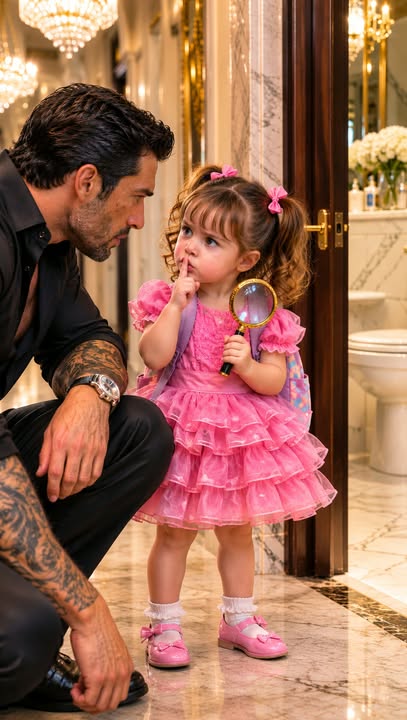
Part 6 – The Quiet Harbor
“Then don’t use his trust as permission to decide what I can bear.”
Marcus’s eyes closed for a moment.
When they opened, the old steadiness was still there, but something in it had softened.
“You’re right,” he said.
I had expected an argument, perhaps another careful explanation.
Instead, the plain admission left me with nowhere to put the anger I had been carrying.
“I should have told you about the letter,” he continued. “I should have told you what I found in the archive. I should have told you when the accounts stopped matching the reports.”
“What did you find?”
“Not enough to understand it at the time. A set of payments that looked like ordinary contractor expenses, and a list of your movements that didn’t belong in the security files.”
“Did you write the list?”
“No.”
“Did you ask someone else to?”
“No.”
“Why didn’t you come to me?”
His gaze lowered to the folder between us.
“Because I thought I could solve it quietly. I told myself I was protecting you from a concern that might turn out to be nothing.”
The words were familiar, but this time he seemed to hear them as I did.
“You did what my father warned you not to do,” I said.
“I know.”
“Not because you wanted to own the organization.”
“No.”
“But because you thought you knew better than the person you were protecting.”
He nodded once.
“I don’t expect you to forgive me tonight.”
“I don’t know what I expect.”
“That’s fair.”
He looked at the folder, then back at me.
“Give Raphael the records. Let the independent review happen. I’ll step away from security until it’s complete.”
“You’re agreeing to that?”
“I don’t have to like it to know it’s right.”
For the first time since I had walked into the room, I saw the man who had sat beside me after my father died, not a guardian, not a security chief, not an old friend defending his position.
Just Marcus, tired and afraid of what his choices had done.
“I’m not asking you to decide tonight whether you trust me,” he said. “I’m asking you to let the facts decide what I’m responsible for.”
“That’s what I intend to do.”
He stood and offered his hand.
I took it, though the gesture did not erase the space between us.
It only acknowledged that we had both chosen not to make that space wider.
At the door, I stopped.
“Did you tell Isabella that I needed someone to help me build a life beyond fear?”
“Yes.”
“Did you mean it?”
“Yes.”
I searched his face.
“I meant it when I said it. I still mean it now.”
“Then I hope you understand that she gets to decide for herself whether she wants to stay.”
“I do.”
I left without promising him anything.
Outside, Raphael waited in the quiet corridor, his phone in one hand.
“How did it go?” he asked.
“He’s stepping aside while the review happens.”
“And the letter?”
“He knows what it says.”
Raphael nodded, neither congratulating me nor asking whether I felt better.
He had always understood that the right decision did not always bring immediate relief.
We returned to the estate shortly before midnight.
The library lights were still on, and Isabella sat at the table with my father’s letter beside her.
She had been reading it, though she looked up as soon as I entered.
“Did you meet Marcus?”
“Yes.”
“What happened?”
“He agreed to step away from security while Raphael organizes an independent review.”
Her face eased, but only a little.
“Did he deny the records?”
“He denied ordering anyone to track me. He admitted he had found concerns in the accounts and kept them from me.”
“Did he say why?”
“He thought he could solve it quietly.”
Isabella looked down at the letter.
“That sounds familiar.”
“I know.”
She waited, not asking me to excuse him.
“I told him the review would happen whether he liked it or not,” I said. “He agreed.”
“And how do you feel?”
I drew out the chair across from her.
“Less certain than I wanted to be.”
“That might be a good sign.”
“Why?”
“Because certainty was what made all of us stop listening.”
I sat down.
For a few moments, the only sound in the room was the soft tick of the clock on the mantel.
Then I said, “I’m sorry I watched you before I asked you what was wrong.”
Isabella’s fingers rested beside my father’s letter.
“I’m sorry I hid the evidence from you.”
“I understand why you did it.”
“That doesn’t make it all right.”
“No.”
“And understanding why you watched me doesn’t make it all right either.”
“No,” I said. “It doesn’t.”
She met my eyes.
“I don’t want us to turn understanding into a way of avoiding what hurt.”
“Neither do I.”
“I need time.”
“I’ll give you time.”
“I need you to tell me when you’re afraid instead of trying to control what happens around you.”
“I’ll work on that.”
“Not just work on it when things are difficult.”
“Every day,” I said. “Even when it’s easier not to.”
She studied my face, searching not for a promise that would solve everything, but for some sign that I knew a promise was only a beginning.
“I can’t promise I’ll trust you the way I did before,” she said.
“I’m not asking you to.”
“I don’t want a grand gesture.”
“I don’t have one.”
A small, almost reluctant smile touched her mouth.
“That may be the first sensible thing you’ve said all evening.”
The warmth in her voice was faint, but it was real.
I let myself receive it without asking it to become more.
The independent review began the next morning.
Raphael secured copies of the records and gave them to an outside accounting firm with no ties to our security operation.
A separate technical team examined the camera system and the archive access logs.
The review took several weeks, during which Marcus stayed away from the security office and answered every question put to him.
The results came gradually, each one adding another piece to a picture none of us had wanted to see.
Northline Protective Services had been paid for routine work, but a small portion of its funds had been diverted through a subcontractor.
Those payments covered schedule reviews and discreet monitoring of my movements.
The reports had been created by a senior administrator who worked beneath Marcus, using access that Marcus had allowed the office to maintain without adequate oversight.
Marcus had not ordered the tracking, but he had approved expenses without checking the records closely enough.
More painfully, he had discovered inconsistencies months earlier and chosen to handle them privately.
He had not been the architect of the scheme.
He had made it possible for the scheme to continue.
The old archive file revealed the rest.
Years before my father died, a rival organization had begun trying to learn where I would be and who would be with me.
My father had asked Marcus to protect me and watch for any attempt to use the family’s security system against us.
After my father’s death, Marcus had inherited more responsibility than the arrangement was meant to give him.
Instead of returning that authority to me as I grew older, he had held on to it, convincing himself that stability mattered more than honesty.
The administrator who arranged the payments had used my father’s old phrase, quiet harbor, as a label for information deemed too sensitive to share with me.
The phrase had been copied from a document prepared by Calder, the former office manager who had helped formalize my father’s security plan.
Calder had meant it as an internal classification.
My father had meant something entirely different.
The same phrase had carried two meanings through the years: one that invited me to speak, and one that kept me from hearing.
The handwritten note in the movement records belonged to the administrator.
He had copied my father’s words from the old summary to give the reports a sense of authority and to discourage questions.
The envelopes Isabella had hidden behind my toilet contained copies of the records she had found while looking for proof that her introduction to me had not been part of a paid arrangement.
She had discovered the tracking because she was looking for her own name.
She had hidden the papers not to protect herself from me, but because she feared the records would vanish if Marcus learned she had found them.
The archive review also confirmed that Marcus had introduced us because he genuinely believed we might bring something good into each other’s lives.
That did not make his later choices harmless.
It did mean Isabella had not been placed in my life as a paid informant.
When the report was complete, Marcus resigned from his position in security.
He cooperated with the formal inquiry and accepted responsibility for the failures under his watch.
The administrator and the subcontractor were removed, and the company’s accounts were turned over to the appropriate authorities.
Marcus was not sent away or made into a public spectacle.
He faced the consequences of what he had done, and the people entrusted with the organization’s security were required to answer for what had happened.
The changes were less dramatic than the old way of doing things, and more difficult to maintain.
Security decisions required documented approval from more than one person.
Financial reviews were conducted by an outside team.
No single person could control the information that reached me or decide what I was ready to know.
The organization became slower in some ways.
It became more honest in others.
I addressed the leadership group myself and told them that our structure had allowed trust to become a substitute for oversight.
I did not blame Marcus alone.
I told them I had accepted a system I had never bothered to understand because it had been built by people I loved.
That was my failure too.
Afterward, I apologized to the people whose work and safety had been affected by my silence.
Some accepted the apology immediately.
Others did not.
I learned that accountability was not a performance that ended when everyone had heard the right words.
It was the willingness to keep showing up after the room had emptied.
At home, I began with smaller things.
I stopped letting staff carry every uncomfortable message for me.
When something worried me, I said so.
When I did not know what to do, I admitted that too.
I gave Isabella the information I used to assume she did not need, even when it made me feel exposed.
Some days she asked questions.
Some days she did not.
I answered either way.
We did not return to the ease we had once known.
We built a different kind of closeness, slower and less certain, with room for doubt and room for repair.
Isabella stayed.
Not because I asked her to forgive me.
Not because she forgot the envelopes or the hidden camera.
She stayed because, over time, my choices began to match the words I had offered her.
One evening, several months after the review was complete, we sat together on the back terrace while the last of the sunlight warmed the garden.
Isabella rested her elbows on the table.
“Do you ever wish you had found those papers some other way?” she asked.
I considered it.
“Sometimes I wish Sophie hadn’t had to notice them first.”
“But she did.”
“Yes.”
“Do you wish you’d never seen the footage?”
“I wish I’d turned off the monitors and gone home to ask you what you were afraid of.”
She looked at me, her expression gentle but thoughtful.
“That would have been a better beginning.”
“It would have.”
“And now?”
“Now I’m trying to begin better.”
She reached across the table and touched my hand.
It was not a declaration that everything was restored.
It was a choice to meet me where I was.
I turned my palm upward, leaving the decision to her.
She placed her hand in mine.
“I don’t want a life where I have to guess what you’re thinking,” she said.
“Then I’ll tell you.”
“Even when you think I might leave?”
“Especially then.”
Her fingers tightened around mine.
“I’m not promising the past disappears.”
“I don’t want it to.”
“Good.”
“I want to remember what it cost us to become honest.”
She leaned closer, her shoulder resting against mine.
For the first time, the quiet between us did not feel like a room where a secret was waiting.
It felt like a place we had chosen together.
Marcus came to see me one last time before leaving the city for a while.
We spoke in my father’s old study, the room where I had first learned the phrase quiet harbor and then spent years misunderstanding what it was meant to offer.
Marcus did not ask for his old position back.
He did not ask me to erase the report or pretend that the years of withheld information had been harmless.
“I was trusted with something important,” he said. “I thought keeping control was the same as keeping you safe.”
“It wasn’t.”
“No.”
“I believe you cared about me.”
He looked down at his hands.
“I did.”
“I still do,” I said. “But caring about you doesn’t mean the consequences disappear.”
“I understand.”
We shook hands before he left.
There was no embrace, no dramatic reconciliation, no promise that the old friendship would return unchanged.
There was only a beginning that did not pretend to be an ending.
By the time winter softened into spring, our house had changed in small, unmistakable ways.
Elena no longer apologized every time she brought a concern to me.
I no longer asked Raphael to check the cameras before I asked the people in the house what they had seen.
Sophie still carried her pastel backpack, though the lavender straps were beginning to show signs of wear.
She had added a shiny detective badge to the front pocket, a gift from Raphael that she wore whenever she helped Elena in the garden.
One Sunday evening, we gathered around the long dining table for dinner.
Elena had made a warm vegetable pie and a bowl of soup, and Raphael arrived with a loaf of bread that he claimed was from the best bakery in the city.
Sophie sat between her mother and Isabella, with a napkin tucked beneath her chin.
She had drawn a new picture for us.
This one showed the house beneath a bright yellow sun, with every window open and a small pink door drawn beside the bathroom.
“That’s the safe door,” she explained.
“There’s a safe door in the bathroom?” I asked.
She nodded seriously.
“So nobody hides papers there anymore.”
“We don’t hide papers anywhere,” I said.
Sophie glanced at the envelopes on the table, which Raphael had brought back after the review was finished.
“They’re not secrets now?”
“No,” Isabella said gently. “Now they’re just papers.”
Sophie considered this distinction.
Then she turned to me.
“Is the bathroom safe?”
I looked around the table at Elena, whose worry had eased into warmth.
At Raphael, who no longer had to stand between suspicion and the truth.
At Isabella, whose hand rested close enough to mine that I could reach for it without assuming she would take it.
And at Sophie, the smallest person in the room, who had noticed what all of us had missed.
“Yes,” I said. “The bathroom is safe.”
Sophie nodded, satisfied.
Then she raised her spoon like a tiny officer giving the final word.
“Good.”
Laughter moved around the table, soft at first, then bright enough to fill the room.
Isabella slipped her hand into mine beneath the table.
This time, I did not wonder what she meant by it.
I simply held on, grateful for the truth, for the people who had stayed to face it, and for the smallest voice in my house that had taught us all how to listen.
**–THE END–PLEASE
Share your thoughts or feedback to motivate us to create more stories ♥️
* * *
[PREVIOUS: PART 5](https://echoesofstories.idolsgift.com/blog/part-5-the-message-behind-the-mirror-047)
✓ Lynn R. Adams
Part 6 – The Quiet Harbor “Then don’t use his trust as permission to decide what I can bear.” Marcus’s eyes closed for a moment. When they opened, the old steadiness was still there, but something …