PART 6 (THE END): The Lullaby Behind the Locked Door 052
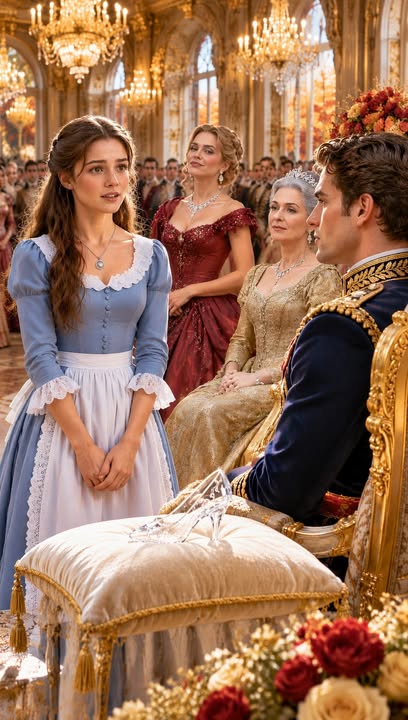
Part 6 – A Place Chosen
“Miss Bennett’s?” Eleanor repeated.
The messenger nodded, his gaze fixed on the floor.
“The steward says the pass was presented shortly after dawn. The person collecting the case wore a gray cloak and gave no name.”
I felt the blood drain from my face.
“I have never had a royal pass.”
Alexander held the note firmly, but his expression remained measured.
“Then someone has used your name,” he said. “That does not make it yours.”
“Who could have done it?”
“I don’t know,” Eleanor replied. “We will find out.”
There was no accusation in her voice, only worry—and the beginning of a resolve I had not heard from her before.
She turned to the messenger.
“Send for the captain of the guard and Mr. Vale. Ask Lord Ashcombe’s steward to preserve the visitor’s description and the records of every pass issued this week.”
The messenger hurried away.
I looked at the sealed note in Alexander’s hand.
If someone wanted the dispatch case, then the papers inside mattered more than Ashcombe had admitted.
Or they mattered to someone else.
“Could this be a way to make me look guilty?” I asked.
“It could,” Alexander said. “But we won’t decide what happened before we know.”
“I’m tired of being the center of a story other people are writing.”
“I know,” he replied. “This time, we’ll ask what you want before we act.”
The words did not make the fear disappear.
They did remind me that I was no longer alone in the hallway, watching people make decisions over my head.
The captain arrived with Mr. Vale, and Eleanor explained the missing case.
Mr. Vale listened carefully, then asked to examine the pass records.
“An unused royal pass was reported missing from the household office yesterday,” the captain said. “It was not assigned to Miss Bennett.”
“Who had access to it?” Alexander asked.
“The office clerk, the assistant steward, and two members of the household staff.”
“Then we speak with them privately,” Eleanor said. “No one is to be accused until we have more than a missing pass and a vague description.”
The captain bowed.
I felt a small easing in my chest.
The order was not to find someone to punish.
It was to find out what had happened.
Mr. Vale looked at the note from Ashcombe’s residence.
“Has the dispatch case itself been seen?”
“Not since it was taken,” the messenger had said.
“The route from the estate to the palace passes through Bellmere,” I said. “If the person used a royal pass, perhaps they intended to come here.”
“Or perhaps they wanted us to think so,” Alexander replied.
Eleanor glanced toward the tall windows.
“Lord Ashcombe must be informed that the case is missing.”
“He has already reported it,” Alexander said. “His message arrived with the warning.”
I looked at the handwriting on the note.
“Did he tell us what was inside?”
“No,” Alexander said.
“Then perhaps we should ask.”
The answer came naturally, though until recently I would have expected a prince or queen to decide whether a question was proper.
Alexander nodded.
“Agreed.”
We sent a reply asking Lord Ashcombe to come to the palace and provide a complete list of the case’s contents.
He arrived before noon, appearing more troubled than he had in the council chamber.
“I am sorry the matter has created suspicion,” he said. “The dispatch case was kept in my study, and I believed it secure.”
“What did it contain?” I asked.
He looked at me with care.
“Letters, old appointment records, and a packet Princess Elara entrusted to me before she left the palace.”
“The packet you said you had forgotten.”
“Yes.”
“What was in it?”
“I never opened it.”
Eleanor watched him steadily.
“Why did you keep it for twenty-one years?”
“I told myself I would deliver it when the court had settled. Then I left public service, and the case went with my papers. Over time, I forgot it was there.”
“Did you forget the promise?” Alexander asked.
Ashcombe looked down.
“I did not think of it often enough. That is the truth, and it is not an excuse.”
His admission was quiet, but I could hear how much effort it took to say it before us.
“Who knew about the case?” Eleanor asked.
“My steward. My secretary. Perhaps my daughter.”
“Lady Victoria?” Alexander asked.
Ashcombe nodded.
“I told her about the missing packet this morning. She was with me when I saw the note.”
“Did she know where the case was kept?”
“She has visited my study, as many people have.”
No certainty emerged from his answers.
Only a widening circle of people who might have known.
“Was the case locked?” Mr. Vale asked.
“Yes. The study door was not forced, and the lock was undamaged.”
“Do you suspect anyone?”
“No,” Ashcombe said. “I have no reason to accuse my staff.”
“Nor do we,” Eleanor replied. “We will establish what happened before drawing conclusions.”
Ashcombe met her eyes.
“Thank you.”
The captain’s inquiries began quietly.
Household staff were interviewed one at a time, and the clerk responsible for the passes discovered that the missing one had been removed from a drawer during the afternoon before the council meeting.
No one had seen who took it.
A footman remembered delivering a tray near the household office and hearing someone ask where spare passes were kept.
He could not identify the voice.
The gray-cloaked visitor had used the pass at Ashcombe’s residence and left before anyone thought to ask a name.
The trail seemed likely to end there.
Then Lady Victoria came to see us.
She stood just outside Eleanor’s sitting room, her gloves held in one hand.
“My father asked me to tell you that he had remembered something else,” she said.
Alexander looked up from the table.
“What?”
“The dispatch case had a small brass key. My father kept it in a desk drawer, but he says it may have been taken with the case.”
“Did he tell you that before it went missing?” I asked.
“No. He told me just now.”
Her gaze shifted to me.
“I also need to tell you something about the pass.”
The room grew still.
Victoria’s fingers tightened around her gloves.
“I borrowed the spare pass yesterday.”
Alexander’s face changed.
“You took it?”
“I did. I should have asked, but I thought I needed it for a matter involving the council records.”
“What matter?” Eleanor asked.
“After the meeting, I went to the archive office to ask whether the panel’s examination could be delayed until my father had time to review the documents.”
“Why would it be delayed?” I asked.
“I was worried that the inquiry would become public before the facts were clear. I thought a little more time would protect everyone.”
“Did you use the pass to enter the archive?”
“Yes. I returned it afterward.”
“Did you go to your father’s residence?”
“No.”
“Did you take the dispatch case?”
“Absolutely not.”
Victoria’s answer was immediate, but not offended.
“I know how this looks,” she continued. “I created the opportunity for someone to use the pass because I took it without permission. I am sorry.”
Alexander stood, then seemed to decide not to let his first reaction be the only one.
“Why didn’t you tell us at once?”
“I was ashamed. And I didn’t want my father to think I had acted carelessly.”
“Yet it was careless,” Eleanor said.
“Yes,” Victoria replied. “It was.”
There was no excuse in her voice.
Just the uncomfortable understanding that a good intention could still leave a door open.
I looked at her.
“Did you see anyone in the archive office?”
She thought for a moment.
“A junior clerk was there. He was copying the list of documents for the panel.”
“Do you know his name?”
“Thomas Reed.”
Mr. Vale, who had remained by the window, turned at the name.
“Thomas Reed was at Lord Ashcombe’s residence this morning,” he said. “He was part of the household inquiry.”
Victoria looked startled.
“He is the clerk who works with the council records?”
“Yes.”
The captain was sent for at once.
When Thomas arrived, he was pale and visibly nervous, but he did not deny taking the pass.
He had used it to enter Ashcombe’s residence and retrieve the dispatch case.
He had not meant to make it appear that I had taken it, he said.
He had recognized my name on the pass and hoped the confusion would delay the council’s decision until he could examine the case himself.
“Why?” Alexander asked.
Thomas looked at the floor.
“My father served in the palace archives when Princess Elara disappeared. He was blamed for the missing ledger page and dismissed from his position. He died believing that no one cared what had really happened.”
Mr. Vale’s face softened with recognition.
“Your father was Samuel Reed?”
“Yes,” Thomas said.
“He maintained the birth ledgers,” Mr. Vale replied. “I remember him.”
Thomas lifted his eyes.
“He told me he had seen the physician’s note before the official report was changed. He said he had tried to keep a copy, but it was taken from him. When I saw the inquiry begin, I feared that the same people who had silenced him would make the records vanish again.”
“You took the case to protect the evidence?” Eleanor asked.
“I thought it might contain proof of what my father had said. I meant to return it before anyone noticed.”
“Did you open the packet?” I asked.
“No. I did not have the key.”
The captain retrieved the case from a room where Thomas had hidden it, intending to return after the inquiry.
The brass lock was intact.
Ashcombe’s key had been left in the case, but the packet inside remained sealed.
Thomas stood with his hands clasped tightly before him.
“I am sorry, Miss Bennett,” he said. “I used your name because it was on the pass. I didn’t think what that would mean to you.”
“It made me afraid that people would decide I had done something before asking me,” I replied.
His shoulders dropped.
“I know. I was wrong.”
“Your father was wronged too,” Eleanor said. “But you cannot repair that by repeating the same kind of mistake.”
“No, Your Majesty.”
Eleanor looked at him for a long moment.
“Return the pass. Cooperate with the inquiry. Your father’s records will be examined alongside the others.”
Thomas bowed his head.
“Thank you.”
The dispatch case was opened in the presence of Mr. Vale, the captain, Ashcombe, and the council’s appointed archivist.
Inside were old appointment books, letters, and a sealed packet addressed in Elara’s hand to Eleanor.
The seal had been pressed with the crescent-and-laurel crest.
Eleanor stared at it without reaching for it.
“It is hers,” she whispered.
I stood beside her, my pendant cool against my skin.
“Would you like me to read it aloud?” she asked me.
The question touched me more than the words on the envelope.
“No,” I said. “It was meant for you.”
She nodded, then broke the seal.
The letter was short.
Elara wrote that she was leaving the palace because the court had become a place where every kindness was measured for advantage.
She said she would return when she could do so without risking her child’s future.
She told Eleanor that she had given Lord Ashcombe a packet of correspondence to deliver, but had changed her mind about its contents and asked him to keep it sealed until she could speak with her mother herself.
The final lines were written in a hurried hand.
“If the child’s birth is announced as a death, do not believe it.
“Dr. Renshaw has promised to speak with you.
“I am taking the baby with me.”
Eleanor lowered the letter.
The room seemed to hold the sound of those final words for a long time.
“She knew I might be told the baby had died,” she said.
Ashcombe’s face had gone ashen.
“What happened?” Eleanor asked him.
He looked from the letter to the packet still resting in the case.
“I was told the child had died,” he said. “I was told Elara was too ill to understand the report. I believed I was preventing a succession dispute.”
“You saw the physician’s note,” Alexander said.
“I saw a note that said the infant had shown signs of life. I was told it was an initial observation and that the baby had failed to survive afterward.”
“Who told you?”
Ashcombe looked at the packet.
“I do not know. At the time, I accepted the explanation.”
“You accompanied Elara to Veyr,” I said. “Why?”
“She had asked me to arrange safe travel to a friend’s estate. I believed she was taking her child.”
“And you did not check?”
“No.”
The answer was not a confession to taking me.
It was a confession to having chosen trust in a convenient explanation over the harder work of finding out.
“After Elara arrived in Veyr, what happened?” Eleanor asked.
Ashcombe paused.
“I returned to the palace. I was told she and the child had gone on to another estate. Later, I heard she had died abroad. I did not see a death record.”
“Did you question it?” Alexander asked.
“I should have.”
The words echoed Eleanor’s confession from the archive.
For a moment, they stood facing one another with the same old failure between them, though neither had intended to cause it.
“What did the packet contain?” Mr. Vale asked.
Ashcombe turned to the case.
“The letters Elara gave me.”
Beneath the sealed envelope lay a slim bundle tied with faded ribbon.
The council archivist examined the knot and declared it safe to open.
Inside were several letters from Elara to a woman in Veyr named Madame Rosalie, along with a receipt from an inn near the border and a small card bearing an address.
Mr. Vale read the letters carefully.
Elara had reached Veyr safely.
She wrote that she was recovering and that the baby was strong.
In one letter, she said she hoped to return to Aurelien when the court had changed and she could bring her daughter home without fear.
Another, dated nearly two years later, was never sent.
It said that she had learned her mother believed both her and the child dead.
She wrote that she did not know whether a return would help or reopen a wound no one could bear.
The last letter was brief and written in a shakier hand.
“I will go north to the coast and seek work under another name,” Elara wrote. “If I cannot bring my child home, I will at least leave a way for her to find me.”
There was no address after that, only the name of Madame Rosalie.
Eleanor pressed the letter to her heart.
“She lived,” she said. “She lived for years.”
“Yes,” Mr. Vale replied. “We can now establish that.”
“Can we find Madame Rosalie?” I asked.
“The address is old, but not impossible,” he said. “The local archives in Veyr may have records.”
Ashcombe was quiet.
“I will provide the names of every person who arranged Elara’s journey,” he said. “I will also surrender the correspondence and make a full statement to the council.”
Eleanor looked at him.
“You understand that the inquiry may find you failed in your duty.”
“Yes.”
“And that your family’s influence will not change its findings.”
“I understand.”
He turned to me.
“I cannot give you back the years you lost with your mother. I can only tell the truth now, even where it shows my own failures.”
I looked at him, searching for the smooth answer that might make the moment easier.
There was none.
“I want the inquiry to decide what is true,” I said. “Not your regret, and not my anger.”
He bowed his head.
“That is fair.”
The council’s investigation lasted several weeks.
Mr. Vale found other examples of Margaret’s writing, and the scholars confirmed that her letter and the hidden notes were authentic.
The physician’s statement matched his records.
Thomas’s father’s private diary was found among his belongings, including a copy of the missing ledger page and a note describing how Lord Ashcombe had ordered the official report amended after being told the infant was alive.
The page did not prove that Ashcombe had taken me himself.
It did prove that he had knowingly helped keep the truth from Eleanor and the palace.
Thomas’s father was formally cleared of responsibility for the missing record.
Ashcombe resigned from the remaining offices he held and appeared before the council to answer for his actions.
He did not deny the evidence.
He did not ask for sympathy.
The council judged that he had abused the trust placed in him, even if he had believed he was protecting the kingdom from uncertainty.
His influence was removed from matters of succession, and he was required to surrender the family papers connected to the conspiracy.
The inquiry also traced the physician’s records to a midwife who had assisted Dr. Renshaw.
Her name led them to a small coastal town in Veyr, where Elara had lived for several years under the name Elara Vale.
She had died when I was seven.
Madame Rosalie, now an old woman, still lived in the same town.
When the council’s emissary showed her the portrait of Elara, she recognized her at once.
She remembered Elara as a quiet, proud woman who had carried a silver pendant and spoken often of a daughter taken from her before they could escape the palace together.
Elara had believed the child died.
She had kept the pendant’s matching chain and a small lock of baby hair in a wooden box.
She had never stopped wondering whether the palace had told her the truth.
The confirmation reached us on a morning washed in clear autumn light.
I was in Eleanor’s sitting room when Alexander entered with the letter from Veyr.
He did not speak at first.
His eyes met mine, and I knew from his expression that the answer was complete.
“She is my mother,” I said.
“Yes,” he replied. “The records and Madame Rosalie’s testimony confirm it.”
Eleanor rose slowly.
“May I read the letter?”
I handed it to her.
She read the careful account in silence, one hand pressed against the table.
When she finished, she sat down as if her strength had left her.
“She lived,” Eleanor whispered.
“She knew I survived,” I said, “but she thought I had died.”
“She carried that sorrow for years.”
“So did you.”
Eleanor looked up at me.
“I did, but not in the same way. I had a palace full of people to tell me what to believe. She had no one to correct the lie.”
For a moment, I could not answer.
I imagined my mother in a room beside the sea, holding the little box with the lock of my hair, wondering whether I had ever known her name.
The grief was sharp, but it had changed.
It was no longer a question without an answer.
It was a loss we could finally name together.
Eleanor came to stand before me.
“I am sorry,” she said. “Not because I expect you to forgive me, but because I failed to ask the questions that might have brought you home sooner.”
I looked at the Queen Mother, then at the woman who had been made to grieve a daughter and granddaughter she believed were gone.
“I can’t give back the years,” I said.
“No.”
“And I won’t pretend trust returns all at once.”
“I understand.”
“But I want to know you,” I continued. “If you’re willing to know me without deciding what I should be.”
Eleanor’s eyes filled.
“That is all I could ask.”
I reached for her hand.
She took mine gently, as though she knew it was not yet a promise of everything.
For a while we stood together without speaking.
Then she asked, “Would you like to see where Elara grew up?”
I nodded.
We went to the portrait gallery.
The same portrait that had first shown me my own eyes hung above the marble mantel.
Eleanor had placed a small frame beneath it, holding Elara’s final letter.
I stood before the portrait with my mother’s silver pendant resting in my palm.
“I don’t know whether I look like her,” I said.
“You do,” Eleanor replied. “But you are not her shadow.”
Alexander stood a little way behind us.
He did not try to fill the silence.
I looked at the painted woman who had lived, hoped, and searched without knowing that her daughter had grown into a young woman with her eyes.
For the first time, I did not feel as though the portrait were asking me to become someone else.
It seemed only to welcome me into the truth.
The council formally recognized me as Princess Elara’s daughter after the evidence had been reviewed.
The question of the succession took longer.
I learned that Elara’s daughter stood before Alexander in the order of inheritance, but the council could not make that decision meaningful without my consent.
Eleanor explained the responsibilities, the limits, and the life that would follow.
No one asked me to answer at once.
For several days, I walked the castle grounds, spoke with the women who worked in its kitchens and laundries, and listened to what they wanted changed.
I learned how difficult it was for the staff to find warm rooms in winter, how rarely their concerns reached the people who made decisions, and how many small discomforts had been accepted simply because they had always been there.
Margaret had taught me to notice those things.
Elara had, too.
When I spoke with Eleanor about the role I wanted, I told her I would serve as a princess, but not as a figure displayed at ceremonies and hidden away from ordinary life.
“I want to keep a room open where the staff can speak to me,” I said. “Not as a favor, but as part of the work.”
Eleanor listened without interrupting.
“Then we will make that possible.”
“And I want the council to publish the findings, including what you and Lord Ashcombe failed to do.”
Her expression tightened, but she nodded.
“The kingdom should know the truth.”
The decision meant painful conversations and uncomfortable questions.
Eleanor did not turn away from them.
She spoke publicly about the report she had accepted without examining, about the questions she had failed to ask, and about the harm caused by allowing a lie to settle into official history.
She did not ask for praise for admitting it.
She asked the people of Aurelien to judge her by what she did next.
As weeks passed, she and I began to know one another in small, ordinary ways.
She learned that I disliked overly sweet tea and preferred to sit near open windows.
I learned that she kept old letters in orderly boxes but had never written down the memories she feared forgetting.
Some evenings she told me stories about Elara, and I told her the things Margaret had said.
We did not pretend one woman could replace the other.
Their memories became two parts of the same inheritance.
A month after the council’s decision, Alexander asked to walk with me in the garden.
The leaves had turned copper and gold, and the air smelled of wet earth and late roses.
He carried a small parcel, though he did not offer it to me right away.
“I’ve been thinking about the night of the ball,” he said.
“I’m trying not to.”
He smiled faintly.
“I know.”
“You stared at my pendant as though it might answer every question.”
“I was afraid that if I looked away, I would lose the chance to understand what I was seeing.”
“And now?”
“Now I know the pendant is only a pendant. It matters because it belonged to your mother, but it does not decide who you are.”
I looked at him.
“What does?”
“You do.”
His answer was simple, but not careless.
He offered me the parcel.
Inside was a small silver chain clasp, repaired and polished.
The pendant rested on the cloth, its old crest brightened but not altered.
“I had the clasp repaired,” he said. “Only because it was loose. If you would rather I hadn’t touched it, I’m sorry.”
I ran my thumb over the smooth edge.
“Thank you. It needed fixing.”
He let out a breath that might have been relief.
“I have something else to ask,” he said.
The garden seemed to grow quieter around us.
“Not because the slipper fit,” he continued. “Not because you are a princess, and not because anyone thinks our families would make a convenient match.”
I held his gaze.
“Then why?”
“Because I love the person who questioned every story we were given. The person who asked the council to judge evidence instead of fear. The person who remembered that being heard matters, even when the whole room is listening.”
His voice did not rise.
He did not kneel beneath the garden arch or call for witnesses.
He simply stood before me, offering the truth without turning it into a demand.
“I would like to build a life with you,” he said. “If you want that too. I would like to marry you, Ella—not as a reward for a slipper, and not as a promise made by the court.”
For a moment, I could not speak.
The first time I had seen him, he had been a prince watching me across a ballroom, and I had assumed that people like him had no reason to see someone like me.
Now he was waiting for my answer as though it belonged entirely to me.
“I do love you,” I said.
His breath caught.
“But I don’t want to become your shadow.”
“You won’t.”
“I want to keep serving the people who work here. I want to make mistakes and speak my mind without being treated as a symbol.”
“I would want nothing less.”
“And if I tell you that you’re wrong?”
“Especially then.”
I smiled.
“Then yes.”
He reached for my hand and waited until I placed it in his.
The kiss he gave me was gentle, full of the same patience that had carried us from the library to the council chamber.
When we returned to the castle, Eleanor was waiting in the portrait gallery.
She looked at our joined hands, and for one brief moment her practiced composure gave way to pure happiness.
“I see,” she said.
Alexander laughed softly.
“I asked. She answered.”
“And you left the answer to me,” I added.
Eleanor’s eyes brightened.
“Then I am grateful to you both.”
The wedding was held in the castle courtyard the following spring.
It was smaller than the grand ceremonies the court had once expected, and more joyful than any of them could have planned.
The staff were invited as guests, not stationed along
**–THE END–PLEASE
Share your thoughts or feedback to motivate us to create more stories ♥️
* * *
[PREVIOUS: PART 5](https://storyly.idolsgift.com/blog/part-5-the-lullaby-behind-the-locked-door-052-1)
✓ Lynn R. Adams
Part 6 – A Place Chosen “Miss Bennett’s?” Eleanor repeated. The messenger nodded, his gaze fixed on the floor. “The steward says the pass was presented shortly after dawn. The person collecting the…